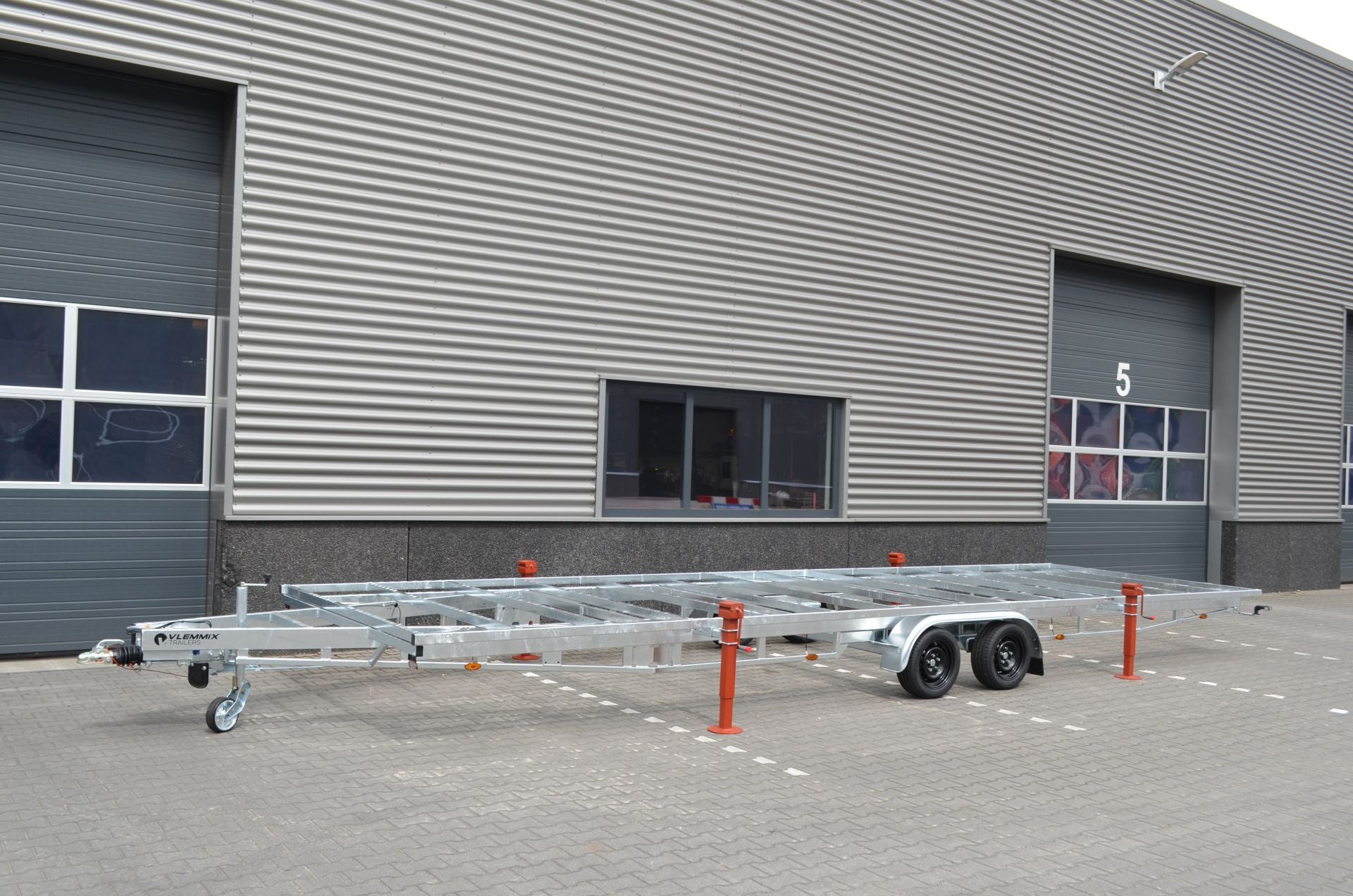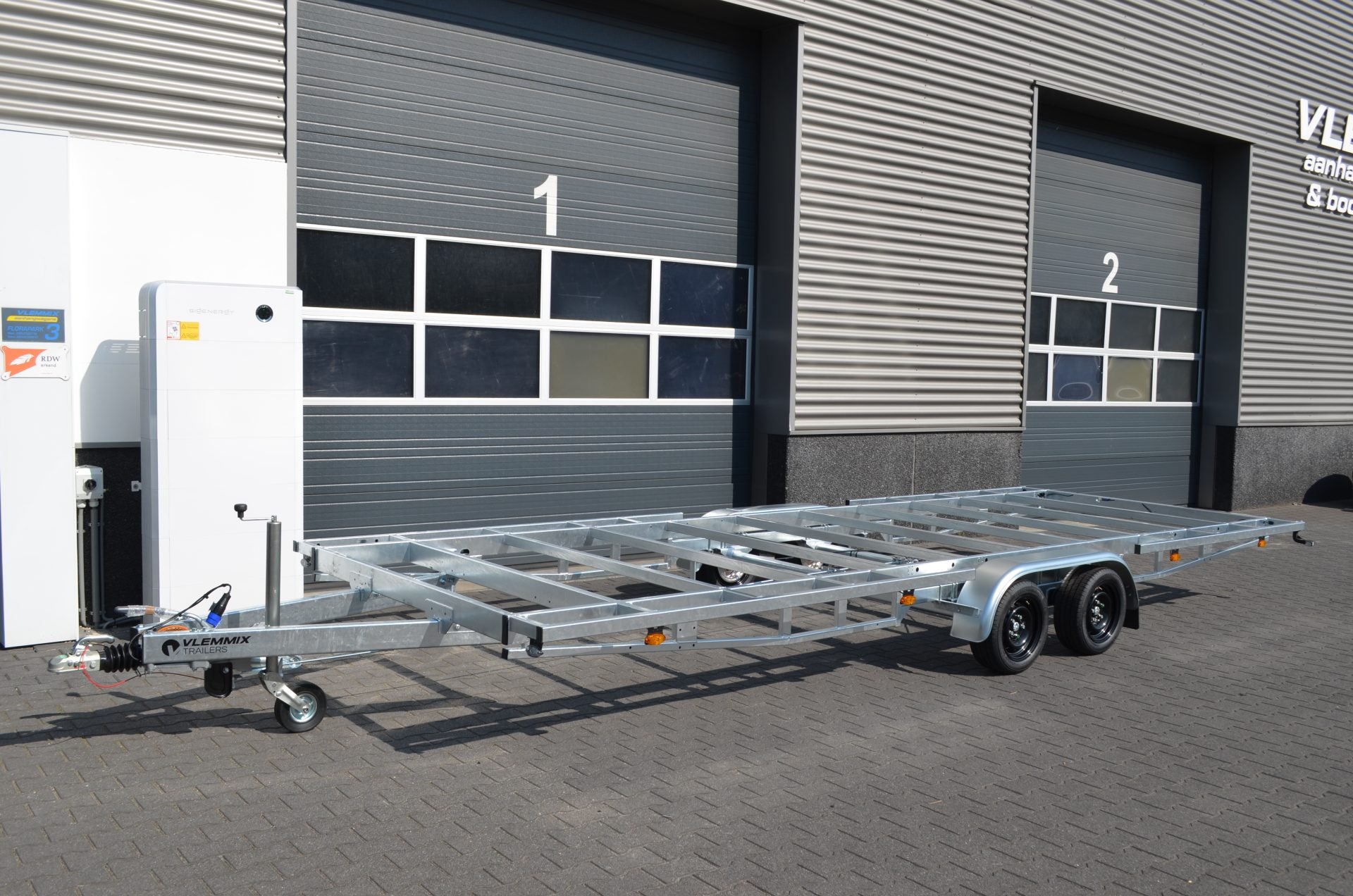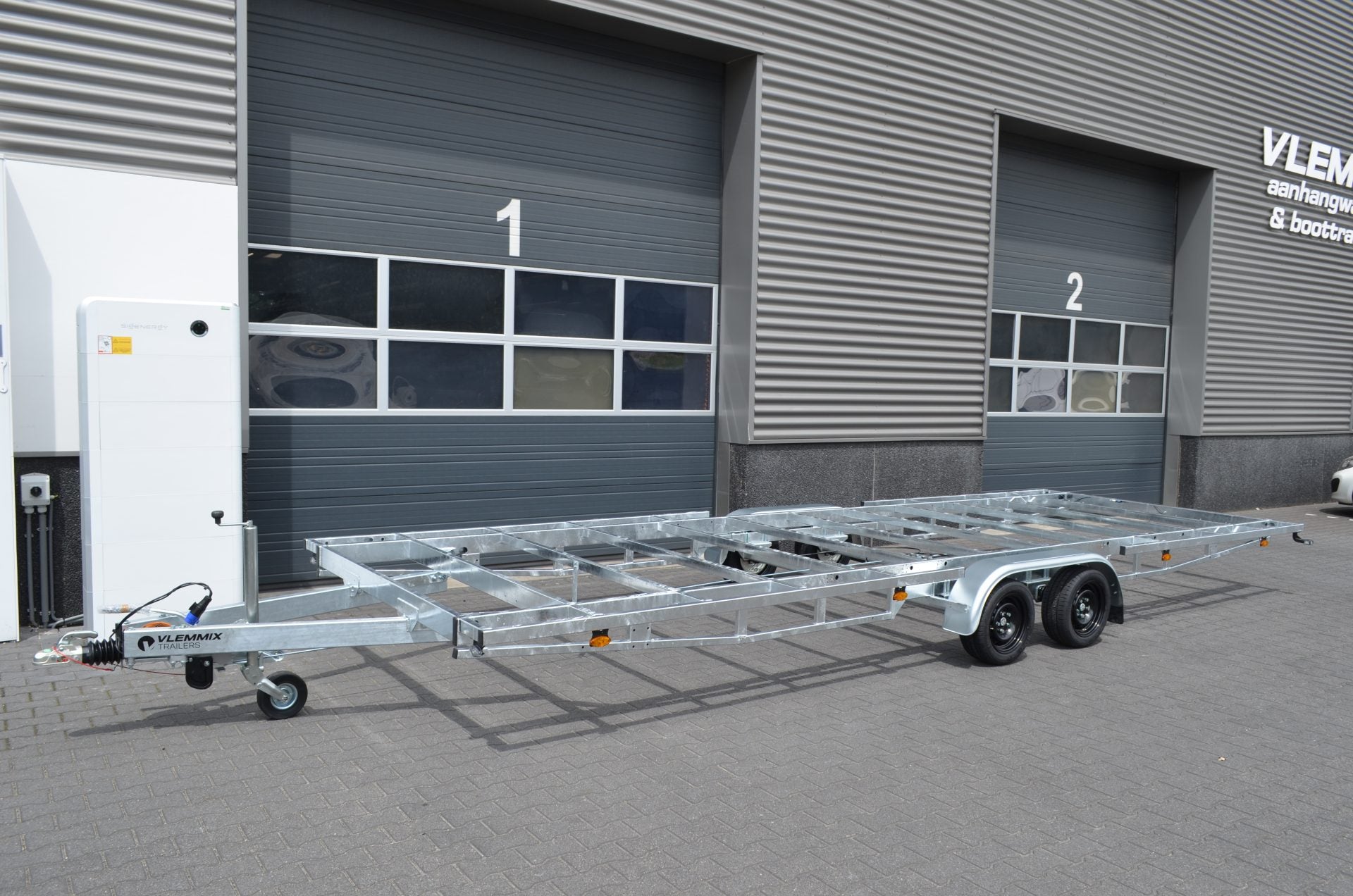

Choosing a trailer shouldn't be taken lightly. In Spain, thousands of units are sold every year for very different uses:
- Boats
- Motorcycles
- Tools
- Working materials
- Machinery transport
However, a significant number of buyers discover too late that the trailer they purchased does not fit their vehicle well or is not ideal for their intended use.
The problem usually arises when quick decisions are combined with a lack of information. Spanish regulations establish clear limits on this. Towing capacity, Maximum Authorized Mass (MAM), braking systems, and driver's licenses are all crucial factors , and any errors in these areas can lead to anything from administrative penalties to road safety issues. Before buying, it's advisable to ask yourself a few specific questions. This brief preliminary check prevents you from spending money on a trailer that later proves inadequate or, worse, one that can't even legally tow the buyer's car.
Why it's a good idea to check several factors before buying a trailer
A trailer is not just a platform with wheels. It is part of a system made up of Tractor unit, hitch, load, and traffic regulations . When any of these elements doesn't fit together, the whole system stops working as it should.
Many people buy a trailer thinking only about the item they want to transport. However, the weight of the item rarely matches the total weight that will ultimately be in transit. In the case of a boat, for example, you have to add the engine, fuel, equipment, and the weight of the trailer itself, especially when using sailboat trailers designed to support the keel and keep the hull stable during transport. Something similar happens with machinery, including tools and accessories.
There are also legal factors that should be checked before finalizing the purchase. General Vehicle Regulations (Royal Decree 2822/1998) It establishes specific requirements regarding the maximum weight of the combination, the braking system, and the need for its own registration. Ignoring these points may force you to change trailers or even modify the towing vehicle.
What any buyer should consider before choosing a trailer
A professional in the sector typically reviews several variables before recommending a specific model. It's not just about choosing the sturdiest or cheapest trailer, but about finding a configuration that performs well on the road and complies with Spanish regulations.
1. What weight are you going to carry?

The first question seems obvious, but it's one of the most common sources of errors. The weight of the load never exactly matches the final weight of the transport. In a trailer, the weight of the frame, axles, accessories, and any additional items loaded all play a role.
The correct calculation involves adding the The weight of the load plus the weight of the trailer , since both are part of the Maximum Authorized Mass. If that calculation falls short, the trailer may be permanently operating near its structural limit.
This mistake is common in professional activities or nautical transport. Many owners buy a trailer sized for their boat's hull and forget to add the engine, fuel, or onboard equipment.
2. What is the towing capacity of the vehicle?
Each vehicle has a maximum towing capacity. This information is found on the vehicle's registration document and must be respected to be driven legally.
The maximum towable mass of the car This determines the type of trailer that can be used. A compact car does not have the same towing capacity as an off-road vehicle or an SUV designed to tow heavy loads.
According to data published by the Directorate General of Traffic, a significant portion of the problems detected in roadside checks are related to Overweight vehicles pulling trailers . This type of infraction can result in fines and the impounding of the vehicle.
3. Do you need a trailer with or without brakes?

Spanish legislation clearly distinguishes between light trailers and trailers with their own braking system. The difference lies in the Maximum Authorized Mass of 750 kg .
Trailers with a maximum authorized mass (MAM) equal to or less than that weight can operate without their own braking system. However, when that limit is exceeded, regulations require an independent braking system, usually an inertia brake.
This difference has important implications for safety and maintenance. A trailer with brakes distributes the braking force between the vehicle and the trailer itself, improving the overall stability when transporting heavy loads.
4. What type of cargo will you be transporting most frequently?
Not all trailers are designed for the same type of transport. There are models designed for machinery, vehicle platforms, general cargo trailers, or specific trailers for boats.
When a trailer is used to transport boats, for example, the frame design and hull support points directly influence transport safety. In these cases, it's advisable to consult a guide to choosing the perfect trailer for your boat , which explains the most important technical criteria. The same applies to motorcycle trailers, where the securing systems play a crucial role.
A trailer well adapted to the type of load reduces vibrations, improves stability and prolongs the lifespan of mechanical components.
5. What will the trailer be used for?
The frequency of use completely changes the choice of model. A trailer used once a year can be simple, while one used weekly needs a more robust structure.
In professional applications, frame quality, axle strength, and corrosion protection become crucial factors. Trailers that frequently enter the water, such as boat trailers, require specific anti-rust treatments.
Experience shows that users who regularly use a trailer prefer to invest in more durable and better sized models .
6. What type of securing system does the load require?

Transporting an object involves more than simply placing it on the trailer platform. Safety depends largely on the securing system.
Approved straps, winches, or frame anchor points must be capable of supporting the load's weight throughout the entire journey. Improper securing can cause weight shifts that directly affect the stability of the entire assembly.
On long journeys, especially on highways, this factor becomes even more important.
7. What maintenance will the trailer need?

A trailer is a vehicle, even though it doesn't have its own engine. Bearings, tires, braking system, and electrical systems all require regular maintenance.
Trailers operating in humid environments or on boat ramps require more frequent inspections to prevent corrosion. Minimal maintenance significantly extends the trailer's lifespan.
8. What documentation is required by Spanish regulations
Light trailers do not require their own registration or separate insurance, but they must be approved and carry the registration of the towing vehicle.
When the trailer exceeds 750 kg maximum authorized mass (MMA), the situation changes. In that case, it is required It must have its own registration, separate technical data sheet, and specific insurance . In addition, the trailer must pass regular vehicle inspections (ITV).
This point often surprises many buyers who are unaware of the administrative differences between the two types of trailers.
9. What driving license do you need?
The type of license also depends on the weight of the vehicle-trailer combination. A Category B license allows you to drive combinations with a total mass not exceeding 3,500 kg.
When that limit is exceeded, a B96 or B+E license may be required. This difference frequently arises when transporting boats or heavy machinery, which is explained in detail in the article " Which license do you need to drive a trailer depending on the load in Spain ?"
Before buying a trailer, it's a good idea to check what combination of weights allows the driver's license .
10. What size platform do you need?

The size of the trailer must be adapted to the load, but also to the space available to store it or maneuver it.
A trailer that's too big can be awkward to maneuver in urban environments or garages with limited space. Conversely, one that's too small forces you to carry the load in unstable positions.
The key is to find a balance between load capacity and ease of use.
11. What is the quality of the trailer's structure?
The frame material, the quality of the axles, and the strength of the drawbar directly influence the durability of the trailer.
Trailers made of galvanized steel usually offer greater resistance to corrosion, especially in marine environments or in humid areas.
This detail may seem minor at first, but it makes all the difference when the trailer has been in use for several years.
12. Where to buy the trailer and what support you will receive

The choice of supplier also influences the user experience. Buying a trailer doesn't end at the moment of delivery; it also involves technical advice, availability of spare parts, and support if you have any questions.
A specialist supplier can advise the buyer on the most suitable configuration for their vehicle and type of load.
In trailer.es We help individual and professional clients choose the trailer that best suits their needs. Our team analyzes the type of transport, the weight of the load, and Spanish regulations to recommend the most appropriate solution.
We also offer a wide range of precision-engineered trailers designed for stability, safety, and durability on the road. Choosing the right trailer from the start prevents purchasing mistakes and ensures that the vehicle-trailer combination operates safely.