
Sailboat Trailers
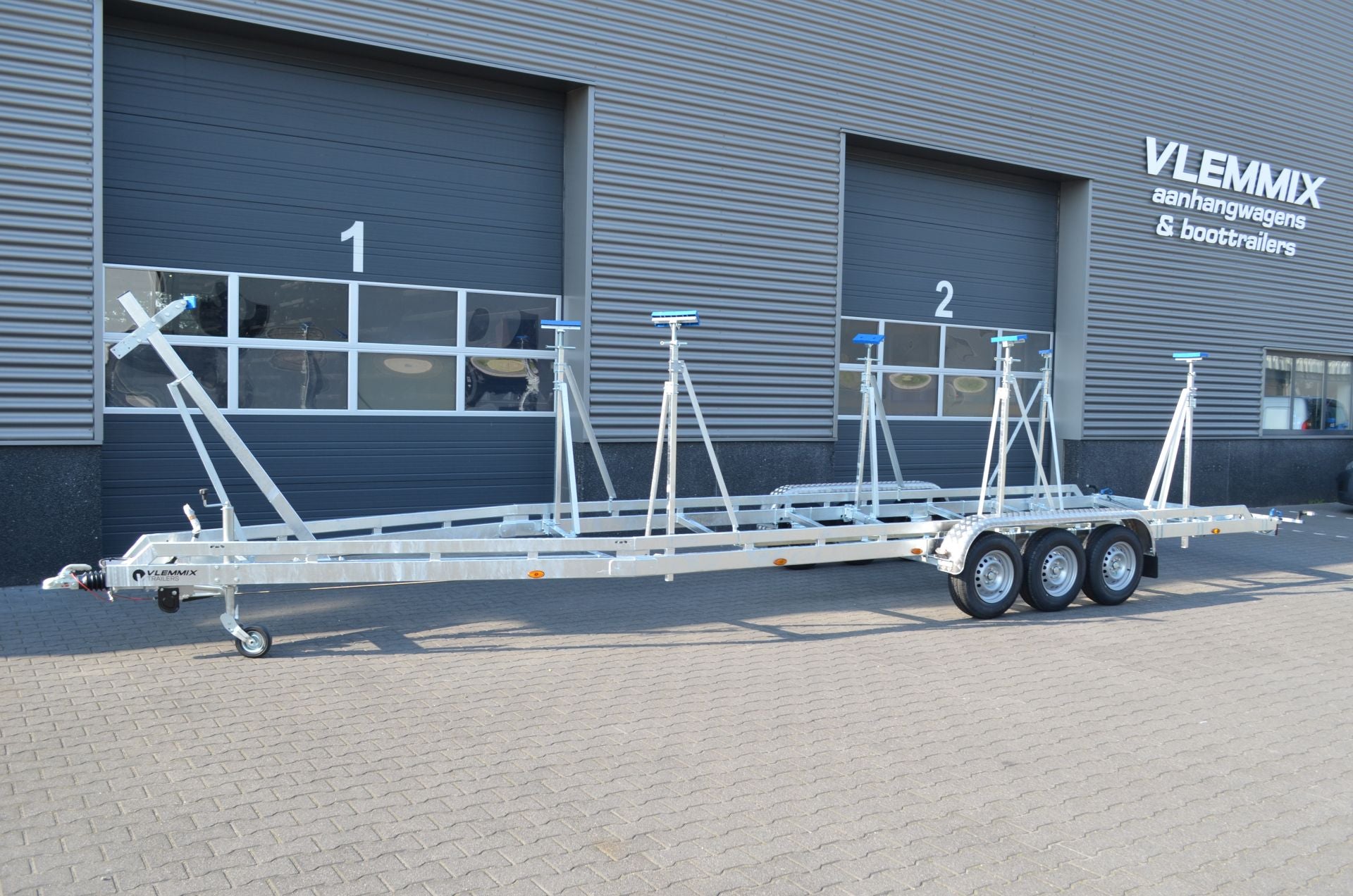
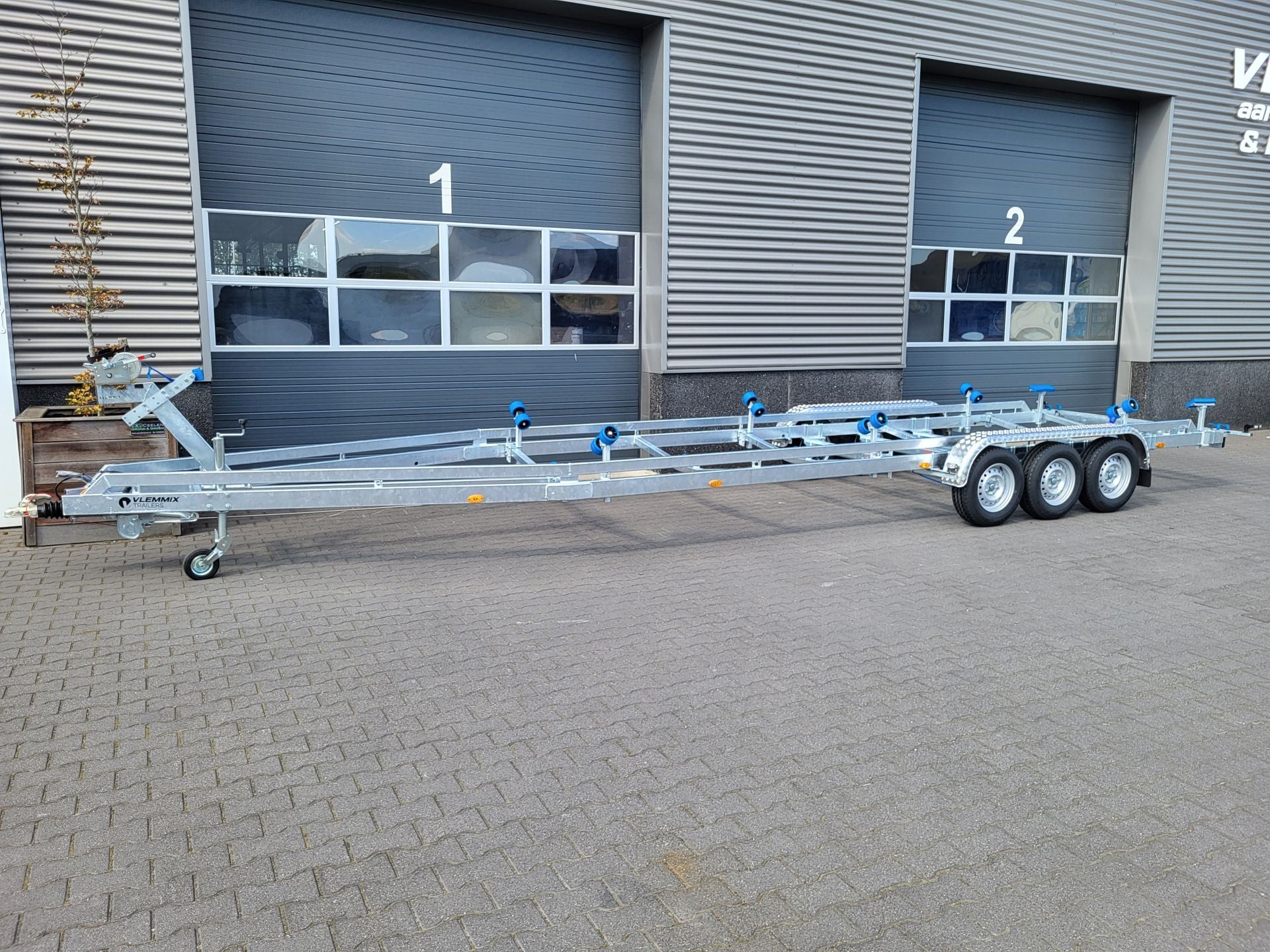

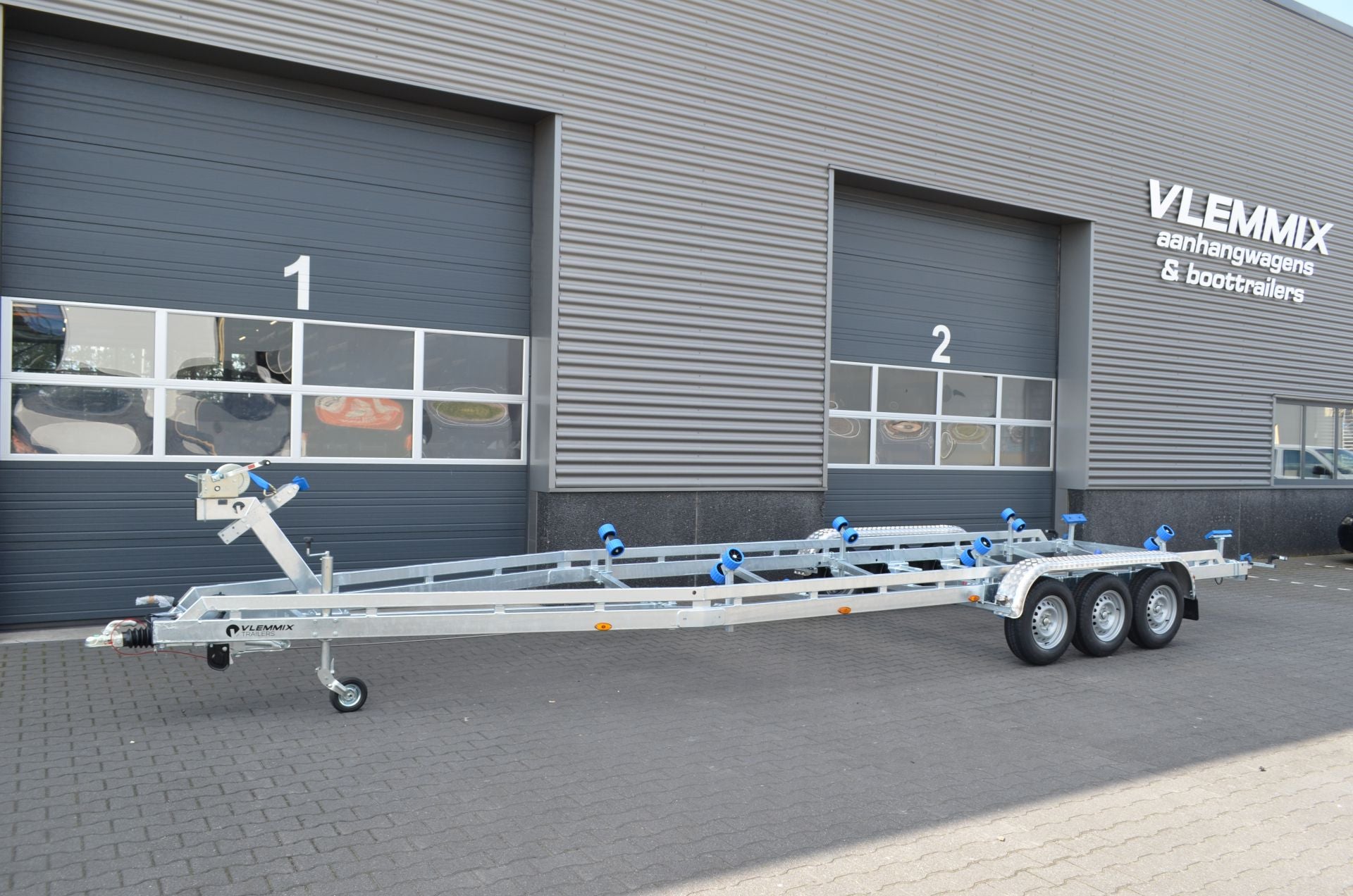
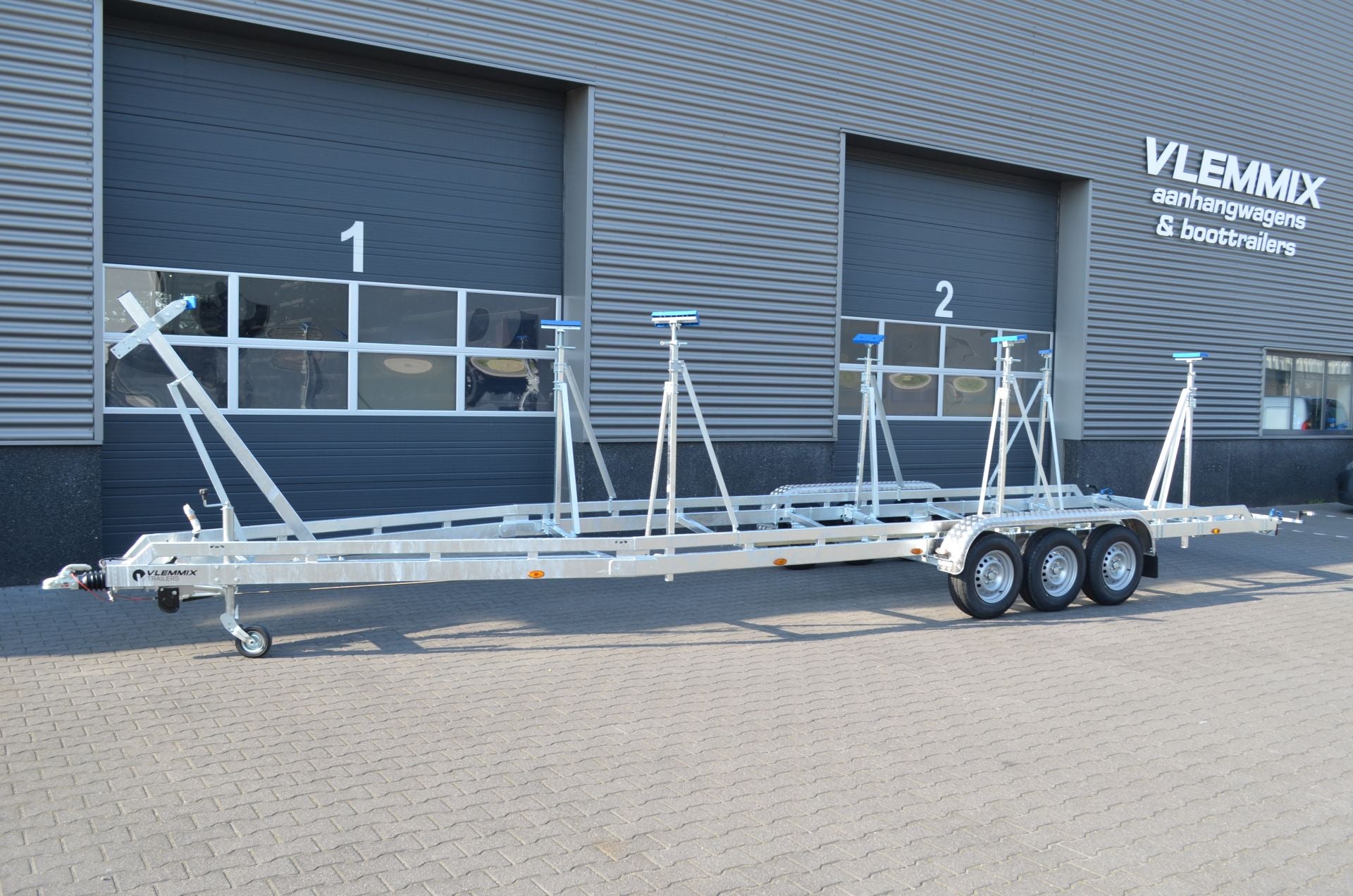
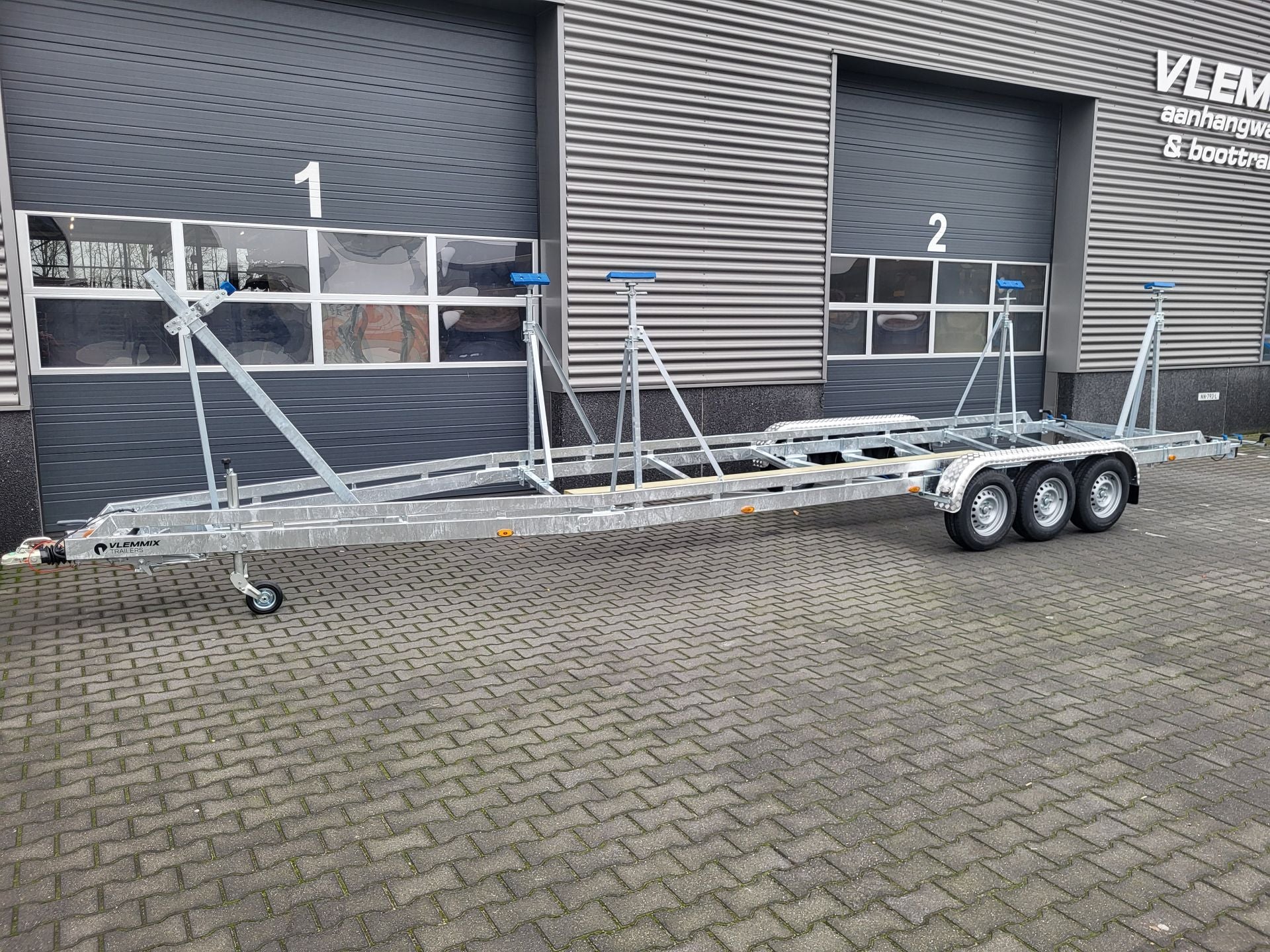
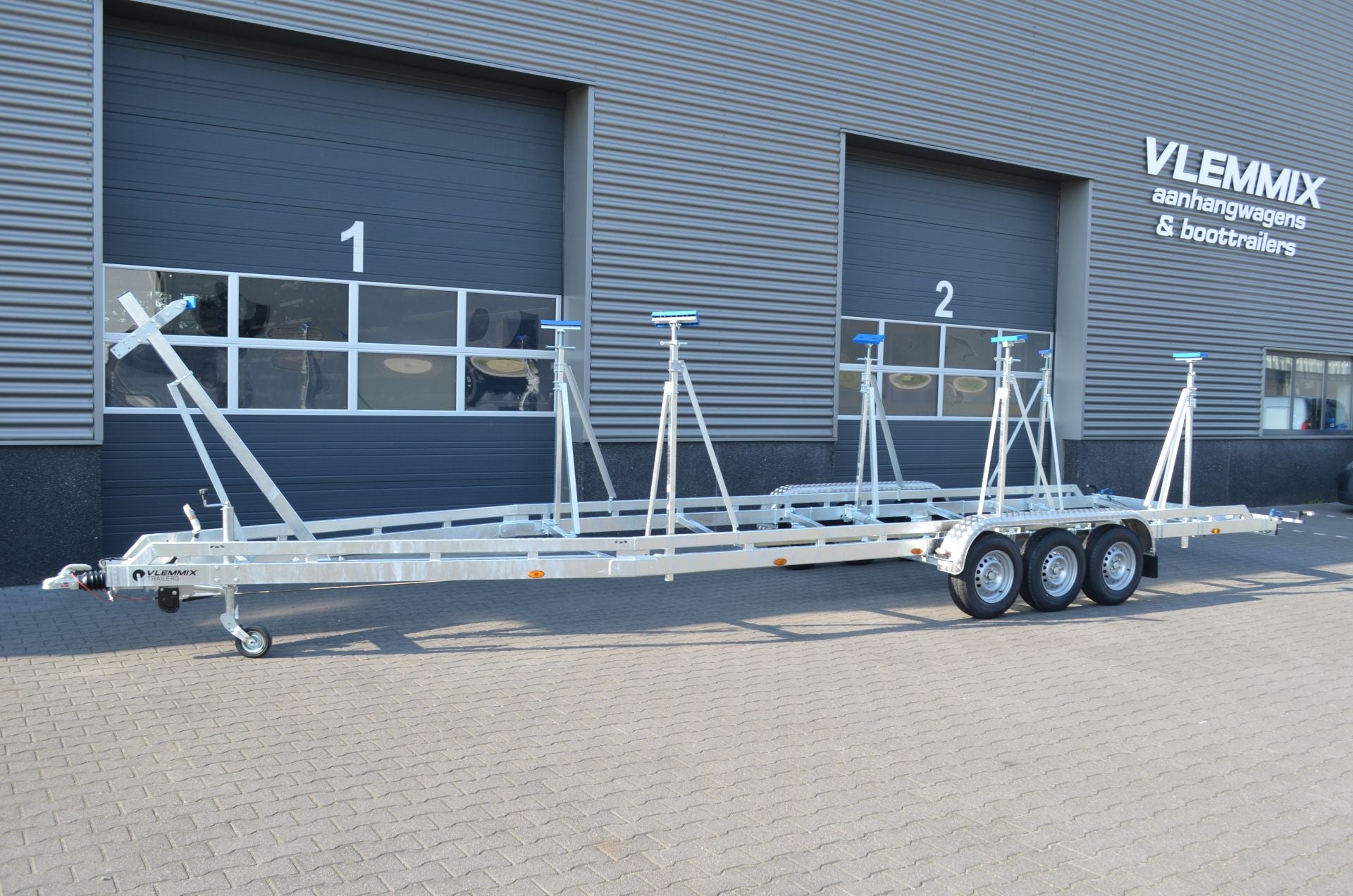
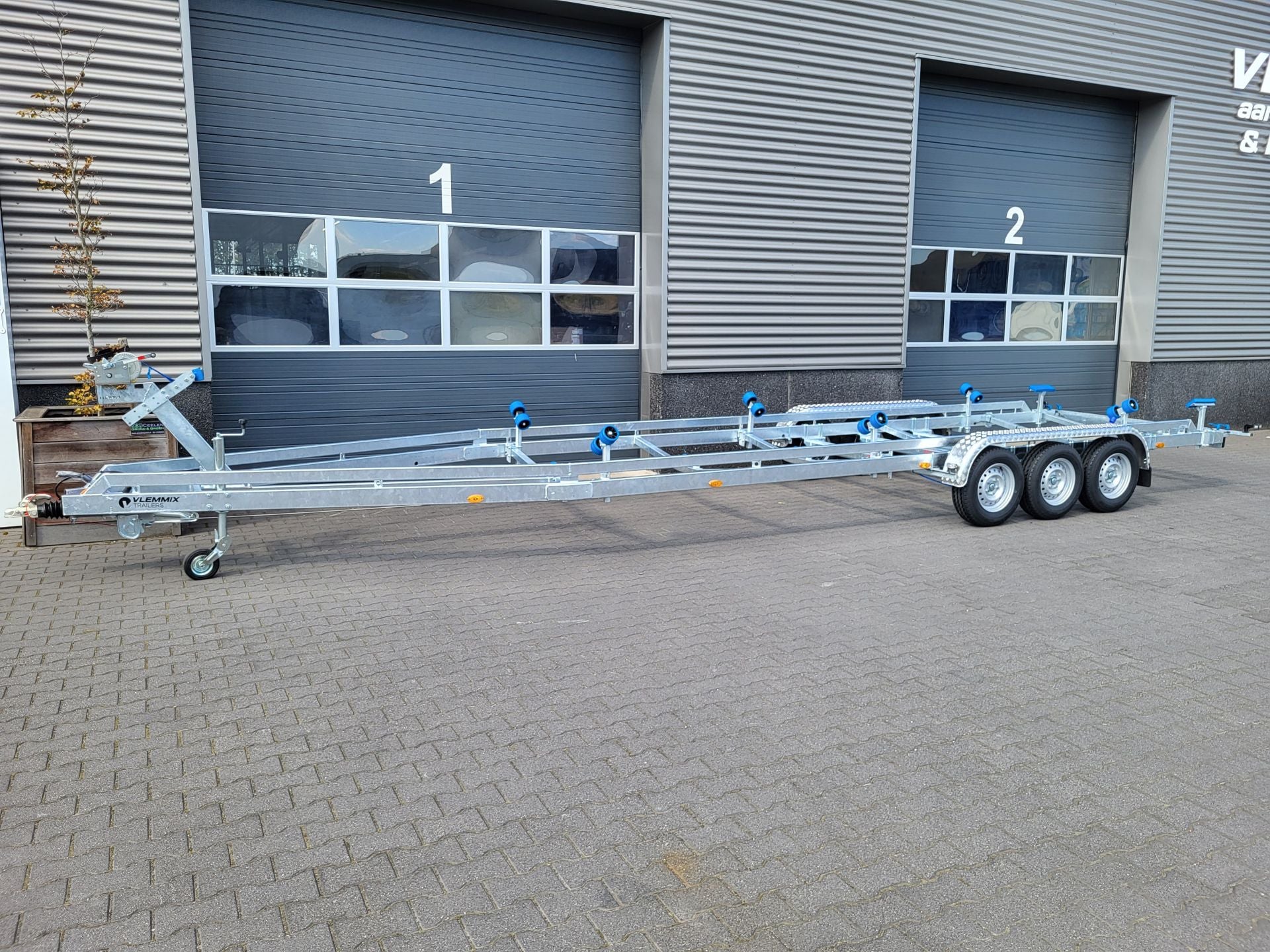
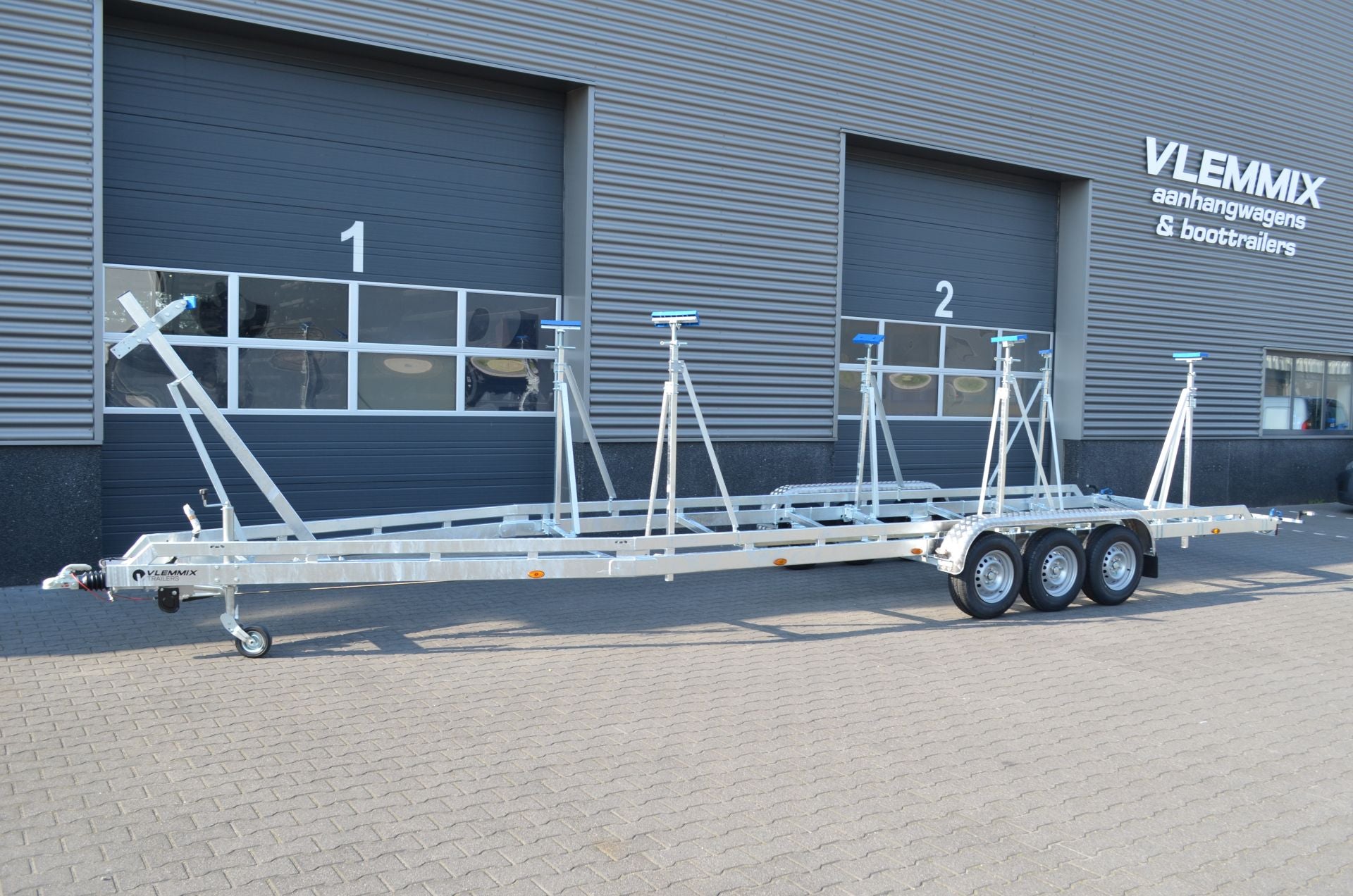
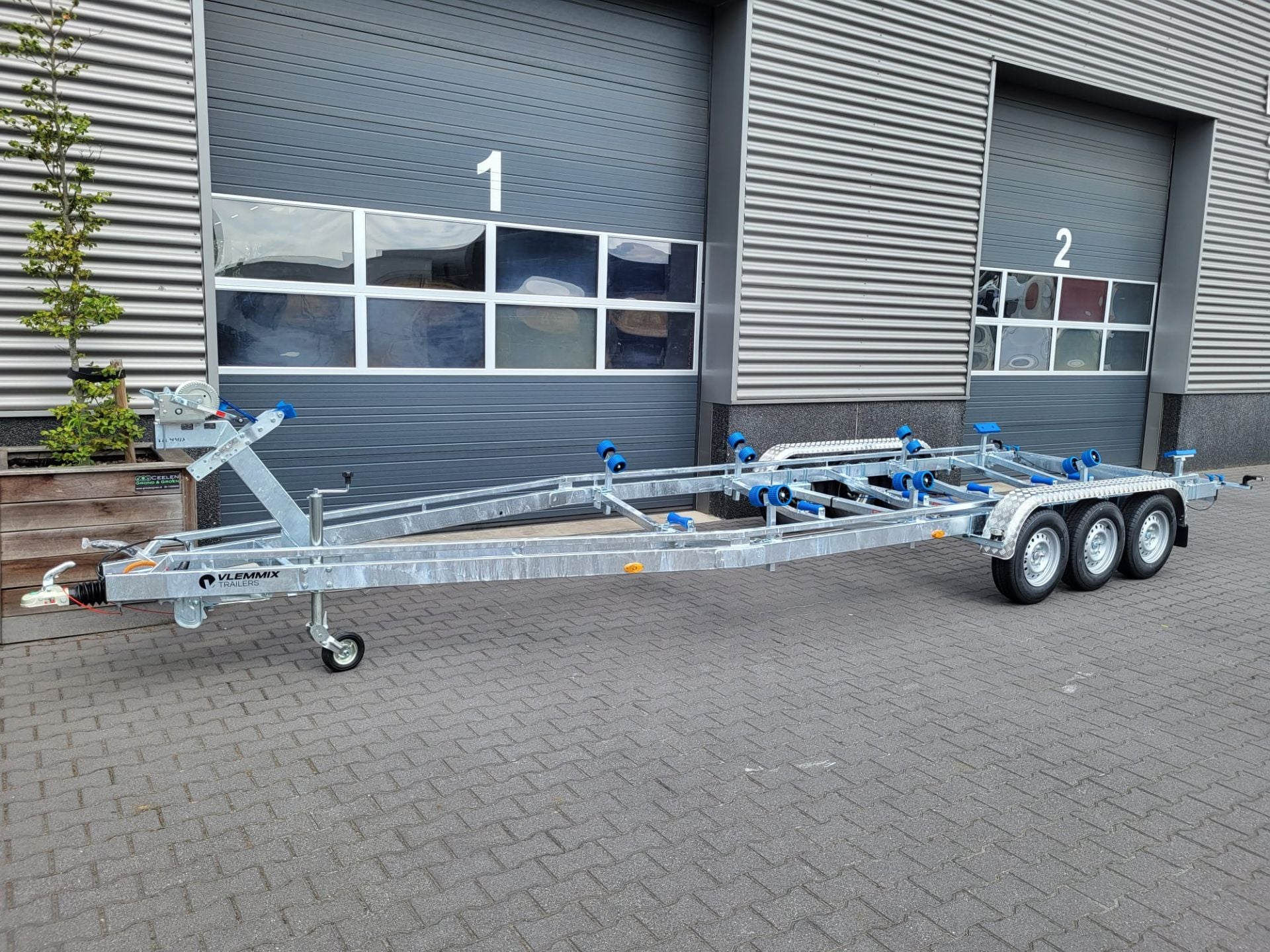
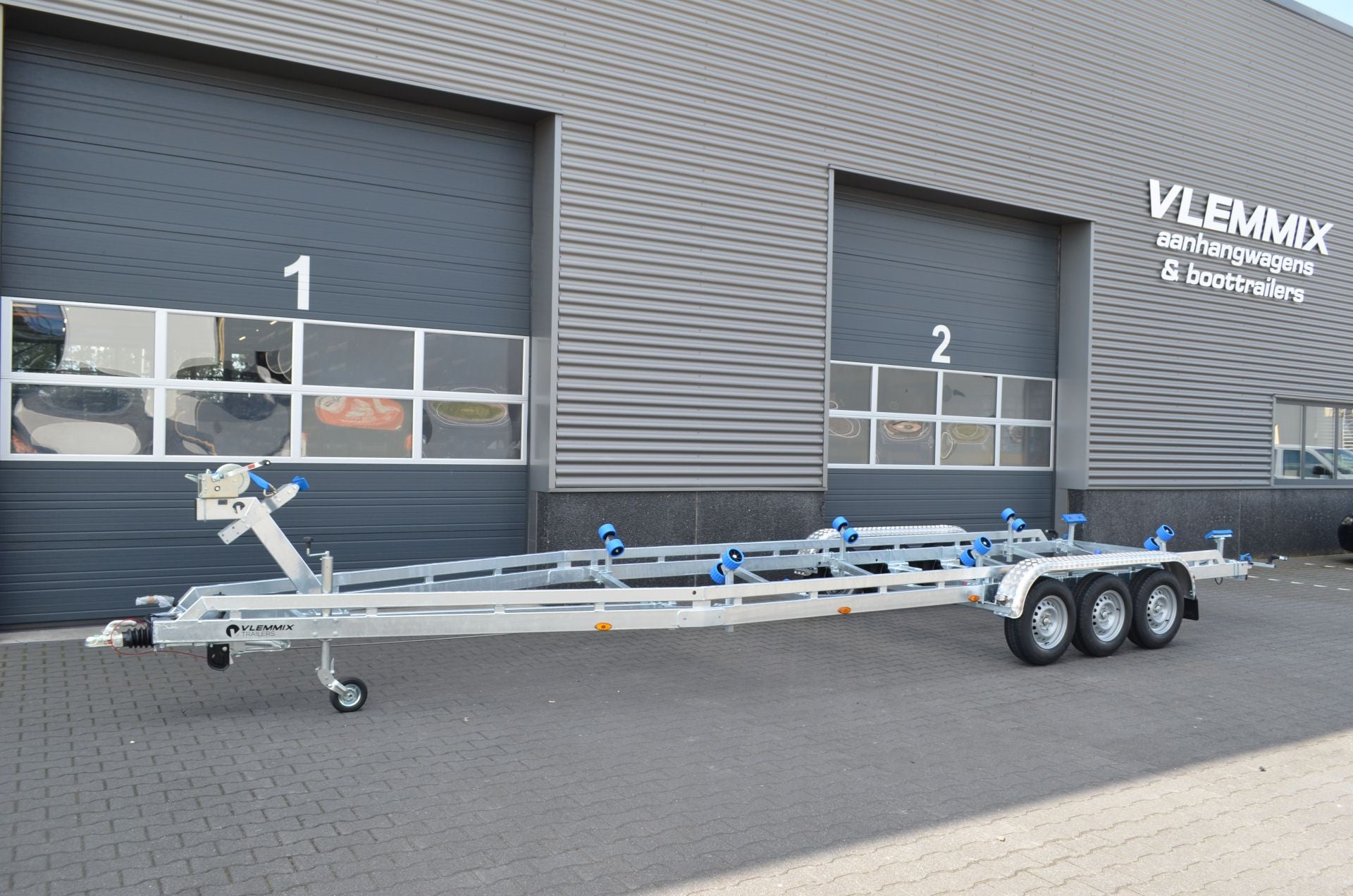
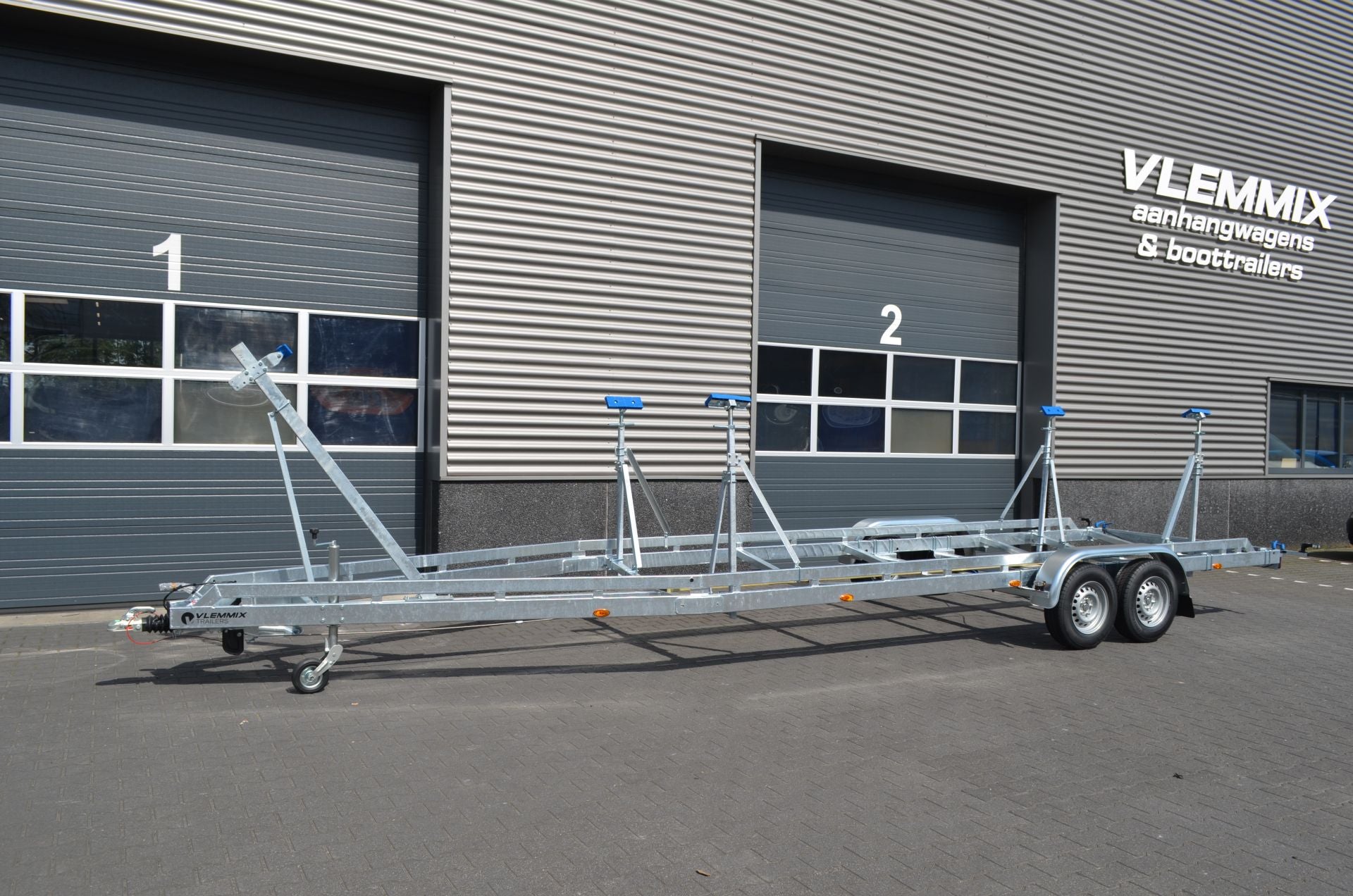
Sailboat Trailer Catalog
Choosing well is protecting your boat
Transporting a sailboat requires more than just a trailer that "fits." When buying a sailboat trailer, you're taking risks with stability, corrosion, long braking distances, and regulations that must be met. The goal is for the boat to travel securely, for ramp maneuvering to be predictable, and for everything to be in compliance.
What's included in our sailboat trailers
These trailers are designed for hulls with keels. They feature galvanized chassis prepared for marine environments, adjustable supports, and weight distribution systems. Many current models incorporate laser-cut tubing and sheet metal, with very tight tolerances. The parts fit together perfectly, and the structures are more "square," a difference that is noticeable when the trailer rolls straight and doesn't wobble.
You'll find configurations with one or more axles, brakes on the higher GVWR versions, electrical systems integrated into the chassis, and removable light bars to avoid damage on ramps. The higher-end models feature waterproof LED lighting and protected wiring, reducing damage from salt air.
How to choose the best trailer for your sailboat
Start with the maximum authorized mass (MMA ). Calculate the actual weight of the sailboat, add equipment, and allow for a margin. Consider the usable length and the possibility of adjusting the supports: adjustable keels/keels (height, length, and width) prevent unnecessary pressure. Hot-dip galvanizing, quality bearings, and a reliable winch are preferable. And always check the load distribution on the tow bar: if the bow is too light, the whole assembly will wobble.
Vehicle and hitch compatibility
Check your car's towing capacity in its technical specifications. If the trailer exceeds it, it won't work. Verify the tow ball, the 13-pin connector (common on boat trailers), and that the trailer is level. A crooked setup will damage tires and brakes.
Safety and basic maintenance
After each use at sea, rinse with fresh water. Check straps, winch, tires, and bearings. For trailers with overrun brakes, ensure regular maintenance. Adjustable supports and a removable light help, but without regular inspections, the risk returns.
Common mistakes and how to avoid them
Another common mistake is assuming that “if it fits on the trailer, it’s fine.” No. The hull must be centered and aligned with the trailer's axle. When the sailboat is shifted even a few centimeters to one side, the whole assembly is crooked, the tires overheat, and stability suffers on highways.
Many drivers also neglect to check their tire torque after several downhill runs. Water, salt, and temperature changes loosen lug nuts. Regularly checking them with the correct wrench prevents unpleasant surprises.
Another common mistake is using straps that "last summer." Sun and salt air weaken them. If they creak or show loose threads when tightened, replace them. And never cross them over the rigging, as sharp objects can cut unexpectedly.
Some people rely on good intentions when installing the winch. Bad idea. The cable or webbing must be in good condition, without kinks or rust, and the ratchet must lock firmly. If the sailboat moves half a meter during braking, the damage is serious.
Finally, there's the "it's fine like that" attitude as you leave the ramp. The trailer changes angle, the load shifts, and what seemed secure suddenly isn't. A quick dry check—straps, lights, power outlet, and a visual inspection—saves you from fines and headaches.
Recommended use cases
Those who sail only occasionally and travel short distances will appreciate a simple trailer that's easy to store and has quick-adjusting supports. Less weight, simpler maneuvering, and affordable maintenance.
If the boat is kept at home and long road trips are planned each season, it's advisable to look for more stable chassis, axles with ample clearance, and a support system that allows for minor adjustments based on hull trim. The goal is to be able to travel for many hours without putting undue stress on the boat.
For those operating on narrow or sloping ramps, a trailer with a detachable light bar and well-positioned rollers simplifies launching. Fewer bumps, less rushing, and less stress.
In highly saline environments—ports, esplanades by the sea—it pays to invest in details that are not immediately visible: protected screws, well-sealed electrical installations, and components designed to get wet and continue functioning.
And if the sailboat's equipment changes frequently (ballast, sails, extra gear), it's best to choose a model that allows for a wider range of support configurations. This adjustability prevents the hassle of constantly getting on or off the tow.