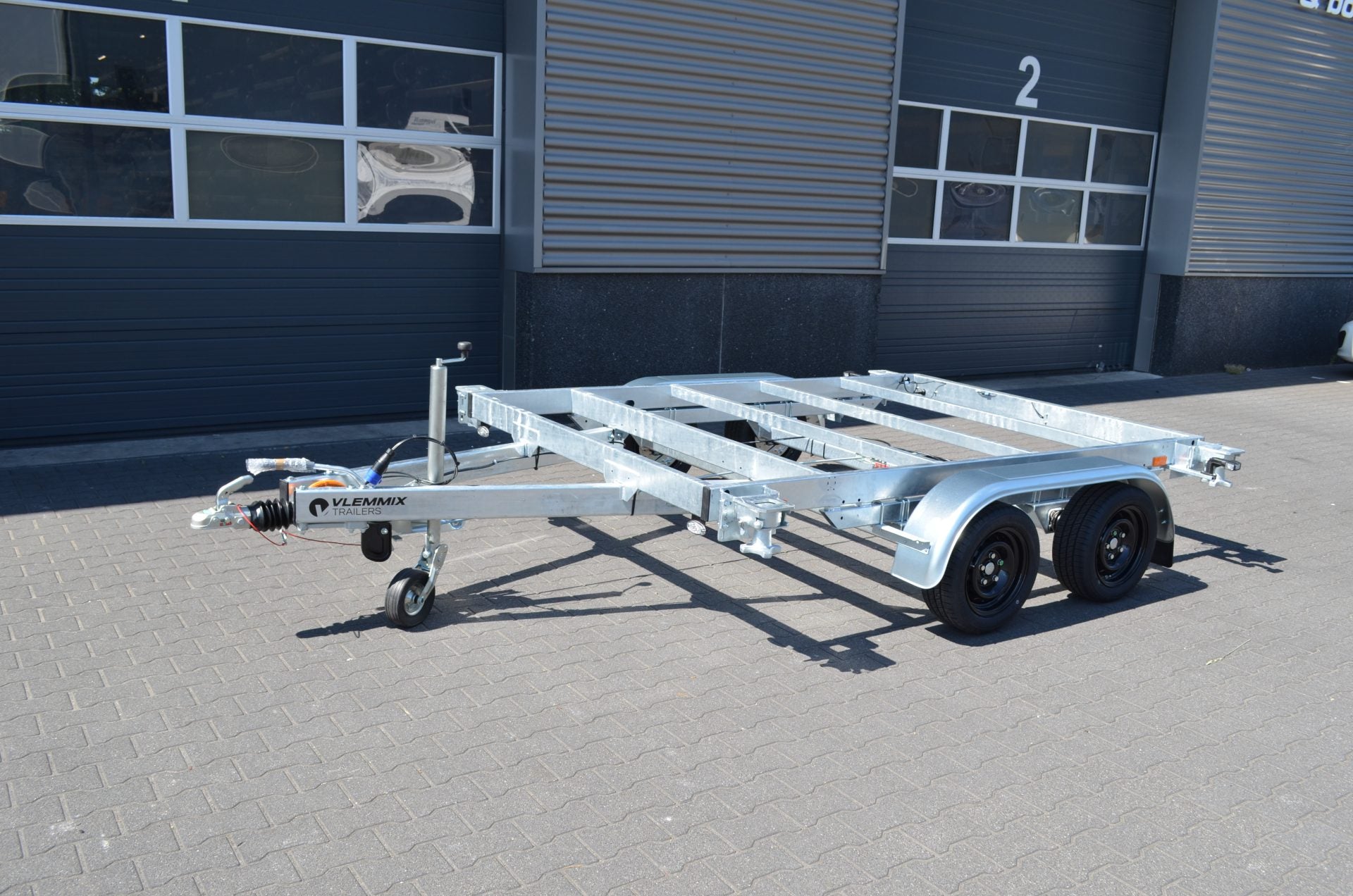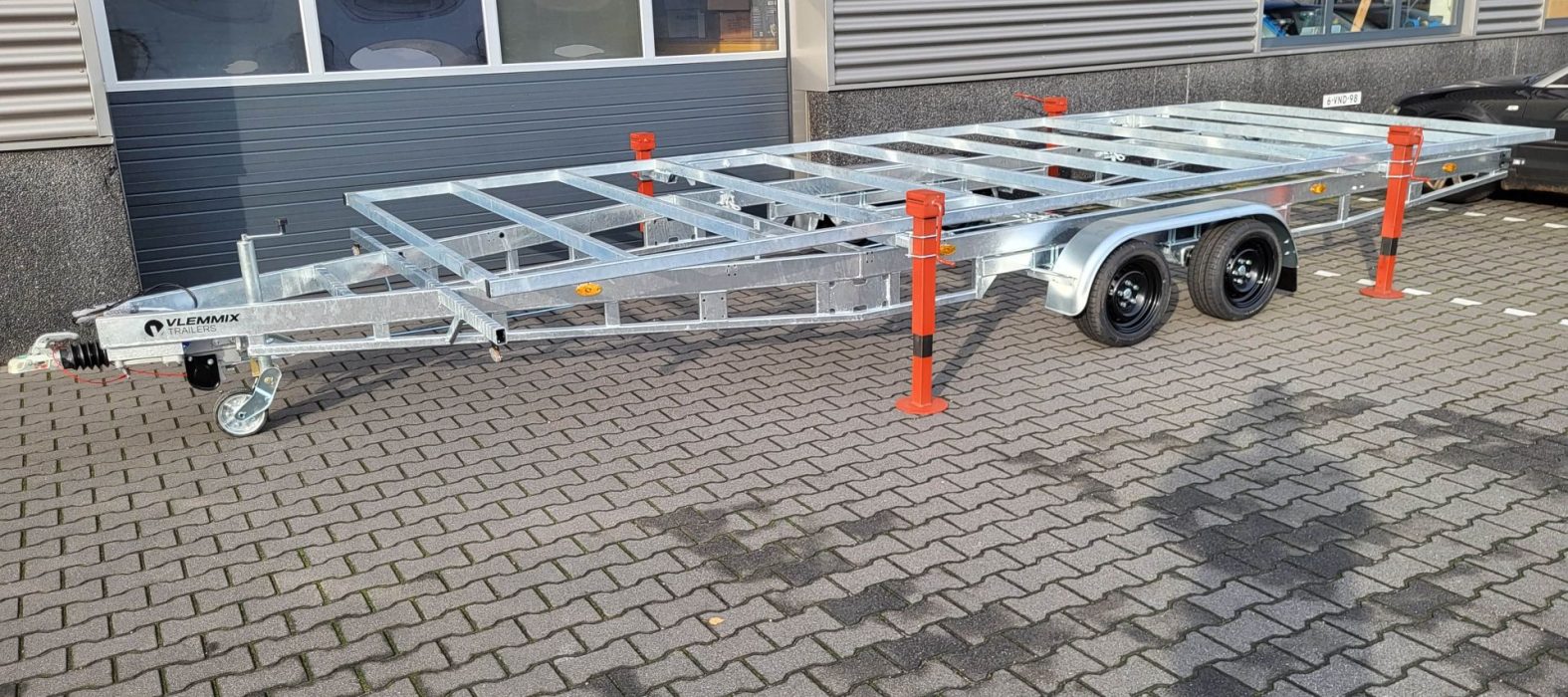

Real limits, exceptions, and nuances that few drivers know
Every summer the same scene reappears: drivers unknowingly towing trailers that are nearly over the maximum permitted width, fines on secondary roads, and risky maneuvers in areas where there isn't an inch to spare. This happens with both recreational and professional users, from those who use a boat trailer From weekends to those who work daily with technical platforms. The question is common, but the answer requires some fine-tuning: the width of a trailer in Spain depends on the type of trailer, its weight, its classification, and its intended use. And not all the limits are intuitive, nor are they applied in the simplified way that is often assumed.
Furthermore, the problem is usually not a lack of knowledge of the legal weight limit, but rather assuming that the trailer complies with it without ever having actually measured it, especially after adding accessories or adapting it for a specific load. This mistake is common among drivers who believe that having the appropriate Trailer Driving License automatically guarantees that the combination is legal, when in reality the license authorizes the driver, but does not exempt them from verifying that the trailer meets the approved dimensions, weights, and technical specifications.
Maximum width allowed according to the General Vehicle Regulations
The General Vehicle Regulations (Royal Decree 2822/1998) establish the external dimensions of trailers and semi-trailers that circulate on Spanish roads. The standard limit for most light trailers—those up to 750 kg GVWR—is 2.55 meters maximum width , including mudguards, fenders, lights, and any fixed elements. This value comes from European harmonization for light commercial vehicles and coincides with the maximum authorized width for non-special vehicles and vehicle combinations.
In the case of non-light trailers, the figure is exactly the same: 2.55 meters . The difference lies not in the permitted width, but in the administrative procedures: mandatory periodic vehicle inspections, separate registration, independent insurance, and stricter documentation requirements. This criterion applies equally to a general cargo trailer, a machinery trailer or a car carrier platform. The width, with very specific exceptions, does not vary depending on the use.
|
Trailer type |
Maximum legal width |
Can he overcome it? |
Relevant technical observations |
|---|---|---|---|
|
Light trailer (≤ 750 kg GVWR) |
2.55 m |
❌ No |
This includes mudguards, lights, and any other fixed components. It's very common to unknowingly exceed the limit after adding accessories. |
|
Non-light trailer (> 750 kg GVWR) |
2.55 m |
❌ No |
It requires periodic vehicle inspections and its own registration. Any modifications must be recorded in the vehicle registration document. |
|
Boat trailer |
2.55 m |
❌ No |
The hull does not count as part of the vehicle's width, but if it protrudes laterally it may be considered improperly stowed cargo. |
|
Sailboat trailer |
2.55 m |
❌ No |
He usually works close to the limit due to the helmet's sleeve. Special attention is paid to stability and lateral visibility. |
|
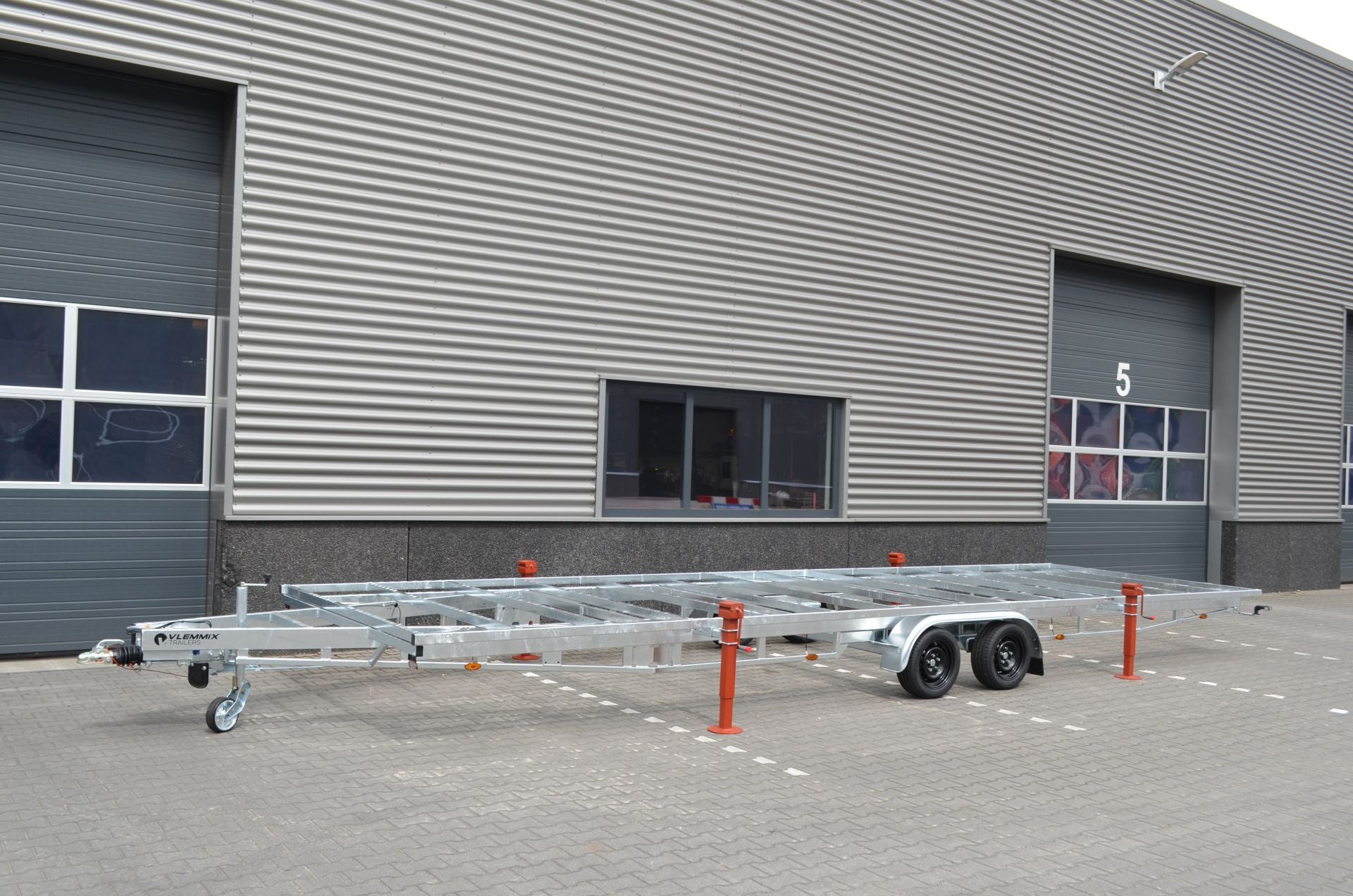
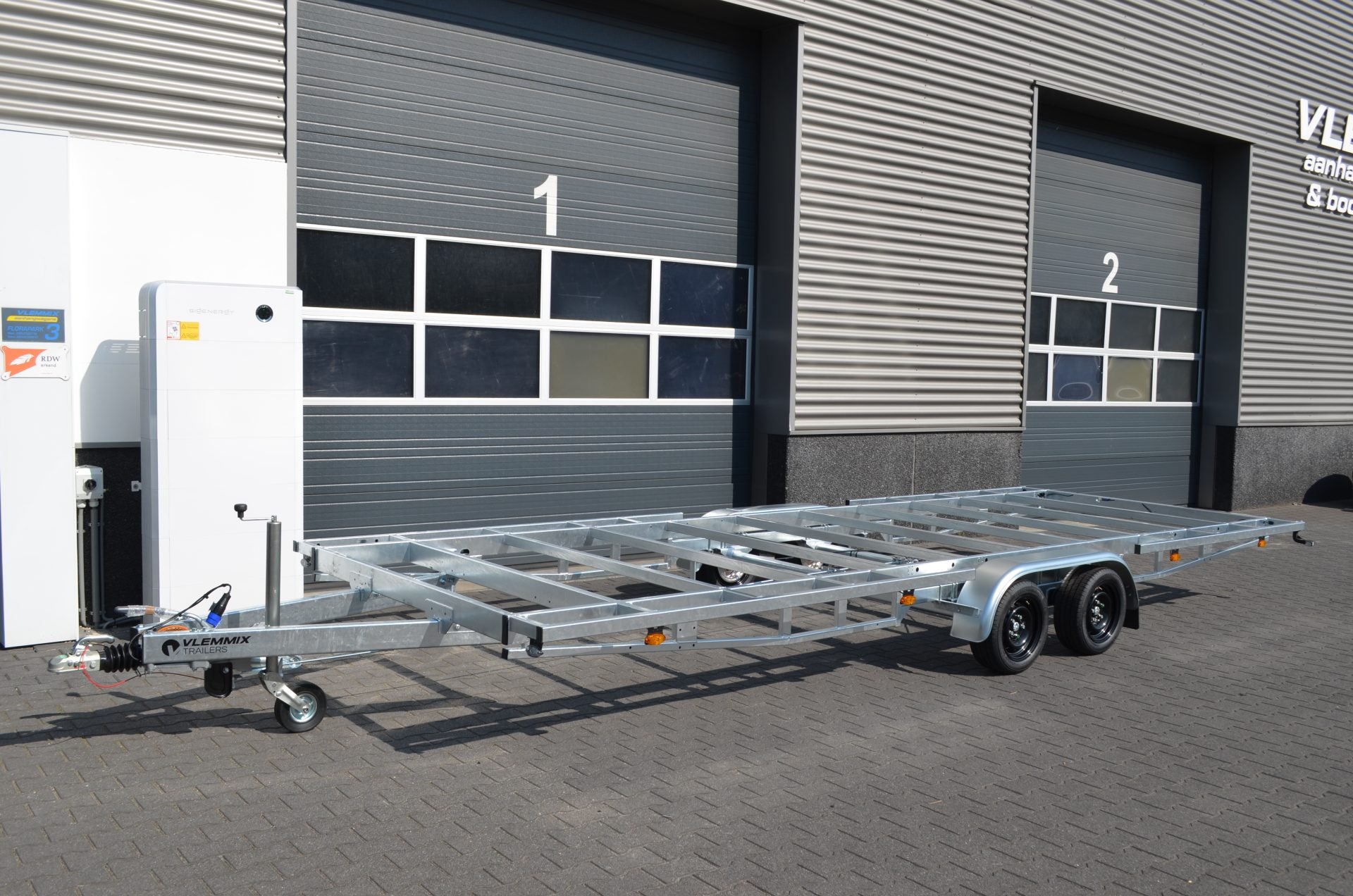
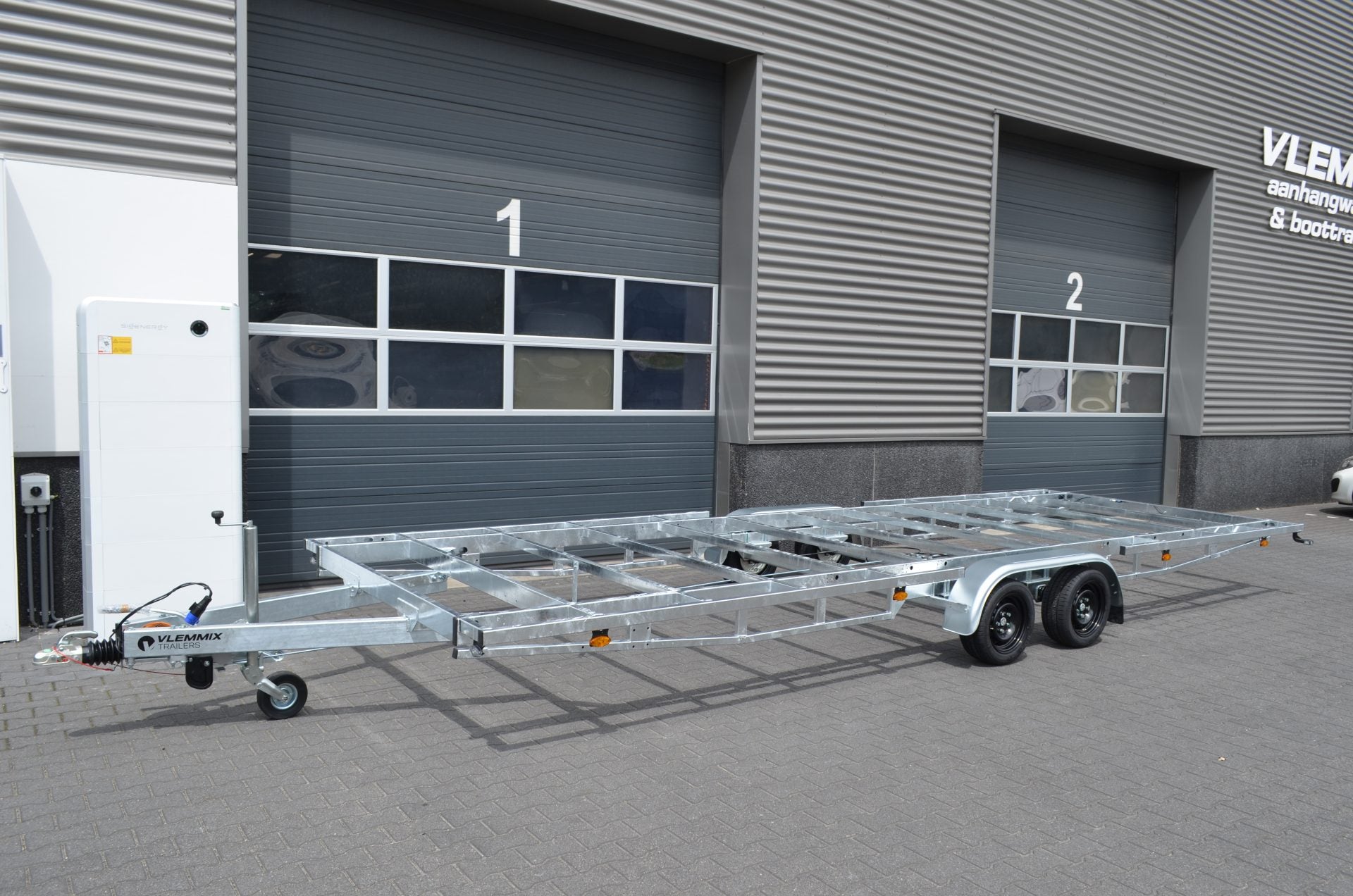
Trailer for tiny house |
2.55 m |
❌ No |
It is one of the most critical cases: housing + insulation + finishes can cause an actual excess of width. |
|
Machinery carrier trailer |
2.55 m |
❌ No |
It is typically designed to the limit to maximize usable surface area. Any changes to wheels or axles may result in non-compliance. |
|
Authorized special transport |
> 2.55 m |
✅ Yes, with permission |
It requires specific authorization from the DGT and usually involves signage, escort and time restrictions. |
Special trailers: when is it permitted to exceed 2.55 meters
The only legal way to exceed the general limit appears in the Special transport , regulated by specific permits managed by the DGT (Spanish Directorate General of Traffic) and the competent bodies of each autonomous community. This system is intended for agricultural machinery, indivisible loads, or large industrial transport, not for conventional trailers.
For the average user —car carriers, cargo trailers, platforms, boat trailers, sailboat trailer or motorcycle trailers—the answer is clear: The height cannot exceed 2.55 meters without special permission , and these permits are not granted for recreational or regular private use. Any excess, however slight, renders the structure illegal.
What is the actual width of a trailer?
One of the most common mistakes is thinking that the width refers only to the frame. The regulations are clear: it must be measured. any fixed protruding element , and that includes:
-
Mudguard
-
Rear light assembly if they protrude
-
Side fins
-
Winches or front structures
-
Fixed supports, guides or connections
The measure It is not taken on the load , for example in a boat trailer , since the boat is not part of the vehicle. However, in practice, if the hull protrudes laterally and compromises safety, it can lead to a complaint for improperly stowed cargo (Art. 15 of the RGV). This is an important distinction: it is not a problem of trailer dimensions, but of road safety.
Common mistakes when calculating the usable width
Many users rely solely on the manufacturer's specifications without verifying the actual exterior width. It's common to find frames listed as 2.00 m wide that reach 2.15 m or more once the fenders are fitted. This mistake is especially prevalent in:
-
Nautical trailers adapted to wide hulls
-
Platforms intended for mobile housing, where the trailer for tiny house It's very close to the legal limit.
-
Trailers modified after purchase with accessories not reflected in the homologation
It is also common to fit wider tires, add side guides, or assume that "if it comes from the factory it is legal," when some accessories installed by distributors are not listed in the technical data sheet.
Differences between light and heavy trailers with respect to width
The width limit remains the same, but the level of enforcement does. For light trailers, a slight excess might go unnoticed on the road; for heavy trailers subject to regular vehicle inspections, Any variation in dimensions must be recorded on the inspection card .
In a For example, machinery trailers often have their width maximized to gain usable space. This requires extreme precision: a different wheel, a changed fender, or added reinforcement can turn a legal trailer into one subject to penalties without the owner even realizing it.
How does width affect stability on the road?
Width not only affects legality but also the overall dynamic behavior of the trailer. A narrow trailer is more agile but can become twitchy if the load isn't properly centered. A wide trailer tends to be more stable on straightaways but makes maneuvering in narrow streets, on ramps, or when entering parking garages more difficult.
This is clearly seen in groups made up of passenger cars or SUVs towing a Sailboat trailer , where the high center of gravity and the width close to the maximum force you to anticipate turns and widen maneuvering radii.
Width and tractor vehicle: fit required to avoid fines
The width of the trailer can be greater than that of the towing vehicle; this is legal as long as the total width does not exceed 2.55 m. However, it is important to keep the following in mind:
-
If the trailer protrudes significantly, the mirrors must ensure sufficient rear visibility; in many cases, fitting extenders is mandatory.
-
In narrow passages, bridges and reduced lanes, the responsibility lies entirely with the driver.
Infringements due to incorrect dimensions are considered serious and are usually punished with €200 , no points deducted, but with the possibility of immobilization if safety is compromised.
Specific cases that raise doubts in Spain
Agricultural trailers
Agricultural trailers are subject to the same general limit of 2.55 m, unless specially authorized. The confusion often arises from self-propelled machinery, which are not trailers.
Boat trailers
In a For boat trailers , the hull is not counted as part of the vehicle's width, but if it protrudes laterally and poses a risk, it can be reported for improper stowage. This is a common situation in coastal areas during the summer.
Car transport platforms
They are usually between 2.00 and 2.20 m wide. As long as they do not exceed 2.55 m and maintain proper signage, they are legal, although a loaded vehicle may affect cornering behavior.
How to check the actual width before driving
-
Place the trailer on level ground.
-
Measure from end to end including all fixed elements.
-
Check the figure with the technical specifications.
-
Check for added accessories after purchase.
If you have any doubts, an ITV station can confirm whether the trailer complies with its original homologation.
Practical tips based on real-world road experience
If you buy a used trailer, measure it yourself: many "2.10 m" trailers actually exceed 2.25 m.
For urban use, a narrow width reduces stress on roundabouts and narrow access roads.
On boat trailers, thin metal fenders help to avoid adding unnecessary centimeters.
For long journeys, a narrower trailer is usually less sensitive to crosswinds.
Also check the width when changing tires: some models protrude more than expected.
The legal width limit for a trailer in Spain is clear: 2.55 meters , regardless of whether it is a a tiny house trailer , a sailboat trailer or a technical platform. The tricky part isn't knowing the number, but making sure the trailer It really fulfills it after accessories, renovations or adaptations.
Measuring, checking, and not taking anything for granted prevents penalties, arguments on the road, and awkward situations where every centimeter counts.