
Setting up a conventional hospitality venue costs between 30,000 and 80,000 euros, including transfer, construction, and licenses. An equivalent business in a 10-foot container starts at less than 15,000 euros, including the container, basic equipment, and the trailer that transports it to the customer's location. This model works for food, ephemeral retail, workshops, and construction site offices. The piece that makes it possible, and which most people misjudge, is the trailer.
TL;DR
- The right container for a mobile business is the 10-foot one (tare 1,200-1,400 kg): it travels equipped behind a car without exceeding 3,500 kg PTAC.
- The 20-foot container only travels empty with a car: as an equipped business, it requires a truck for each transfer, which kills mobility.
- Estimated budget: container 900-2,500 euros, adaptation 3,000-8,000, container trailer 3,000-5,000.
- The weight of the equipment (kitchen, water, counter, generator) is deducted from the payload: weigh it before buying anything.
- The combination requires a B or B+E driving license depending on the combined GVM, a registered trailer with its own insurance, and lashing with twist locks.
Why a container and not a caravan or tent
Compared to classic mobile business alternatives, a shipping container wins on three specific and measurable fronts. Robustness: corten steel designed to be stacked nine high on a ship, capable of withstanding decades of assembly and disassembly without fatigue. Security: when closed, it's a safe, with no tarpaulins to cut or caravan locks. Image: the industrial aesthetic sells, and the box allows for full branding.
Compared to a tent, it adds climate control and protected inventory. Compared to a classic food trailer, it adds surface area and visual impact in exchange for more weight. The key that makes it competitive is true mobility: the container on a trailer can be set up in an hour and removed in another, without construction permits or permanence.
Size determines the business: 10 feet almost always
The 10-foot container (2.99 x 2.44 m, about 7 m² usable) weighs 1,200-1,400 kg tare. With 800-1,000 kg of equipment, it is still transportable behind a car on a 3,500 kg PTAC trailer. A bar, coffee point, pop-up store, bike workshop, or construction site office can fit into this format.
The 20-foot container doubles the surface area (14 m²) but breaks the math: its tare weight of 2,080-2,300 kg plus equipment exceeds the payload of any car trailer. As a truly mobile business, the 20-foot container travels by crane truck each time, at 300-600 euros per transfer and dependent on scheduling. This format is for semi-fixed seasonal locations, not for rotation.
There is a third option that some projects explore: two 10-foot modules that connect at the destination. This doubles the surface area while keeping each unit transportable by car, in exchange for two trailers and slightly more logistics. To start, begin with one and validate the business.
The quick table:
| Format | Usable Area | Equipped Weight | Mobile with car? |
|---|---|---|---|
| 10 ft lightly equipped | 7 m² | 2,000-2,400 kg | Yes, 3,500 PTAC trailer |
| 10 ft fully equipped | 7 m² | 2,400-2,900 kg | Yes, just: weigh beforehand |
| 20 ft equipped | 14 m² | 3,500-5,000 kg | No: truck for each transfer |
The trailer: specific requirements for business
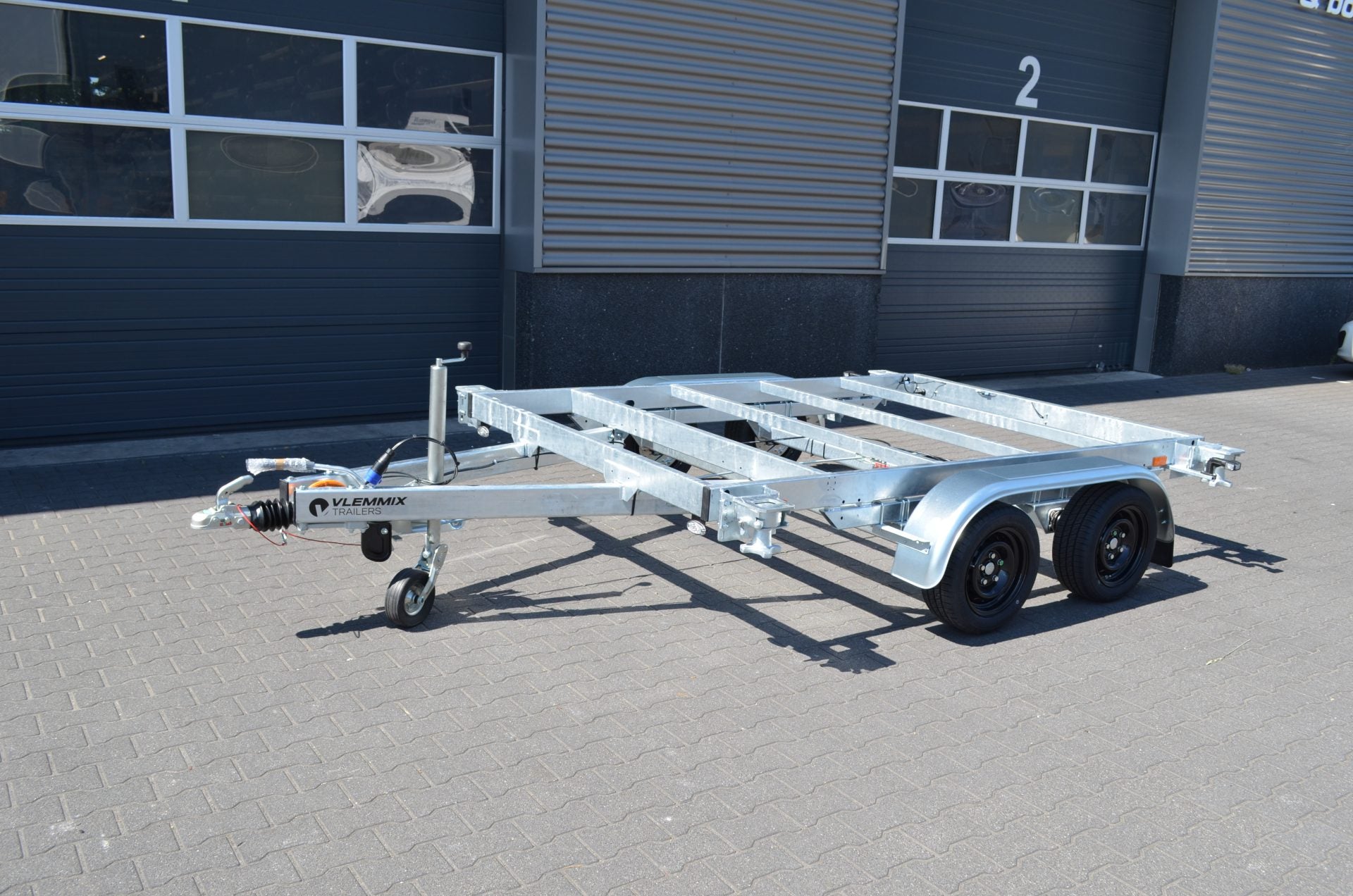
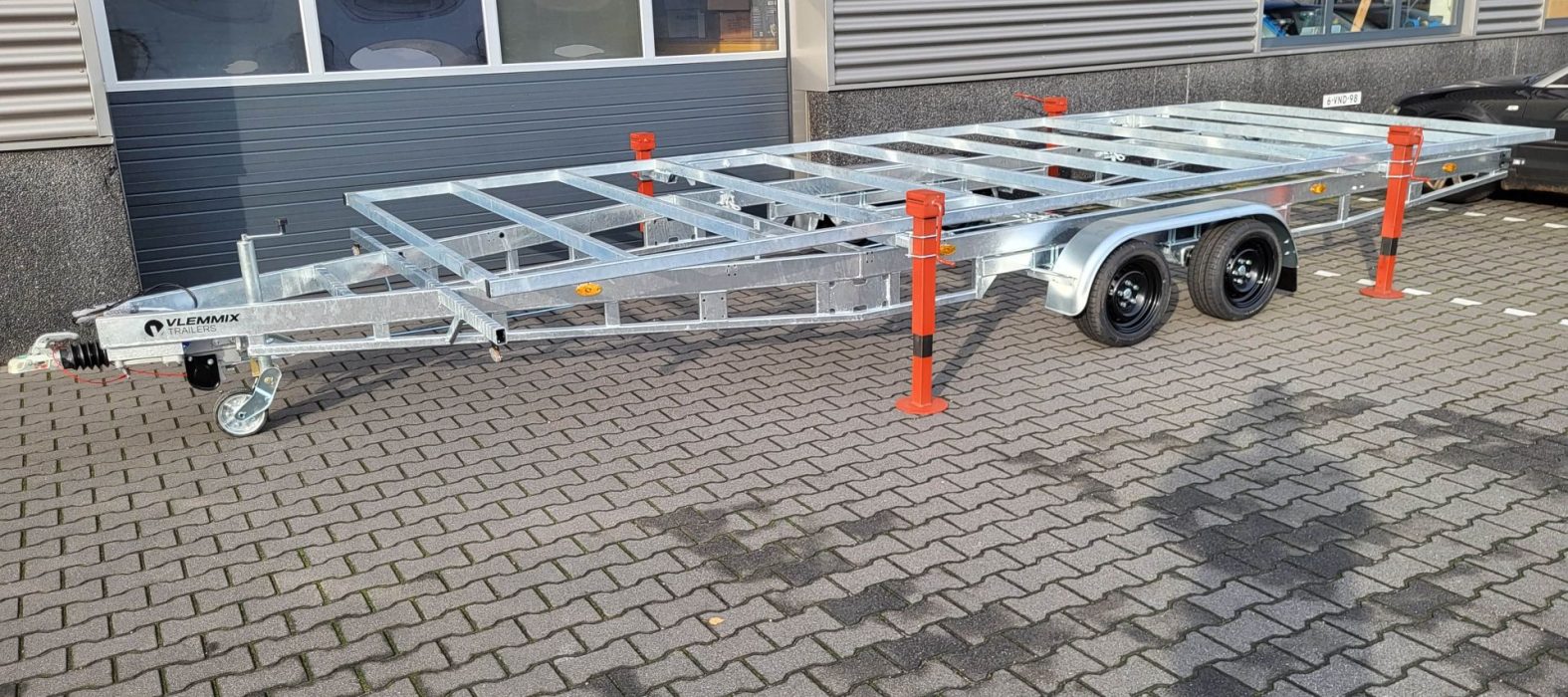
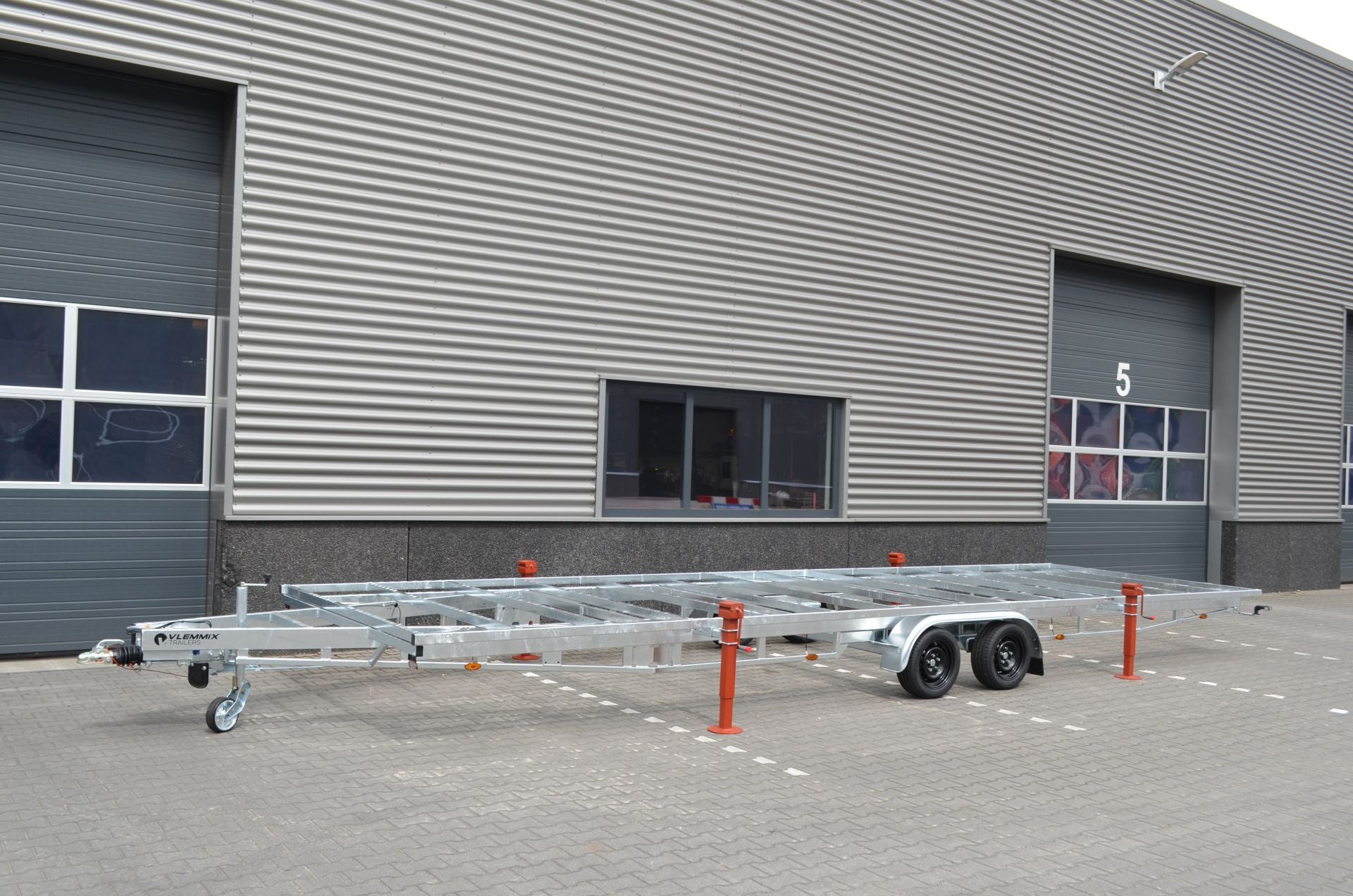
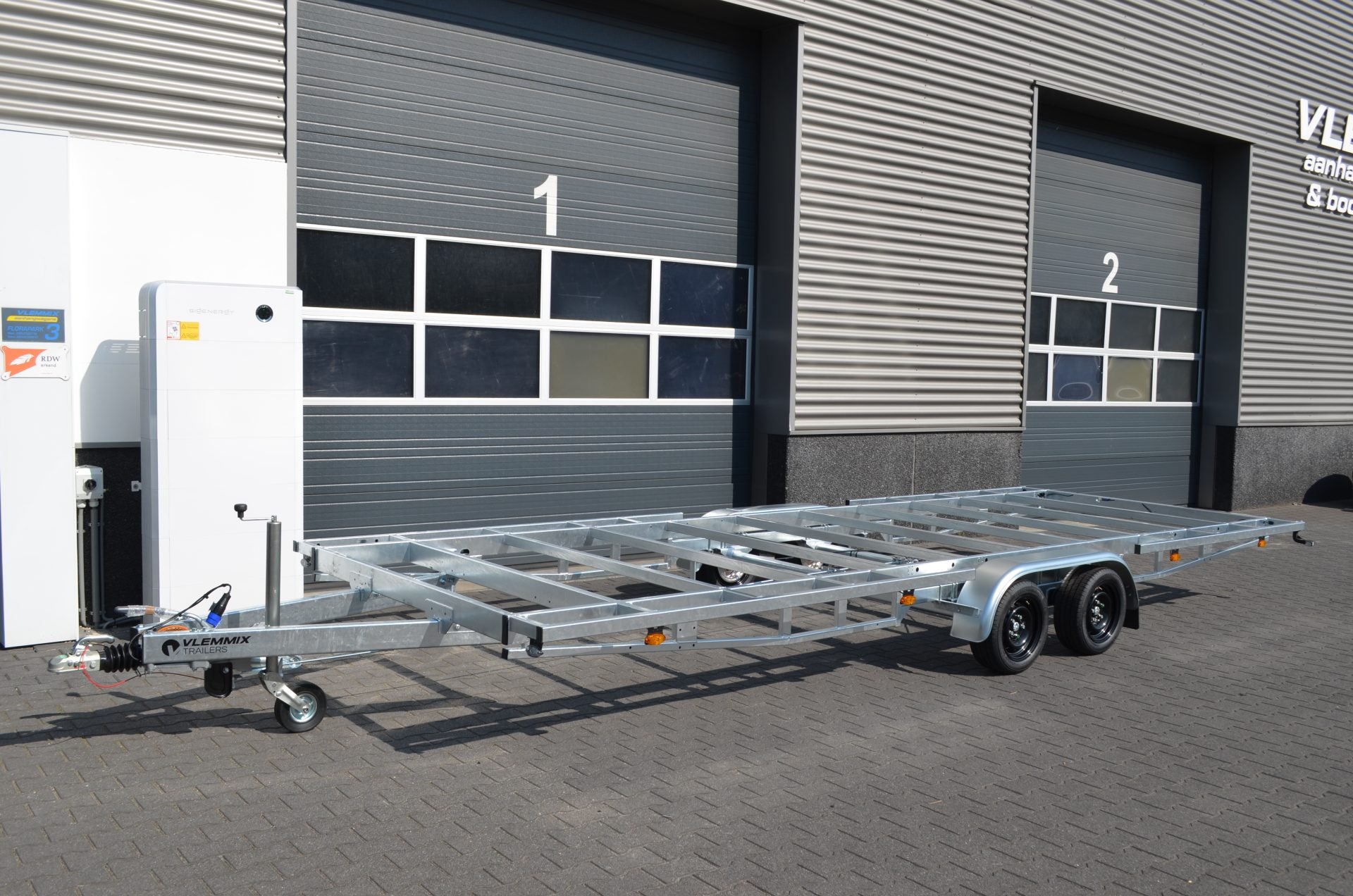
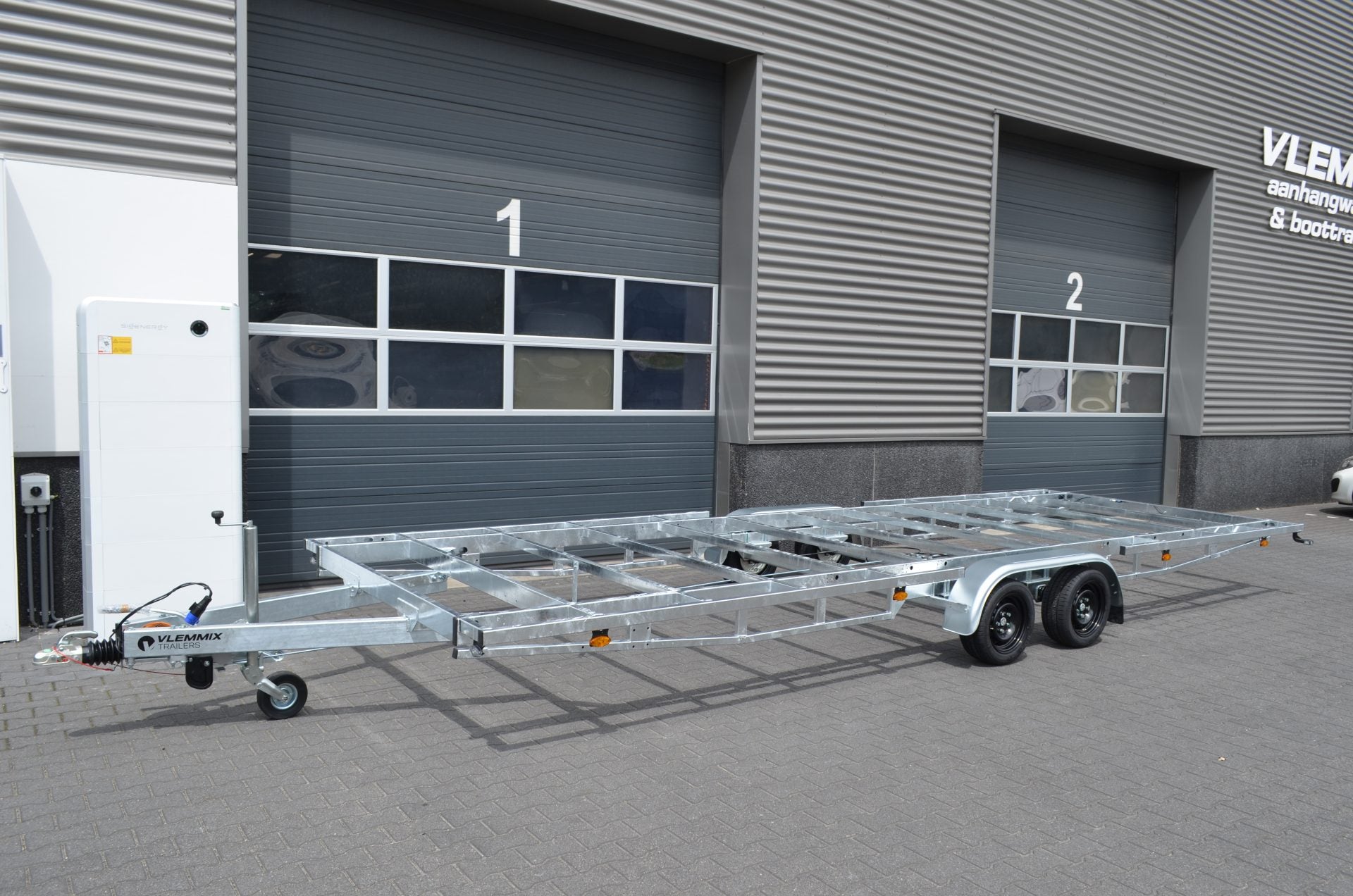
The business container travels anchored by twist locks to a 10-foot container trailer with a double axle and inertia brake. ISO anchors are non-negotiable: the interior equipment multiplies inertia during braking, and straps are not legal lashing for a two-ton box.
For commercial use, two extra factors are important. First, the trailer's tare weight: every kilo of chassis is subtracted from the equipment you can carry; 2 mm galvanized steel achieves lighter chassis with the same strength as oversized standard steel ones. Second, frequency: a business that rotates weekly needs agile twist locks and a chassis that can withstand hundreds of loading cycles.
If your format is different (sanitary module for events, site office), there is a specific category: trailers for transporting sanitary cabins follow the same logic with adapted anchors. And the complete range is available in container carriers.
Actual weight: weigh before equipping
The error that sinks projects: equipping the container and then discovering that the whole setup is not legal. A compact professional kitchen weighs 150-300 kg; a full 200-liter water tank, 200 kg; counter and shelves, another 150-250 kg; a generator, 50-150 kg. The complete equipment for a food container easily reaches 800-1,200 kg.
The legal calculation: container tare (1,300 kg) plus equipment (1,000 kg) plus trailer tare (700-800 kg) = 3,000-3,100 kg. Within the 3,500 kg PTAC, with little margin. Always travel with empty tanks: 400 liters of water are 400 kg that can be filled at the destination. The complete calculation method is in the guide on trailer dimensions and load.
Regarding the driving license, the known rule: up to 3,500 kg combined GVM, B is sufficient; the typical case with a large SUV requires B96 or B+E. An employee with a basic B license and a small car will not be able to move the business: keep this in mind when planning your team.
Business regulations: what goes beyond the trailer
Street vending requires municipal authorization from the market or event where you set up, and food handling requires health registration and equipment requirements (washable surfaces, hot water, temperatures). Each city council manages its markets: the space is requested, not occupied.
The rolling unit has its own list: a registered trailer with a red license plate (exceeds 750 kg GVM), its own insurance, periodic inspection, and technical data sheet on board. The complete documentation details are in the trailer's technical inspection card. The container, as cargo, does not require its own traffic documents.
Electricity and water are managed at the destination according to what each location offers: connection to the event's power point, a self-contained soundproof generator, or a lithium battery with solar panels on the module's roof. Serious events require a low-voltage electrical installation certificate for the module: order it when adapting, not the day before the fair.
Rotation patterns: from single event to full season
The mobile container business has three possible rhythms, and each requires different logistics. The purely itinerant (weekly markets, fairs) sets up and dismantles every few days: here the container lives permanently anchored to the trailer and only the counter is deployed at each location. Maximum agility, zero handling.
The seasonal (seasonal beach bar, Christmas booth) is installed once and operates for months. The unit arrives on a trailer, is stabilized with supports, and at the end of the season returns home in an afternoon, without cranes or hired transport. Between seasons, the container acts as storage.
Multi-location (two or three fixed points that rotate according to demand) is the most profitable pattern per invested capital: a single module covers the locations where the business operates at each time of year. The flexibility is paid for by the trailer once and enjoyed by the business every month. For fleets of more than one module, the complete range of cargo trailers allows for unified spare parts and maintenance.
Three reference setups to copy
Specialty coffee in a 10-foot container. Fold-down side window, 2-meter bar, two-group machine, grinder, small refrigerator, and 100-liter tank. Equipped weight: about 2,100 kg, well within the PTAC. Target weekly market turnover: that of a classic food truck with half the startup cost and double the visual presence.
Fashion or local product pop-up. Open-plan interior with rails, curtain changing room, LED battery lighting, and folding counter. It's the lightest setup (1,700-1,900 kg equipped) and the quickest to deploy: less than 45 minutes per location. It works for rotation at fairs and in collaborations with wineries and olive mills during their visiting campaigns.
Mobile workshop (bikes, sharpening, express repair). Bolted workbench, tool panel, small compressor, and soundproof generator. The weight increases (2,300-2,600 kg) and distribution matters: the workbench and compressor go centered over the axle, never at the door. This format has the least competition and the most loyal clientele of the three.
All three share the same logistical basis: a 10-foot container anchored to its trailer, a car with a legalized hitch, and a schedule of locations managed with the city council or organizer of each event.
Complete startup budget
| Item | Range |
|---|---|
| 10-foot container (new or used in good condition) | €900-2,500 |
| Adaptation (window, bar, insulation, electricity) | €3,000-8,000 |
| 10-foot container trailer | €3,000-5,000 |
| Equipment according to activity | €2,000-10,000 |
| Licenses, registration, and business insurance | €500-1,500 |
The realistic total ranges from 9,500 to 27,000 euros depending on ambition, compared to 30,000-80,000 euros for an equivalent fixed premises. And with a structural difference that no fixed premises offers: if the location doesn't work, the business moves the following week; if the project closes, the container and trailer retain high resale value, and the loss is limited to specific equipment.
Before buying each piece, apply the usual filter: the 12 questions on the checklist before buying a trailer and, for ideas of formats that already work, the creative uses of shipping containers.
The trailers in the range are delivered homologated, with complete documentation, hot-dip galvanized chassis, and a 2-year warranty, purchased directly without intermediaries. Arnaud will size the setup for your exact container and equipment: inquire without obligation.
Frequently Asked Questions
What trailer do I need for a container food truck?
A 10-foot container trailer with ISO twist locks, a double axle with inertia brake, and a PTAC of 3,500 kg. The equipped container (2,000-2,900 kg) travels anchored at all four corners. Generic platforms with straps are not legal lashing for this weight.
Can I move an equipped 20-foot container as a business?
Not behind a car: the tare weight of a 20-foot container plus equipment exceeds the legal payload of any 3,500 kg PTAC trailer. This format is transported by crane truck (300-600 euros per move), which limits it to semi-fixed seasonal locations.
How much does it cost to set up a mobile container business?
Between 9,500 and 27,000 euros fully equipped: 10-foot container (900-2,500), adaptation (3,000-8,000), approved trailer (3,000-5,000), equipment (2,000-10,000), and licenses and insurance (500-1,500). An equivalent fixed premises starts at 30,000-80,000 euros.
What driving license is required to move the business?
It depends on the combined GVM of the car and trailer. Up to 3,500 kg combined, a B license is sufficient; the usual case with a large SUV and a 3,500 kg PTAC trailer requires a B96 or B+E license. Plan which team member has the license before finalizing the event calendar.
What permits does the business need at each location?
Street vending authorization from the city council or event organizer, health registration if you handle food, and an electrical certificate for the module to connect at fairs. The rolling unit adds the trailer's registration, its own insurance, and up-to-date inspection.
Should I travel with full water tanks?
No. Water weighs one kilo per liter: 300 liters are 300 kg that consume your payload margin and destabilize the unit. Travel with empty tanks and fill them at the destination, at the event's water point or with jerry cans. The same rule applies to ice and heavy inventory.
How long does it take to set up and dismantle at each location?
With the container permanently anchored to the trailer, typical deployment takes less than an hour: stabilizers, opening the window or counter, electrical connection, and it's ready. Dismantling is even faster. This is the key difference compared to a grounded container, which requires a crane for every move.
Does a container on a trailer require a building permit at each location?
No: as it remains on a registered vehicle without being fixed to the ground, it operates as a mobile installation with the corresponding market or event authorization. If the module is placed on the ground and stays for weeks, some city councils already treat it as a temporary installation with its own process.
Is it better to buy an already adapted container or adapt it myself?
A turnkey module saves months but costs 30-60% more than the sum of the container and adaptation separately. If your activity has sanitary requirements (food), a specialized adapter with experience in health registration justifies the extra cost; for retail or a workshop, local adaptation with a metalworker and electrician is considerably cheaper and provides the same functional result.
What insurance does a mobile business need?
Three distinct policies: the trailer's (mandatory for exceeding 750 kg GVM), the business's civil liability towards customers (required by markets and events, usually with 300,000-600,000 euros coverage), and, advisable, content and equipment insurance for the module. None of the three covers the others.