
A used 20-foot container costs between 1,200 and 2,500 euros. The urban planning penalty for installing it without a license on rural land can be ten times that amount, in addition to the order to remove it. Thousands of owners discover this too late, with the container already in place. This guide outlines what the regulations say, what risks you face, and the detail almost no one mentions: how to get it to the plot and what changes if it remains mobile.
Prior notice: urban planning jurisdiction is municipal and regional, and criteria vary greatly between territories and even between technicians within the same local council. What follows is general verified guidance, not legal advice for your specific case. Always consult your local council before installing anything.
TL;DR
- Installing a fixed container on rural land requires a license or responsible declaration in almost all municipalities, even for tool sheds.
- Without a license, you risk an urban planning file: a fine, an order to remove it, and land restoration. The amounts depend on each regional regulation.
- The most common permissible use in rural areas is related to agricultural exploitation (tool shed); housing is the most restricted.
- A container that remains on a registered trailer better retains its status as a mobile element, although the final criterion is up to each local council.
- Getting it to the plot: crane truck (150-600 euros per trip) or your own trailer if the container is 10 feet or empty (20 feet).
Direct Answer: You almost always need permission, even in rural areas
Popular belief, repeated in forums and by some container sellers, says that in the countryside you can put "something provisional" without asking anyone's permission and without consequences. Administrative practice in recent years shows the opposite, with increasing inspections. The regulations state that placing a container on land is an act of land use, and as such requires an enabling title (minor works license, responsible declaration, or authorization depending on the municipality and use).
The type of land does not exempt you from the procedure: what it does is condition which uses are authorized. In common rural areas, use linked to agricultural activity usually fits; in protected rural areas, almost nothing does. And duration matters: a "provisional" installation that has been in the same place for three years is, in the inspector's eyes, a consolidated construction without a license.
What you can install depending on the use
Tool shed linked to agricultural exploitation: the case with the best fit. Many local councils allow it with a responsible declaration and conditions on size, setbacks, and aesthetics. Some require proof of actual agricultural activity, meaning the recreational plot does not always qualify.
Warehouse or auxiliary use without agricultural activity: a gray area. Depends on municipal planning; in many cases, it is denied or limited to temporary removable installations. Housing or habitual occupation: the most restricted case. Converting the container into a dwelling in a rural area runs into the general prohibition of new residential uses on that land, except for regulated exceptions.
The consequences of skipping the procedure follow a pattern: complaint (often from a neighbor or SEPRONA), legality restoration file, fine, and removal order. If the installation is not legalizable, removal is mandatory even if you pay the fine.
The card few play: keeping the container mobile
Here is the nuance that separates two distinct legal situations. A container settled on the ground (on a slab, with anchors, or simply placed for years at the same spot) is analyzed as an installation or construction. A container that remains on a registered trailer, moves regularly, and is not intended for permanence looks much more like a parked vehicle with its load.
This criterion is not a carte blanche: there are local councils that accept it and others that equally pursue the "parked vehicle" that never moves. But for truly temporary uses (agricultural campaign, event, short-term work), real mobility substantially reduces urban planning risk and makes it easier to remove the container within hours if a request arrives.
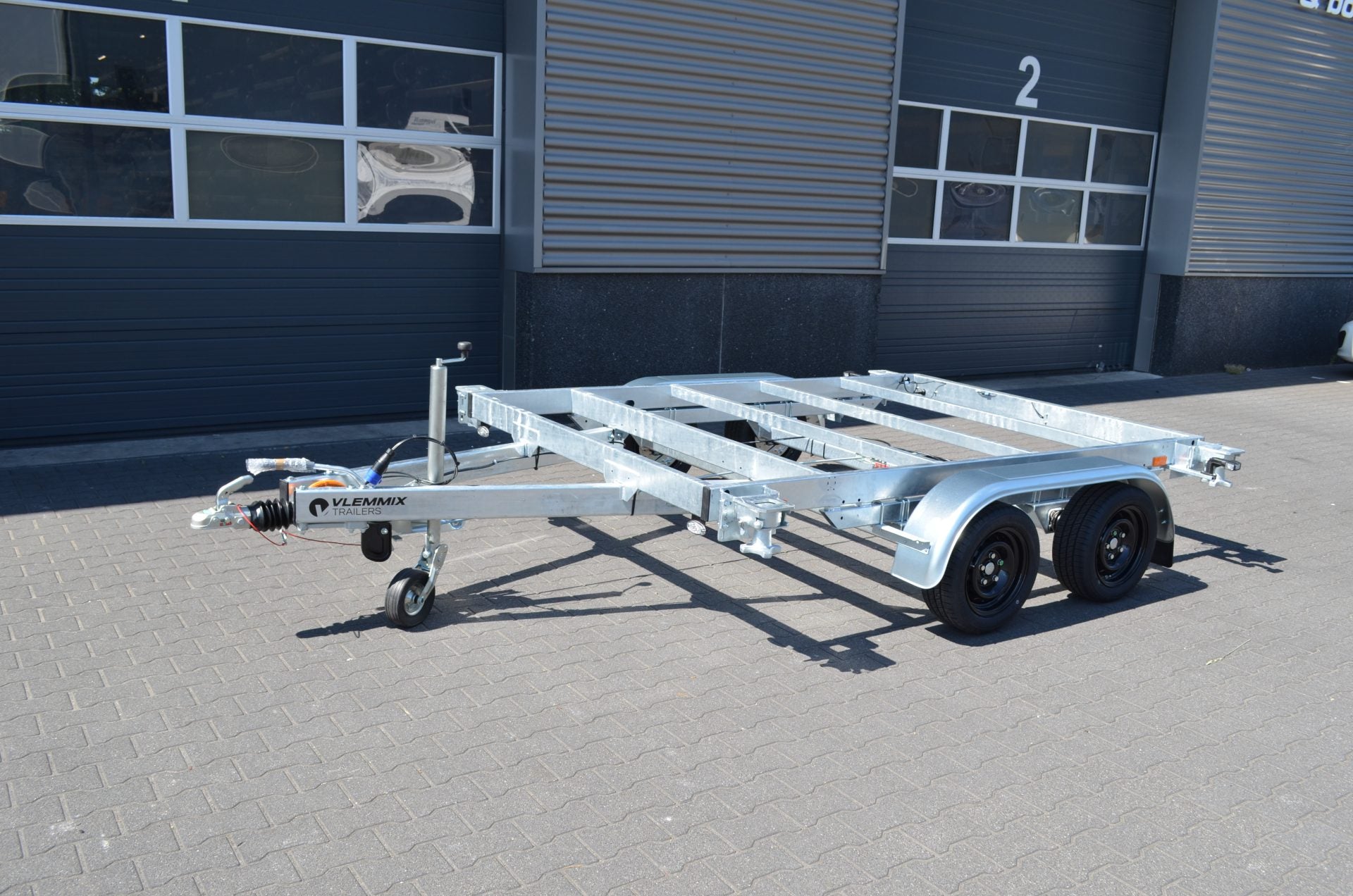
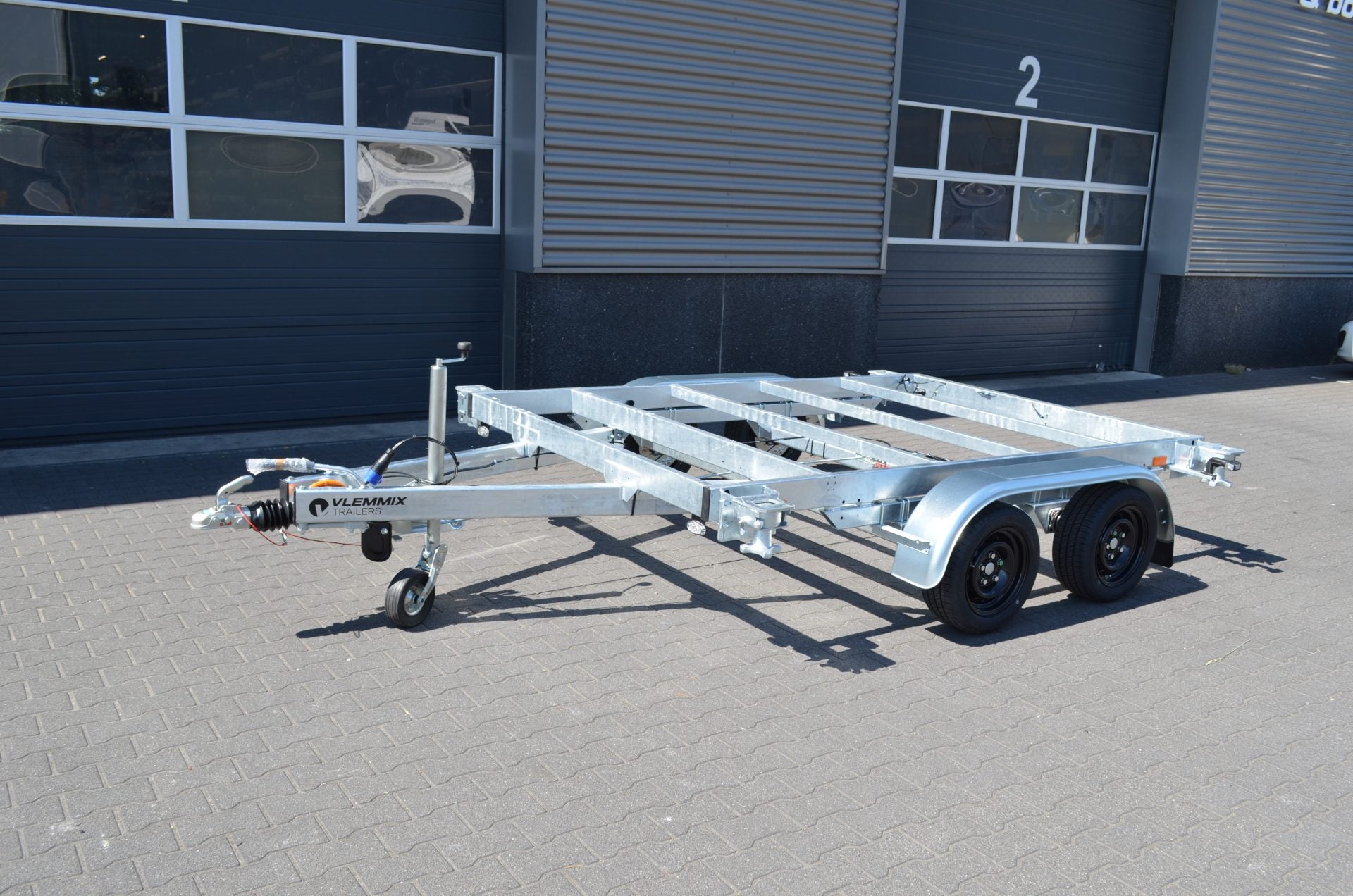
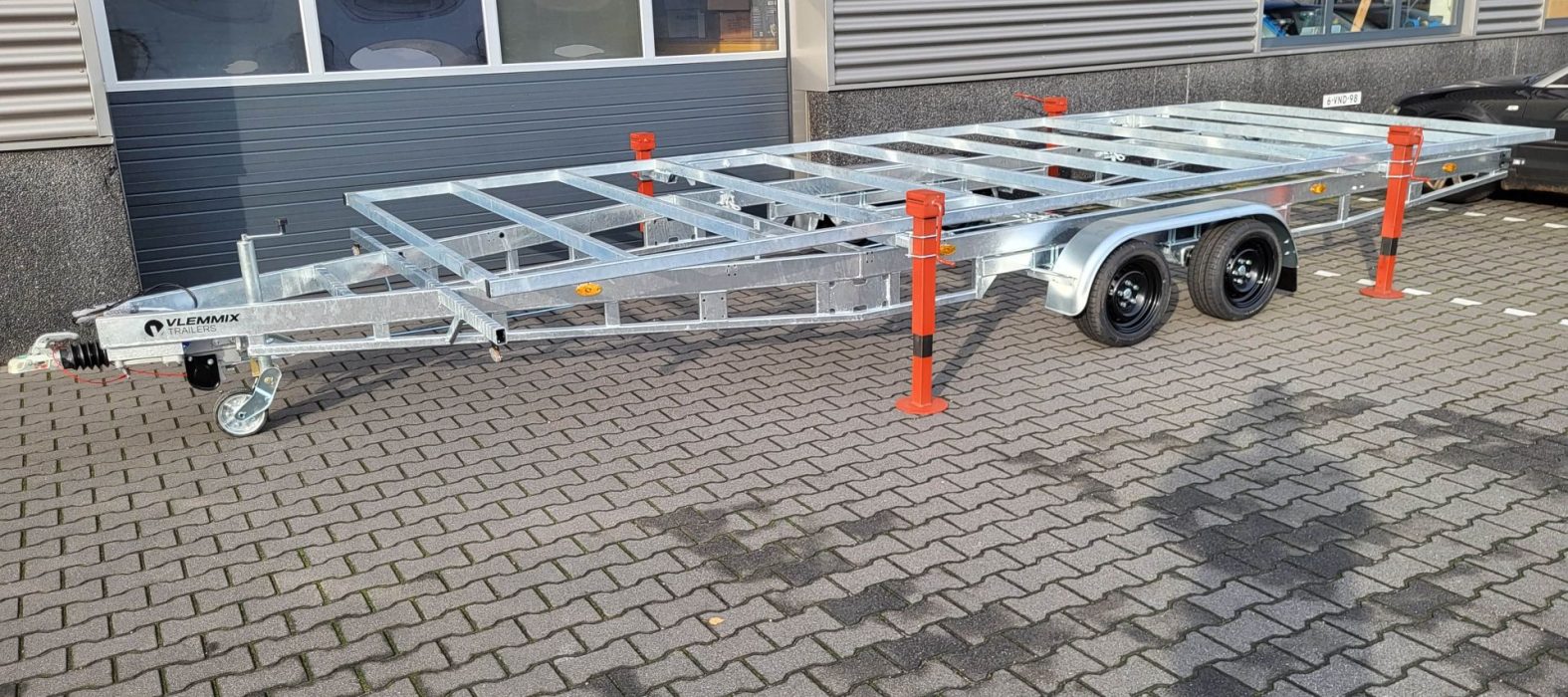
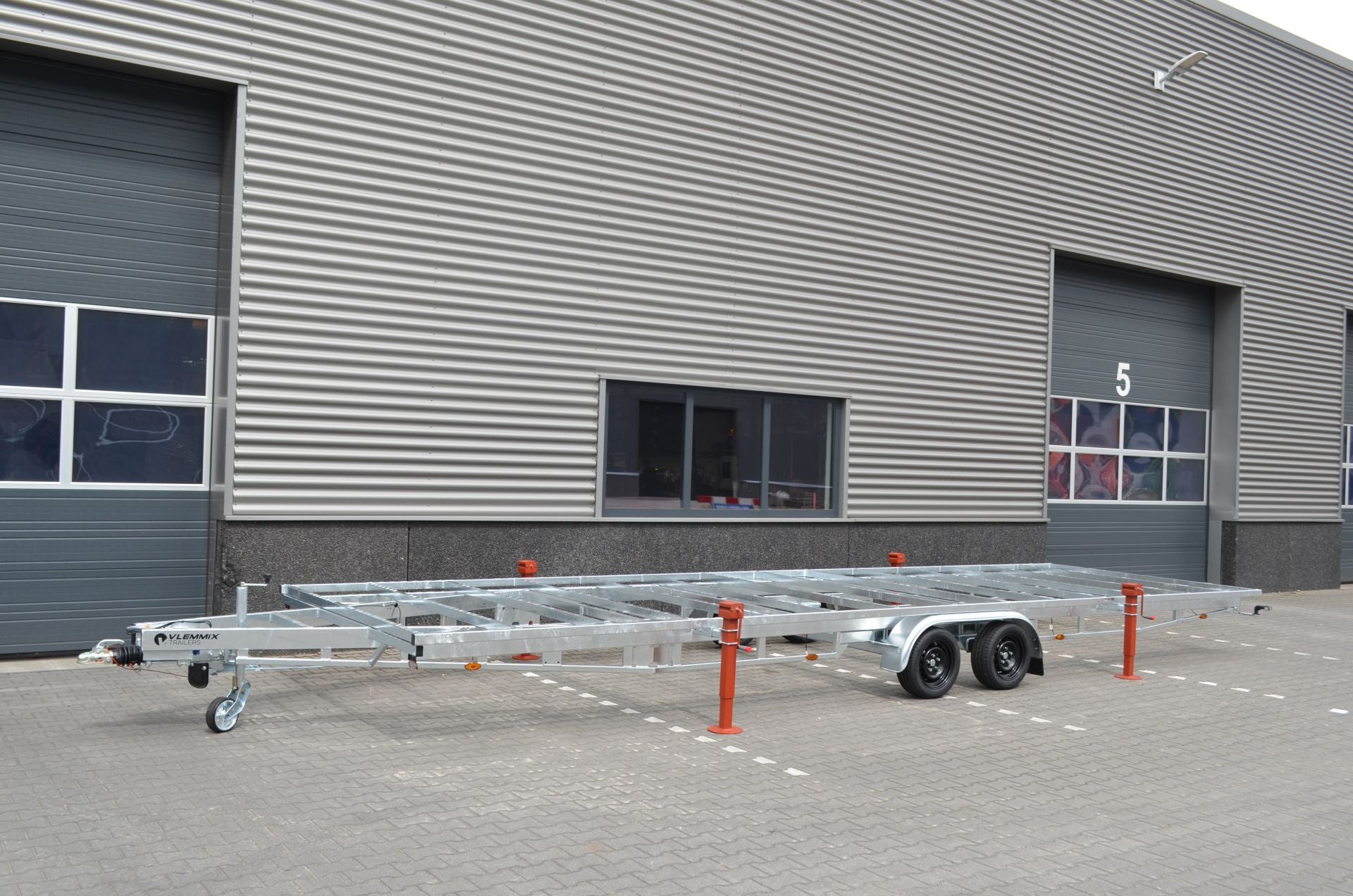
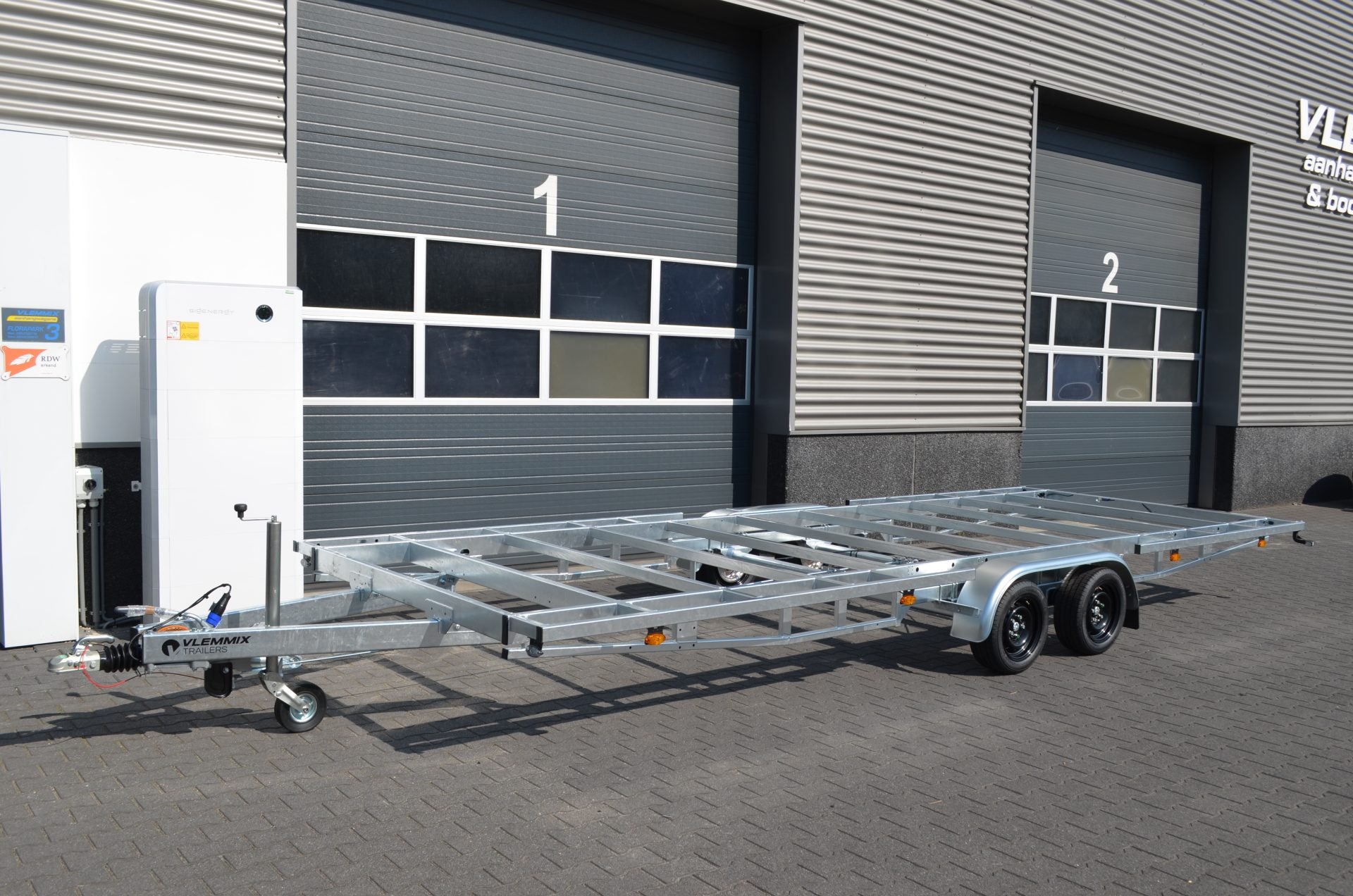
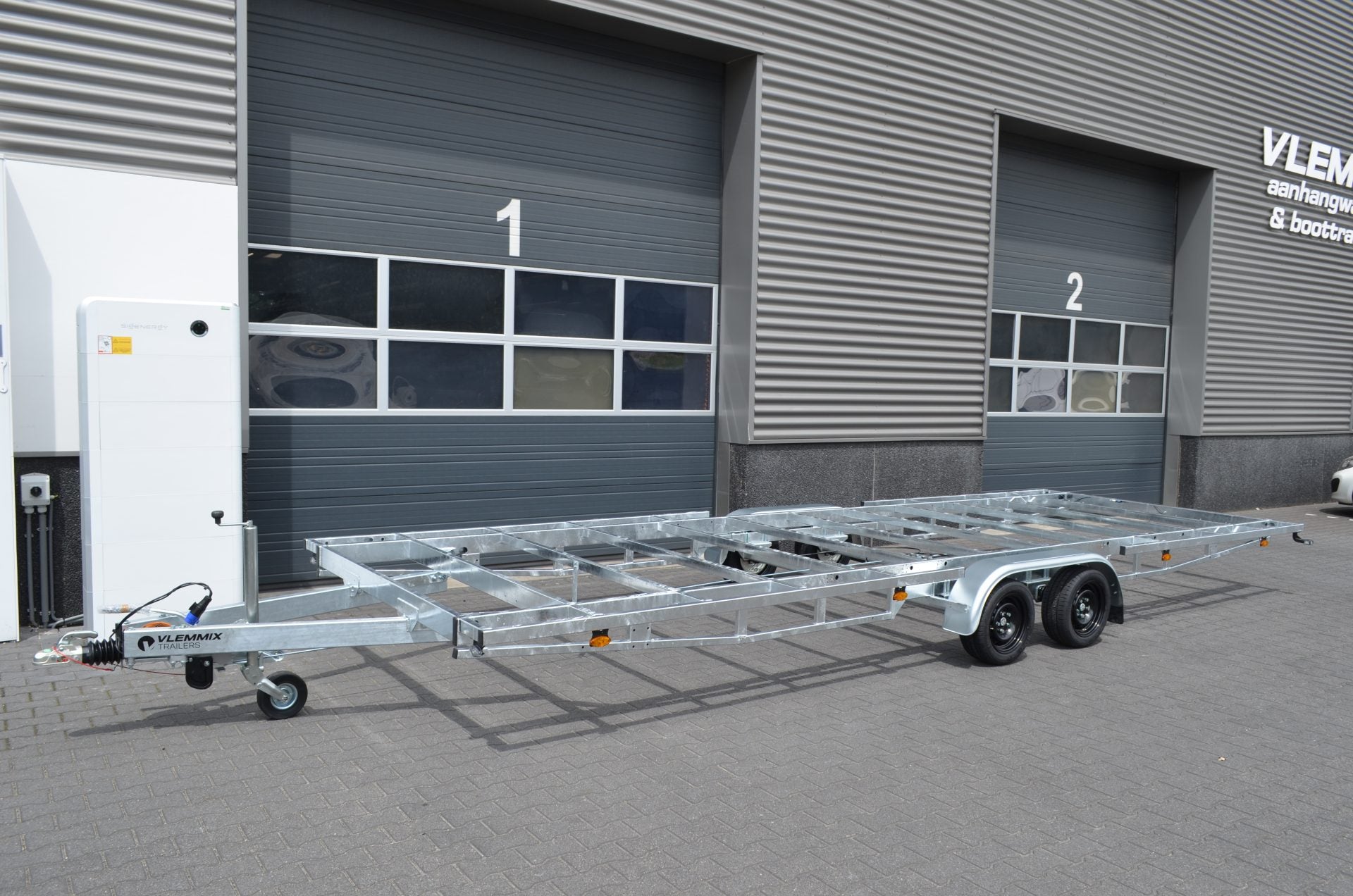
The logistics of this approach involve a container trailer with twist locks, on which the container lives anchored and ready to move. For a 10-foot container, the unit can be moved with a medium SUV; options are available in 10-foot container trailers.
How to get the container to the plot
Transportation is the chapter that container sellers dismiss in one line and that causes the most scares. Three factors condition it: the size of the container, actual access to the property, and how many times it will be moved later.
With a crane truck, the standard transport costs 150 to 600 euros depending on the distance, plus surcharges if the truck cannot get close to the unloading point. This is where many deliveries fail: narrow roads, tight turns, soft ground after rain, and low power lines prevent the crane's maneuver, and the container is left 200 meters from its intended spot.
Having your own trailer solves the access problem: a car-trailer combination can go where a long car can go and turn where a three-axle truck wouldn't even try. A full 10-foot container or an empty 20-foot container can be legally transported with a 3,500 kg maximum authorized mass and the appropriate driver's license. Before the first trip, check the vehicle on the list of the best cars for towing a trailer in Spain.
Unloading without a crane has its methods (container jacks, rented telescopic handler) and its stowing technique. The weight distribution on the trailer follows the rules of any load: you can find them in how to load a trailer correctly.
Total operation cost
| Concept | Estimated range |
|---|---|
| Used 20-foot container | 1,200-2,500 € |
| Used 10-foot container | 900-2,000 € |
| Transport with crane truck | 150-600 € per movement |
| New container trailer | 3,000-6,000 € (one-time payment) |
| License/responsible declaration | 50-500 € depending on municipality |
| Technical project (if required) | 300-1,500 € |
Two interpretations of the table. First: doing the paperwork correctly costs a fraction of the fine for not doing it. Second: if the container is going to be moved more than once (campaigns, events, changing plots), owning a trailer pays for itself compared to contracted transport and also reinforces the mobile nature of the installation.
Rural use cases that work (and their logistics)
Agricultural campaign warehouse: the container arrives before the harvest and is removed at the end. Use linked to activity, real temporality, and clean urban planning fit in most municipalities. With the container on a trailer, setup and removal are a matter of hours.
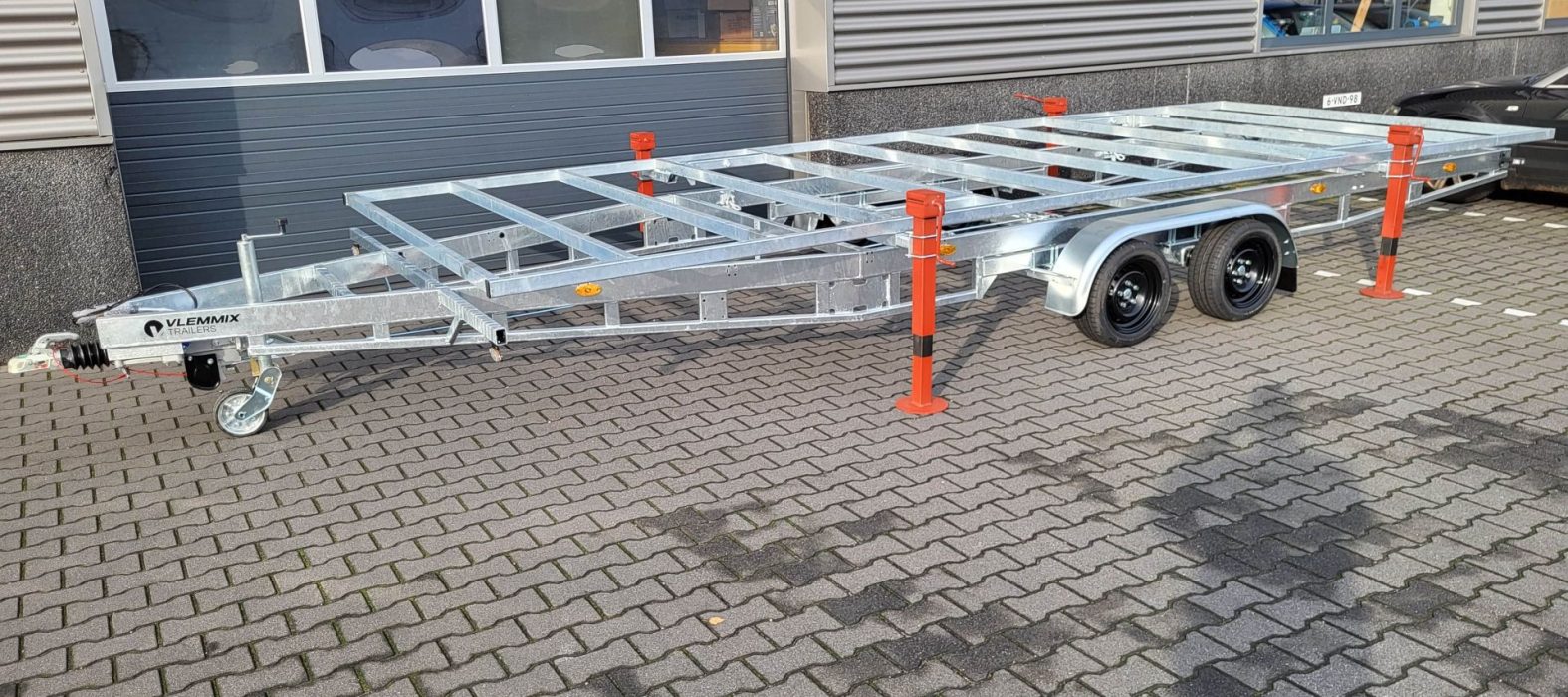
Workshop or construction site hut: the module accompanies the work with its license and disappears with it. Here, the 20-foot container trailer makes sense when the module travels empty between jobs and is equipped at its destination, because the 20-foot offers double the usable area of the 10-foot.
Seasonal sales or tasting point: the winery or olive oil mill that receives visitors three months a year does not need to build. The labeled container is installed during the campaign with its temporary authorization and the rest of the year it works as a warehouse on another plot. The rotation between uses is exactly what the trailer-container combination makes cheap.
In all three cases, the measure of success is the same: proper temporary use permits, zero associated construction, and the real ability to remove the module within the day. Also, pay attention to the transported volume: a container at the limit of the gauge has its rules, summarized in how much a trailer load can overhang.
The script for consulting the local council
Before buying anything, a morning in urban planning saves the entire process. Bring the cadastral reference of the plot and ask four specific questions. One: what exact classification does the land have (common rural or protected, and what protection). Two: what enabling title does the municipality require for a removable agricultural installation, license or responsible declaration, and with what conditions of surface area and setbacks.
Three: if there is a specific ordinance on containers or prefabricated installations, because several municipalities have approved them after the wave of container homes. Four: what criteria they apply to a container that remains on a registered trailer without associated construction. Ask for the answer in writing or officially recorded: documented prior consultation is your best defense against a subsequent change of criteria.
With these four answers, the decision makes itself: fixed installation with its procedure, mobile installation on a trailer, or another plot in another municipality where the fit is clean.
Mistakes that lead to disciplinary action
The first is to trust the container seller about permits. Their business is to sell the box; the urban planning file comes to your name, not theirs. Consulting the local council takes one morning and avoids the most expensive mistake of the entire operation.
The second is to build around it: concrete slab, porch, new fence. Each added element consolidates the installation and complicates defending its temporary nature. If your strategy is mobility, the container must remain a load on a vehicle, without associated construction.
The third is a visible location from the public road with different days' registration. Urban complaints arise from visibility. Common sense: discreet location, actual compliance with the declared use, and up-to-date trailer documentation.
For inspiration on what does work (campaign warehouse, mobile workshop, seasonal sales point), review the creative uses of shipping containers. And for equipment, the range of cargo trailers includes container trailers with galvanized chassis, 2mm steel, and a 2-year warranty. Arnaud advises you on the exact setup: consult without obligation.
Frequently asked questions
Can a shipping container be placed on rural land?
It depends on the municipality, the type of rural land, and the use. The most common fit is a tool shed linked to agricultural activity, with a license or responsible declaration. In protected land or for housing use, the general rule is denial. Always consult your local council.
What is the fine for placing a container without permission?
There is no single figure: each regional regulation sets its ranges and they are usually calculated based on the value of what is installed, with minimums that easily exceed the price of the container. In addition to the fine, there is an order to remove it and restore the land, which can be executed subsidiarily.
Does a container on a trailer count as a construction?
This is a gray area. A container anchored or permanently placed is treated as an installation. One that remains on a registered trailer, with real movements and no associated construction, better defends its status as a vehicle with cargo. The final criterion is up to the local council and varies between municipalities.
How do I transport a container to a property without truck access?
With a car-trailer combination: it fits on roads where a crane truck cannot maneuver. A 10-foot container travels fully loaded and a 20-foot container travels empty, on a container trailer with twist locks and a 3,500 kg maximum authorized mass. Unloading is done with container jacks or a rented telescopic handler for a few hours.
Do I also need a license for a temporary container?
Strictly speaking, most ordinances require an enabling title even for temporary installations, although the process may be lighter (responsible declaration, seasonal authorization). True temporality, with dates and effective removal, is also your best defense if there is an inspection.
Which container is suitable for a property, 10 or 20 feet?
For tools and storage on an average plot, a 10-foot container is usually sufficient: 7 m² of usable space, transported fully loaded with an SUV and trailer, and more inconspicuous. A 20-foot container doubles the surface area but only travels empty behind a car and requires a truck if loaded.
How long does it take for a local council to grant a license?
The responsible declaration enables use from its submission in municipalities that accept it for this purpose. A minor works license takes weeks to several months depending on the local council. Submit a prior written consultation: the response serves as a reference if there are discrepancies later.
Can I connect electricity and water to a container in a rural area?
Connections consolidate the installation and usually require their own authorization, in addition to indicating permanence. For temporary uses, the solution consistent with mobility is autonomous: solar panels with a battery, a water tank, and, if necessary, a generator. No trenches or construction.
What if I already have the container installed without permission?
Do not consolidate it further: any added construction worsens the file if it arrives. There are two reasonable options. Legalize it, if the use is authorized on your land: consult and process as soon as possible, because time is against you. Or regain real mobility by placing it on a trailer and using it effectively temporarily. A local urban planner will tell you which is appropriate in your municipality in a brief consultation, and it's money well spent.