
Storing a boat in Spain costs between €0 and €4,500 a year depending on the option you choose, for the same length and the same use. It is the most important financial decision in boat ownership and the one people compare least: most owners inherit whatever their marina offers without looking at the other five. Here are all six, with indicative prices, real hull protection and the profile each one suits.
TL;DR
- Wet berth: €1,800-€4,500 a year for 6-8 metres. The most convenient option for daily sailing and the worst one for the hull.
- Dry stack marina: €900-€4,800 a year. It protects the hull, but it is still rental and it depends on launching schedules.
- Outdoor boat park: €350-€800 a year. Cheap, no services: you need your own trailer.
- Your own garage or plot: no recurring cost. It requires a trailer or a cradle and a trailerable length.
- Cradle on a hardstanding or at a yard: the long-stay and maintenance option, with full support of the hull.
- Quick rule: below 7-8 metres, keeping the boat in dry storage at home saves €2,000-€4,000 a year compared with the marina.
The table that settles the decision
| Option | Annual cost (6-8 m) | Hull protection | What you need |
|---|---|---|---|
| Wet berth | €1,800-€4,500 | Low: osmosis and fouling | Nothing extra |
| Dry stack marina | €900-€4,800 | High | Nothing extra |
| Outdoor boat park | €350-€800 | Medium (exposed to the weather) | Your own trailer |
| Your own garage | €0 | Maximum (under cover) | Trailer and space |
| Plot or garden | €0 | Medium-high with a cover | Trailer or cradle |
| Cradle on a hardstanding | €0-€400 | High | Cradle and initial transport |
The ranges come from published rates at Spanish ports and marinas: the high-demand Mediterranean sets the upper figures, and the Atlantic and inland ports the lower ones. The decisive column is the third: water works against the hull all year round, and dry options reverse that equation.
Option 1: a wet berth, convenience you pay for twice

A berth is unbeatable in one scenario only: you go out several times a week and the boat is longer than trailerable. You arrive, start up and leave. That convenience costs you the berthing fee (around €4,000 a year for 8 metres on average in Spain) and a second, silent bill: annual antifouling, anodes, fouling and the osmosis that creeps in over years afloat.
Add the waiting lists at the good marinas and the annual rate rises. The berth is most people's default option, and it is the right one for a minority: those who sail a lot, with a large boat, close to home. Everyone else pays for convenience they do not use. The full breakdown of that bill is in how much it costs to own a motorboat in Spain.
Option 2: dry stack, the middle ground with small print

A dry stack marina keeps the boat ashore, racked or on a hardstanding inside the port, and launches it with a travel lift when you give notice. The hull stays dry (goodbye to most of the antifouling) and the fee is lower than a berth at many lengths: from €75-€150 a month for small boats up to €400-€800 for larger ones at premium marinas.
The small print is the schedule and the dependency: launches by appointment, queues in August, and the boat 40 minutes from home. It is still a permanent rental that builds no asset. It works well for boats of 8-12 metres that cannot be trailered and whose owner sails two or three times a month.
Option 3: outdoor boat park, savings with conditions

Caravan and boat parks charge €30-€70 a month for a guarded outdoor space. It is the cheap option for anyone without a plot: the boat waits on its trailer, ready to hitch up and go any day of the year, with no appointment and no travel lift.
The conditions: you need your own type-approved trailer, the boat is left out in the open (a breathable cover is essential) and security varies a great deal from site to site. Ask about cameras, site insurance and 24-hour access before you sign. With those guarantees, it is the best cost-to-flexibility ratio for the weekend boater with no space at home.
Option 4: your own garage, zero cost and maximum protection
If the boat and trailer together fit in your garage, the financial argument is over: no recurring cost, full protection under cover and the boat ten metres from your morning coffee. A standard parking space takes boats of up to 4-4.5 metres with a folding drawbar; double garages or small units comfortably handle lengths of 6-7 metres.
The requirement is the kit: a properly sized trailer and practised manoeuvring. Reversing the outfit into a tight space is a skill, and how the boat sits on the trailer matters as much as it does on the road: we explain it in our guide to positioning the boat correctly on the trailer.
Option 5: a plot or garden, the rural owner's solution
With your own land, the boat lives on a trailer or cradle next to the house. Zero cost, immediate access and high protection if you add a cover or a light canopy. It is the standard model across half of boating Europe and the fastest-growing one in Spain among owners of trailerable boats.
Two warnings. The first is legal: inside your own plot there is no problem, but parking the outfit on the street has its own rules, summarised in is it legal to park a boat on a trailer in the street?. The second is technical: for stays of several months it is worth taking the load off the trailer tyres with supports, or moving the boat onto a cradle.
Option 6: a cradle on a hardstanding, at a yard or for long stays

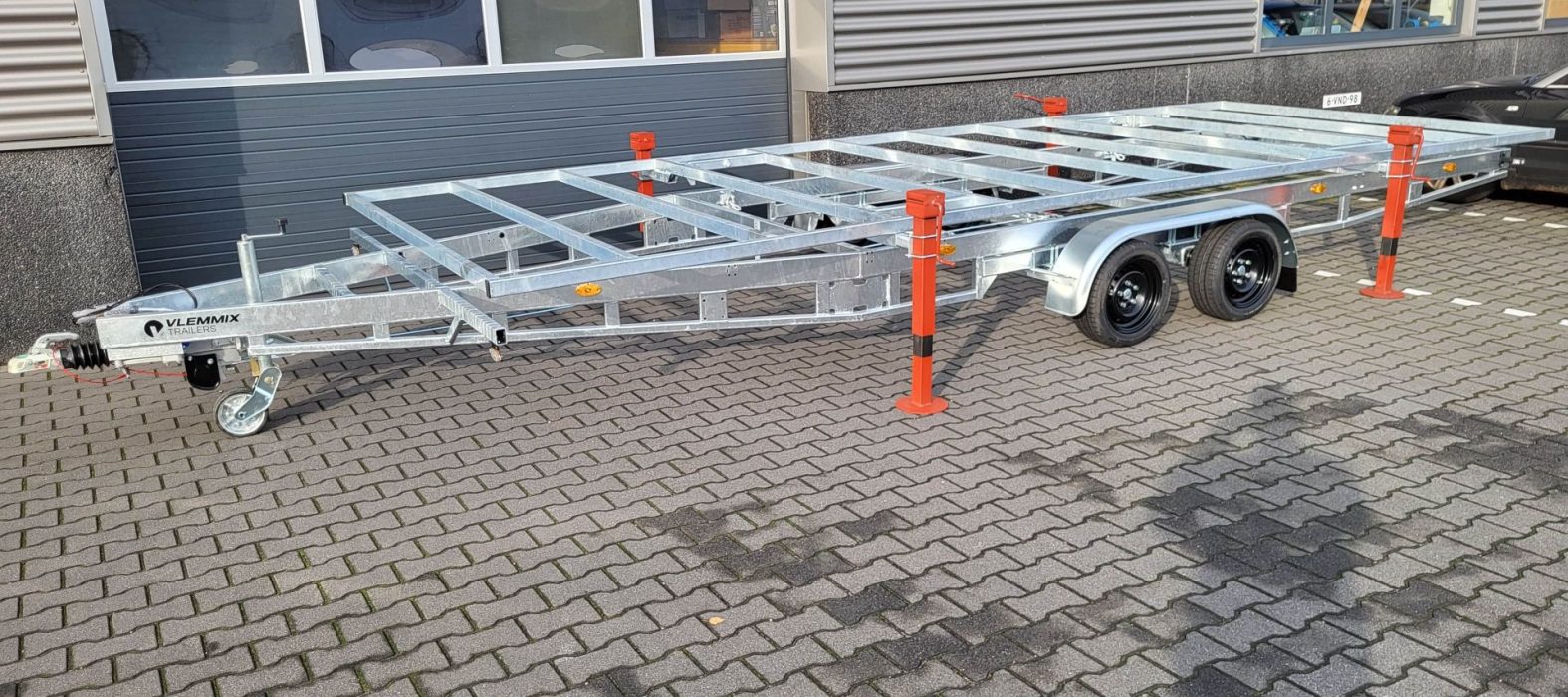
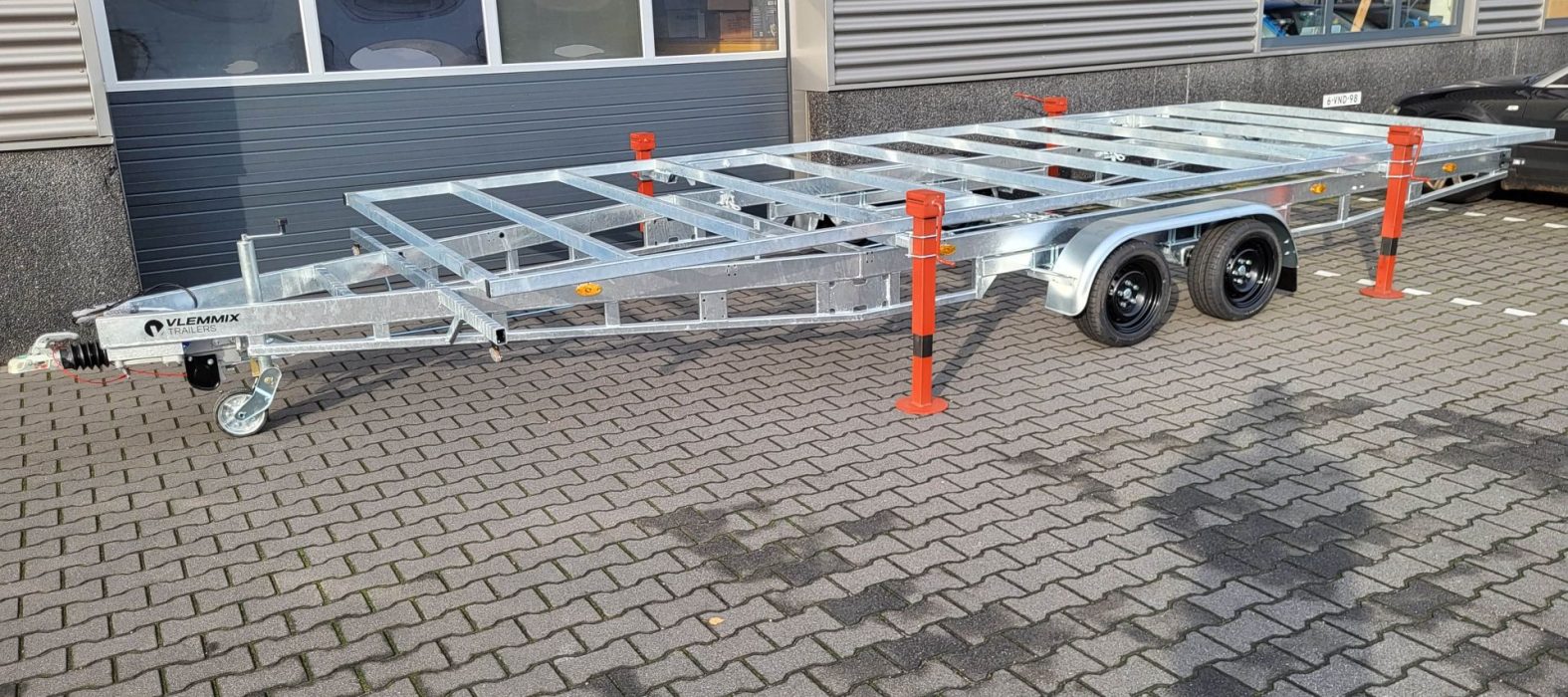
The cradle is the boatyard system: full support of the hull on a fixed structure, no wheels, with the boat perfectly ventilated. For long winter storage, repairs or boats that only sail in summer, it is the best possible support for the hull and the cheapest in the long run.
Galvanised boat cradles with adjustable stands cover lengths from 4 to 10 metres and let you work under the boat safely. The winning combination for the dry-storage owner is a pair: a cradle for the long stay and a storage trailer to move the boat when you need to, with no cranes and no appointments.
What each option does to the hull (and to resale value)
Your storage choice shows up in the valuation years later. The boat that is always afloat comes to market with a history of annual antifouling, spent anodes and, often, high moisture readings in the underwater hull: an informed buyer knocks thousands of euros off for that history. The boat kept in dry storage shows live gelcoat and a dry bilge, and it sells faster and for more.
There are nuances among the dry options too. Exposure punishes upholstery, plastics and covers (all replaceable); a roof avoids it. And support matters: years on badly distributed stands leave distortions that an expert eye spots against the light. A well-set cradle and a trailer with wide bunks keep the hull geometry intact.
The surveyor's conclusion fits in one sentence: the money you do not spend at the marina, you collect on resale. That is the double gain of dry storage that almost nobody mentions when comparing monthly rates alone.
How to decide in three questions
First: is your boat trailerable? Below 7-8 metres and 2,500 kg, yes, with a capable car. If it is, your own dry-storage options save €2,000-€4,000 a year compared with the marina and protect the hull better. If it is not, the decision is between a wet berth and a dry stack.
Second: how many times a month do you go out? More than eight trips a month justifies a berth on convenience alone. Between two and six, dry storage with a trailer gives you the same outings for a fraction of the cost. Fewer than two, and any paid option is money thrown away compared with a cradle at home.
Third: what is happening to the hull? If your boat has spent years afloat, check the underwater hull before renewing the berth: gelcoat moisture can be measured and the diagnosis changes decisions. The full guide is in osmosis in the hull: how to detect, treat and prevent it.
The kit for switching to dry storage
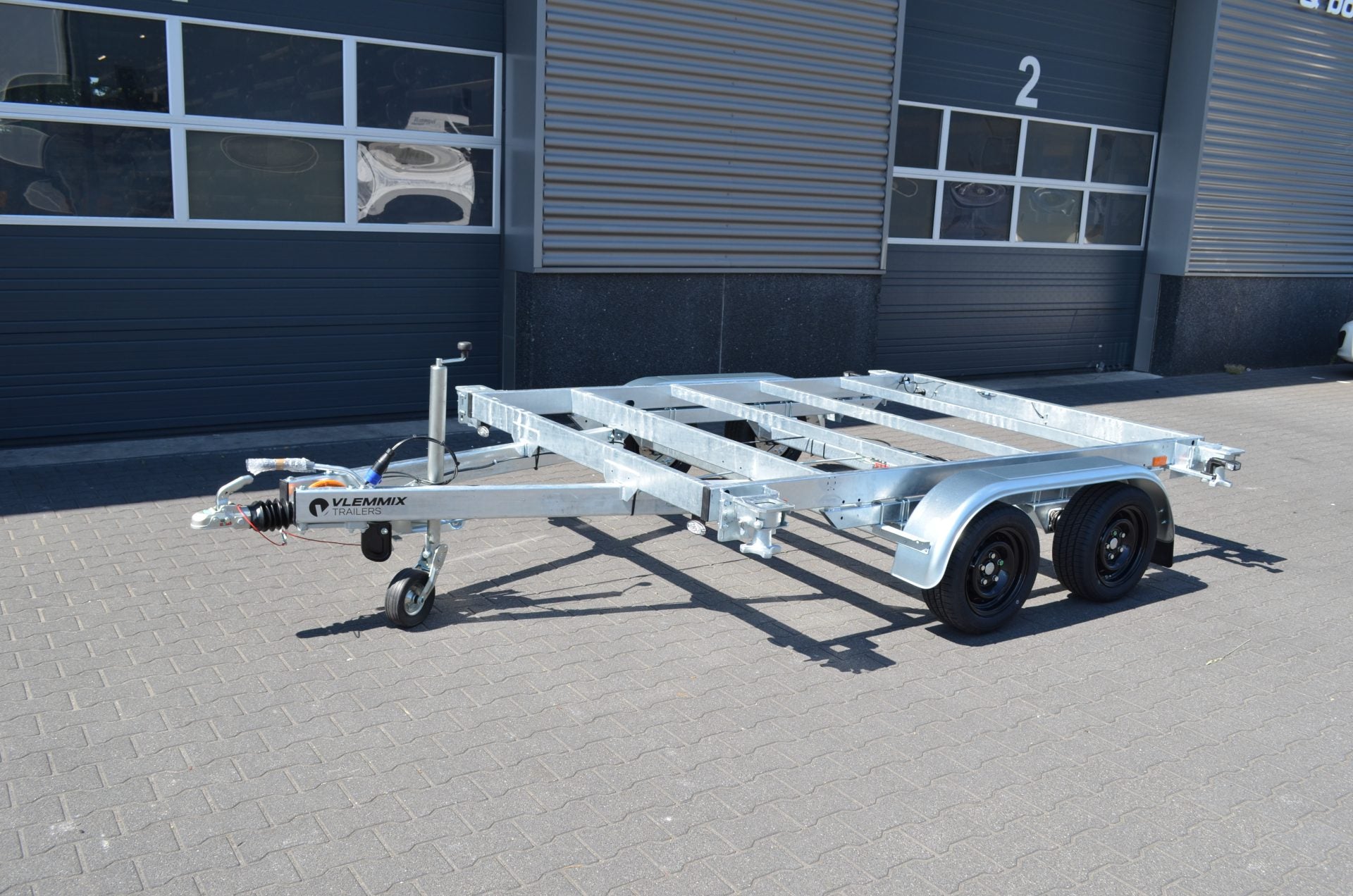
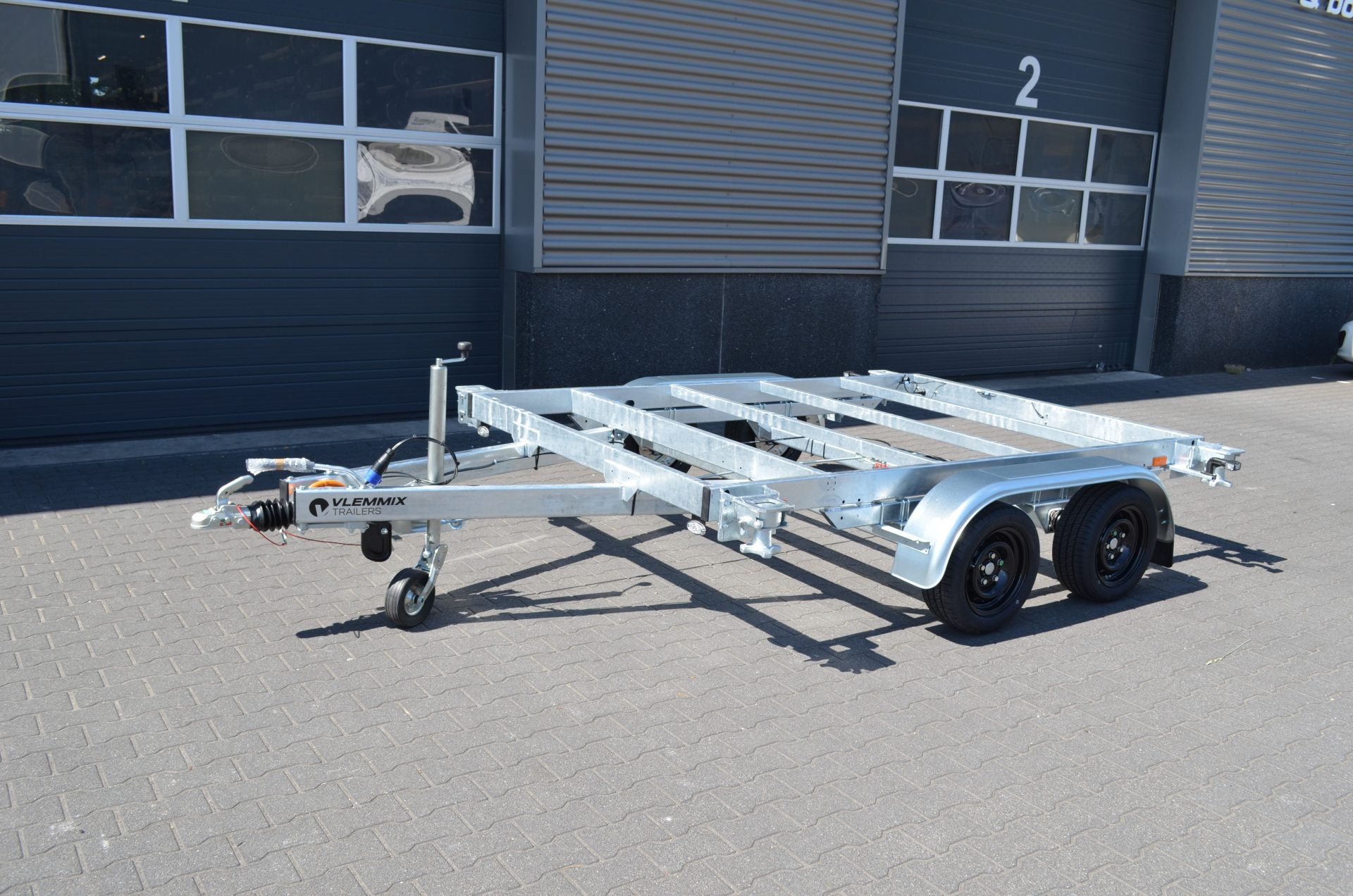
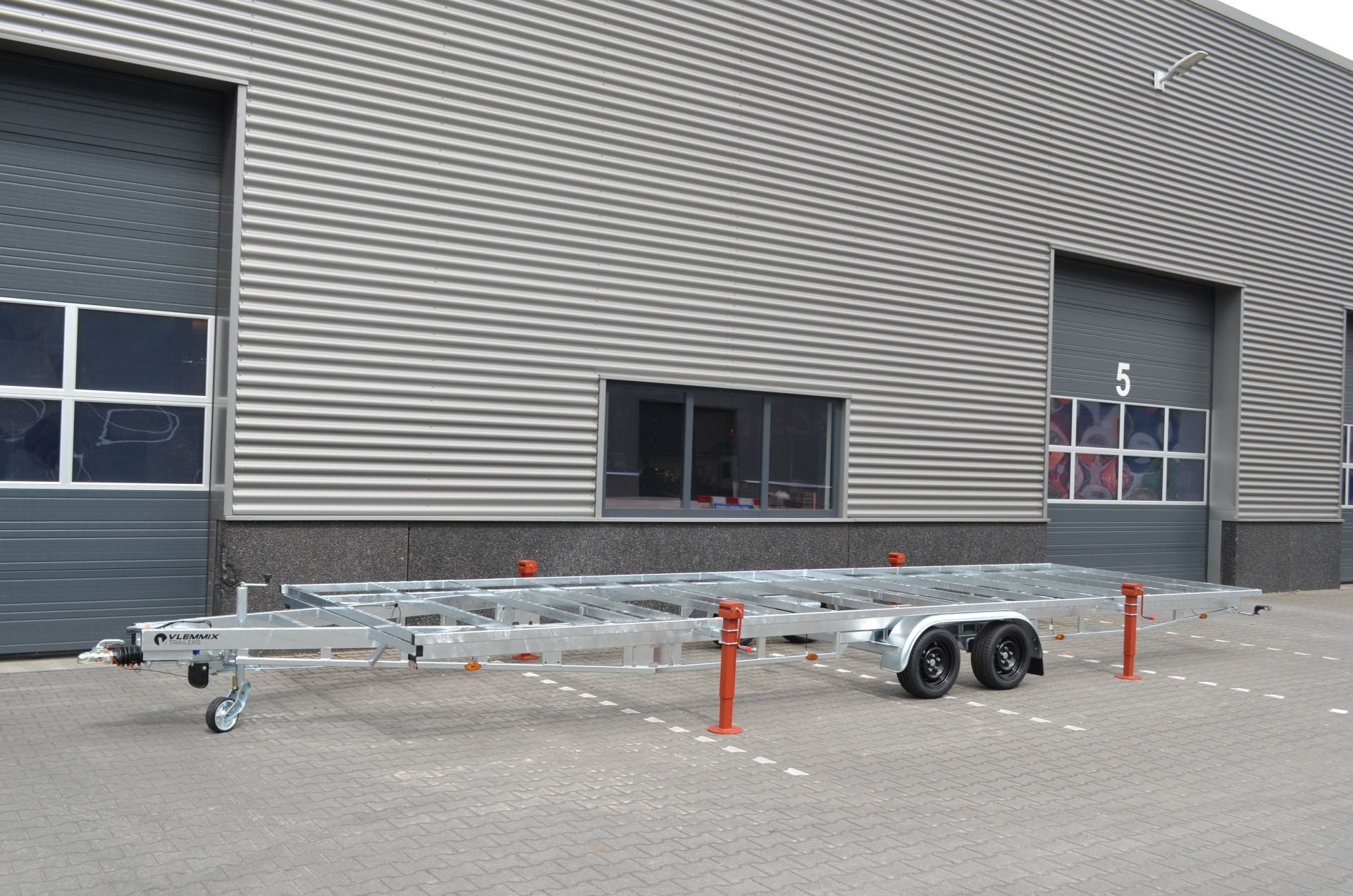
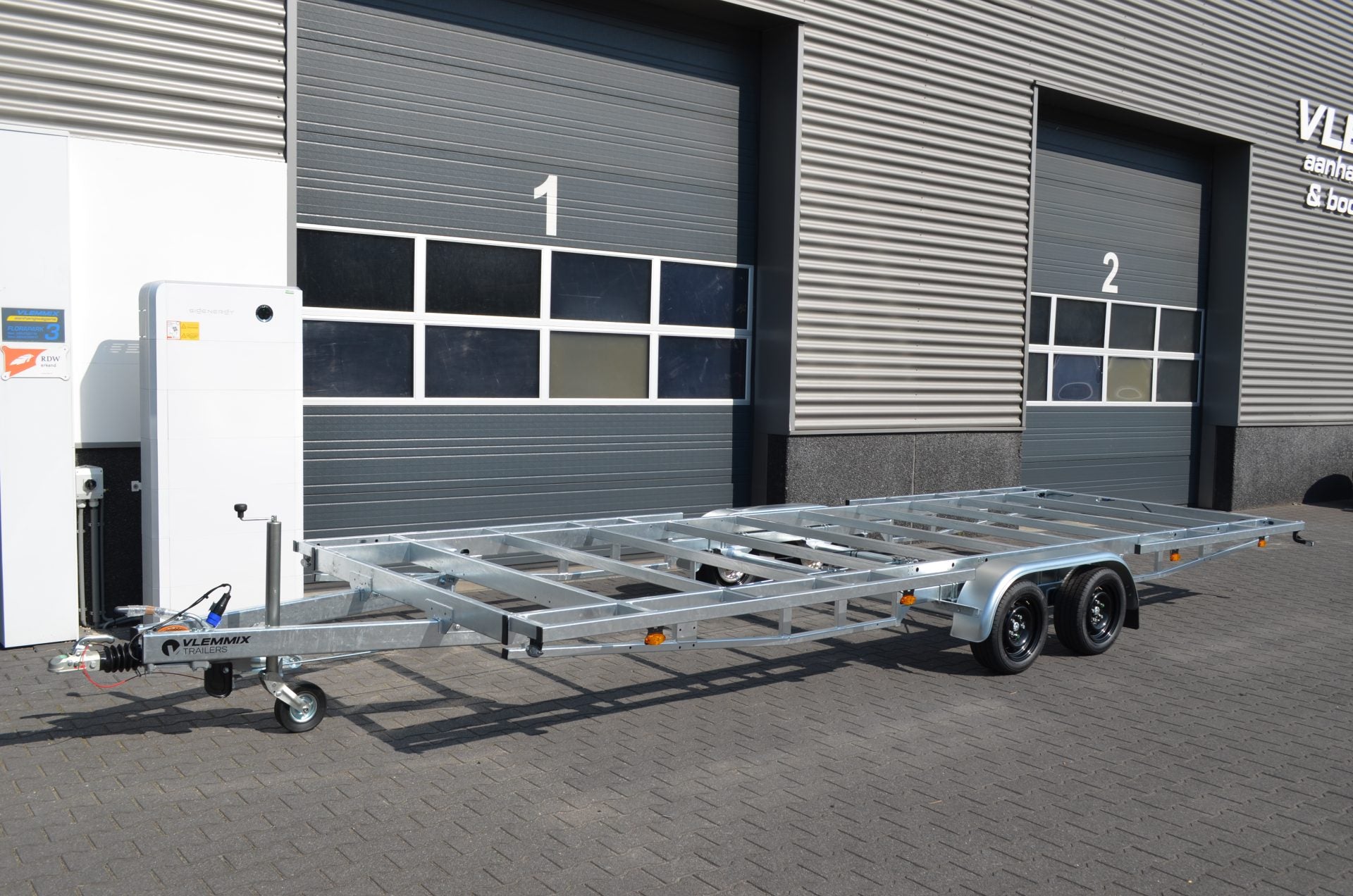
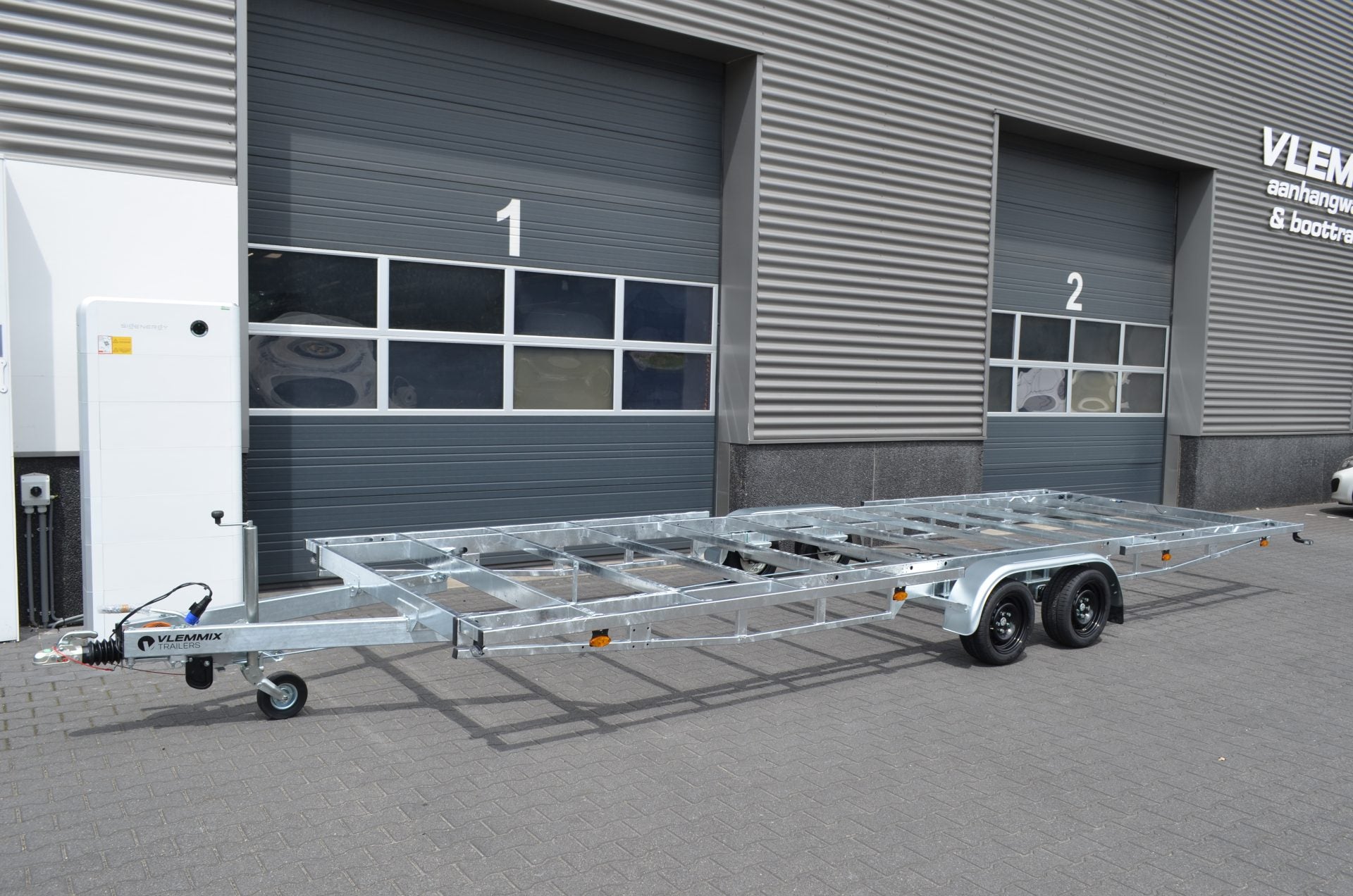
Moving from the marina to home calls for a one-off investment: a type-approved trailer or a cradle, and a tow hitch on the car. For medium lengths, the complete outfit costs less than a year of berthing in the Mediterranean. The boat trailers range covers 4 to 12 metres with a hot-dip galvanised chassis, 3 mm steel and some of the lightest trailers on the market, which widens the choice of cars that can tow your boat.
For motorboats and RIBs, which make up the bulk of the Spanish trailerable fleet, the motorboat trailers add braked versions up to 3,500 kg gross vehicle weight. All with a 2-year warranty and EU type approval, bought direct with no middlemen. Arnaud will work out the exact outfit for your boat and your situation: ask with no obligation.
The complete winter storage procedure ashore (cleaning, engine, cover, checks) is set out step by step in our guide to storing the boat over winter.
Frequently asked questions
Where is the cheapest place to store a boat?
At home: your own garage or plot has no recurring cost and only calls for the one-off investment in a trailer or cradle. Among the paid options, the outdoor boat park (€350-€800 a year) is the cheapest, followed by the dry stack for small boats, with the wet berth as the most expensive.
Which is better for the hull, water or dry storage?
Dry storage, by a wide margin. A hull afloat grows fouling, consumes anodes and absorbs moisture that turns into osmosis over the years. Ashore and ventilated, those processes stop and annual antifouling is reduced or disappears. Boatyards keep their own boats in cradles for that reason.
What length of boat can be stored at home?
Up to 7-8 metres with a trailer and a car with enough towing capacity; the practical limit is usually the total weight (around 3,500 kg gross) and the manoeuvre into your access. On a plot with no manoeuvring restrictions, using a cradle and one-off hired transport, any reasonable length.
How much does a dry stack marina cost per month?
From €75-€150 a month for boats of 6-7 metres at standard marinas up to €400-€800 for larger boats or premium marinas with launches included. Always compare what the fee covers: number of launches, hull washing and the hours you can access the boat.
Can the boat stay on the trailer all year round?
Yes, with two precautions: take weight off the tyres during long stays (supports under the chassis or boat stands) and distribute the hull properly across the supports. For whole years without moving, a cradle supports the boat better and frees up the trailer for other uses.
What happens to my insurance if I store the boat at home?
Tell your insurer: many policies lower the premium with the boat in dry storage on private ground, because the risk of sinking, osmosis and theft afloat disappears. Keep transport cover if you move the boat on your trailer several times a year.
Is a berth worth it if I sail a lot?
Yes, from around eight trips a month in season, especially if you live near the port and your boat's length makes daily trailering awkward. Below that frequency, a trailer plus a slipway gives you the same outings at a far lower annual cost.
Can I combine several options through the year?
That is exactly what the owners who fine-tune their spending do: a berth or dry stack only during the high season and the rest of the year in dry storage at home on a cradle or trailer. The saving compared with a full annual contract is around 40-60% with no loss of summer outings.
How does the storage option affect resale value?
Directly: the boat kept in dry storage comes to market with live gelcoat and a dry bilge, no history of osmosis, and an informed buyer pays for that. The permanently berthed boat accumulates deductions for moisture and wear to the underwater hull. Dry storage pays you twice: every year and when you sell.
Which option suits a boat that only sails in summer?
The seasonal combination: an operational option near the water in season (a short berth, a summer dry stack or a park next to the slipway) and winter storage at home on a cradle or trailer the rest of the year. It cuts the annual bill by 40-60% without sacrificing a single July or August outing.
Do I need permission to keep the boat on my plot?
Inside a private plot, the boat and trailer together are a vehicle with its load parked on private property: as a general rule no formalities are required. A permanent installation (a canopy, a new slab) may require municipal planning permission depending on the case. On the street, by contrast, parking rules apply.
How long does the switch from marina to home take?
A realistic week: ordering and registering the trailer, fitting a tow hitch to the car if you do not have one, and the first transport run. The longest delay is usually administrative rather than technical, so start the paperwork before your berth renewal falls due so you do not pay for an extra quarter.