
Quick Summary
- Storing a boat in a dry marina costs between €300 and €800 per month in Spain; afloat, between €150 and €350.
- Storing it at home on a trailer or cradle eliminates that monthly expense and protects it just as well if prepared properly.
- Winterization involves six tasks: engine, hull, battery, fuel, humidity, and interior. None take more than an afternoon.
- A fiberglass hull ages better out of the water; a wooden one, afloat.
- In Spain, it's advisable to start between October and November, before the first frost.
According to market data collected by Cronoshare, storing a boat in a dry marina in Spain costs between €300 and €800 per month, and a 10-meter sailboat in Barcelona is around €380. To this, shrink-wrapping (€15-25/m²) and transportation, which are charged separately, are added. The bill for a single winter can approach €2,000 without you having sailed a single day. This guide explains how to protect your boat during the cold months and how to avoid much of that cost by storing it at home.
Winterization is neither complicated nor expensive to do yourself. What ruins engines and upholstery every spring is not the cold, but leaving the boat idle without preparation. With an afternoon's work in autumn, you'll reach the next season without surprises.
Where to store the boat in winter: afloat, dry, or at home?
The first decision is not how to winterize, but where to leave the boat. There are three options, and each changes the cost and the work ahead of you.
Afloat winterization leaves the boat at its mooring. This is the most convenient and cheapest option in mild winter areas, like much of the Mediterranean. The downside is that the hull never rests: it remains exposed to osmosis and fouling from algae. It works if the climate is suitable and if you check the boat every few weeks.
Dry storage, in a dry marina or boatyard, removes the boat from the water on stands. It protects the hull better and completely stops osmosis, but it is the most expensive option. You depend on cranes and transfers that are billed separately, and access for DIY maintenance often requires an appointment.
The third option, which almost no article mentions, is to store it on your own property on a trailer or cradle. You pay for the equipment only once and stop paying mooring fees every month. This option makes the most sense for trailerable boats, which can fit on a trailer without special permits.
| Criterion | Afloat (mooring) | Dry marina | At home (trailer/cradle) |
|---|---|---|---|
| Monthly cost | €150-350 | €300-800 | €0 after purchase |
| Hull protection | Low (osmosis) | High | High |
| Maintenance access | Limited | By appointment | Full and anytime |
| Crane dependence | No | Yes | Only launching |
| Best for | Mild winter | Large lengths | Up to 8-9 m, fiberglass |
For a boat up to 8 or 9 meters with a fiberglass hull, the home option is almost always the most cost-effective. You can view the complete catalog of nautical trailers and filter by your length and type of boat, whether it's a launch, RIB, or light sailboat.
It's worth doing the math with real numbers. A 6-meter boat that spends from October to April in a dry marina, at €350 per month, totals more than €2,000 in a single season, not including crane or shrink-wrapping. That same money buys a storage support that will last for all subsequent winters. Dry marina makes sense when there's no space at home or the length is large; as soon as the boat fits on a property, the numbers clearly lean towards storing it yourself.
Prepare the engine before the first frost
The engine suffers the most from winter and is the most expensive to repair. The rule is simple: water out, protection in. Every euro you invest in winterizing it well translates into a clean start in spring.
If you have an outboard, it's the easiest to winterize. Circulate fresh water through the cooling system to flush out accumulated salt, change the gear oil and its filter, and add a fuel stabilizer to the tank. This prevents the gasoline from degrading and leaving varnish and deposits in the carburetor. Ten minutes of work saves you a repair bill of several hundred euros at a workshop. For detailed steps, follow the step-by-step guide to winterizing your boat's engine.
For inboard or sterndrive engines, drain the cooling system and refill it with propylene glycol antifreeze, never ethylene glycol. Propylene glycol is non-toxic to aquatic environments. If saltwater remains inside the block and freezes, the expanding ice can crack the casting. This is the most expensive and, at the same time, the easiest damage to prevent during winterization.
Grease moving parts, fog oil into the cylinders if the manufacturer recommends it, and close the fuel valve. It's also advisable to loosen belt tension and check the condition of sacrificial anodes. A properly winterized engine starts right up when warm weather returns, without smoke or irregular idling.
Clean and protect the hull and deck
Before covering anything, clean thoroughly. Remove traces of salt, algae, and dirt with specific marine products, because accumulated salt attacks the gelcoat and fittings during months of inactivity. A dirty stored hull is a hull that ages twice as fast. If you sail in saltwater, these tips for extending the life of your trailer in saltwater also apply to transport equipment.
With the boat out of the water, it's the best time to inspect the hull below the waterline. This is when osmosis blisters, micro-cracks in the gelcoat, or wear on seacocks and the propeller become visible. Repairing on dry land, with time and without rush, costs a fraction of what it would cost in the middle of the season when the boat is demanding water. Take the opportunity to apply a coat of antifouling if needed. If you want to understand why keeping the boat dry avoids this problem, we explain it in the guide on hull osmosis: detecting, treating, and preventing it.
Cover the boat with a breathable, resistant canvas, well-fitted to prevent rain from accumulating or rubbing in the wind. If you store it outdoors, a breathable cover prevents condensation that rots upholstery, wood, and interior linings. Avoid plastics that completely seal the boat: they turn the interior into a humidity greenhouse. A good cover is worth the cost.
Care for the battery and electronics
The battery is the component that suffers most from neglect, not from use. A battery that spends the winter gradually discharging loses irreversible lifespan and usually needs to be replaced in March.
Disconnect it and, if possible, remove it from the boat to store it in a dry, temperate place. Ideally, keep it connected to a charger-maintainer that keeps it fully charged without overcharging. Also, remove batteries from remotes, remote controls, and small devices to prevent sulfation and ruin contacts during months of inactivity.
Disconnect all onboard electronics: sonar, GPS, plotter, VHF radio, and lighting circuit. If you live near the sea, protect the connectors with a dielectric spray, because salt spray corrodes copper even inside a closed garage. Your navigation equipment is among the most expensive parts of the boat, and protecting it takes only a few minutes.
Control humidity and empty the interior
The silent enemy of winter is humidity, not the cold itself. A closed, damp interior breeds mold, bad odors, and stains that won't come out even with professional cleaning.
Remove all perishables, food, bedding, and damp life jackets. Clean and thoroughly dry lockers, bilges, refrigerators, and cabins before closing the boat. Leave cabinets, lazarettes, and the refrigerator ajar for air circulation to prevent stagnation against the walls.
Place dehumidifiers or anti-humidity bags throughout the interior and check them every few weeks to empty or replace them. If the boat is dry-stored, open the seacocks and completely empty the fresh water and gray water tanks, so that no circuit retains liquid that could freeze. A dry and ventilated interior in March smells like a boat, not a basement.
The task list seems long the first time, but it boils down to a couple of well-organized afternoons. Do it once with method and the second year it will become a habit: water out, battery protected, and interior dry.
Store the boat at home on a trailer or cradle
This is where winter stops being a recurring expense. Instead of paying between €300 and €800 per month for a dry marina, you can store your boat on your property on a storage trailer or cradle, and amortize the equipment in a single winter season.
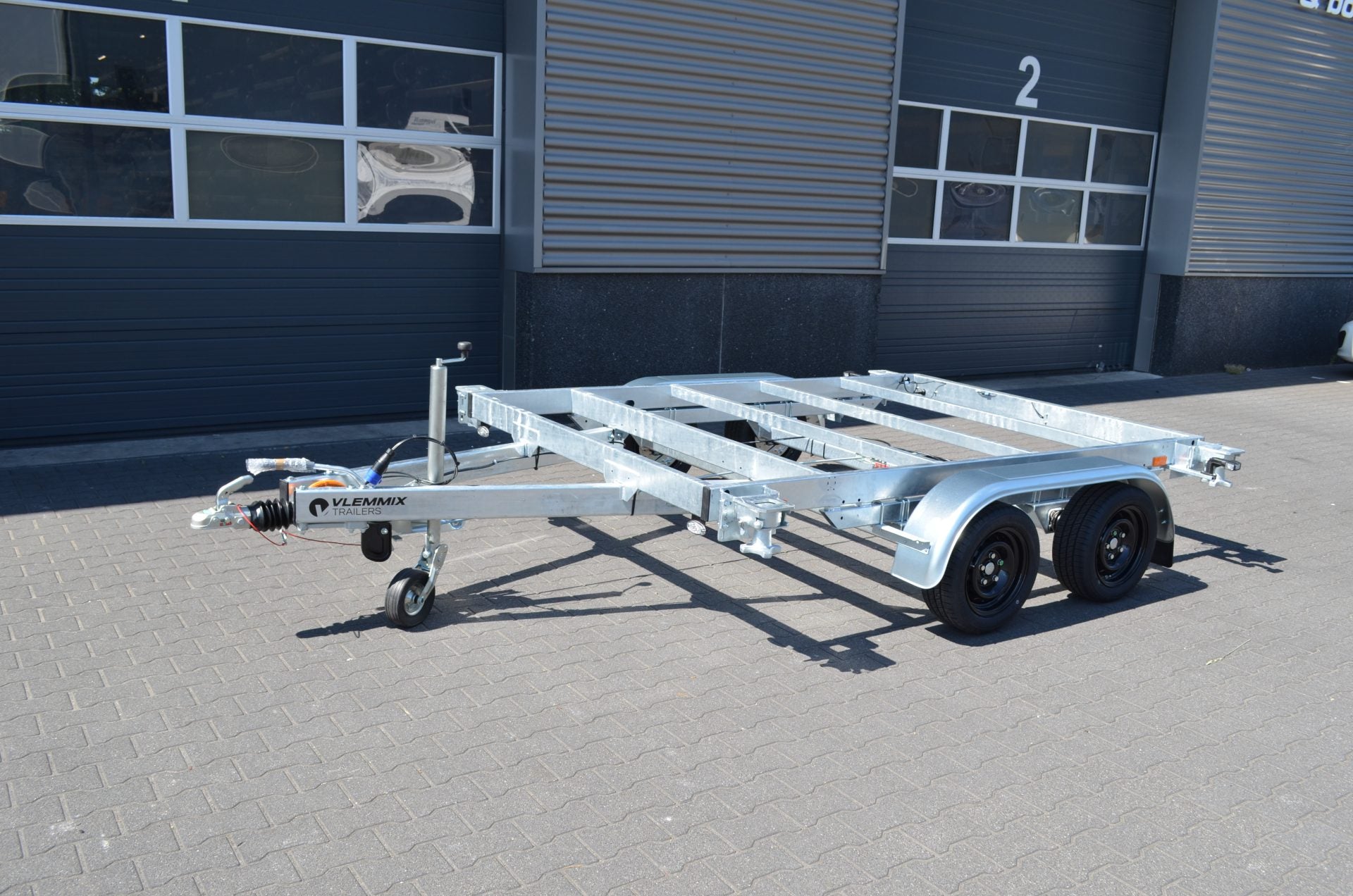
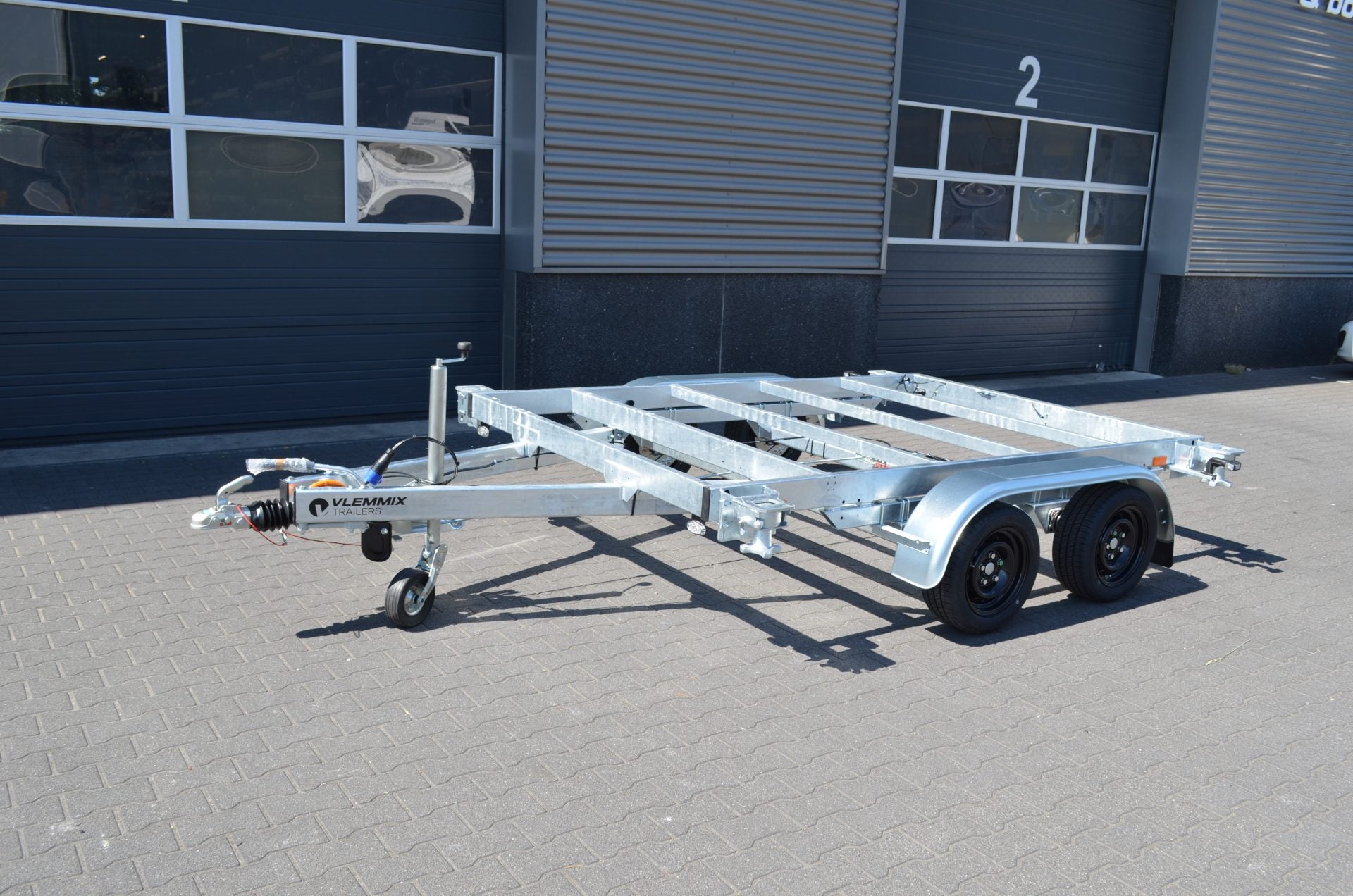
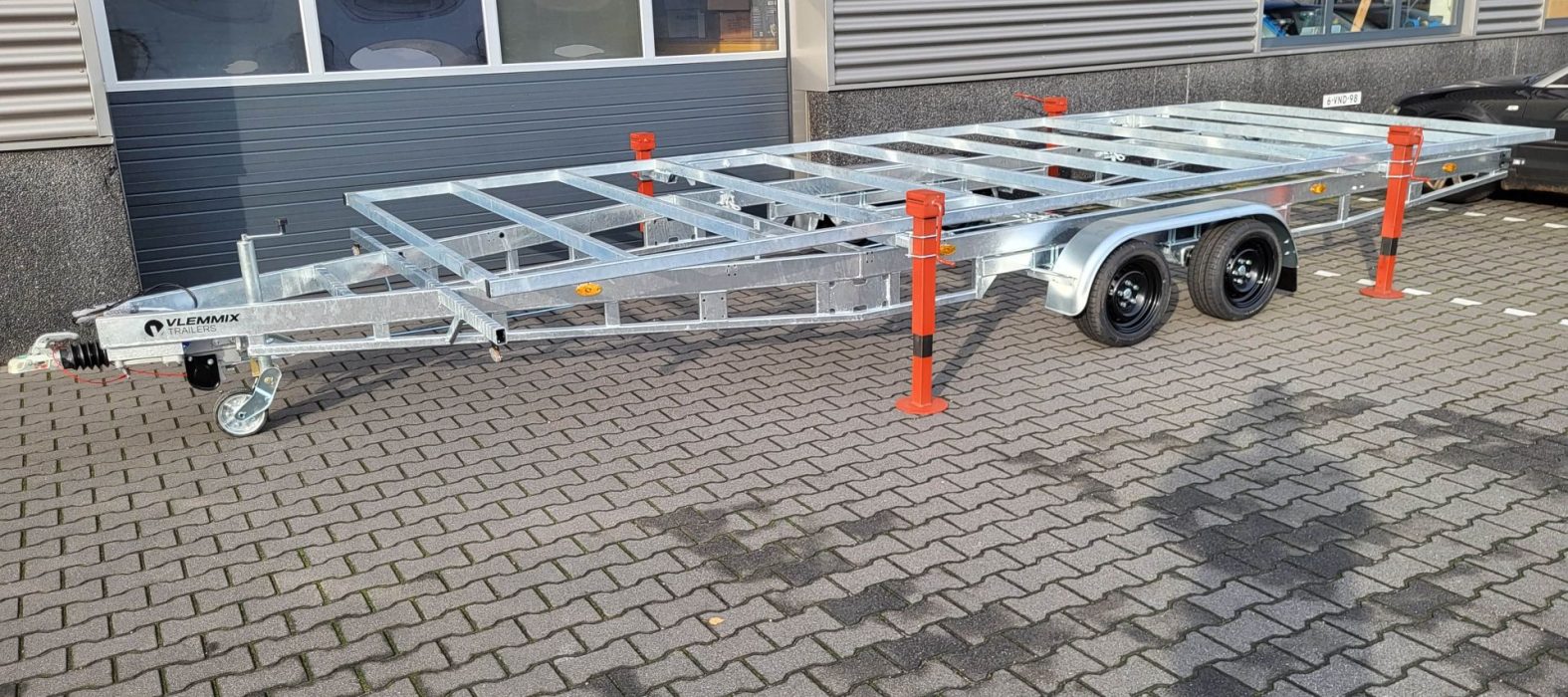
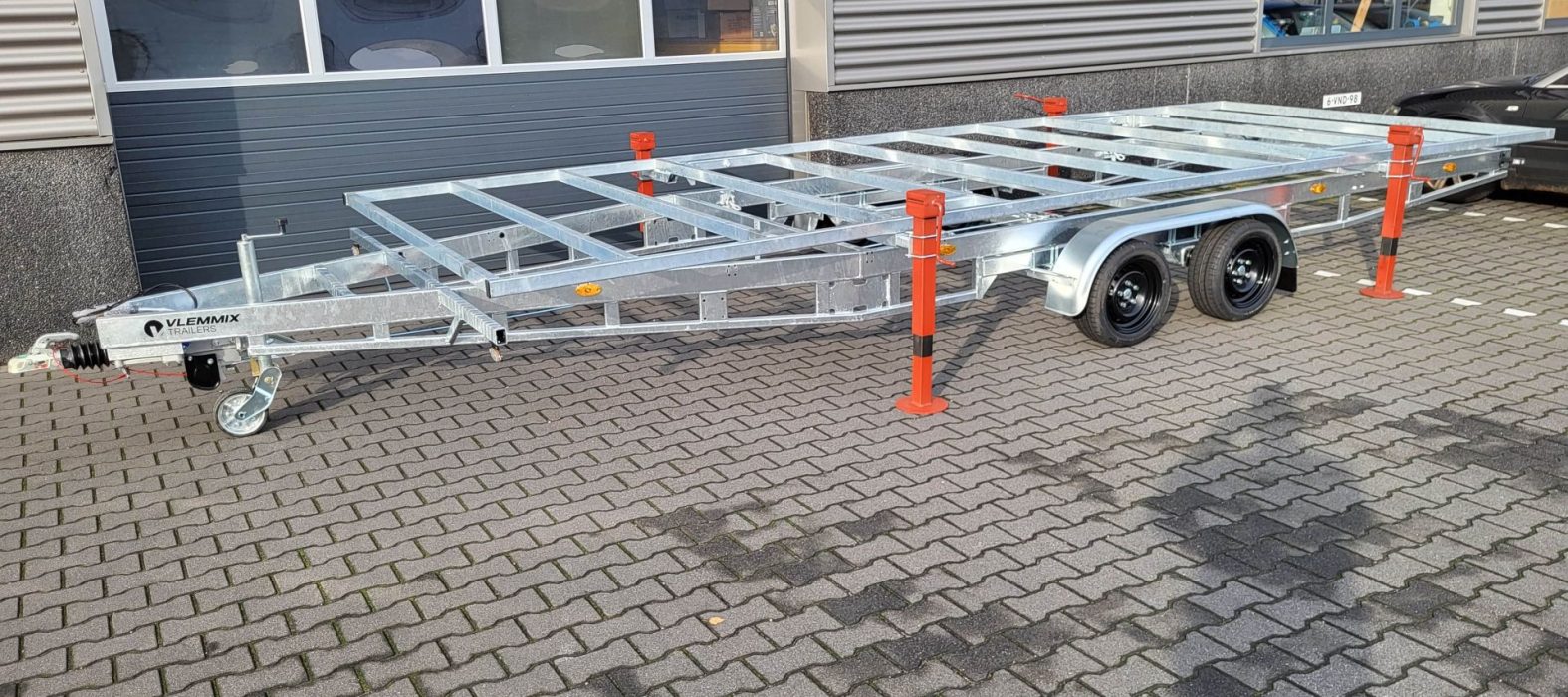
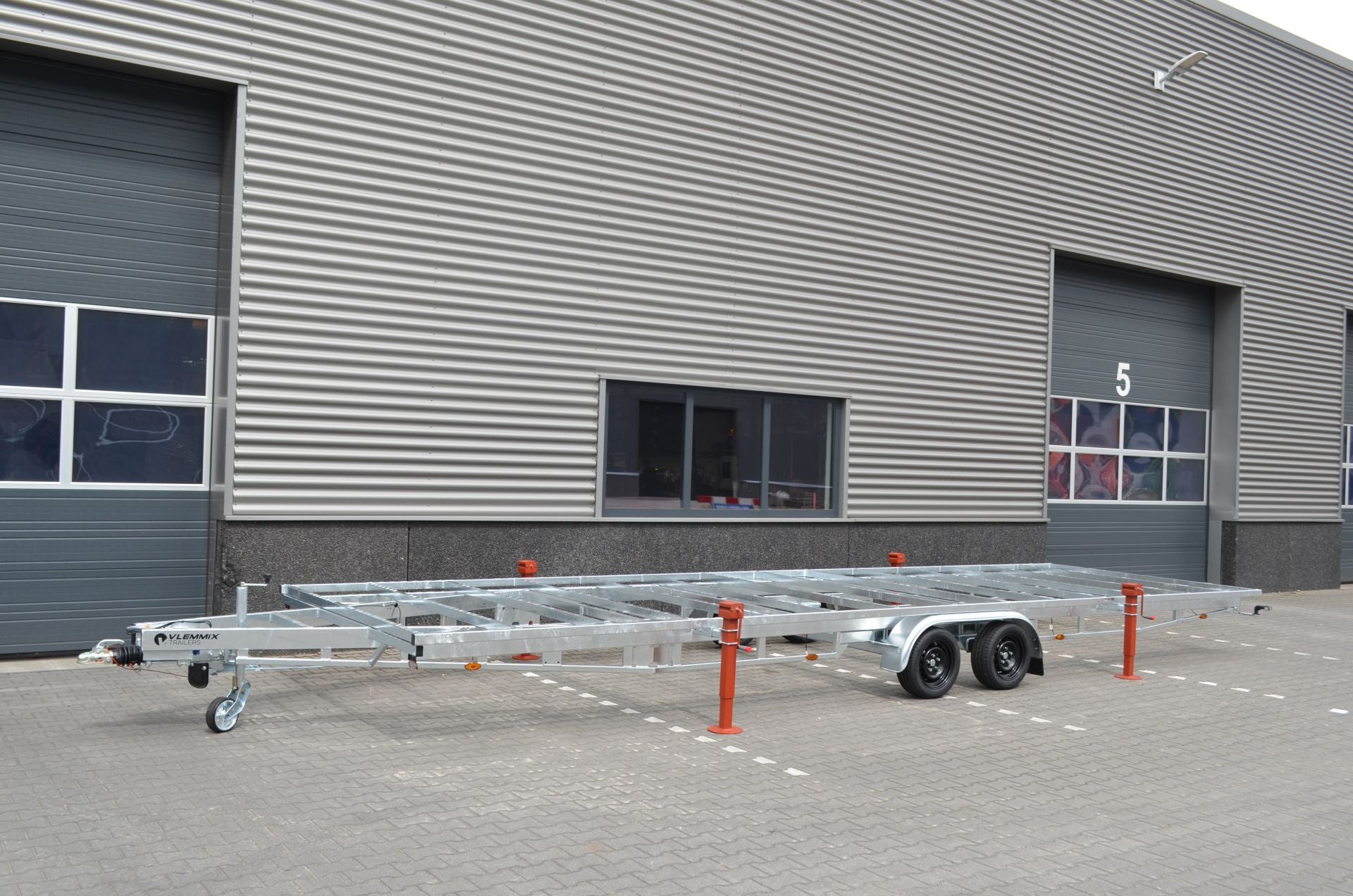
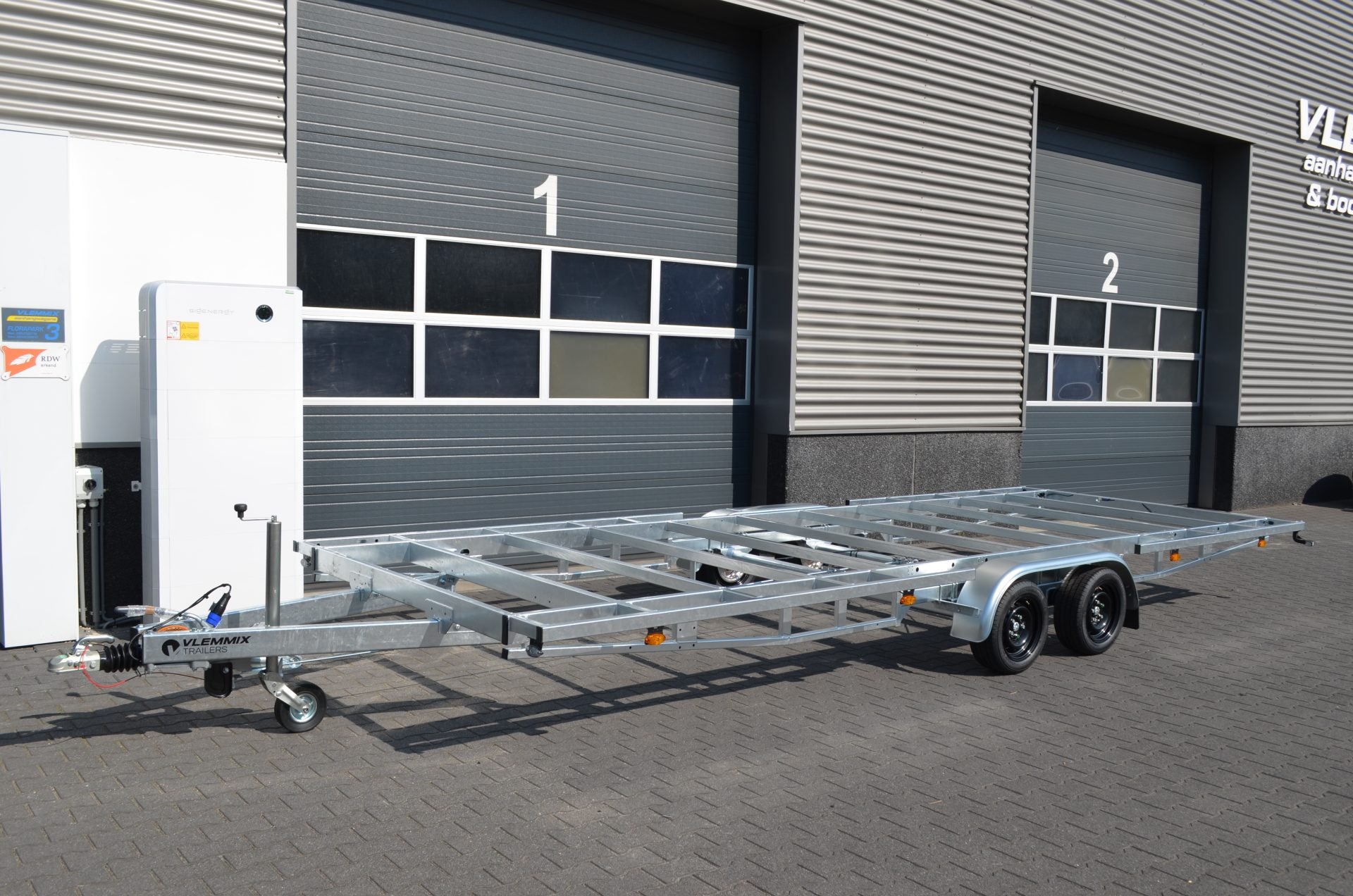
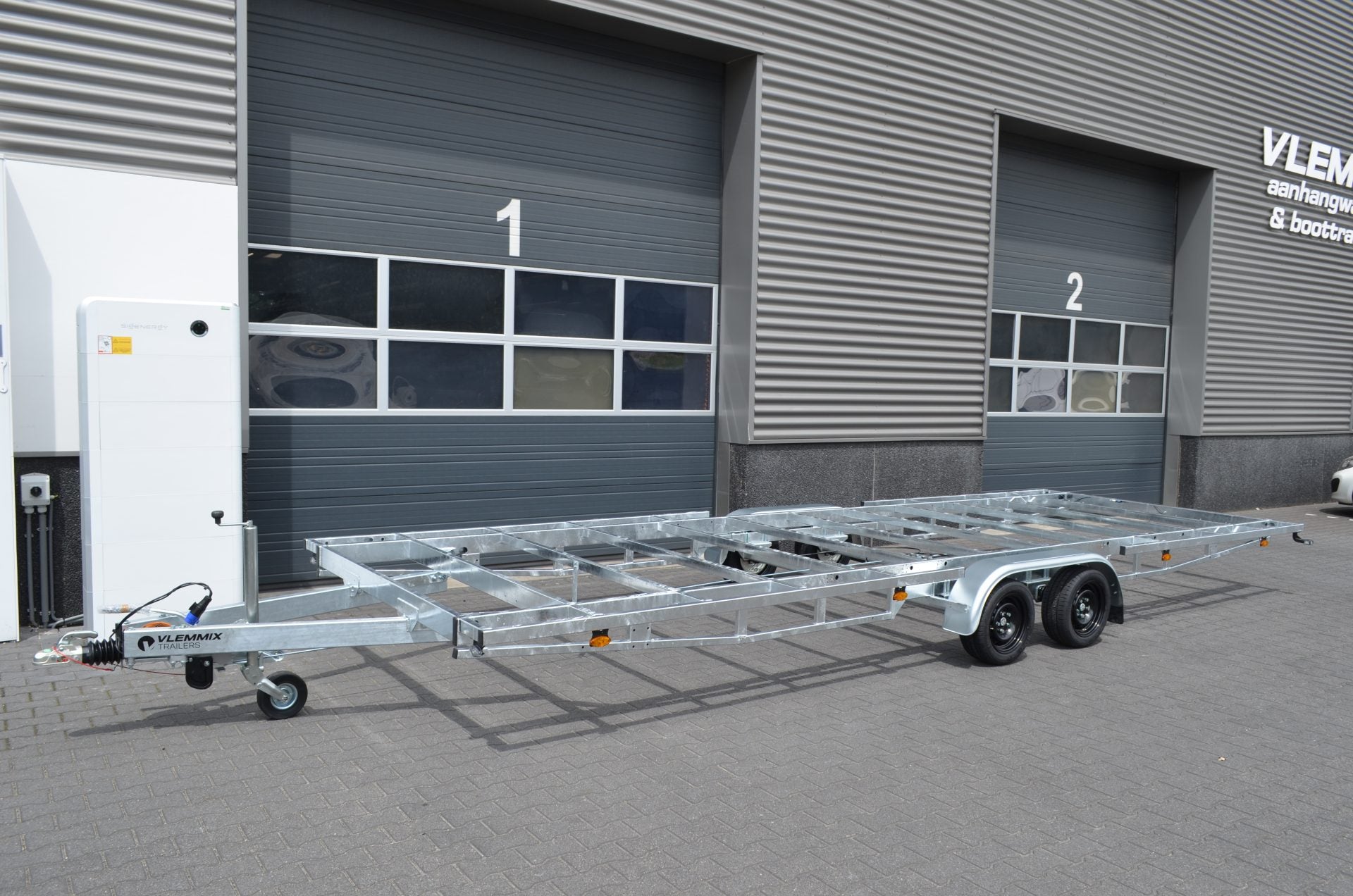
Boat storage trailers are designed precisely for this: to support the boat dry for months without moving it, with supports that distribute the weight. If you don't need to tow on the road and only need a fixed support at home, boat cradles embrace the hull, take up less space, and cost less. Both turn a corner of your property into the best possible dry winter storage.
This option has a clear limit: the boat must be trailerable, meaning it fits on a trailer within the dimensions allowed for circulation without special permits. In practice, this covers most launches, rigid inflatables, and sailboats up to about 8 or 9 meters. Above that length, dry marina or boatyard still makes sense. If your boat falls within that range, the savings from a single season already cover a good part of the support.
Trailer weight matters more than it seems. A 6-meter trailer of these weighs about 570 kg compared to the usual 650-900 kg of competitors, so you make much better use of your vehicle's 3,500 kg MMA on the day you do want to move it. The chassis is hot-dip galvanized, which is exactly what a support exposed to winter needs to prevent rust. The 2 mm steel, compared to the standard 1.5 mm, withstands static load for months without yielding or deforming.
When the boat rests on the trailer all season, suspend the axles on blocks to relieve pressure on tires and bearings. If it's going to be parked for months, dismounting the wheels and storing them indoors extends their useful life. Distribute the hull supports well so that the weight is not concentrated at a single point and deforms the fiberglass. If you're debating between a fixed support and a transport trailer that also serves for launching, compare the options in boat trailers depending on whether you use the boat once or several times per season.
The approach works equally well for a launch or a light sailboat. Those with a rigid inflatable can look at trailers for launches, and those storing a trailerable sailboat, trailers for sailboats with their keel support. All Remolque.es material is sold directly, without intermediaries, with a two-year warranty and with Arnaud as the sole contact for questions about load, length, or home delivery.
Common mistakes when storing the boat in winter
The most expensive mistake of all is leaving water in the cooling system. If it freezes, the ice expands and cracks the engine block. Draining the circuit or adding antifreeze is half an hour's work; a new block means weeks in the workshop and a four-figure bill.
The second mistake is to seal the boat with plastic without any ventilation. You trap humidity inside, and in spring, you find mold on upholstery, linings, and wood. Always use breathable canvas and allow air to circulate underneath.
The third is to forget the battery and leave it to discharge on its own all winter. March arrives, the boat won't start, and you have to buy a new battery every season. A €30 maintainer prevents that recurring expense year after year.
The fourth, less obvious, is to improperly support the hull on the stand. Concentrating all the weight at two points for months can permanently deform the fiberglass. That's why a cradle or stand sized for your length, with well-distributed supports, is not a whim but what keeps the hull straight. Before settling it, review how to properly place the launch on the trailer.
Frequently Asked Questions
When should I start winterizing my boat in Spain?
It's usually between October and November, when temperatures drop and before the first frost. If you sail in the mild winter of the Mediterranean, you can delay it, but don't leave the engine without fuel stabilizer for more than two months.
Is it better to store the boat in the water or dry in winter?
For fiberglass hulls, dry is better: it rests from osmosis and fouling. For wooden hulls, afloat is better, because taking it out of the water can crack the frames as they dry. Most current recreational boats are fiberglass.
Can I store my boat at home on a trailer all winter?
Yes, and it's the most economical option if you have space. You need a storage trailer or cradle suitable for your length, suspend the axles on blocks, and cover the boat with breathable canvas. You completely eliminate the monthly dry marina cost.
How much does it cost to winterize a boat versus storing it at home?
A season in a dry marina can total between €1,500 and €2,500 including transport and shrink-wrapping. A storage trailer or cradle is paid for only once and serves for all subsequent winters at no additional cost.
What antifreeze is used for a boat engine?
Propylene glycol antifreeze, which is non-toxic to aquatic environments. Avoid ethylene glycol used in cars. It is introduced into the cooling system after draining the saltwater from the engine.
Want to store your boat at home this winter and stop paying mooring fees? Talk to a specialist and we'll help you choose the support according to your length, without obligation.