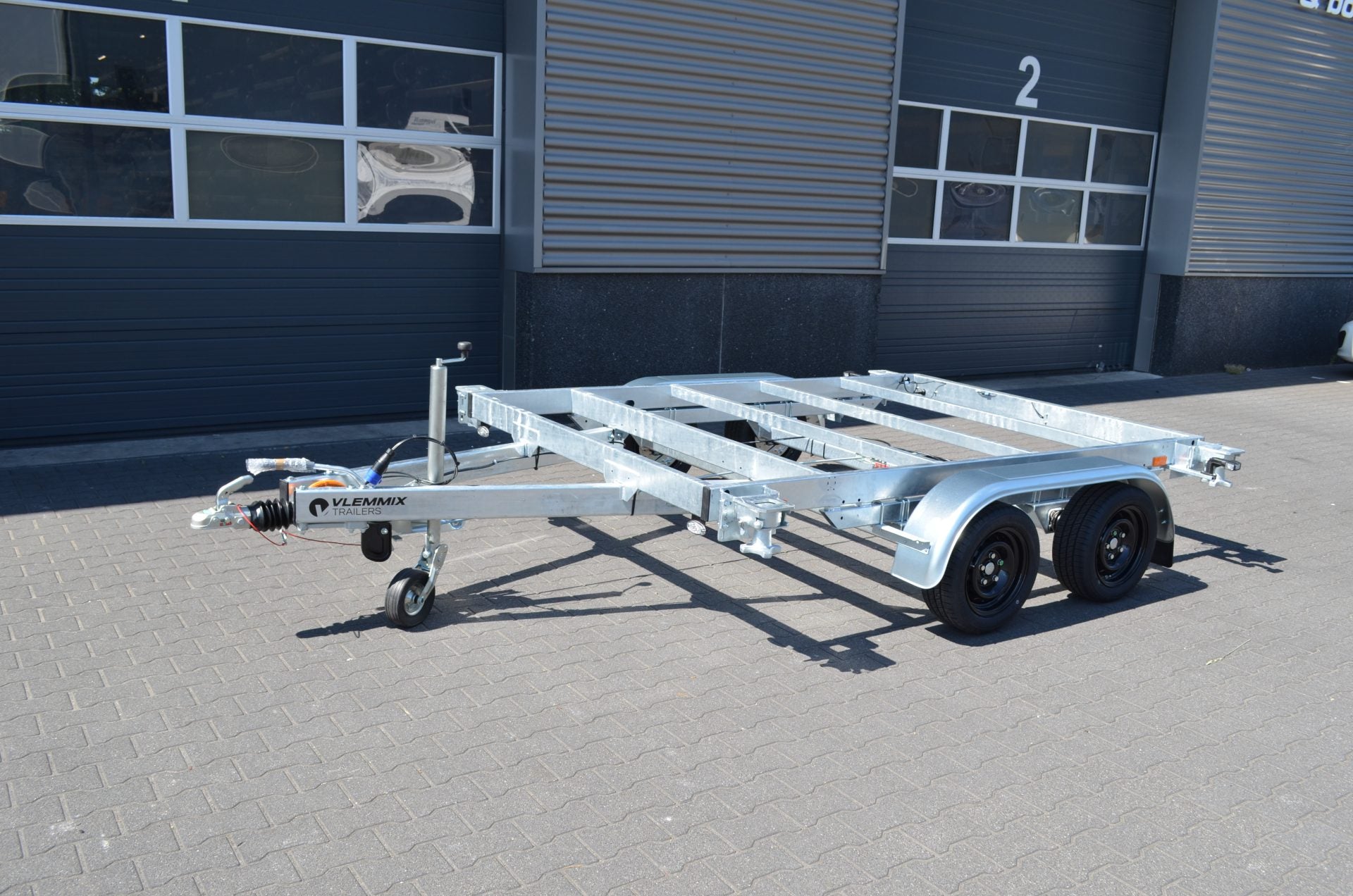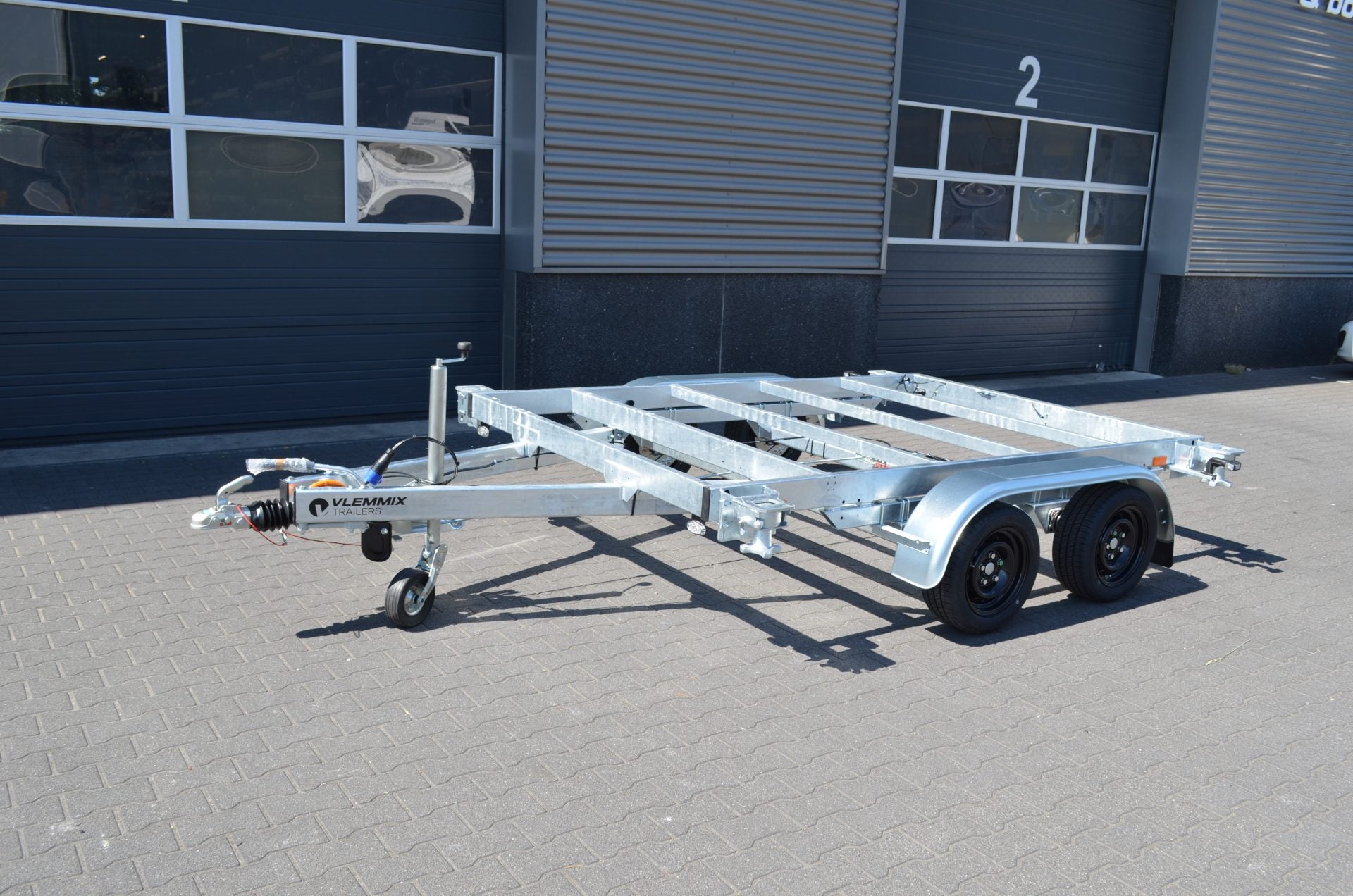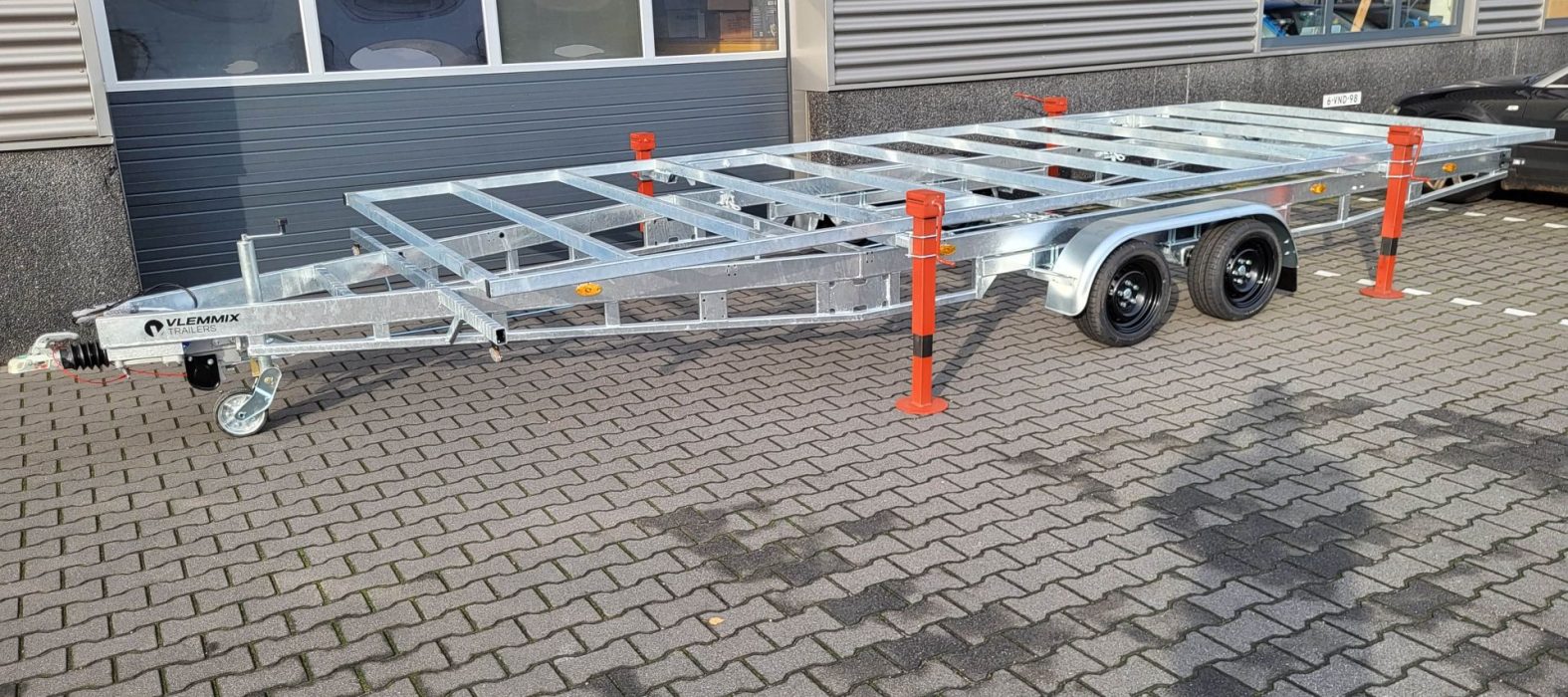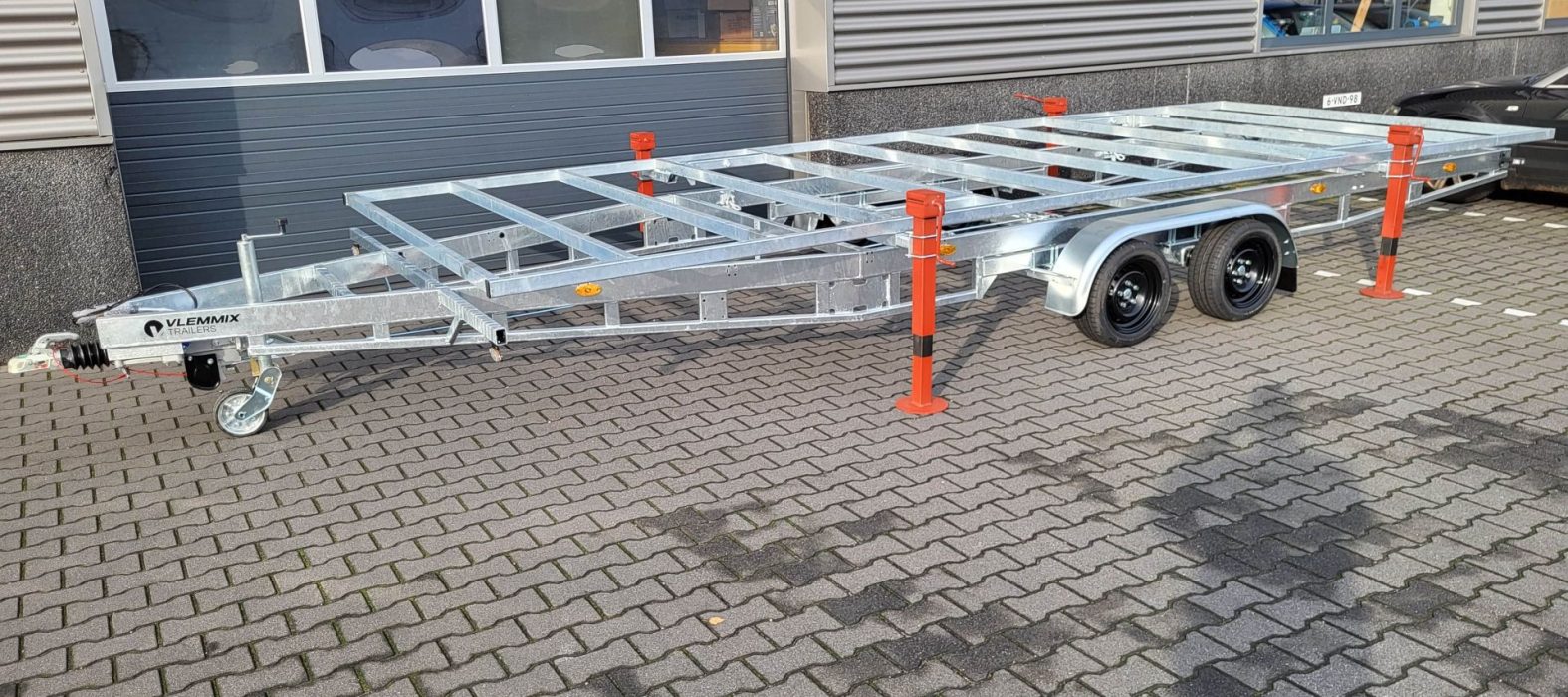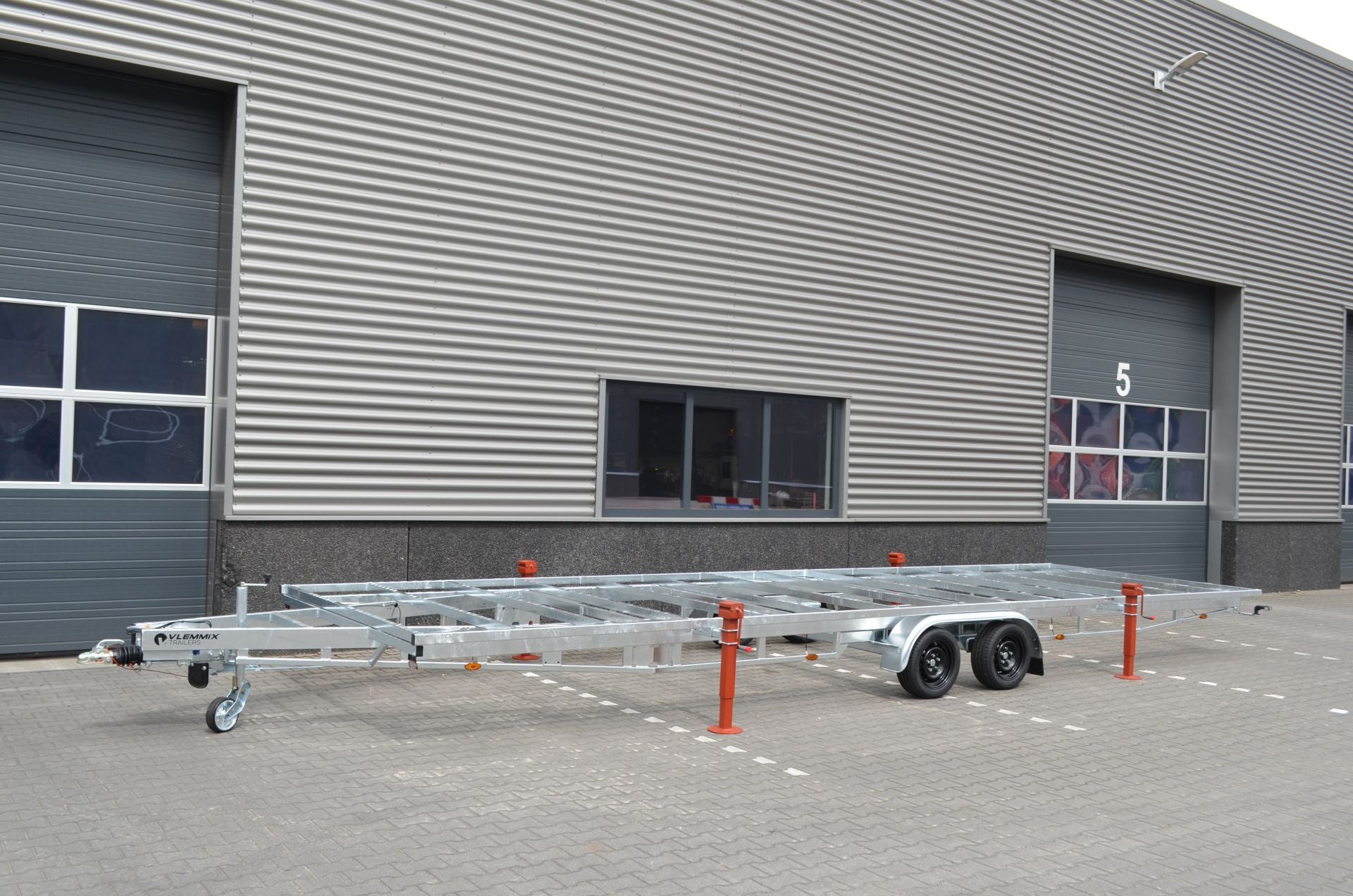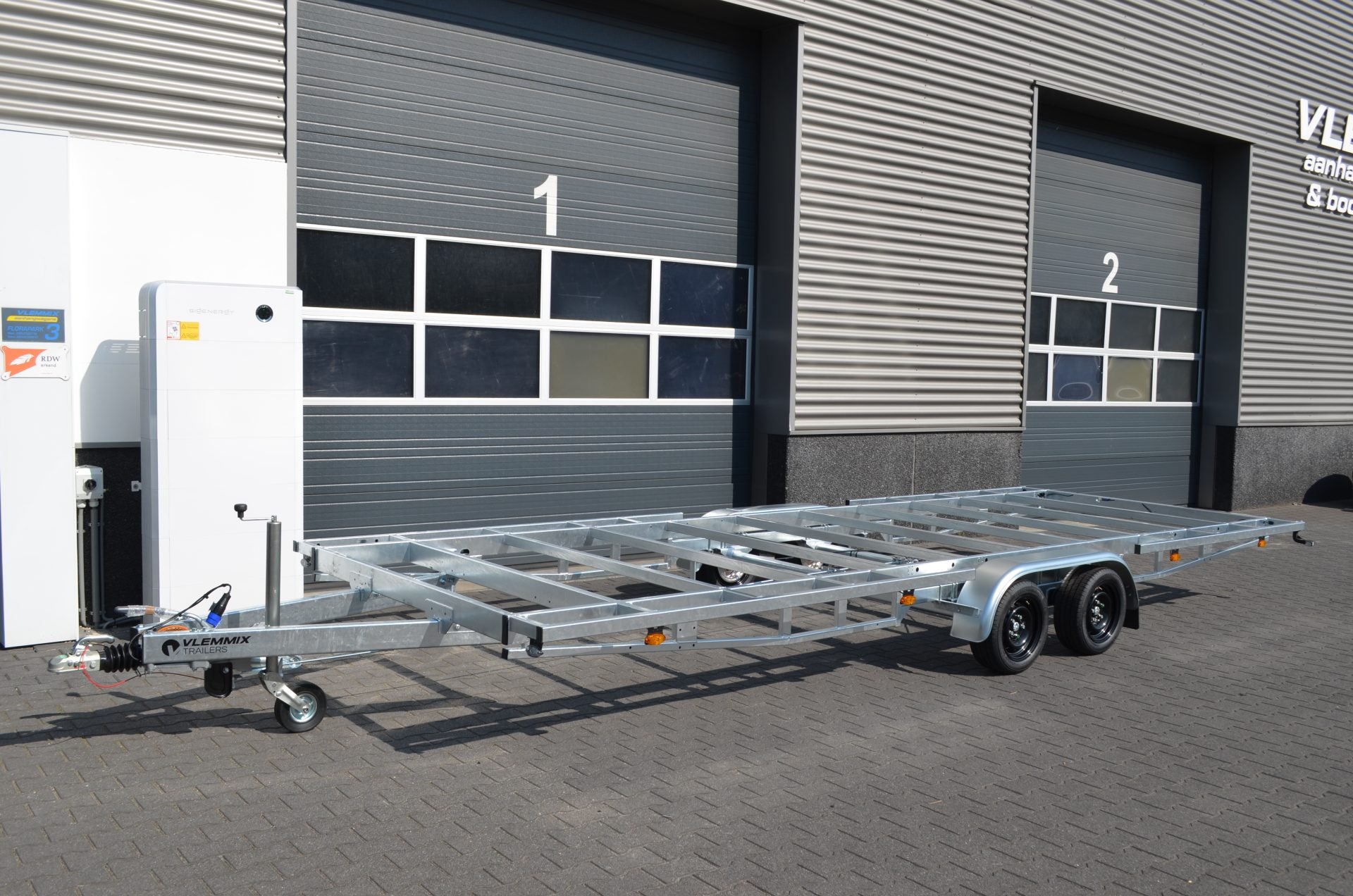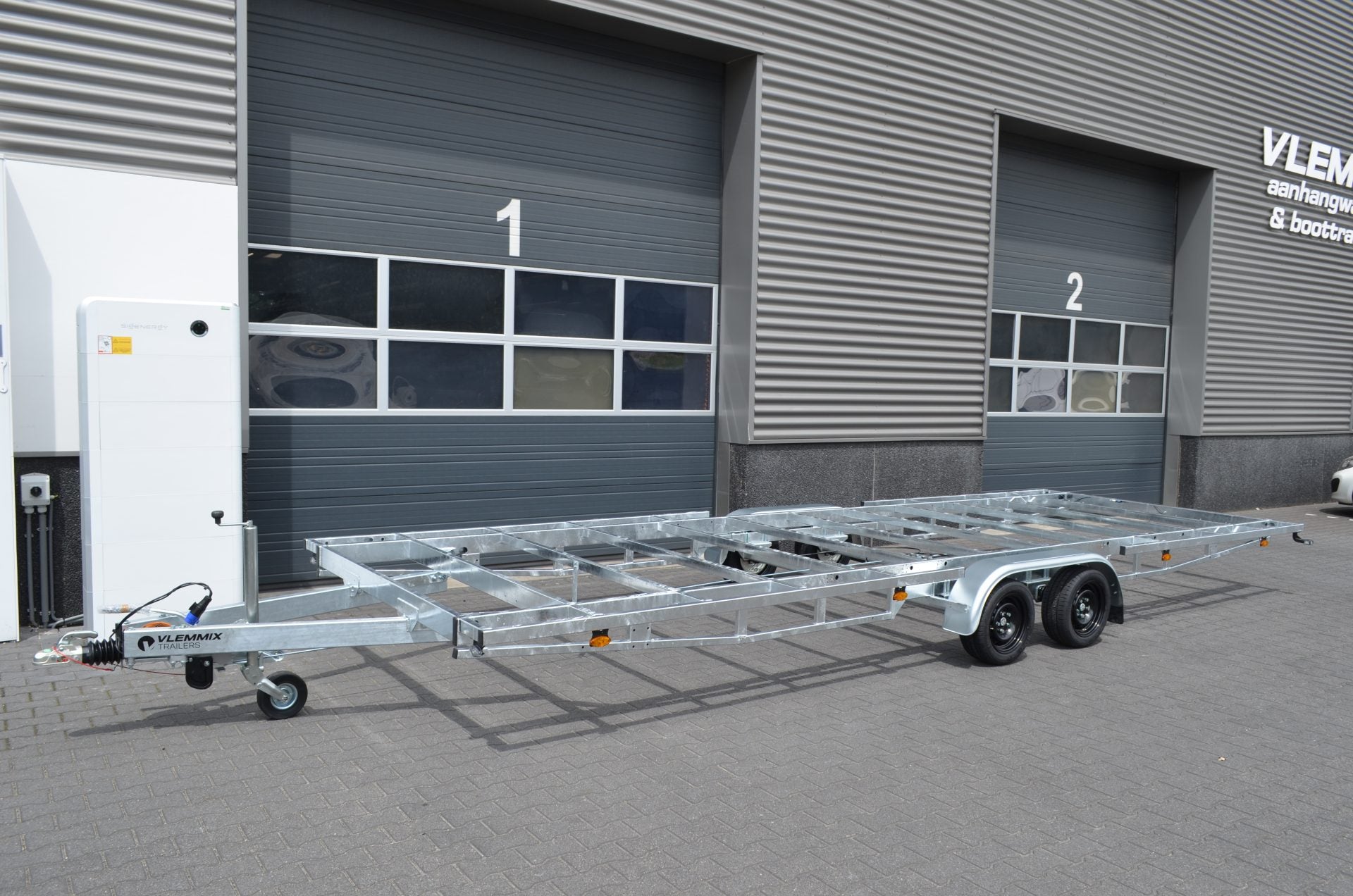

Every season, boat ramps in Spain present the same scene: pristine boats on boat trailers that are no longer up to par. Hulls with hidden rust, wobbly bearings, barely functioning brakes, and lights that have been out for some time. At first glance, they seem acceptable, but a long trip or a hard stop is all it takes for the problem to surface. That's why many owners end up asking themselves the same question: how many years can a boat trailer last before becoming a hazard?
Giving a fixed figure would be misleading. The lifespan isn't printed on the trailer's plate. It depends on where you sail, how often you put the axle in the sea, how you store the equipment, and the maintenance you give it between seasons. What we can do is establish a realistic framework based on what we see daily in Spanish ports, what the regulations say, and the faults that the DGT (Spanish Directorate General of Traffic) and the MITMA (Ministry of Transport, Mobility and Urban Agenda) have been detecting for years in their campaigns and statistics.
The average lifespan of a boat trailer in real-world use. Wear and tear, signs of wear, and when to retire it.
When a boat trailer is well-designed, built with the right steel, hot-dip galvanized, and properly inspected, its actual lifespan is typically between 8 and 15 years. This isn't a theoretical figure, but rather what we observe in workshops, boatyards, and vehicle inspection stations. However, in highly exposed coastal areas—such as the Levante region, the Gulf of Cádiz, and Atlantic Galicia—this range can easily drop to 5–10 years without consistent maintenance. The sea is unforgiving: salt spray takes its toll every day of the year, whether the trailer is in use or not.
More than age, usage matters. A boat trailer that has made hundreds of trips in and out of the water, always loaded to its maximum authorized mass (MMA), but rigorously washed and greased, is likely to reach the end of its useful life in better condition than one that has barely been used but has spent five summers sitting next to the dock. For anyone considering buying a boat trailer, it's not just a platform to transport the vessel from A to B; it's a key safety component that determines how much you'll be able to enjoy your boat without any unpleasant surprises.
A boat trailer endures stresses that a conventional cargo trailer can't even begin to imagine. Entering and exiting slippery ramps, towing the concentrated weight of the hull, withstanding hard braking from a car or 4x4 with the entire trailer attached, and enduring crosswinds on the highway—all of this takes its toll. Every misstep, every bit of time submerged, adds to the wear and tear. Therefore, when comparing the cost of a low-end trailer with that of a robust model, the question shouldn't just be how much it costs, but how long it will last under those conditions.
Spanish regulations that affect its longevity
The law doesn't dictate how many years a trailer should last, but it does establish controls that, in practice, effectively set a limit. The General Vehicle Regulations (Royal Decree 2822/1998) classify trailers as light, up to 750 kg maximum authorized mass (MAM), and non-light above that threshold. For the purposes of useful life, this is relevant for a simple reason: light trailers are exempt from periodic vehicle inspections (ITV), while non-light trailers must undergo inspection every two years until they are six years old, and annually thereafter.
In the case of light boat trailers, the lack of mandatory vehicle inspections (ITV) means that many continue to circulate with advanced rust, inactive brakes (if they are fitted), and neglected bearings. The responsibility falls entirely on the owner. For larger trailers, the ITV acts as a natural cutoff: any trailer that fails an inspection due to corrosion, play in the body, or brake failure is automatically taken out of service until it is repaired, if it is worthwhile, or is simply deregistered. The DGT (Spanish Directorate General of Traffic) has been warning in its reports of a significant percentage of serious defects in inspected trailers, with a particular focus on damaged braking systems and chassis.
The Ministry of Transport, Mobility and Urban Agenda (MITMA), in analyses related to road safety and light transport, has identified the marine environment as one of the factors that most significantly shorten the lifespan of metal structures without maintenance. There is no official table stating "this trailer lasts this many years," but there is a clear consensus: if used near the sea and not properly maintained, it will exceed its useful life much sooner than its design allows.
How a boat trailer ages
Corrosion on the frame
Corrosion is the silent enemy. Hot-dip galvanizing offers far superior protection to paint, but it's not an indestructible shield. Impacts against ramps, skidding, poorly taken curbs, or minor collisions while maneuvering gradually lift the zinc layer in specific areas. From there, the combination of salt, water, and oxygen does the rest. The first few seasons often show surface rust, which can be controlled. If left untreated, it leads to deep corrosion that thins the surface, weakens welds, and can cause the frame to no longer respond as it should under hard braking.
Who wants Preventing rust on boat trailers You have to accept two uncomfortable truths: there will be bumps and there will be salt. The key is what you do afterward. Washing with fresh water, visually inspecting the most exposed areas, and sealing damaged spots as soon as possible with the right product is what makes the difference between a trailer that lasts a decade with dignity and one that needs to be retired after five years.
Bearings, brakes and moving parts
Bearings operate under the worst possible conditions: they support the weight of the entire assembly, rotate at high speeds, and are repeatedly submerged. Even if they are sealed or have systems designed for marine use, moisture eventually gets in. If the grease isn't changed, if the trailer sits idle for extended periods, or if it's driven with a hot bearing and then suddenly plunged into cold water, wear accelerates dramatically. It's common for traffic enforcement campaigns to detect bearings with excessive play or that are completely seized.
On heavier trailers, the overrun brake and its wiring add another layer of vulnerability. Rusty brake shoes, malfunctioning wheel cylinders, seized levers—all of these affect not only braking performance but also the overall stability of the trailer. It's not uncommon for vehicle inspections to flag serious defects in this area. An annual check-up before the peak season should be the minimum for anyone looking to extend the trailer's lifespan. and avoid breakdowns on the road.
Mistakes that cut the trailer's lifespan in half
Boat trailer owners consistently make the same mistakes. The first, and most damaging, is failing to rinse with fresh water after each use. A "I'll do it tomorrow" attitude that almost never materializes. Saltwater gets trapped in profiles, axles, bolts, and areas the water jet can't reach unless you're persistent. By the time you finally try to address the issue, rust has already taken hold.
The second mistake is parking the trailer on damp ground or by the sea, without protection or a roof, for months at a time. Galvanized steel holds up better, but if there's daily dew, salt, and temperature fluctuations, corrosion will progress from underneath. Added to this is a classic error: always loading it to the maximum capacity. Many boats, once fuel, batteries, electronics, anchoring equipment, and other gear are added, weigh more than expected at purchase. If the trailer is constantly operating above its maximum authorized mass (MMA), structural fatigue will set in much sooner than theoretically predicted.
These types of errors also affect the perception of quality. Sometimes the manufacturer is blamed when, in reality, the problem was due to improper use. Choosing well from the start, following criteria similar to those you would use for Choosing the perfect trailer for your boat helps, but without good usage habits, no trailer can perform miracles.
What you really see in Spanish ports
Anyone who has spent time on the ramps of Valencia, Huelva, Santander, or Mallorca knows that certain patterns repeat themselves. Trailers that spend the entire season just a few meters from the water, even if not in use, age faster. The axles don't even need to be wet for the salt air to do its work. Nights with a sea breeze and a lack of washing or protection are enough.
The ramps with their uneven slope and broken surface force the boat to be submerged deeper than recommended to keep it afloat. This extra saltwater on the axles, brakes, and bearings shortens their lifespan. There's another, less obvious problem: the taillight seals are no longer working properly. They allow water to enter the electrical system, the connectors corrode, and over time, the problem isn't just cosmetic: it can result in a fine for driving without lights or, worse, an accident because the lights are no longer visible in low-light conditions.
Available data on durability and failures
There are no large public databases focused exclusively on boat trailers, but there are clear signs. MITMA has repeatedly identified corrosion as the main cause of premature downtime for recreational trailers exposed to humid and marine environments. Eurostat, when analyzing maintenance costs for light vehicles, emphasizes how the coastal environment increases expenses and reduces the lifespan of metal structures if systematic maintenance is not implemented.
For its part, the DGT (Spanish Directorate General of Traffic), in its roadside inspection campaigns of vehicles with trailers, reports frequent defects such as seized bearings, inoperative lights, ineffective brakes, and weakened frames in trailers over ten years old with no inspection history. While this data doesn't break down by trailer type, it closely aligns with what is observed daily in the nautical sector.
The real savings of owning a trailer versus mooring
There's a comparison many people belatedly make: how much does it really cost to maintain a trailer versus paying for year-round mooring or dockage? In many marinas, even for small boats, the annual cost of mooring reaches four or five figures when you add up fees, utilities, required insurance, and associated services. In return, the boat is always in the water, the hull gets dirty faster, and the engine spends its life breathing salt air.
With your own trailer, properly fitted to your boat, correctly sized, and certified, the whole picture changes. You invest once and then handle reasonable maintenance like washes, regular checkups, and the occasional bearing or tire replacement. In return, your boat sleeps indoors or in storage, gets less dirty, spends less time in harsh environments, and you choose which ramp and sailing area you prefer each weekend. Many owners, when they do the math five or six years down the line, discover that the trailer has already paid for itself just from what they would have spent on mooring fees.
How to extend the actual lifespan of a boat trailer
Extending the lifespan of your trailer is important if you want it to last for many years; here are some tips for extending the life of your trailer. It involves adopting simple routines and consistently maintaining them. Wash with fresh water after each dive, paying particular attention to axles, rollers, the lance, and hidden areas. Grease bearings according to the manufacturer's or workshop's recommendations, not when they start to squeak. Check the overrun brake's operation before the peak season. Seal any areas where the galvanizing has chipped to prevent unchecked corrosion.
It also helps a lot to store the boat indoors or, at the very least, in a well-ventilated area away from standing water. Regularly check bolts, roller supports, and trestles for loose parts before they break. And always adjust the load distribution of the boat on the trailer: an unbalanced hull puts stress on axles, tires, and the chassis itself. This is where you can see who has opted for the best boat trailers And who has bought thinking only about the price? Good design, well cared for, lasts much longer without surprises.
How long does a boat trailer actually last?
With all of the above in mind, the reasonable answer is this: under normal usage conditions in Spain, a well-maintained boat trailer can easily last ten to twelve years in good structural condition. In environments with heavy coastal conditions—constant ramps, salt spray, and heat—that window narrows to five to eight years if maintenance is inconsistent; it extends considerably if axles, brakes, and the frame are properly protected.
Beyond the number, the key lies in the fit between the boat, vehicle, and trailer. Make the right decision from the start, following similar criteria to those you would use for... Choosing the perfect trailer for your boat reduces the likelihood of overloading the equipment and puts less stress on the structure. Lifespan isn't just about what the steel can withstand; it's about what you allow it to withstand through your purchasing and usage decisions.
A boat trailer doesn't die from the passage of time; it dies from uncleaned dives, improperly distributed loads, neglected bearings, and years of unprotected saltwater exposure. If protected, it lasts; if ignored, it eventually causes problems. The difference between a tool that serves you well for many seasons and a recurring problem lies largely in how it was chosen and how it was maintained.
At remolque.es, we've seen this entire cycle for years: trailers that last a decade with dignity and others that are ready for retirement after just five years. That's why at remolque.es we don't just sell equipment, we advise. We analyze your boat, car, or 4x4, the environment in which you navigate, and the frequency of use so you can choose the right model. And if you wish, we can also guide you on how to... Preventing rust on boat trailers And what routines to follow to get extra years of life out of it. A good trailer, well chosen and well maintained, is an investment that provides safety, freedom, and peace of mind every time you hit the road.