
A dry stack marina charges between €75 and €800 a month to keep a boat ashore, half the cost of an equivalent berth at many lengths. The industry sells it as the perfect middle ground between the marina and home, and for certain profiles it is. For others it is a permanent rental with an appointment book that costs more than the kit needed to do without it. This guide explains what it is, what it really costs, what the fee covers and where the point lies at which it stops paying off.
TL;DR
- A dry stack marina keeps the boat ashore (on a hardstanding or in racks) inside the port and launches it with a travel lift or forklift when you give notice.
- Spanish prices: €75-€150 a month for 6-7 metre boats at standard marinas; €300-€800 for larger boats or premium marinas.
- Real advantages: a dry hull (less antifouling and osmosis), no need for your own trailer and the boat right by the slipway.
- Drawbacks: launching by appointment, queues in high season and a cost that never ends.
- It stops paying off when the boat is trailerable: your own trailer matches the protection and removes the fee within 1-2 years.
What a dry stack marina actually is
A dry stack marina is a boat store on land, inside or next to the port: hardstandings with boats on cradles and supports, or steel racks 2-4 levels high for small and medium lengths. When you want to go out, you give a few hours' or a day's notice, and the marina launches the boat with its travel lift or forklift; when you come back, it lifts the boat out, hoses it down and returns it to its slot.
The model was born to solve two problems at once: the shortage of berths and the deterioration of hulls afloat. It delivers on both. A boat ashore grows no fouling, consumes no anodes and slows osmosis down, and the marina multiplies its capacity by stacking small boats vertically.
What it costs: the real ranges in Spain
| Length | Standard marina | Premium marina / large city |
|---|---|---|
| Up to 6 m | €75-€150/month | €150-€300/month |
| 6-8 m | €120-€250/month | €250-€450/month |
| 8-10 m | €200-€400/month | €400-€600/month |
| Over 10 m | €300-€500/month | €500-€800/month |
The ranges come from rates published by Spanish marinas; each facility sets its own and the variation by area is wide (Barcelona, the Balearics and the Costa Brava at the top end). The headline figure misleads if you do not look at what it covers: the number of launches is the decisive small print.
There are flat rates with unlimited launches, rates with 2-4 launches a month and a surcharge for extras (€15-€40 each), and storage-only rates where every movement is charged. For a weekend boater, the difference between those formats adds up to €300-€800 a year on the same base fee. Ask too about hull washing being included, water and electricity on the hardstanding and access to the boat without launching it.
What a dry stack does well
Hull protection is genuine: dry, ventilated and with no underwater hull submerged, the boat saves most of its annual antifouling and slows moisture processes down. For hulls with a history of osmosis, or owners who want to extend the life of the gelcoat, the step up from a berth is noticeable.
The logistical convenience is real too: no trailer, no capable car, no slipway manoeuvres. You arrive, your boat is in the water and off you go. For boats of 8-12 metres that cannot be trailered, or owners with neither space nor a vehicle, a dry stack marina is simply the best option available, and there the debate ends.
What the fee does not tell you
The main drawback is the timetable: launching works by appointment and with the marina's staff, not whenever you feel like it. In July and August, when everyone wants to go out, launch queues swallow whole mornings at busy marinas. The spontaneous "the weather's good, let's go out in an hour" plan ceases to exist.
The second is distance: the marina is where it is, and the boat stops being an object you see and look after every week. The third is structural: it is a permanent rental. At €150 a month for ten years, you have paid €18,000 to store a boat that may have been worth less. No monthly fee builds anything.
And a fourth, operational: handling. Your boat is moved by someone else's machinery several times a month. Serious marinas do it impeccably; even so, check the cover for handling damage in the contract and in your policy, because a scrape from the forklift is the most common claim under this model.
The exact point where it stops paying off
The dividing line is whether the boat can be trailered. If yours is over 7-8 metres or 2,500-3,000 kg in real weight, the dry stack only competes against a berth, and it usually beats it on cost and protection. There it is a good buy.
If your boat is trailerable (most of the Spanish leisure fleet), the sums change. A galvanised storage trailer costs the equivalent of 8-18 months of dry stack fees, lasts decades and gives the same hull protection with total availability: you launch when you want, at the slipway you want, and the boat lives on your plot or in your garage at no cost. From the second year on, it is all savings.
The calculation with your own quoted rate: monthly fee times 12, plus extra launches, plus the small surcharges, against the price of the trailer divided by the years you expect to own the boat. At lengths of 4 to 7 metres the trailer wins almost every time unless you have nowhere to park it and no car to tow it. The total cost of ownership, item by item, is in how much it costs to own a motorboat in Spain.
The equipped alternative: what you need to go it alone
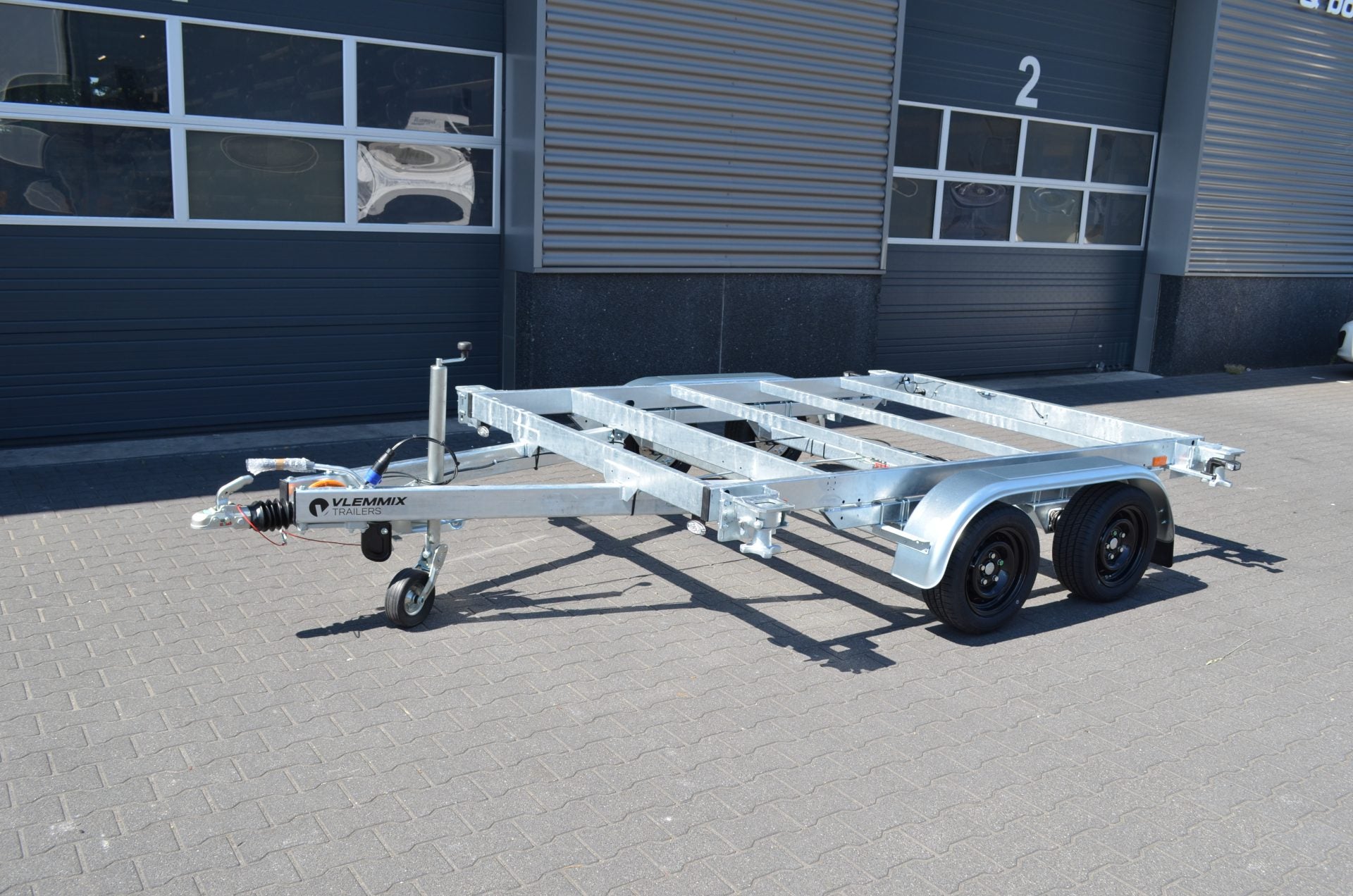
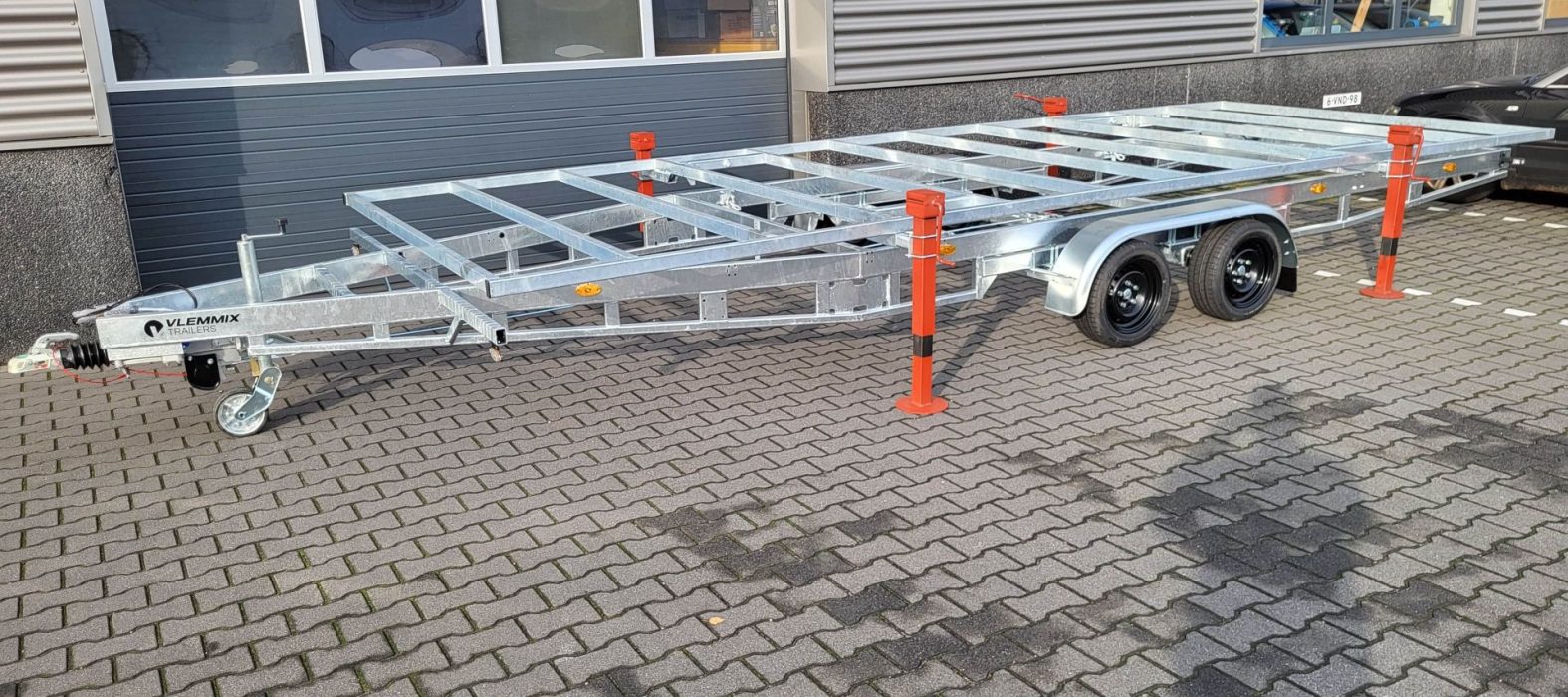
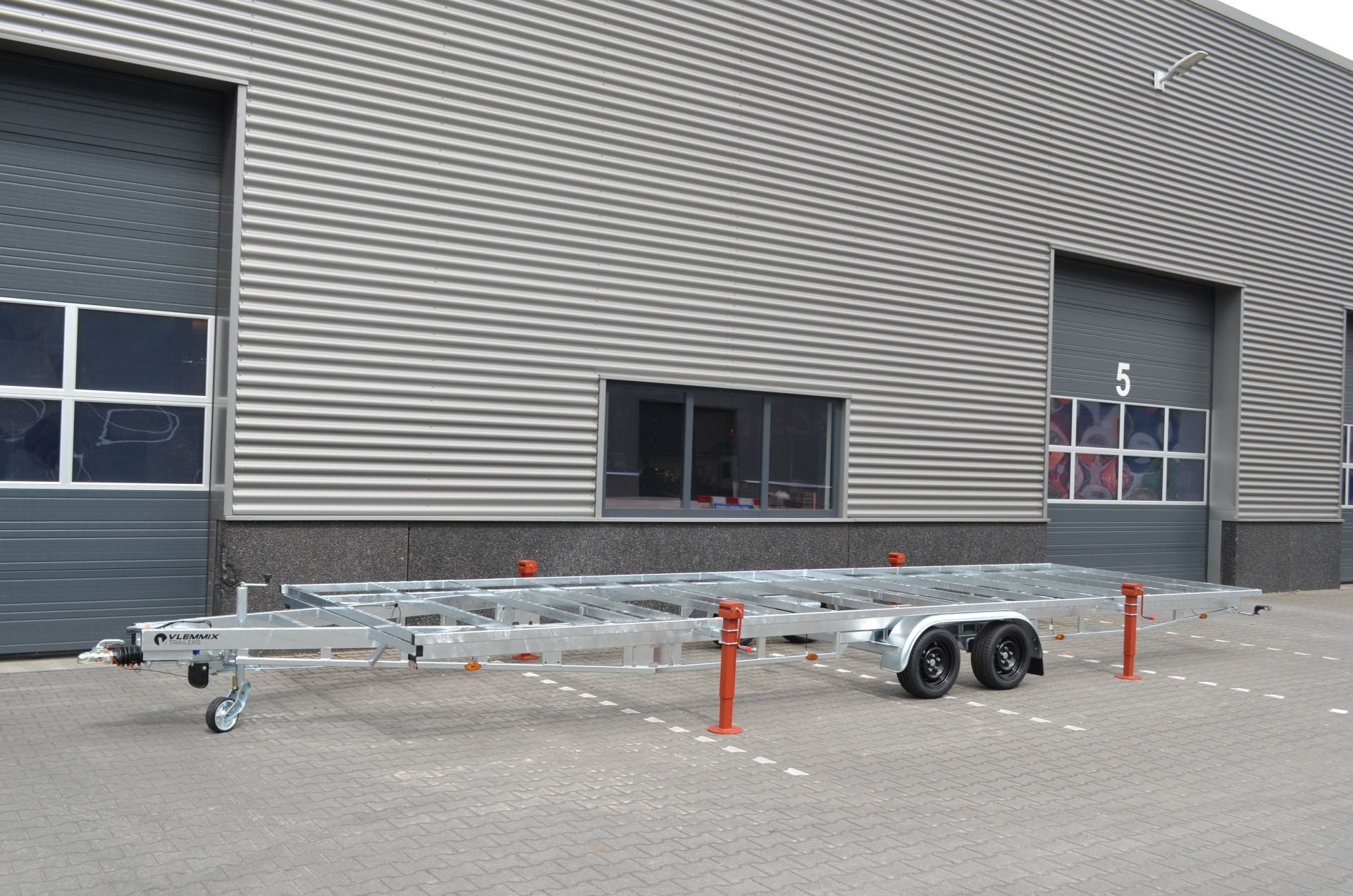
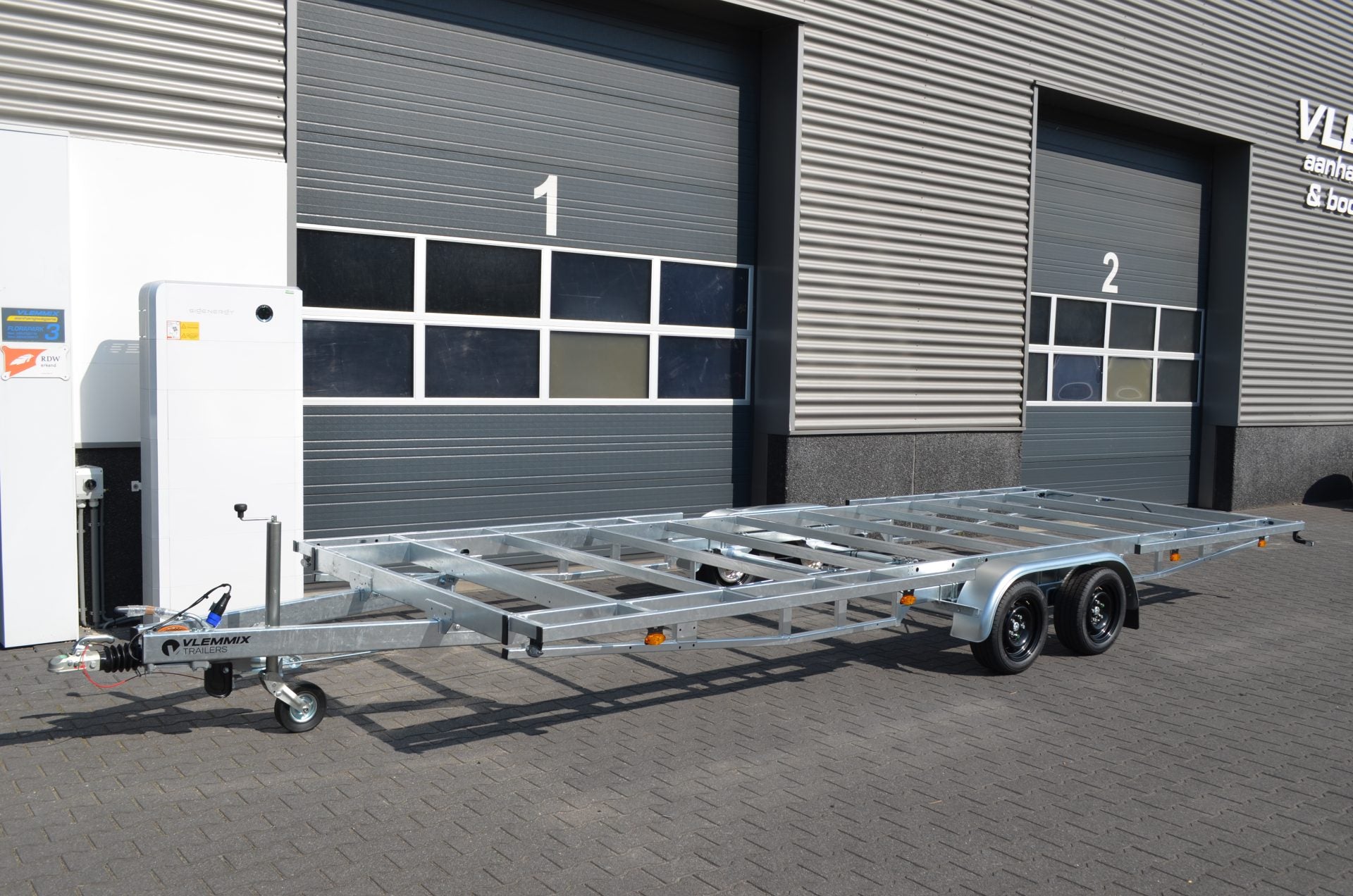
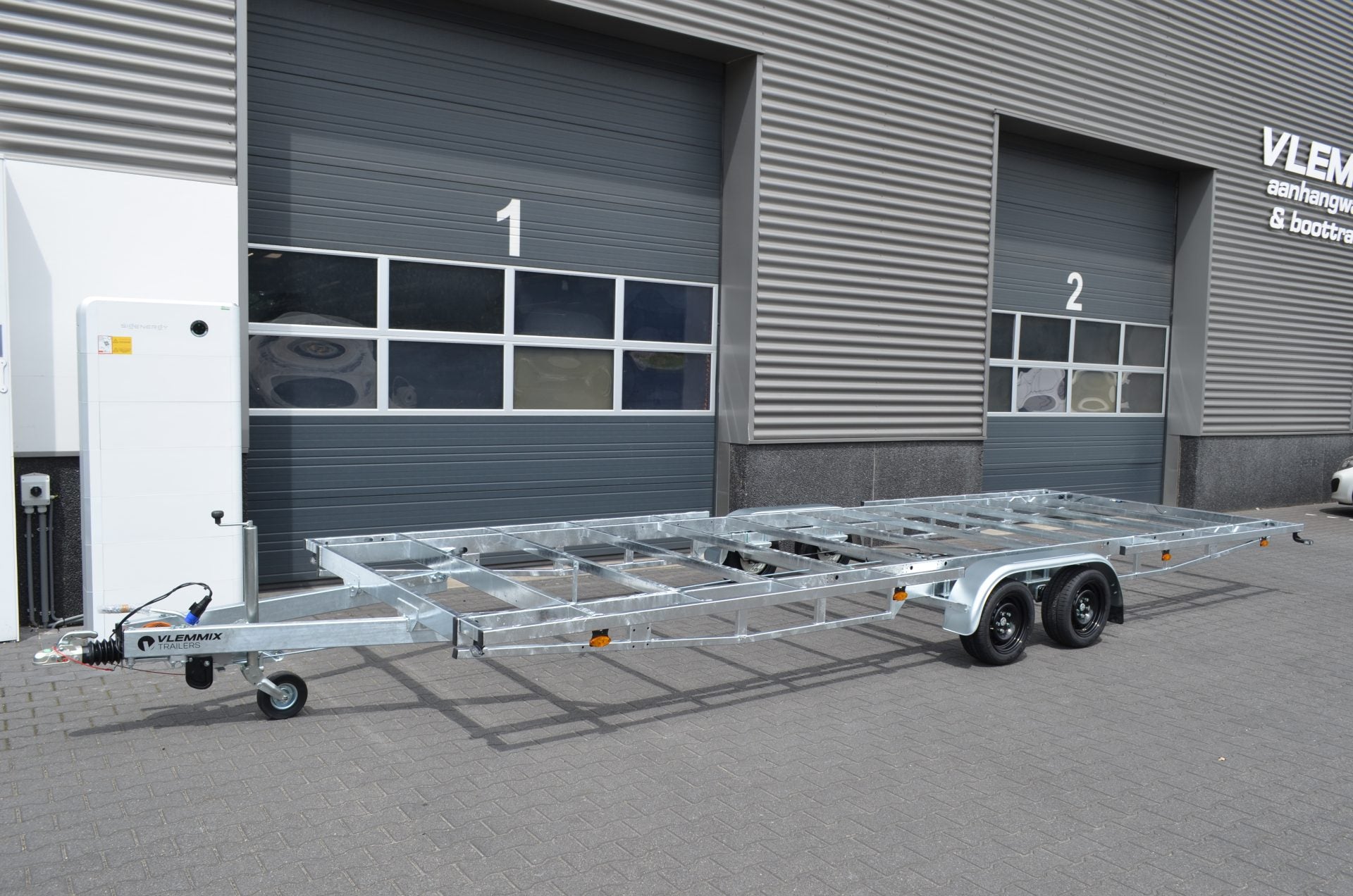
The independent dry-storage owner's kit has three parts. The boat storage trailer, with a hot-dip galvanised chassis designed for long stays and occasional movement. The boat cradle if the stay runs to months without moving, giving the hull the best possible support. And a car with a legally fitted tow hitch and enough capacity.
For a boat that also travels, the boat trailers range covers lengths of 4 to 12 metres with 3 mm steel and some of the lightest trailers on the market: 570 kg for a 6-metre boat trailer against 650-900 kg from competitors, which is extra payload margin for your boat. The complete family, with multi-roller, bunk and storage versions, is in boat trailers. All type approved, with a 2-year warranty and bought direct with no middlemen; Arnaud will finalise the exact configuration with no obligation.
Dry stacks by area: what the postcode changes
The same slot costs twice as much depending on the province. Barcelona, the Balearics, the Costa Brava and the urban-demand rias set the top of each range; the southern Mediterranean, the Andalusian Atlantic coast and inland reservoirs the bottom. The practical rule: 30-60 minutes from the expensive hotspot there is usually the same facility at half the price, and with the boat on a trailer that distance is covered once a season.
Seasonality moves rates too: marinas with low winter occupancy will negotiate half-season deals, and those that are full in August charge surcharges for extra launches. If your boating calendar is July and August, ask about the season rate at two or three marinas and compare the cost per actual outing, not the headline fee.
That cost-per-outing exercise is the one that changes the most contracts: €1,800 a year over 15 outings is €120 per day on the water. The same sum with your own trailer drops to €15-€25. With that in front of them, every owner knows where their own dividing line lies.
How to choose a dry stack if it is your option
If your boat's length or your circumstances point to a dry stack, choose with five questions. How many launches the fee covers and what an extra one costs. How far in advance you have to book and what happens in August. Whether the boat is accessible without launching it (to check, load, work on it). What the facility's insurance covers for handling. And whether there is water, electricity and a permitted work area on the hardstanding.
A sixth, seasonal: ask about the winter rate. Many marinas offer half a year at a reduced price, and combining a dry stack in season with winter storage at home on a cradle cuts the annual bill by 40-50% without losing any of the summer. The procedure for that winter storage is in storing the boat over winter.
Frequently asked questions
What is a dry stack marina?
A boat storage facility on land, on a hardstanding or in multi-level racks, inside or next to the port. The boat lives ashore and the marina launches it with a travel lift or forklift when the owner asks, usually by prior appointment.
How much does a dry stack marina cost per month?
Between €75 and €150 a month for boats up to 6-7 metres at standard Spanish marinas, and €300 to €800 for larger boats or premium facilities in the expensive areas. Always compare the number of launches included: that is the real difference between rates that look identical.
Is a dry stack cheaper than a berth?
At small and medium lengths, yes, with savings of 30-60% over an equivalent berth, plus the hull protection. At larger lengths the gap narrows. Compared with a trailerable boat kept at home, however, the dry stack is the expensive option.
What are the advantages for the hull?
Ashore there is no fouling, anodes barely wear and the moisture that turns into osmosis is held back. Annual antifouling is reduced or eliminated. It is the same protection a boat gets on a trailer or cradle at home: the difference is who charges you for it.
When does it pay off and when does it not?
It pays off for boats that cannot be trailered (over 7-8 metres or 2,500-3,000 kg), owners without space or a tow vehicle, and anyone who values having launching handled for them. It stops paying off with a trailerable boat: your own trailer costs the equivalent of 8-18 months of fees and removes the expense for good.
Can I work on my boat inside the dry stack?
It depends on the facility: many allow light maintenance on the hardstanding (washing, waxing, small repairs) and prohibit sanding and painting outside the yard area. Ask before signing if you intend to do your own maintenance, because policies vary a great deal.
What if I want to go out on the spur of the moment?
You need a launch appointment, and in high season the diary fills up: a spontaneous plan depends on the travel lift and the staff being free. It is the model's main drawback compared with a boat on your own trailer, which goes out at any hour from any slipway.
Does a dry stack work for the winter too?
Yes, and many offer a reduced low-season rate. The alternative that saves most: a dry stack only in the months of heavy use and winter storage at home on a cradle or trailer the rest of the year, combining summer availability with minimum winter cost.
What is the difference between a dry stack and a boatyard?
The boatyard is the port's work area: the boat comes out to be repaired or painted and goes back in within days. A dry stack is seasonal or year-round storage, with launches on demand. They share the hardstanding and the travel lift at many ports, but the contract and the rate are different.
Can I keep my trailer at the dry stack?
Many facilities accept the boat on its own trailer in a hardstanding slot, and some rent an in-house trailer for movements. If you have your own trailer, compare that format with a pure boat park: it usually costs less and keeps the flexibility of launching at any slipway.
Are the high racks safe for the boat?
Yes at serious facilities: racks are calculated by weight and length, and the boat-handling forklift is purpose-built machinery. The points to check are the hull supports on the bed (wide and rubber-faced) and the insurance cover for handling, which is where the real risk is concentrated.
What happens to my slot if I sell the boat?
Contracts are usually annual with notice: check whether they allow transfer to the buyer, a switch to another boat or early termination without penalty. A transferable slot in a busy area is even a selling point for the boat, just as a good trailer included is.
Are there waiting lists at dry stack marinas?
In the areas of highest demand, yes, although shorter than berth waiting lists: turnover is high and racks add slots. If your area is full, your own trailer plus a boat park gives you an equivalent service without waiting for a space to come free.