
The brochure for a 6.46-metre motorboat that sells well in Spain says 904 kg without the engine. With a 150 hp outboard, the 160-litre tank full and the gear on board, that same boat reaches the water weighing close to 1,300 kg. That is where the problem starts: almost everyone chooses a car by comparing the brochure figure with the towing capacity on their registration document, and leaves 400 kg out of the sum.
This guide is the complete calculation, in five steps, to work out whether the car you already have can handle your boat. With the four figures you have to look at, the worked numerical example and the part almost nobody checks until they are stuck on a wet slipway.
Quick summary
- The weight that counts is the boat ready to sail, not the catalogue figure: engine, fuel, water and gear add between 300 and 450 kg on a 6-metre motorboat.
- Your registration document gives two different limits: towing capacity braked and unbraked. The second rarely goes above 750 kg.
- The vertical load on the tow ball (the S value) is usually between 50 and 100 kg, and it is the limit most people exceed without knowing it.
- With a category B licence in Spain and a trailer of up to 750 kg gross vehicle weight, the combination can reach 4,250 kg. If the trailer is over 750 kg, the combination cannot exceed 3,500 kg.
- A 6-metre boat trailer with a tare weight of 570 kg leaves 230 kg more boat available than one weighing 800 kg with the same approved gross weight.
- The slipway asks more of a car than the motorway: gradient, weed and traction decide whether you get the boat out or call a recovery truck.
The four figures that decide whether your car can handle your boat
There is no single "towing capacity" figure. There are four independent limits, and breaking just one makes the outfit illegal or unsafe.
Maximum braked towing capacity. This is the one that appears in nearly every sales brochure. It sets how much you can tow when the trailer has its own braking system, which in boating is practically always the case above 750 kg gross weight.
Maximum unbraked towing capacity. This is a much lower figure, almost always between 600 and 750 kg. It only covers small inflatables, jet skis and light trailers. If your boat with its engine is over that figure, you need a braked trailer and there is no argument to be had.
Combined gross weight. This is the sum of the car's maximum authorised mass plus the trailer's, as stated on their registration documents. It governs the licence. It does not depend on what your boat weighs today, but on the approved figures for both vehicles.
Vertical load on the tow ball. The weight the trailer drawbar puts on the hitch. It is identified by the letter S on the hitch plate and in the car's handbook. On European cars and SUVs it usually falls between 50 and 100 kg.
All four are in documents you already have. The two towing capacities appear on the car's registration document, in fields O.1 and O.2 of the European format. The S value is on the riveted plate on the hitch, which also has to be legible at the ITV (Spain's roadworthiness test).
Step 1. Work out the real weight of your boat
The weight the builder publishes is the bare hull. For the outfit calculation you need the weight ready to sail, which is built up item by item. None of them is negligible.
| Item | How to estimate it | Example, 6.46 m motorboat |
|---|---|---|
| Hull without engine | Builder's specification | 904 kg |
| Outboard engine | 200-230 kg for a 150 hp four-stroke | 206 kg |
| Fuel | 0.74 kg per litre of petrol | 160 L = 118 kg |
| Fresh water | 1 kg per litre | 0 kg (no tank) |
| Gear and equipment | Anchor, chain, lines, lifejackets, cool box, skis | 70 kg |
| Boat ready to sail | 1,298 kg |
That jump from 904 to 1,298 kg is 44% more than the brochure says. Almost 400 kg of difference that appear as soon as you fill the tank and load the gear on board. If you keep the boat loaded, as almost everyone does, that is the weight you tow every weekend.
At shorter lengths the calculation is the same and the proportions hold. On a 4 to 5 metre inflatable or RIB, the engine and fuel can be 40% of the total, so it is worth settling what trailer a 4 to 5 metre boat needs before looking at the car's paperwork.
On keeled sailboats the item that throws the sums out is the ballast. A trailerable 6-metre sailboat with a fixed keel can carry 300 kg of lead under the hull, and that completely changes the weight distribution on the trailer. The guide to towing a sailboat safely goes into the detail of the cradle and the support.
Step 2. Add the trailer and compare with your registration document
To the weight of the boat ready to sail you have to add the trailer's tare weight, not its gross weight. The tare is what the empty trailer weighs, and it is the figure you add to the boat to know how much the car is towing.
Following the example, with a 6-metre boat trailer of 570 kg tare the towed outfit comes to 1,868 kg. With an equivalent trailer of 800 kg tare, the same motorboat goes up to 2,098 kg. That is 230 kg of difference that adds nothing to the boat.
Now compare against your registration document. A mid-sized SUV is approved for between 2,000 and 2,500 kg of braked towing capacity. At 1,868 kg you are inside it even at the bottom of the range. At 2,098 kg you are outside a car approved for 2,000 kg, and the problem is not the boat: it is the trailer.
There is a rule of thumb used by European caravanning clubs that works just as well for boats: do not exceed 85% of the car's kerb weight. It is not a legal obligation, it is a stability margin. A towed outfit of 1,868 kg calls for a car of around 2,200 kg kerb weight to feel comfortable, even if legally you could do it with less.
If your boat with its engine is over 750 kg, your trailer has to have brakes. It is worth understanding when a braked trailer is worth paying for because it changes the price, the ITV and the behaviour on long descents.
Step 3. Check the vertical load on the tow ball
This is the limit most often broken. A car can be approved for 2,500 kg of towing and accept only 75 kg on the ball. If the boat sits too far forward on the trailer, you exceed that value without noticing.
The practical industry benchmark is to leave between 5% and 7% of the towed weight bearing on the ball. For our 1,868 kg outfit that works out at 93 to 131 kg, above the 75 to 100 kg many cars are approved for. The answer is to move the boat a few centimetres aft on the trailer, not to ignore the figure.
With too little load on the ball the opposite happens, and it is more dangerous. The trailer starts to snake from 80 km/h and the outfit becomes unstable in the side wind from lorries. Correct distribution comes from positioning the hull properly, and for that it is worth reviewing how to position the boat correctly on the trailer.
The cheap way to check it is a bathroom scale and a block of wood under the jockey wheel. Ten minutes, once, and you are sure for good.
Step 4. Check the licence: it goes by gross weights, not by what it weighs today
This is where a lot of people go wrong, including articles doing the rounds online. The law does not look at what the outfit weighs on the day you travel. It looks at the sum of the approved gross weights of car and trailer. And a category B licence allows more than is usually said.
| Situation | Licence required in Spain |
|---|---|
| Trailer of up to 750 kg gross weight | B (the combination can reach 4,250 kg) |
| Trailer over 750 kg and combination up to 3,500 kg | B |
| Trailer over 750 kg and combination of 3,500 to 4,250 kg | B with code 96 |
| Combination above 4,250 kg | B+E |
The practical consequence for boat owners is a harsh one. An SUV with 2,500 kg gross weight plus a trailer approved at 2,000 kg gross weight add up to a 4,500 kg combination, so you need B+E even though your boat weighs 1,300 kg and you have towing capacity to spare. That is why it pays to size the trailer's gross weight to what you actually need rather than buying the biggest one just in case.
That is another point where tare weight matters. With a 570 kg tare trailer approved at 1,500 kg gross weight you have 930 kg of payload, enough for a large inflatable or a 5-metre RIB with its engine. With one of 800 kg tare and the same 1,500 kg gross weight you are left with 700 kg of payload, and that same boat no longer fits legally.
As for speed, the outfit is limited to 90 km/h on motorways and dual carriageways and 80 km/h on conventional roads. It is worth knowing before you work out journey times to a port 400 km away.
Step 5. Think about the slipway, not just the motorway
A car can tow 1,900 kg perfectly well at 90 km/h on a motorway and be unable to pull that same outfit up a harbour slipway. They are two different demands and the registration document only speaks to the first.
On the slipway what matters is traction, not engine torque. Harbour slipways have gradients of around 12% to 15%, the concrete in the tidal zone builds up weed, and the car's rear axle is unloaded because the weight of the outfit pulls back and down. A front-wheel-drive car with two people in the front loses grip exactly when it needs it most.
With outfits below 1,200 kg and clean concrete slipways, a front-wheel-drive car usually manages. Above 1,500 kg, or on weed-covered slipways, four-wheel drive stops being a luxury. That is field evidence, not laboratory data: ask any sailing club how many rescues they carry out each year with front-wheel-drive cars.
There are two tricks that work and cost nothing. Shift weight onto the driven axle by putting passengers in the back at the moment of pulling the boat out, and get the slipway wet as little as possible: pull the outfit out as soon as the hull floats, without leaving the car's wheels in the slippery zone. If use is going to be daily or the boat is over 7 metres, the realistic alternative is a launching trolley versus a road trailer, keeping road transport for the occasional trip.
Why the trailer's weight decides which car works for you
The whole calculation above rests on one figure you can actually choose: the trailer's tare weight. The boat weighs what it weighs and the car is the one you have. The trailer is the only variable where you can win hundreds of kilos.
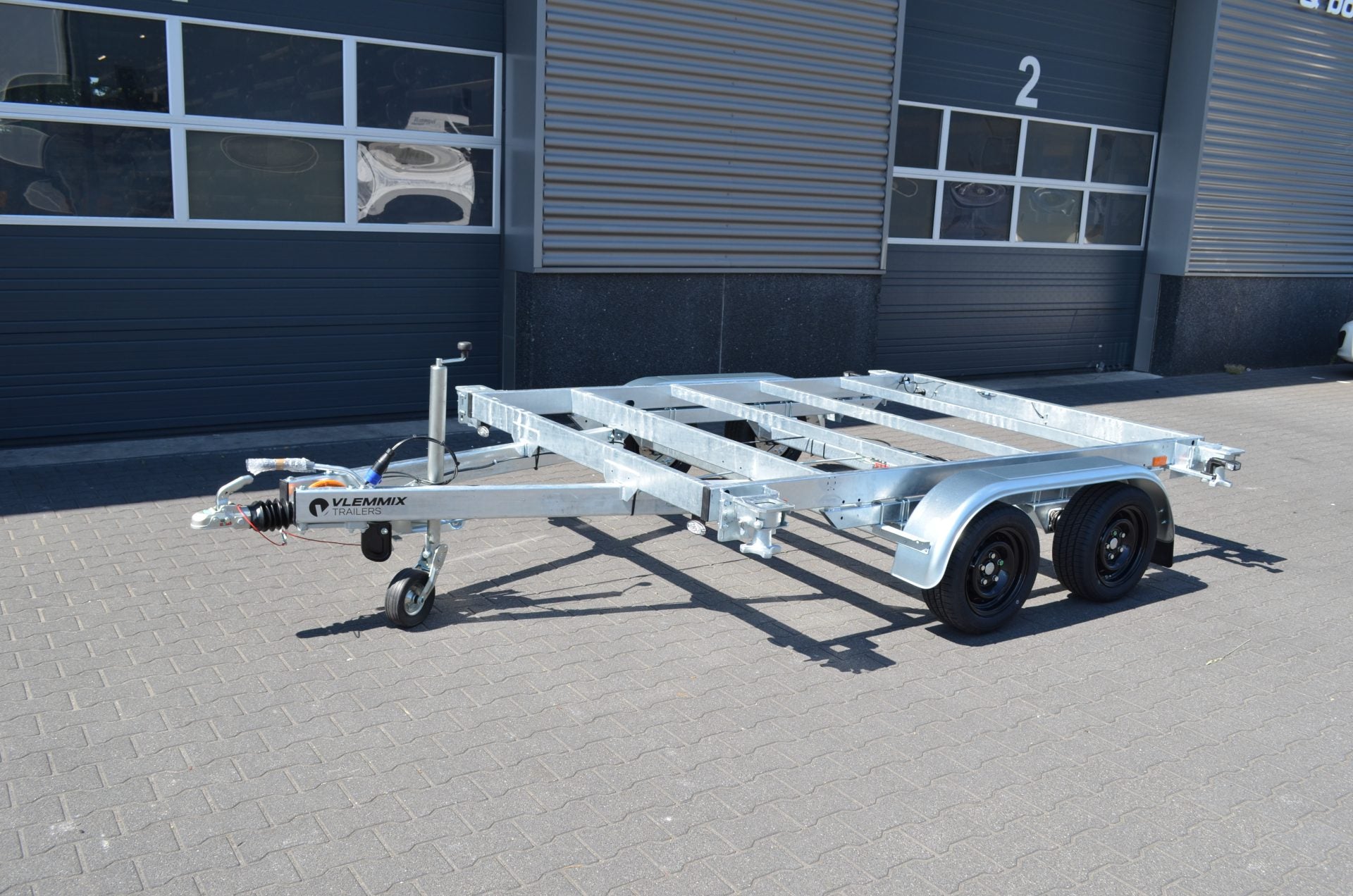
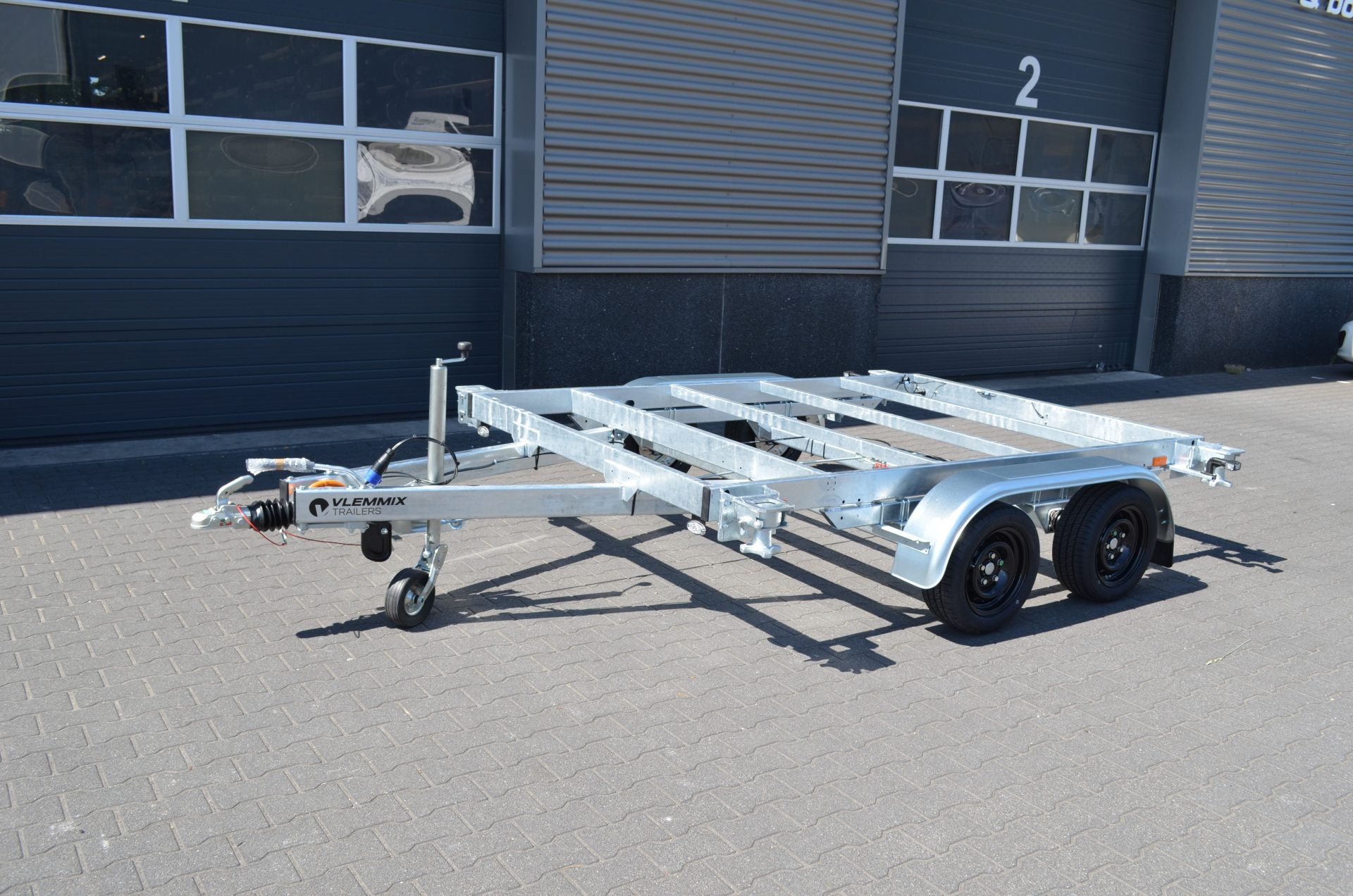
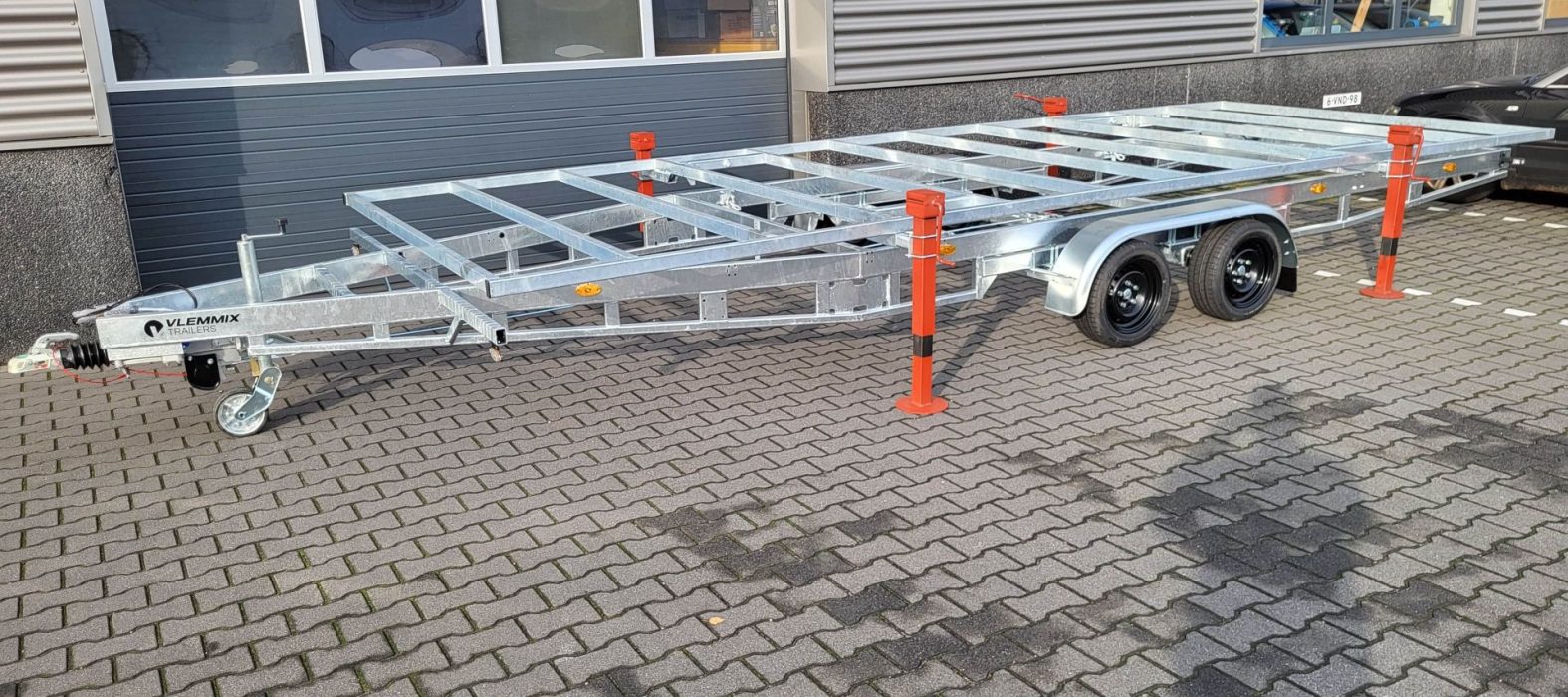
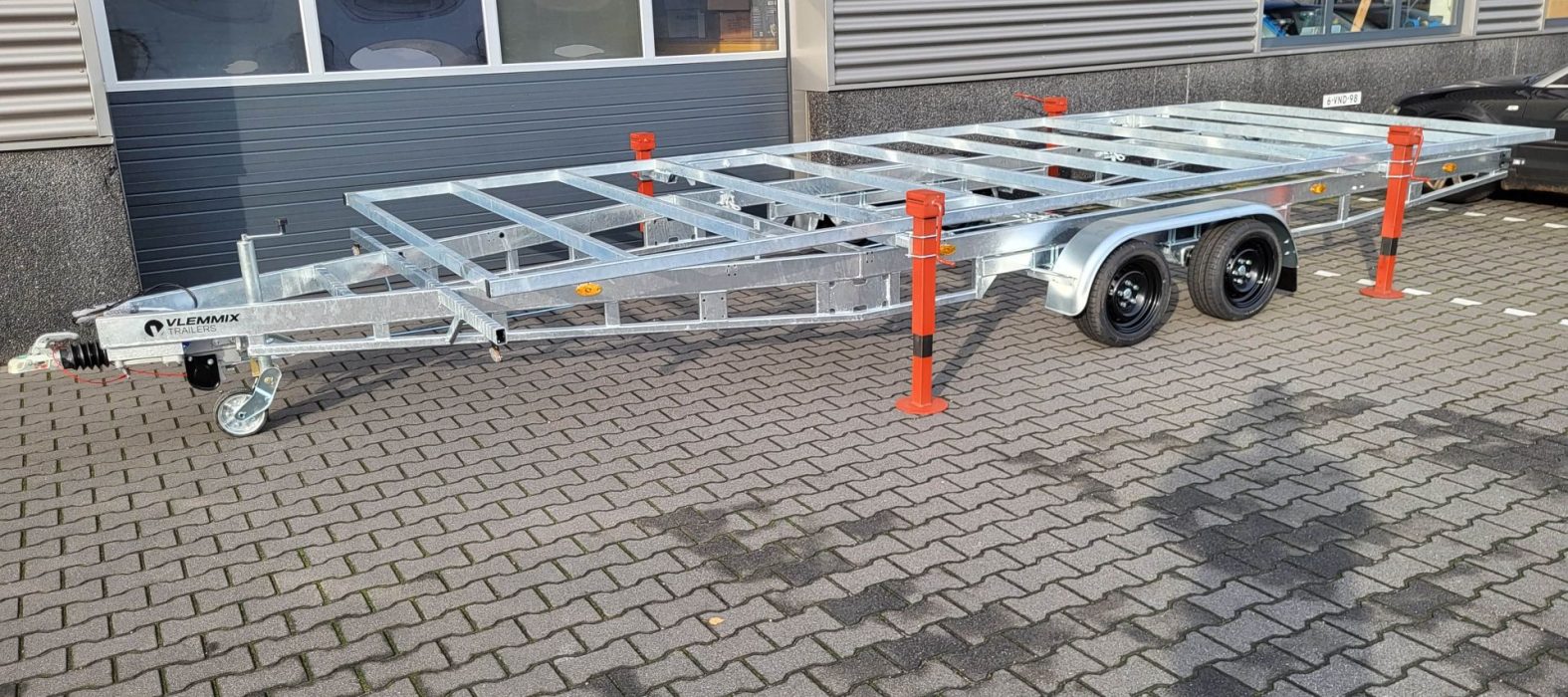
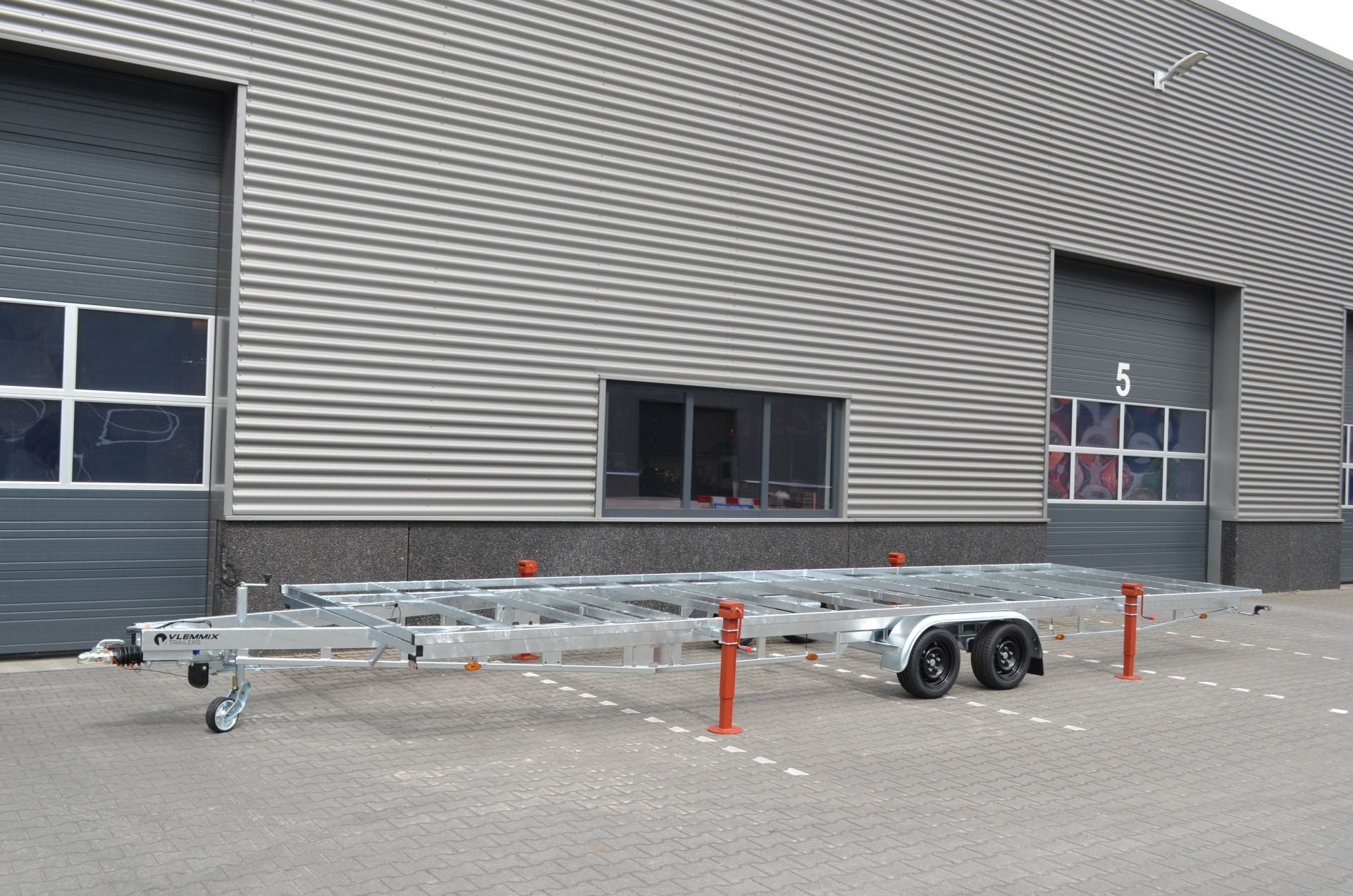
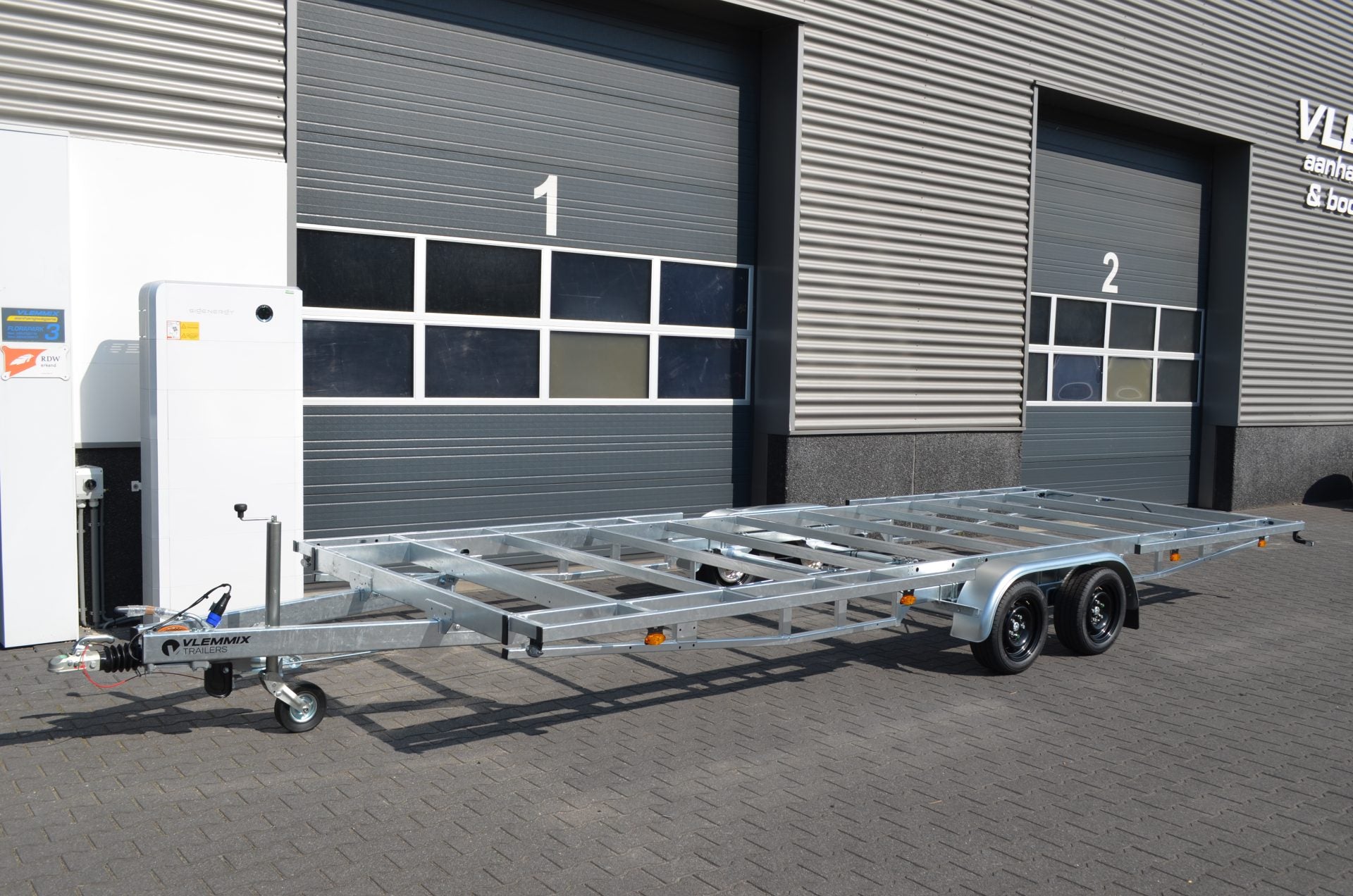
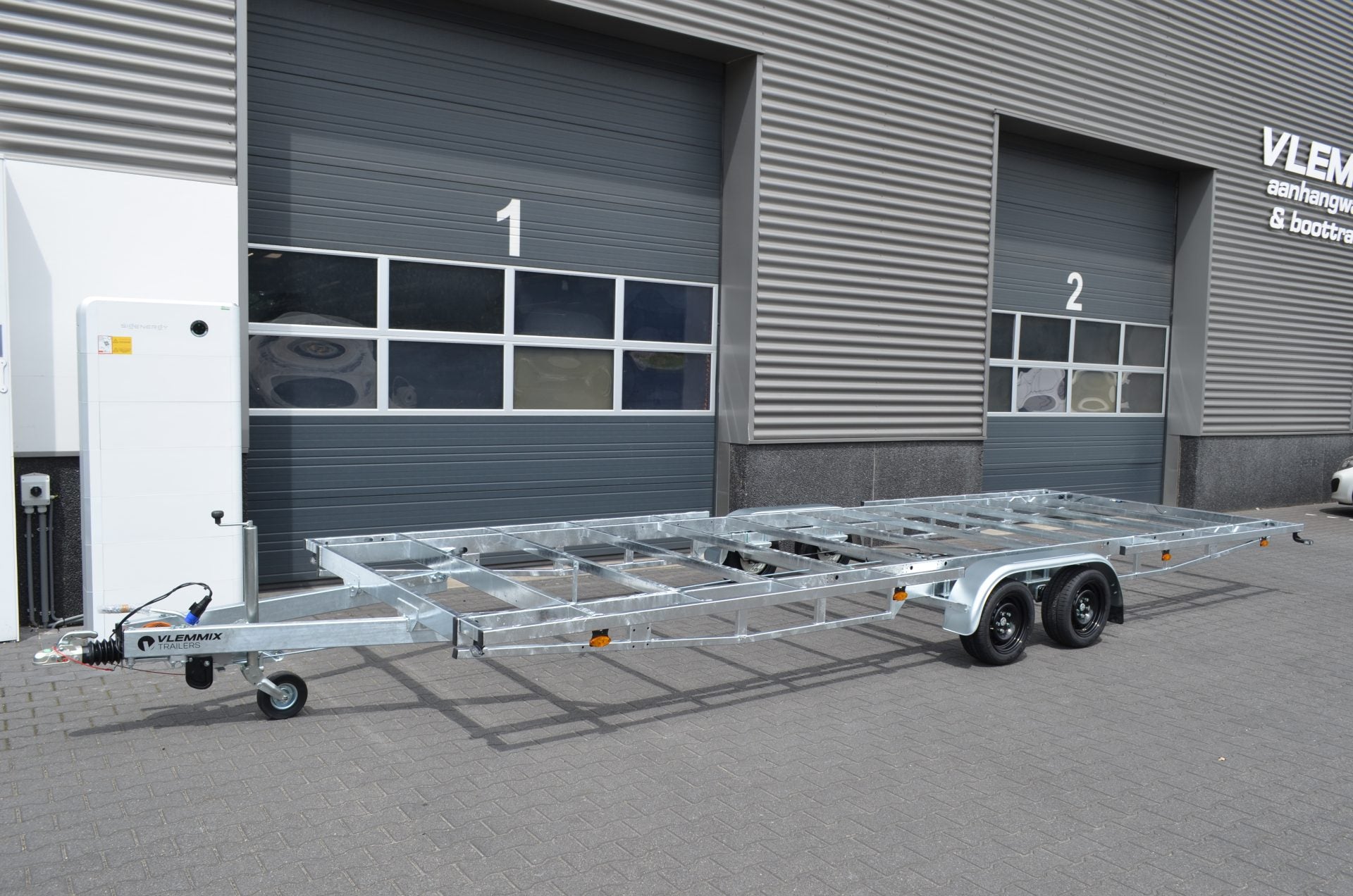
A 6-metre boat trailer from Remolque.es weighs around 570 kg, against the 650 to 900 kg of equivalents on the market. That is not a cosmetic saving. It is between 80 and 330 kg that turn into more boat available, into a less demanding car, or into the difference between needing B+E and not needing it.
What matters is how that weight is achieved. The chassis uses 3 mm thick steel against the usual 1.5 mm, so the lightness does not come from removing material where it matters. And it is hot-dip galvanised, which is what keeps a trailer alive when it goes into salt water forty times a year. You can see the dimensions and capacities in the range of trailers for 6-metre boats and compare the complete outfit in the catalogue of galvanised boat trailers.
For inflatables and RIBs, where the gross weight margin tends to be tighter, the range of trailers for inflatable boats works with even lower tare weights. And for fixed keels, the sailboat trailers solve the problem of supporting the ballast without penalising total weight.
Common mistakes when working out the outfit
Using the catalogue weight. That is the bare hull. It leaves out the engine, fuel and gear, which come to between 300 and 450 kg on a 6-metre motorboat.
Confusing the trailer's tare with its gross weight. The tare is added to the boat to know what you are towing. The gross weight is added to the car's to know which licence you need. Mixing them up leads to wrong conclusions in both directions.
Looking only at braked towing capacity. If the trailer has no brakes, the limit that applies is the other one, which usually stops at 750 kg.
Ignoring the S value. An outfit that is legal on total weight can still be putting 130 kg on a ball approved for 75 kg. It is an ITV defect and a real loss of control under braking.
Buying the biggest gross weight available. Every kilo of the trailer's gross weight counts towards the combination and can push you into B+E with no practical benefit.
Forgetting the car's occupants and luggage. It does not affect the licence, which goes by gross weights, but it does affect stability and the real braking margin on a long descent.
What to do if your car is not up to it
Before changing car, there are three cheaper ways out.
Reduce the towed weight. Travelling with the tank a quarter full instead of full takes 90 kg off a 160-litre tank. Taking out the cool box, the spare anchor and the kit you do not use takes off another 40 or 50 kg.
Change the trailer for a lighter one. That is the big lever, and you have already seen the sums: up to 330 kg of difference between a light trailer and a heavy one of the same length.
Outsource the long journeys. If you move the boat twice a year, comparing how much it costs to transport a small boat with the monthly payment on a new car usually gives a clear answer.
If changing car is unavoidable, look at the approved towing capacity version by version before you look at the styling. We have compared towing capacities by model so you do not have to start from scratch.
And if the underlying aim is to stop paying for a berth, the trailer solves both problems at once. Keeping the boat at home on a trailer or a cradle avoids between €300 and €800 a month of berthing or dry stack fees and keeps the hull out of the water, which is the best prevention against osmosis. The range of boat storage trailers is designed for exactly that use.
Talk to Arnaud before you buy
The outfit calculation takes ten minutes with the figures in front of you. At Remolque.es we do not sell you a trailer and disappear: Arnaud is your point of contact for the quote, the order, delivery and after-sales, and he does this calculation with you before you pay anything. Tell us the length, the hull weight, the engine and your car's towing capacity, and we will tell you which trailer fits and which licence you need to drive it. Every model meets European regulations, with gross vehicle weight configurable up to 3,500 kg and a two-year warranty against manufacturing defects.
Frequently asked questions
How do I know exactly how much my car can tow?
It is on the vehicle's registration document, in fields O.1 and O.2 of the European format: maximum braked and unbraked towing capacity. They are two different figures and the one that applies is the one matching your trailer. The car's handbook repeats the figure in the weights section.
Do I need B+E to tow a 6-metre motorboat?
It depends on the gross weights, not the real weight. If the sum of the car's and the trailer's gross weights exceeds 4,250 kg, yes. An SUV of 2,500 kg gross weight with a trailer approved at 2,000 kg adds up to 4,500 kg and already calls for B+E, even if the boat weighs 1,300 kg.
How much weight can the trailer put on the ball?
That is set by the S value on the hitch plate and in the car's handbook, normally between 50 and 100 kg. The practical recommendation is to leave between 5% and 7% of the towed weight on the ball, always respecting the manufacturer's limit.
Do I need a 4x4 to pull the boat off the slipway?
Below 1,200 kg of outfit and on clean concrete, front-wheel drive is usually enough. Above 1,500 kg or with weed in the tidal zone, four-wheel drive makes the difference between getting out first time and needing help.
What speed can I drive at with the boat hitched up?
A maximum of 90 km/h on motorways and dual carriageways and 80 km/h on conventional roads in Spain. Those are maximums: with a side wind, rain or tight weight distribution, it is better to stay below them.