Moving a shipping container 50-100 km costs between 250 and 600 euros with a crane truck, according to typical industry rates in Spain. Someone who moves it twice a year pays over 1,000 euros annually to third parties for an operation that, with the right equipment, only costs fuel. Here are the actual rates for each method, the variables that drive them up, and the exact point where buying outweighs hiring.
TL;DR
- Crane truck (self-loading): 150-600 euros per standard move. The option without own equipment.
- Flatbed truck plus crane at destination: 300-900 euros; necessary when the crane cannot reach.
- Own trailer: 3,000-6,000 euros one-time purchase; after that, each movement costs fuel (about 15-25 euros/100 km).
- Break-even: starting from 2 movements per year, the trailer pays for itself in 3-5 years; with 4 or more, in less than 2.
- What drives up the price of hired transport: difficult access, distance, urgency, weekend, and loading wait times.
The three methods and their cost
| Method | Cost per movement | Includes | Limit |
|---|---|---|---|
| Crane truck | €150-600 | Loading, transport and unloading | Access: needs space for outriggers |
| Flatbed truck + crane | €300-900 | Transport; crane hired separately | Coordination of two services |
| Own trailer | €15-25/100 km (fuel) | Transport; loading with telehandler or jacks | 10ft full or 20ft empty |
The ranges correspond to indicative rates in the Spanish market, which vary by province, season, and fleet availability: short urban transports are closer to the minimum of each range, and interprovincial transports with complicated access or urgency are closer to the maximum. Treat these figures as a starting point for negotiation, not a fixed price. Always ask for a fixed price with the described access and photos of the drop-off point: unexpected surprises at the destination are the most common extra cost.
Crane truck: cost and limitations
The self-loading truck is the industry standard: a single vehicle loads with its crane, transports, and unloads. Local transport (less than 30 km) is around 150-300 euros; regional transport (50-150 km) is 300-600 euros. Beyond that, many carriers charge per kilometer (1.5-3 euros/km) plus a fixed loading and unloading fee.
Its Achilles' heel is access. The crane needs to deploy outriggers and operate within a radius: narrow roads, slopes, soft ground, and power lines can prevent the maneuver. When the truck cannot reach the exact point, the container stays where the crane can reach, and moving 2,000 kg the last 50 meters becomes your problem.
Add the extra charges: waiting time (30-60 euros/hour), weekends, urgency, and a second maneuver if the location requires repositioning. A "300 euro" transport can end up costing 500 euros with just a couple of extras.
Flatbed truck plus crane: the expensive Plan B
When the container is loaded or the location requires a higher tonnage crane, the operation is split into two services: a flatbed for transport and a self-propelled crane at the origin or destination. The usual total ranges from 300 to 900 euros per movement, plus the coordination of two providers' schedules.
This is the correct method for loaded containers, 40-foot containers, or in complex locations (elevations over walls, inner courtyards, remote street unloading). For the typical owner with a 10 or 20-foot storage container that moves empty, it's overkill: you pay for tonnage you don't use and coordinate two schedules for a simple operation.
Own trailer: the game-changing math
A container trailer converts the cost per move into fuel cost. A 3,000 kg setup behind an SUV consumes an extra 3-5 liters per 100 km: about 15-25 euros per average move, compared to 300-600 euros for a truck. The one-time purchase (3,000-6,000 euros depending on size and configuration) is the only barrier.
The break-even point is calculated on a napkin with two pieces of data: your average contracted transport rate and your projected annual movements. With 2 movements per year at an average of 400 euros, you save 800 euros annually: the trailer pays for itself in 4-6 years. With one movement per month (cabin rentals, events, construction), you save over 4,000 euros annually, and amortization drops below 12 months. From that point on, every transport is profit.
There's a second effect that the napkin doesn't capture: availability. Without depending on the crane operator's schedule, the container moves today, at the time you decide. For seasonal businesses, arriving a week before the competition is worth more than the transport savings.
The limits of owning your own trailer (no hype here)
The trailer can move a full 10-foot container (tare weight 1,200-1,400 kg plus light cargo) or an empty 20-foot container (2,080-2,300 kg). It cannot move a loaded 20-foot container or any 40-foot container: that is truck territory, no discussion. The 3,500 kg PTAC is a legal limit, not a suggestion.
It also requires a capable car (3,500 kg of braked towing capacity for the 20-foot container) and a B+E license in the typical case. Review the full scale in what trailers I can tow with my license. And like all trailers over 750 kg, it requires a red license plate, its own insurance, and periodic inspection: the process is in the guide for passing the trailer ITV the first time.
Loading and unloading can be solved with a rented telehandler (200-350 euros/day) or container jacks (600-1,500 euros for the set, forever). Even adding jacks, the complete equipment costs less than 10 hired transports.
Three typical budgets, with full figures
Scenario one: single delivery of a 20-foot container bought 40 km away, good access. Crane truck: 250-400 euros, operation completed in one morning. Buying equipment for this makes no sense; hire and forget.
Scenario two: campaign container that moves back and forth between two plots 60 km away, twice a year. Hired: 4 annual movements at an average of 350 euros, 1,400 euros per year, 7,000 over five years. With own trailer (4,500 euros for a 20-foot container including jacks): fuel cost of about 100 euros annually and a net saving of over 2,000 euros already in the second year.
Scenario three: business with three modules that rotate monthly within a 100 km radius. Hired: 36 movements at 400 euros, 14,400 euros annually, an expense that devours the margin. With own trailer and used telehandler (about 20,000 euros in total investment): the annual expense drops to less than 2,000 euros between fuel and maintenance, with full amortization in 18 months.
The conclusion from these three scenarios can be summed up in one line: hired transport is a good one-off service and a terrible structural cost.
How to request a transport quote without surprises
If hired transport is your option, the difference between paying 300 or 550 euros lies in how you ask for the price. Always send three things: the actual tare weight of the container (photo of the CSC plate), photos of the access at origin and destination, and the exact coordinates of both points. With that, the transporter will give a fixed price; without it, they will quote low and charge extras at the destination.
Ask about what's not in the rate: waiting time cost, holiday surcharge, what happens if the crane can't reach the final spot, and if the price includes a second repositioning maneuver. A serious quote will answer all four questions in writing; one that responds with vagueness is likely to surprise you later.
And compare with the complete alternative, not just with today's transport. The right question to ask when receiving the quote is how many times you will repeat the operation in the next three years. From there, the decision between hiring and buying your own equipment makes itself, using the table above.
Case study: events company with two containers
An events company moves two 10-foot containers (bar and storage) to 6 fairs a year, an average of 120 km. Hired: 12 movements at an average of 400 euros, 4,800 euros per year, plus holiday surcharges that coincide with the fairs.
With own trailer: one-time purchase of about 4,000 euros, container jacks (900 euros), and fuel (about 600 euros a year for the 12 moves). The first year almost breaks even; from the second year, it saves over 4,000 euros annually and gains the flexibility to set up and dismantle at its own time. The calculation is identical for construction site cabin rentals, food trucks, and temporary warehouses.
Before buying a used container for these purposes, apply the same filter as for any used equipment: the criteria are in new vs. used trailer, and business ideas with containers are in creative uses for shipping containers.
Where to find the equipment
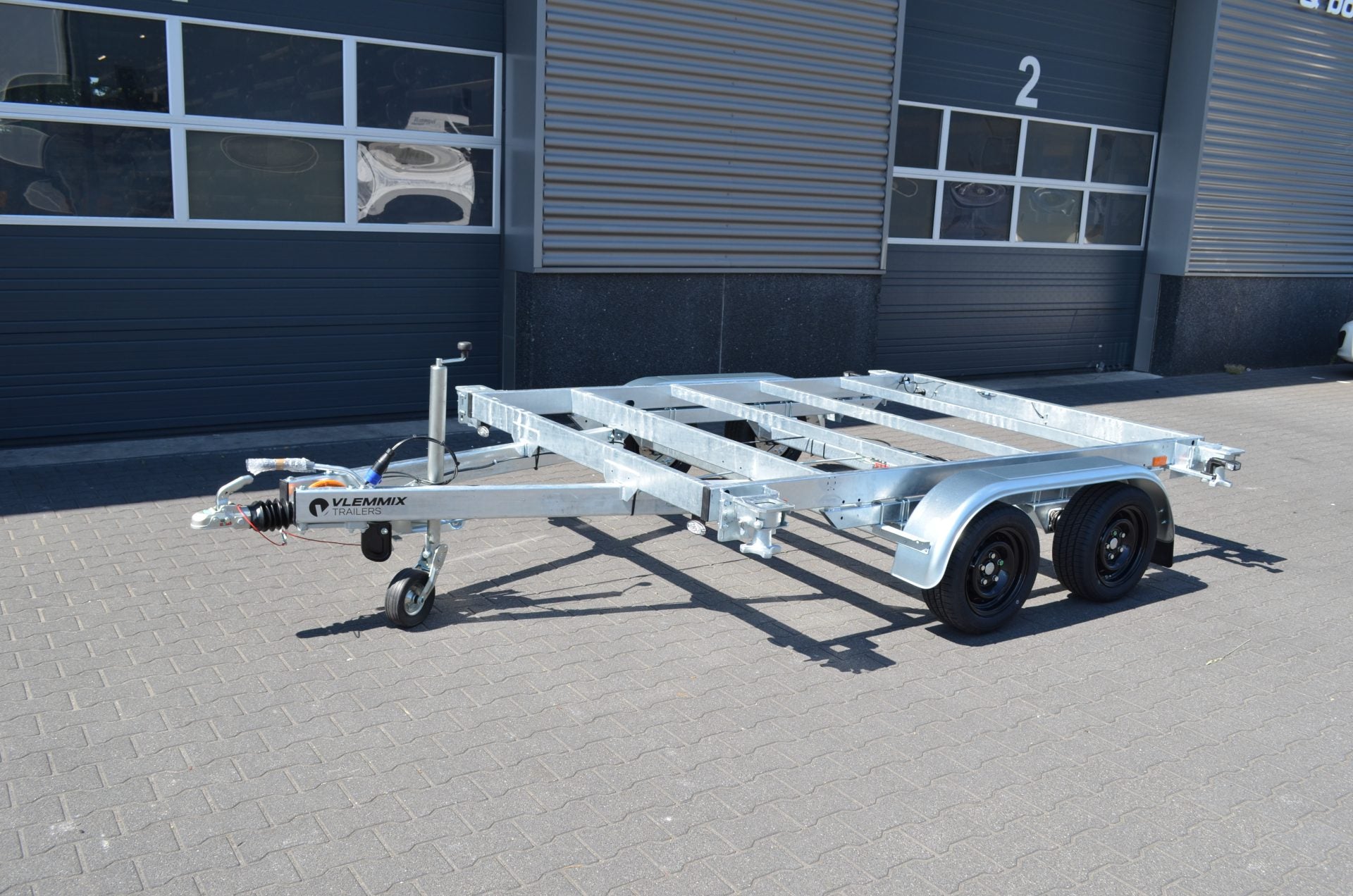
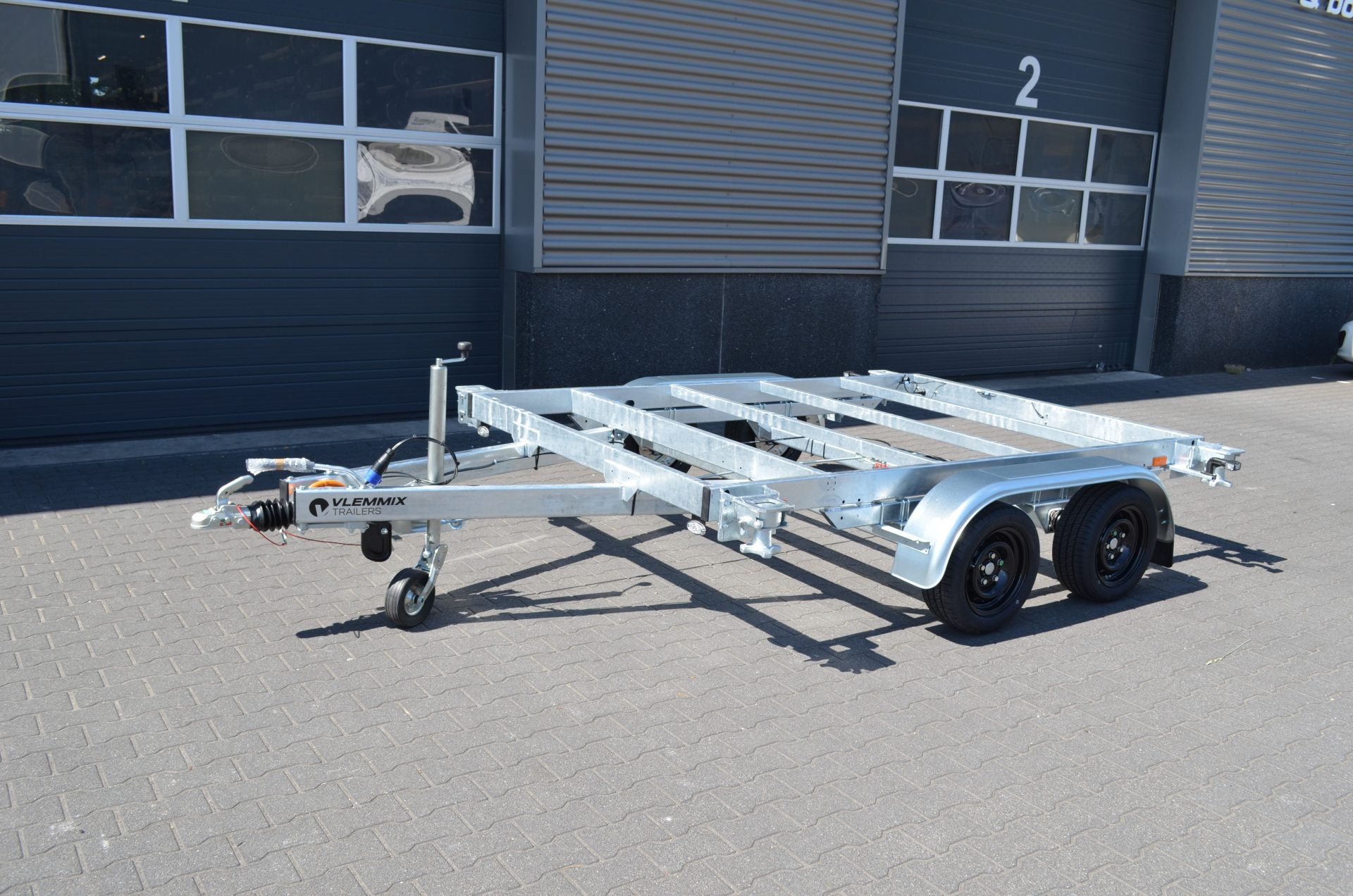
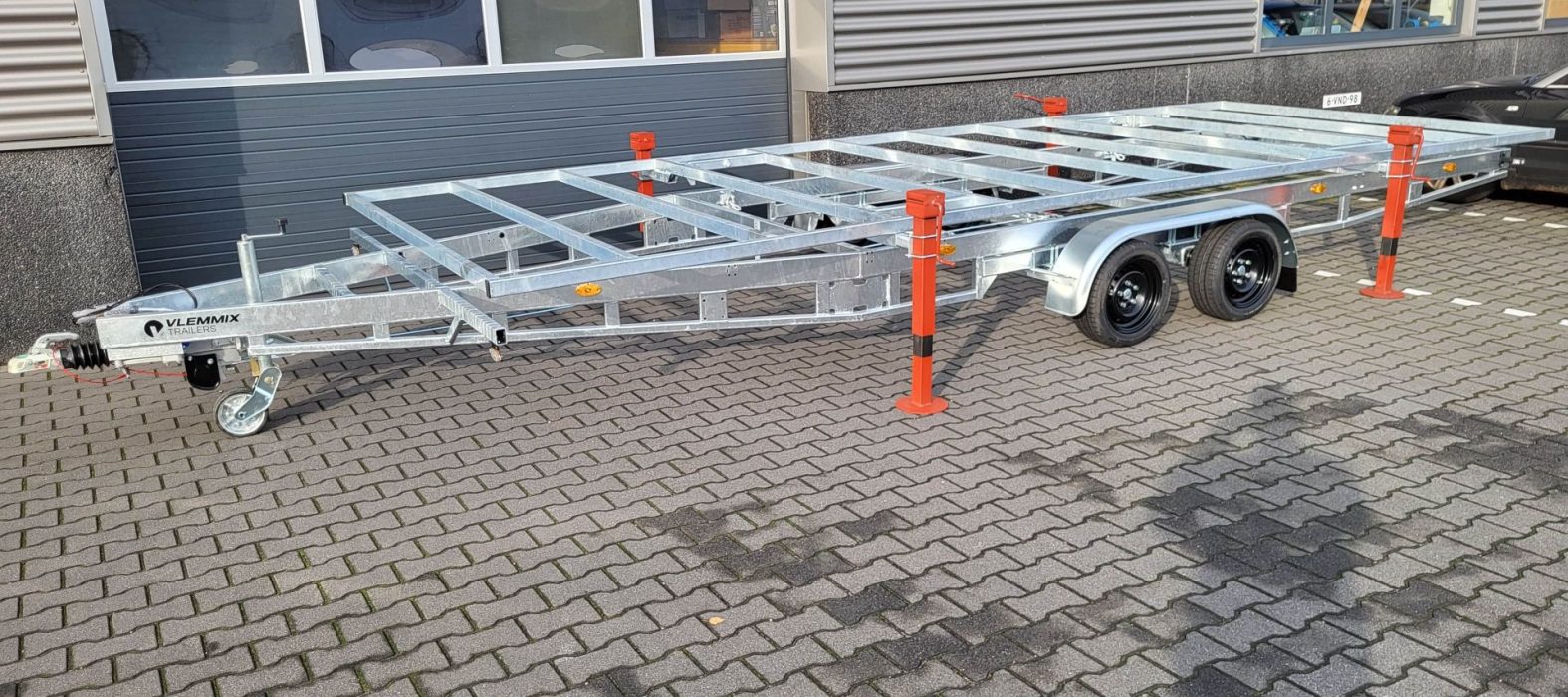
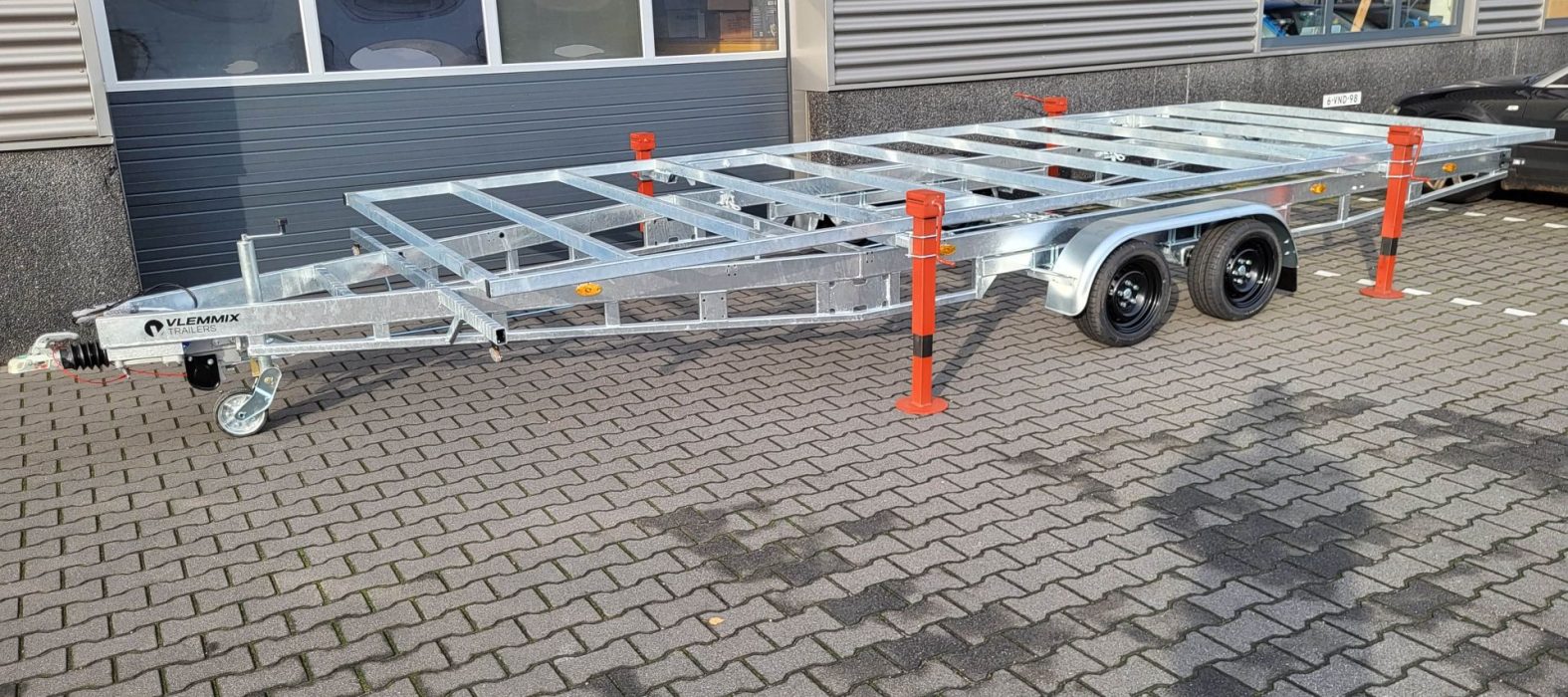
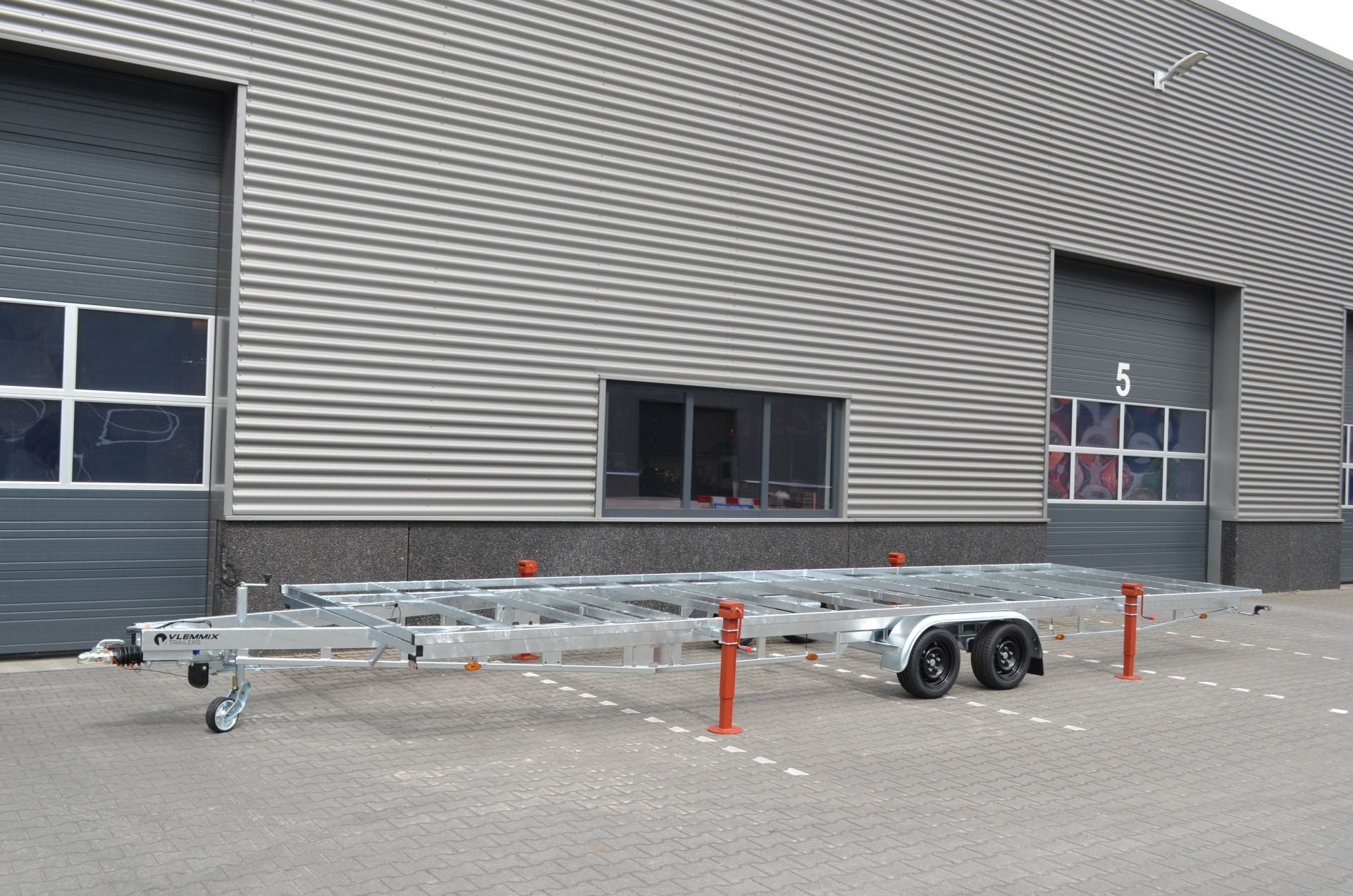
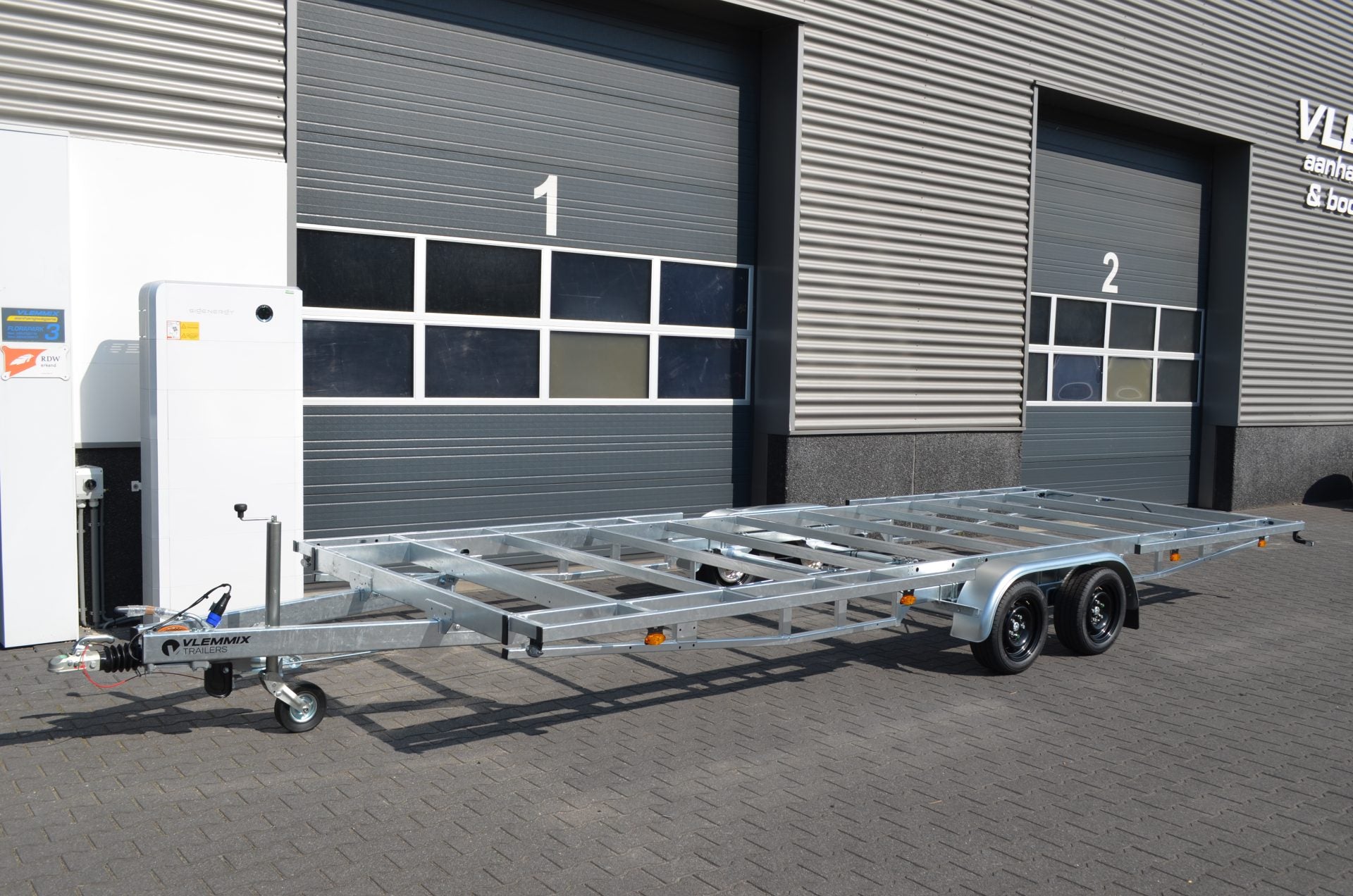
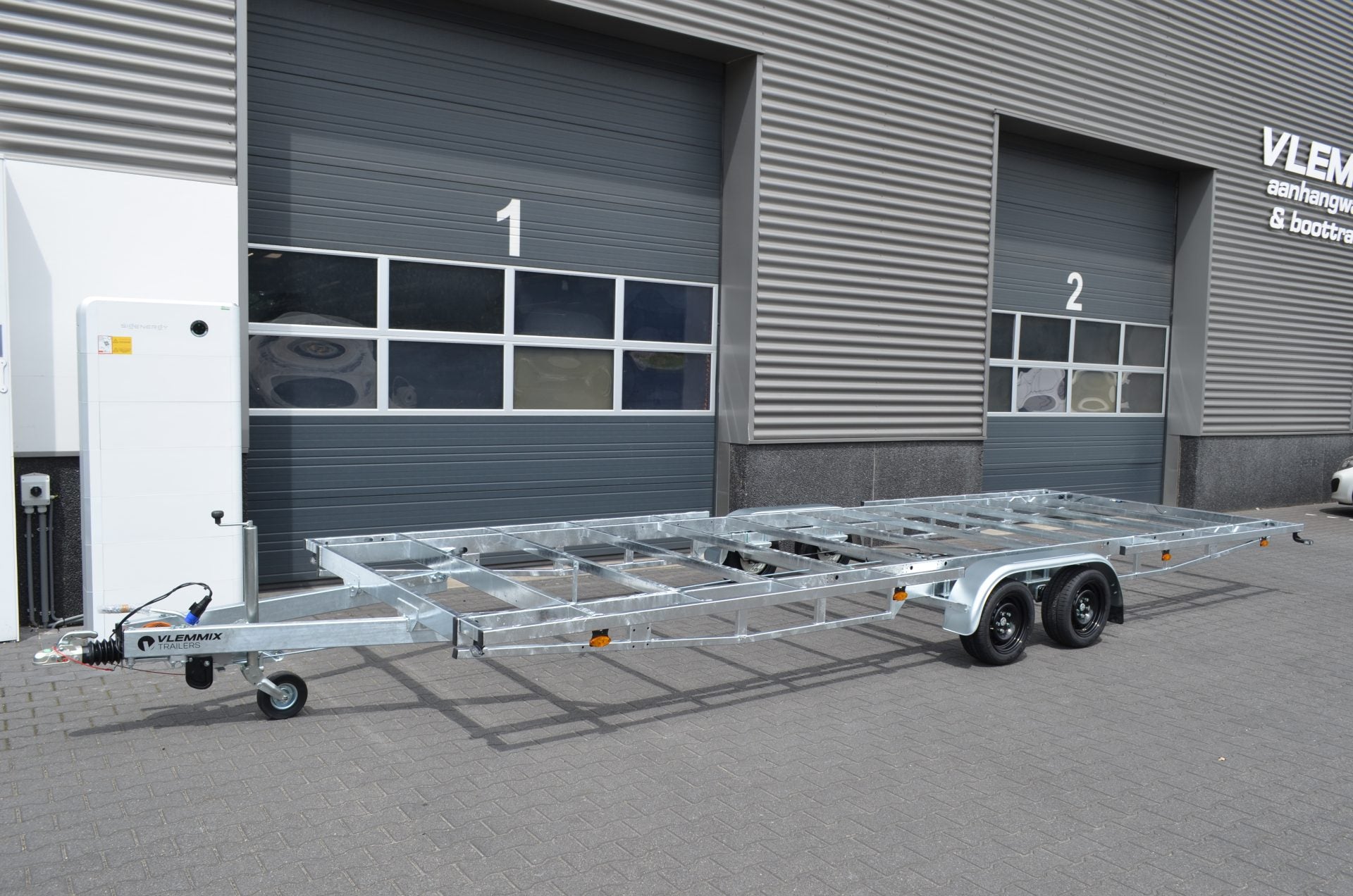
The range of container trailers covers 10 and 20-foot containers with ISO twist locks, double braked axle, and 2mm hot-dip galvanized steel chassis. The 20-foot model is available in 20-foot container trailers starting from about 5,200 euros with European homologation and a 2-year warranty.
If you also move machinery (the telehandler that loads your container, for example), machinery trailers complete the fleet with the same philosophy: contained weight and hot-dip galvanization. All within the cargo trailer family, buying direct without intermediaries. Arnaud can do the numbers for your specific case: consult without obligation.
Frequently Asked Questions
How much does it cost to move a 20-foot container with a crane?
With a crane truck, between 150 and 300 euros for local transport and 300 to 600 euros for regional distances, depending on access and waiting times. Common extras (difficult access, holiday, urgency) add 50-200 euros. Ask for a fixed price by sending photos of the loading and unloading points.
What is cheaper for moving a container many times?
Owning your own container trailer. From the second annual movement, the savings compared to contracted transport amortize the purchase in a few years; with monthly movements, in less than one. Each self-transport costs fuel: about 15-25 euros per 100 km.
Can I move a loaded container with my car and trailer?
Only a 10-foot container can be loaded (1,000-1,200 kg) without exceeding the trailer's 3,500 kg PTAC. A 20-foot container can only travel empty, because its tare weight already consumes almost all of the payload capacity. Loaded or 40-foot containers require a flatbed truck or self-loading truck.
How much does it cost per kilometer to transport a container?
Indicative rates for crane transport are around 1.5-3 euros per kilometer for medium distances, plus a fixed loading and unloading fee (100-200 euros). That's why short transports have a minimum price: the maneuver costs the same at 10 km as at 100 km.
What do I need to transport containers as part of my business?
A type-approved container trailer with twist locks (red license plate, own insurance, and up-to-date ITV for exceeding 750 kg gross vehicle weight), a vehicle with 3,500 kg towing capacity, a B+E license in the typical case, and a means of loading: a rented telehandler or your own container jacks.
Do transport prices include exact on-site unloading?
Only if the crane can reach the final spot with its outriggers deployed. If the truck cannot get close (narrow road, soft ground, cables), it unloads where it can reach, and repositioning is your responsibility. This is the differential advantage of a car-trailer combination: it goes where a passenger car goes.
How much does it cost to move a container a few meters within my property?
Almost nothing in money and quite a bit in time: with conventional jacks, blocks, and steel rollers (100-400 euros for materials), an empty container can be moved on firm ground. Quick alternative: a rented telehandler for half a day solves repositioning for 150-250 euros.
Is it profitable to offer transport services to third parties with my trailer?
As a casual activity between individuals, the legal boundary of remunerated transport is delicate: commercial transport of goods for hire requires a transport authorization. As an internal service for your own business (moving your site offices, your containers, your materials), the savings are direct and without administrative friction.
How much does it cost to transport a container between provinces?
For distances of 200-500 km, flatbed transport is quoted per kilometer (1.5-3 euros/km) plus loading and unloading, with typical totals of 500 to 1,200 euros. Groupage (sharing a truck with other loads) can reduce the bill if the date is flexible and you don't mind waiting for a slot. With your own trailer, the same trip costs only the car's fuel: between 60 and 120 euros depending on consumption and tolls.
Does the price change if the container is loaded?
Yes, on two fronts. The weight may require a higher tonnage crane and a higher capacity truck, with increases of 20-50% over the cost of moving an empty one. And rule out your own trailer in the case of a 20-foot container, which only travels empty behind a car. Emptying it before moving is usually the biggest saving available for the entire operation.