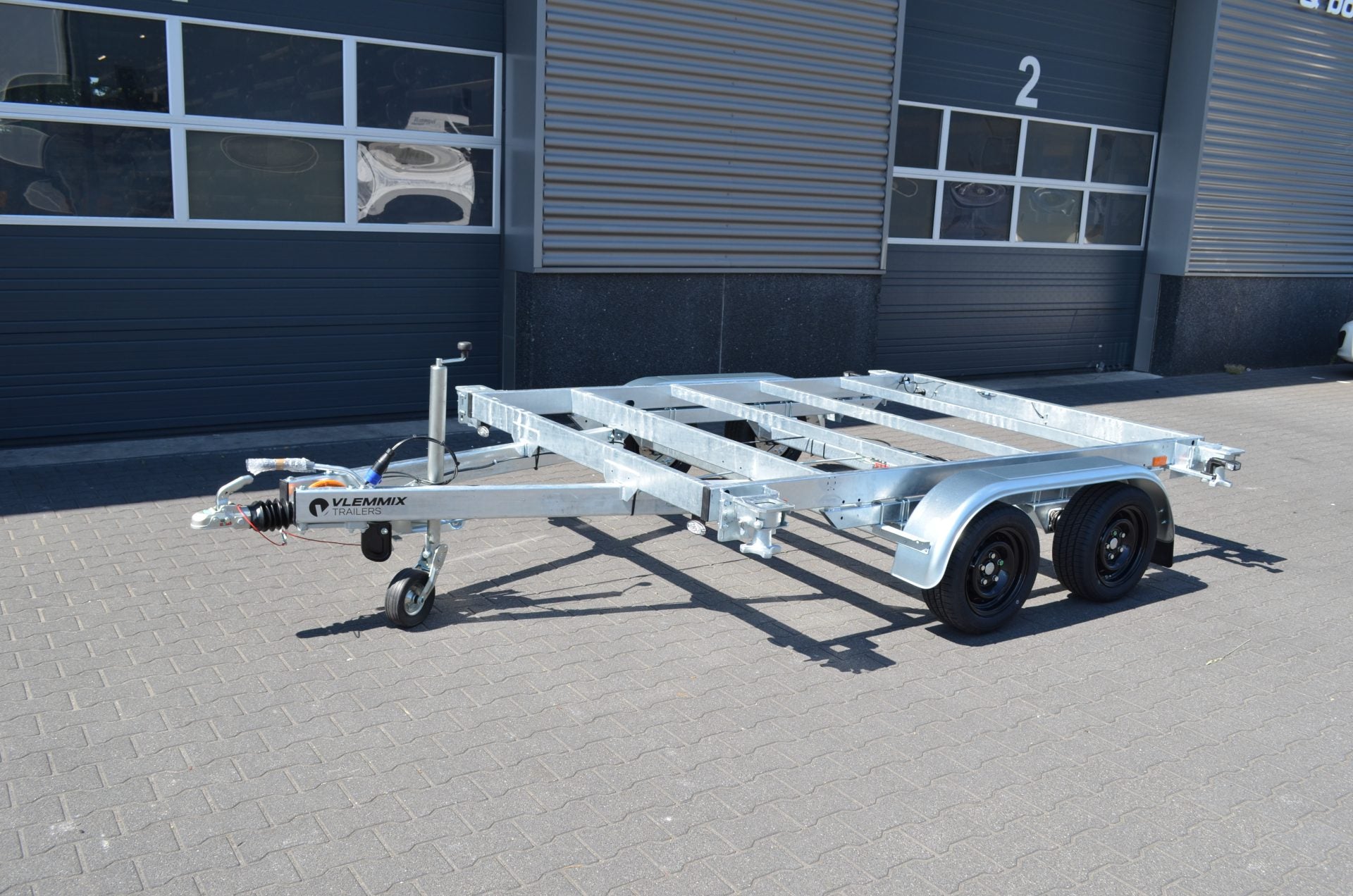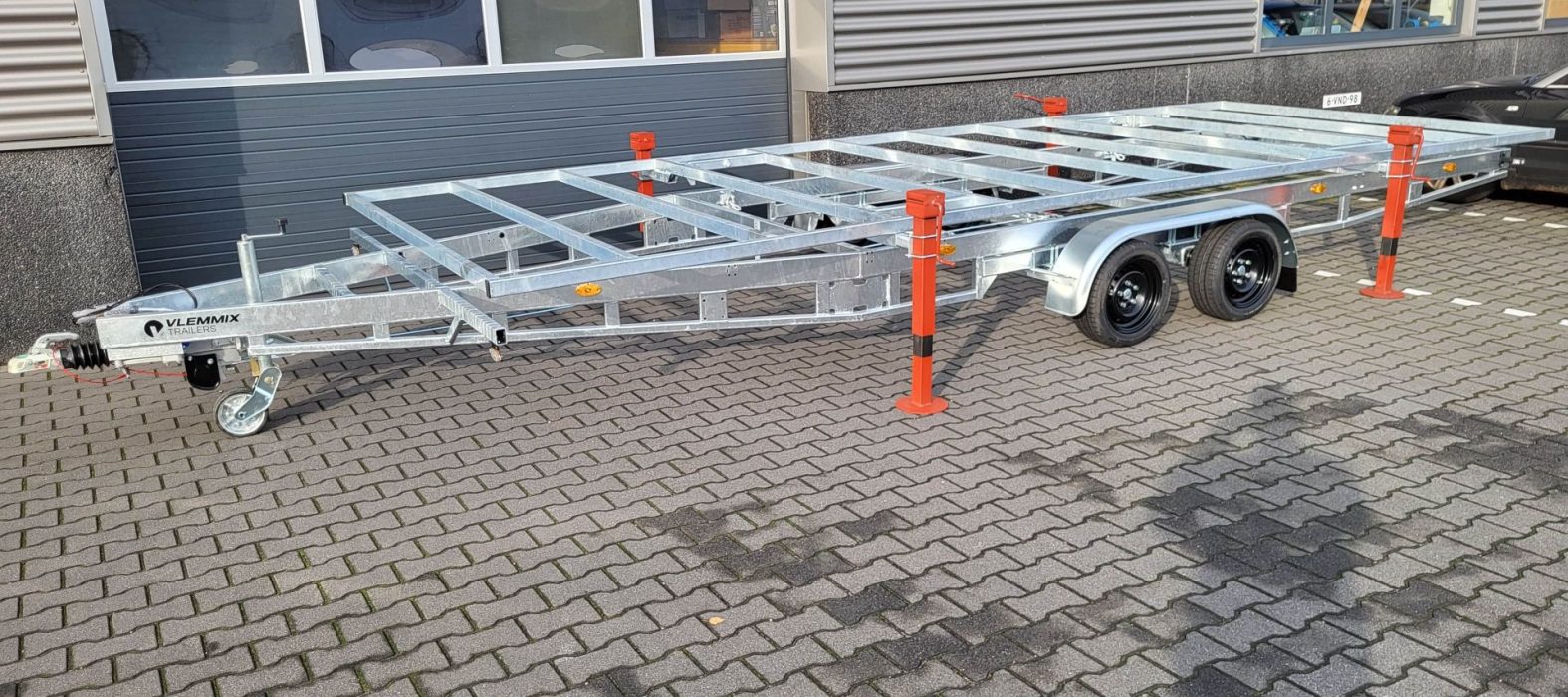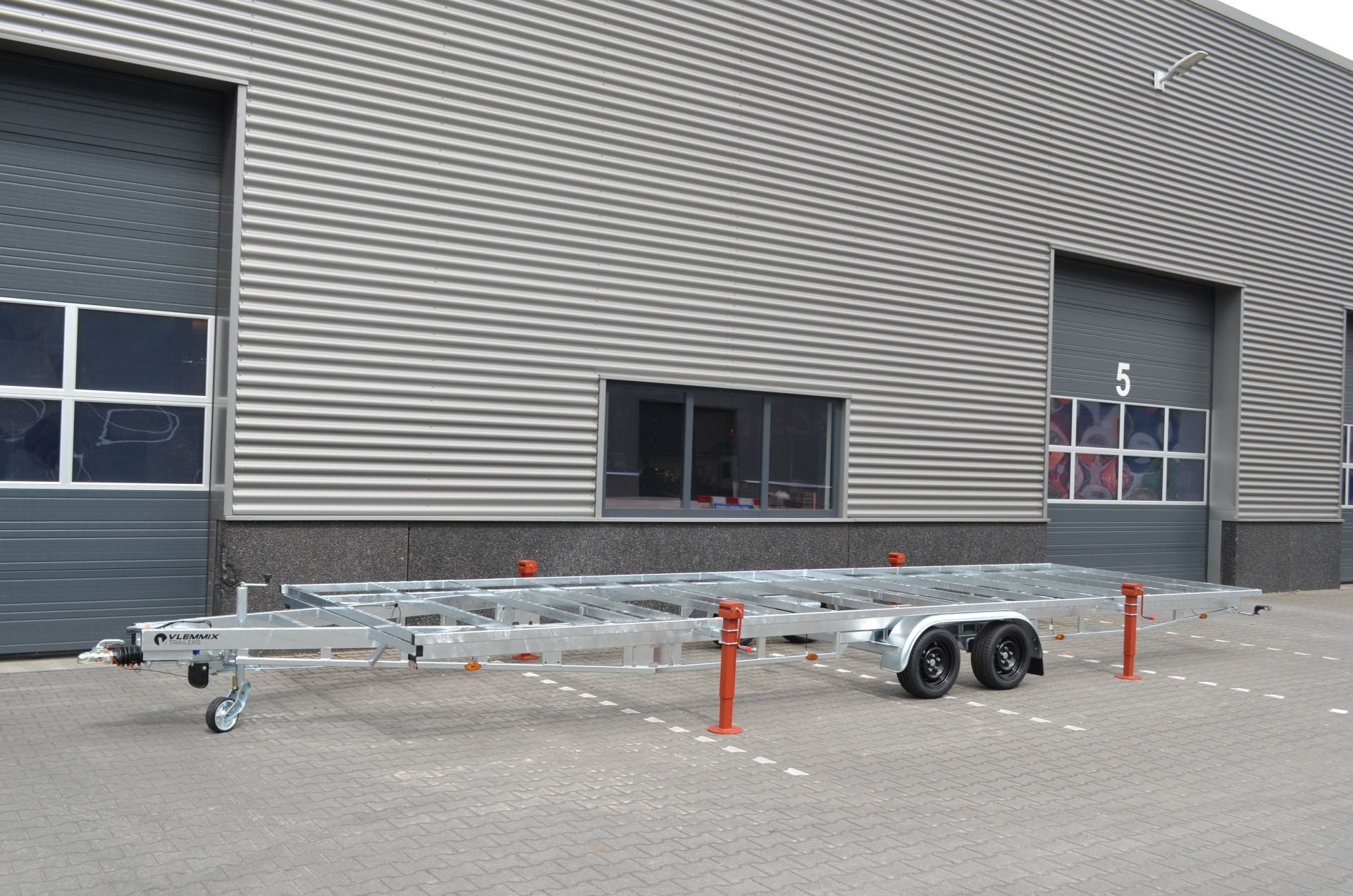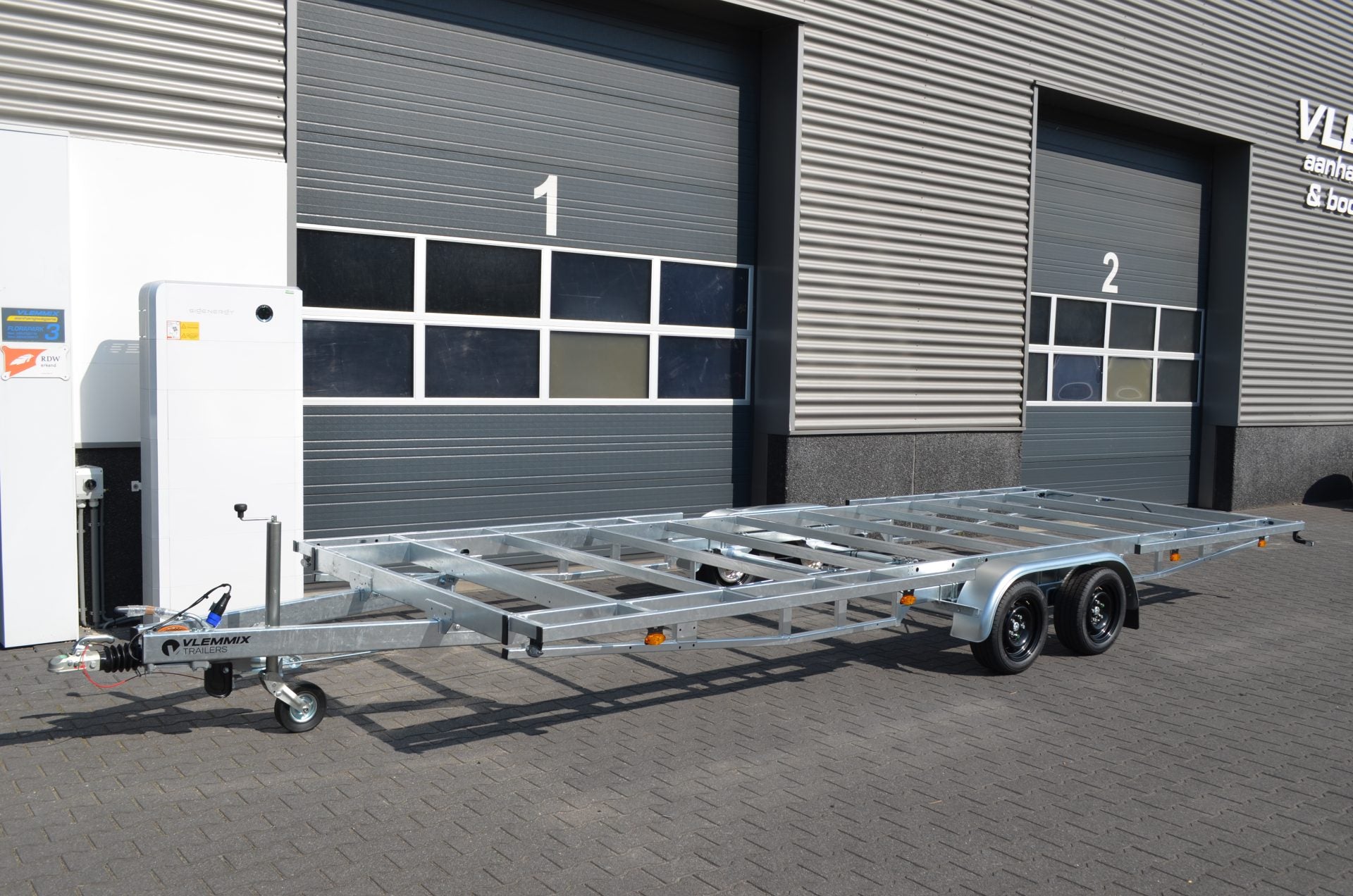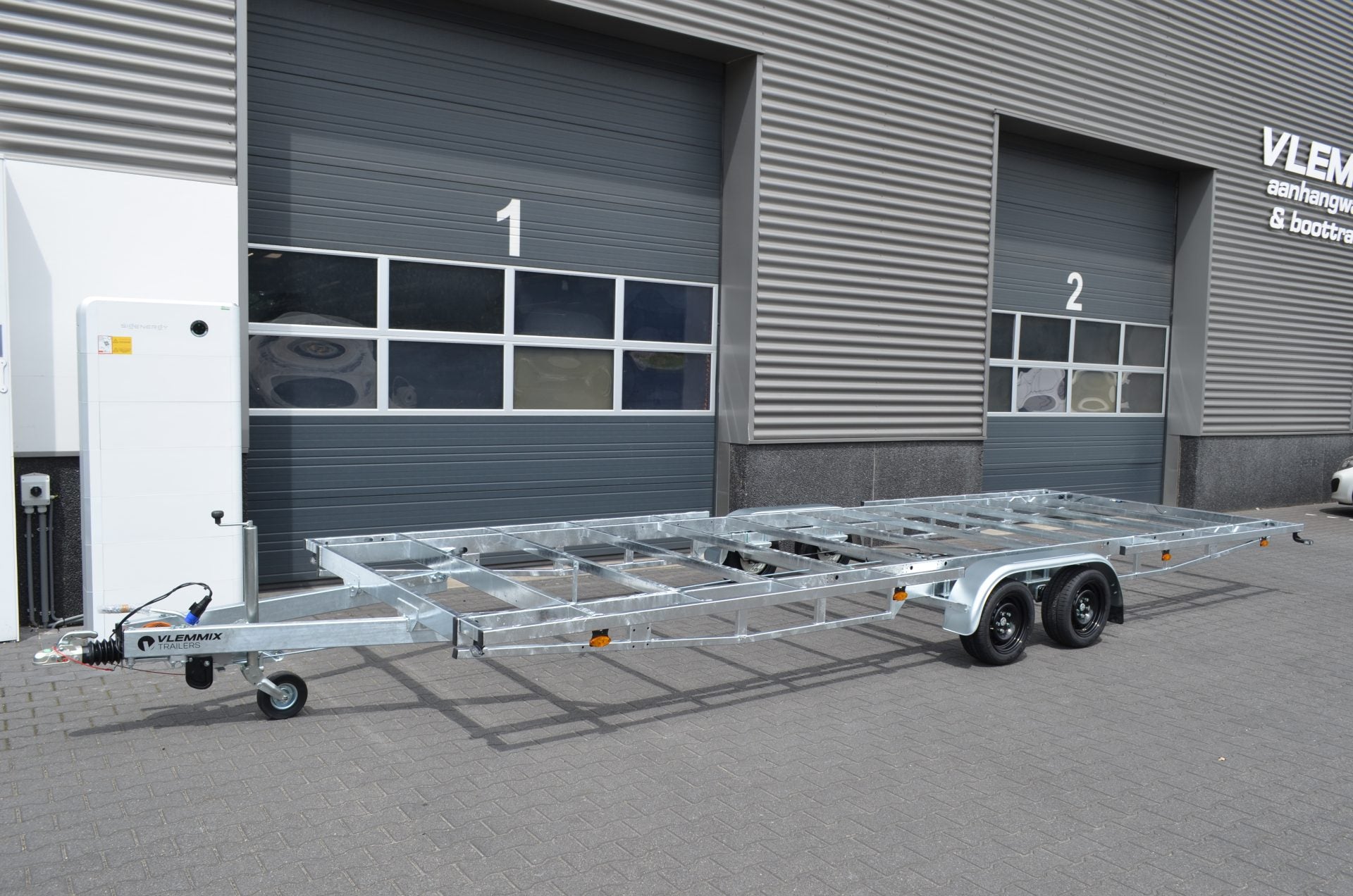
Every winter boats come down in Spanish boatyards because of a badly chosen support, and nearly always with the same pattern: boat stands doing a cradle's job. The four ashore-storage systems (cradle, boat stand, prop and keel support) are not interchangeable: each carries a type of load and fails outside its role. This guide separates them once and for all, with a table, prices and the correct set-up by type of boat.
TL;DR
- The cradle is the complete structure: a keel beam plus side supports joined together. The most stable system for long stays.
- A boat stand is an independent A- or H-shaped support: fine as reinforcement and for light craft, not as the sole support for a motorboat.
- A prop is the adjustable side support used for sailboats: it steadies a boat whose keel is already carrying the weight.
- The keel support (blocks and beams) takes the main weight in any system: 80-90% of the boat rests there.
- Golden rule: weight on the keel, the sides only steady the boat, and every support bears under a structural reinforcement of the hull.
The four systems in one table
| System | What it is | What it carries | Price | Typical risk |
|---|---|---|---|---|
| Cradle | Joined structure: keel + sides | The whole boat | €300-€900 | Low, if correctly sized |
| Boat stand | Loose A- or H-shaped support | Partial loads | €60-€160 each | Toppling if used as the sole support |
| Prop | Adjustable post with a base | Side balance | €80-€180 each | Denting the panel if over-tightened |
| Keel support | Blocks, beams and chocks | The main weight | €40-€120 each | Too little area: a marked keel |
How to read the table: the cradle is a complete system and the other three are parts. A boat can be stored on well-combined loose parts (that is how many boatyards work), but it calls for professional judgement in the set-up. A cradle packages that judgement into the structure: that is why it is the safe choice for a private owner.
The cradle: the complete system for long stays
A cradle brings the keel beam and the side supports together in a single structure, so no support can move on its own. That rigidity is its decisive advantage over loose parts: in wind, on slightly uneven ground or over months of storage, the geometry does not change.
It is the system to recommend for full winter lay-ups, project boats and any motorboat over 800-1,000 kg that spends seasons ashore. Adjustable wheeled versions add repositioning on a hardstanding without machinery. The galvanised models with rubber-padded supports are in boat cradles.
The boat stand: a yard essential, dangerous as the sole support
A boat stand is an independent support, A- or H-shaped, adjustable for height. In the yard it is irreplaceable: it holds sections of the boat while you work, props up an area during a repair or adds an extra support point to a main system. As reinforcement, two or four stands are money well spent.
The trouble starts when four loose stands hold a 1,500 kg motorboat on their own all winter. With no connection between supports, each stand can slide or sink independently; a gust of wind on a tall hull generates side loads a stand is not designed to take. It is the classic boatyard accident, and it is avoidable by choosing a cradle for the stay and stands for reinforcement.
The prop: the sailboat's balancing act
A prop is a telescopic post with a wide base and a tilting head, designed for one specific job: keeping upright a boat whose weight already rests on the keel. It is the natural system for a sailboat ashore: the keel carries, the props balance, four or six around the hull depending on length.
Its rule of use is identical to that of cradle supports: firm contact plus half a turn, never wound up like jacks. An overloaded prop dents the hull panel millimetre by millimetre through the winter. And always chain or lash them together under the hull, so that no prop can be kicked outwards if the boat moves.
For a sailboat that also travels by road, the same support logic carries over to the trailer: a central keel support and adjustable side pads. That specific configuration is covered in what trailer do I need for my sailboat.
The keel support: where the boat really rests
Whatever the system, 80-90% of the boat's weight should rest on the keel, on hardwood blocks, steel beams or the cradle's central beam. Keel supports are sized generously: more area means less pressure per centimetre and less marking of the keel shoe.
Two frequent mistakes here. Blocks that are too narrow, concentrating tonnes into a few centimetres and marking the keel. And a keel resting on soft ground or summer asphalt, which gives way weeks after hauling out and throws the whole system's distribution out. Hard ground, wide blocks and a check after 48 hours: the trio that avoids both.
Which system suits each boat
A motorboat of 4 to 7 metres: an adjustable cradle, with optional stands reinforcing the stern if the engine is heavy. A large or heavy motorboat: a cradle sized to the real weight with a 50% margin, on a concrete surface. A RIB or inflatable: a simple support or a small cradle; their light weight forgives almost any system that is properly placed.
A keeled sailboat: keel blocks plus 4-6 chained props, or a sailboat-specific cradle with an integrated keel support. Catamarans and craft of extreme beam: supports under each hull, always under bulkheads. A jet ski: its own dolly or specific support, which already spreads the load to suit its hull.
The full decision between keeping the boat on a cradle, on a trailer or combining both depends on how much you sail: an active boat lives better on a storage trailer, and a laid-up one on a cradle. On a trailer, the supporting role falls to the rollers or the bunks: the carpeted bunk systems on the bunk boat trailers are, in practice, a rolling cradle for the hull. All the other roller and bunk configurations are in the boat trailers range.
Buying well: materials, pads and capacity
Three criteria separate serious storage equipment from the cheap kind. Certified capacity per support, with a 50% margin over the real distributed weight. The pads that touch the hull: rubber or soft polymer, never bare metal against the gelcoat. And the steel treatment: hot-dip galvanised to live outdoors, because a rusted support loses section exactly where it carries load.
The products in the range share those three criteria with the rest of the boating catalogue: 3 mm steel, hot-dip galvanised and a 2-year warranty, bought direct with no middlemen. Arnaud will configure the complete storage set-up for you (cradle, reinforcements and trailer if needed) from your boat's figures: ask with no obligation.
Looking after metal that lives beside the sea has its own guide in how to extend the life of your trailer in salt water, and it applies equally to cradles and stands: fresh water after exposure to salt, an eye on the welds and never paint over rust, because a cosmetic patch hides the loss of section right where the support carries load.
The support calendar: autumn and spring
In autumn, when hauling out: hard ground, weight on the keel, sides at contact, a check after 48 hours and a breathable cover. The rest of the winter storage procedure (engine, battery, fuel, interior) is set out step by step in storing the boat over winter.
In spring, before launching: a full look at the hull against the light for support marks, an inspection of the underwater hull and the anodes, and dismantling the system in reverse order to assembly (sides first, keel last, with the crane already taking the weight). The complete pre-season preparation is in the guide to recommissioning the boat.
Textbook mistakes repeated every year
Supports on ground that gives way top the list: soft August asphalt, earth after the rains or loose paving. The set-up looks perfect on day one and has dropped by day forty. A concrete surface or spreader plates under each support solve 90% of cases, and the 48-hour check catches the remaining 10% before it becomes a problem.
The second classic is inheriting the previous boat's geometry: a cradle set up for a round-bilged motorboat does not work as it is for the next one with a V-hull. Every new boat calls for repositioning the supports with its specification and its reinforcements in front of you. And the third, on sailboats: props not chained together, which the first storm kicks outwards one by one.
The common factor in all three is haste on haul-out day. A properly done haul-out takes forty unhurried minutes; October's shortcuts are paid for in March.
Frequently asked questions
What is the difference between a boat cradle and a boat stand?
A cradle is a complete structure joining the keel beam and the side supports: nothing moves on its own. A boat stand is a loose, independent support, useful as reinforcement or in a yard, but risky as the sole support for a motorboat, because each unit can slide or sink independently.
Can I leave the boat on stands all winter?
A light craft (inflatable, sailing dinghy), yes, with well-placed supports. A motorboat or a heavy sailboat, not advisable: for long stays, use a complete cradle or keel blocks plus chained props. Stands stay as reinforcement, not as the main system.
How many props does a sailboat ashore need?
Four props is usual for lengths up to 9-10 metres and six above that, plus the keel blocks that take the main weight. Always in opposing pairs, under hull reinforcements, at firm contact without tightening and chained together beneath the keel.
Where should the boat's weight rest when it is ashore?
On the keel: 80-90% of the weight goes onto the blocks or the central beam, on hard ground. The side supports (cradle supports, props or stands) only balance it. Every contact point must bear under a bulkhead or structural reinforcement, never on an unsupported panel.
Which is better for the hull, a cradle or a trailer?
For long stays, the cradle: more support area, a set-up designed for months and full access to the underwater hull. The trailer is unbeatable for an active boat, and bunk trailers support the hull very much like a cradle does. Many owners use both depending on the season.
Do supports mark the gelcoat?
The right ones do not: rubber or polymer pads, correct pressure and proper distribution leave no trace. Marks appear with bare metal, supports on unsupported panels or excess pressure held for months. If there is a mark when you dismantle in spring, next year's set-up needs to change.
How much does a complete storage set-up cost?
For a mid-sized motorboat: an adjustable cradle at €300-€800, plus 2 optional reinforcing stands (€120-€320). For a sailboat: keel blocks (€100-€250) plus 4-6 props (€320-€1,080). It is equipment that lasts decades if it is galvanised; the annualised cost is tiny.
Can I store the boat on my own plot with these systems?
Yes, and it is a growing practice in Spain: a cradle or blocks plus props on hard, level ground, with transport handled by a trailer. Avoid soft ground and slopes; if your land offers no firm surface, a small concrete slab or spreader plates sort the support out.
Will builders' or carpenters' trestles do for a boat?
No. Generic trestles are not calculated for point loads of hundreds of kilos with side thrust, nor do they have a head that follows the curve of the hull. Purpose-made boating equipment costs little more and is sized for what it has to hold: the difference shows on a windy day.
How often should the storage set-up be checked?
48 hours after assembly (the supports bed in), after every strong windy storm and once a month as routine: contact at every support, props vertical, chains taut and no new marks on the hull. Five minutes that avoid any spring surprise.
Which system do I use to work under the boat?
A cradle at working height, or tall keel blocks plus props: both leave the underwater hull accessible and stable. Never work under a boat held only by loose stands or by the trailer jack: the yard standard is structural support plus a redundant back-up.
How do I move the boat from the cradle to the trailer?
With a travel lift at the marina or, on a plot, lifting the hull with jacks bearing on the strong points until the cradle is free and sliding the trailer underneath. It is an unhurried two-person job. The reverse order (trailer to cradle) follows the same steps with the cradle going in section by section.