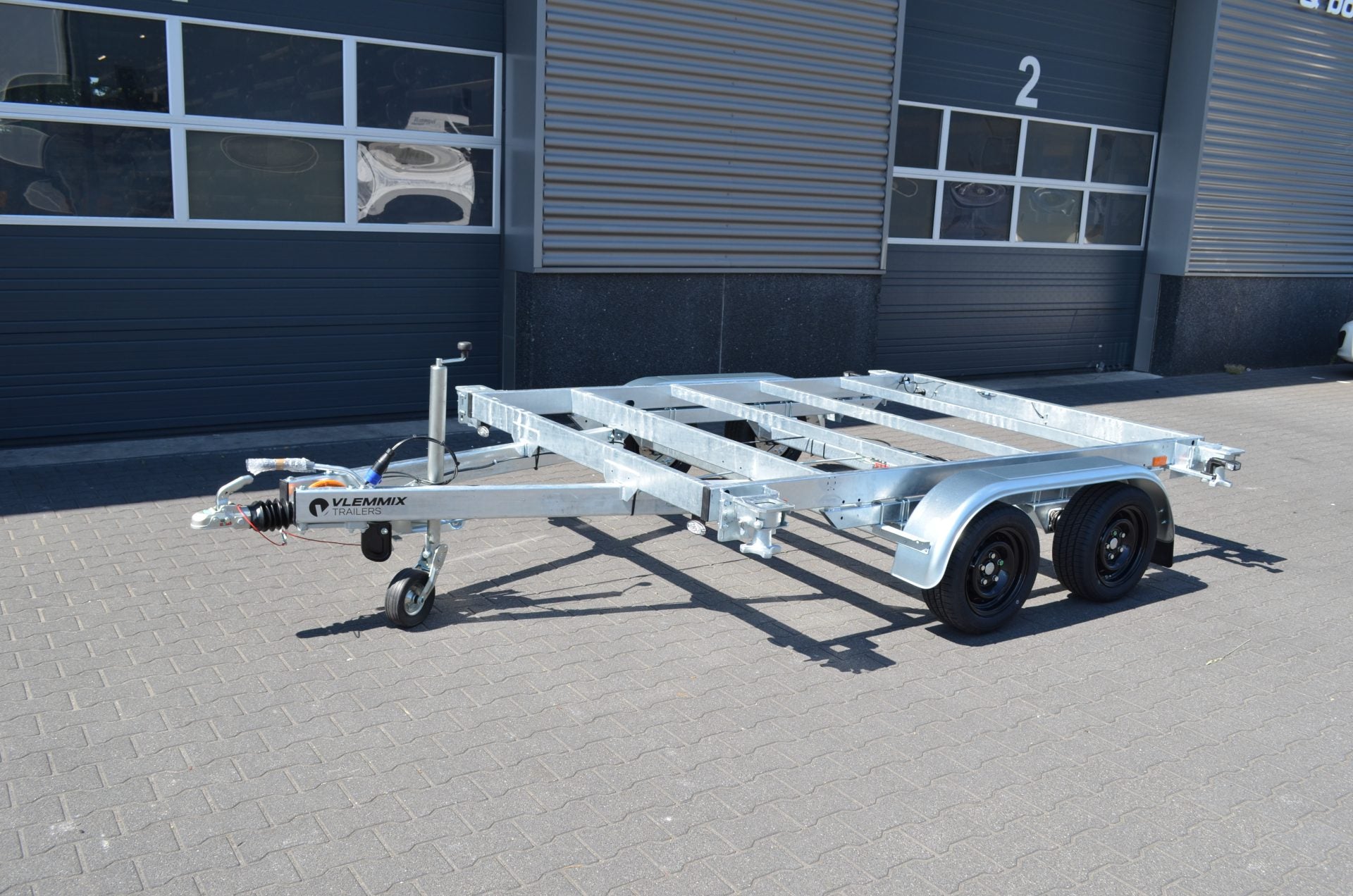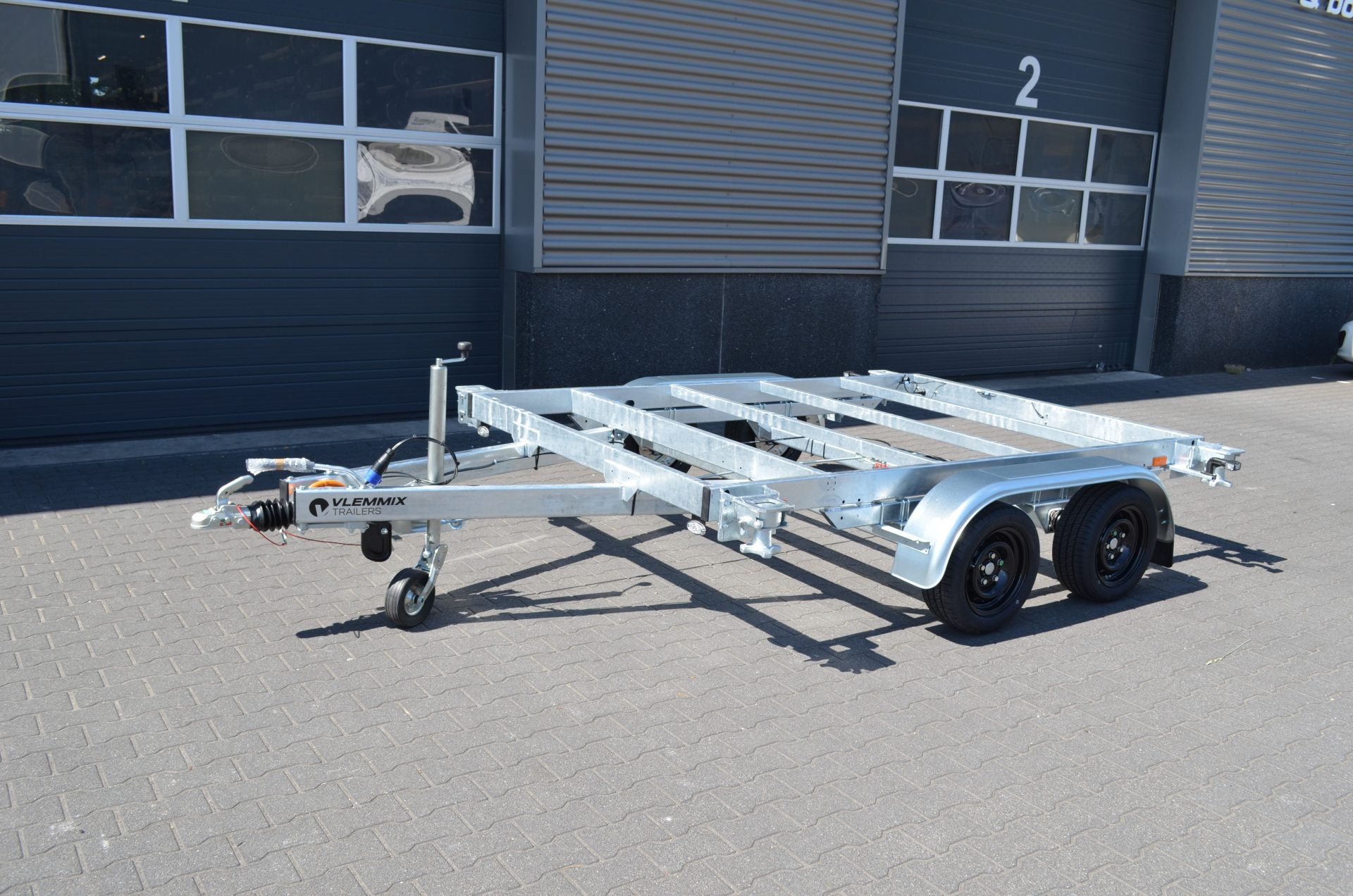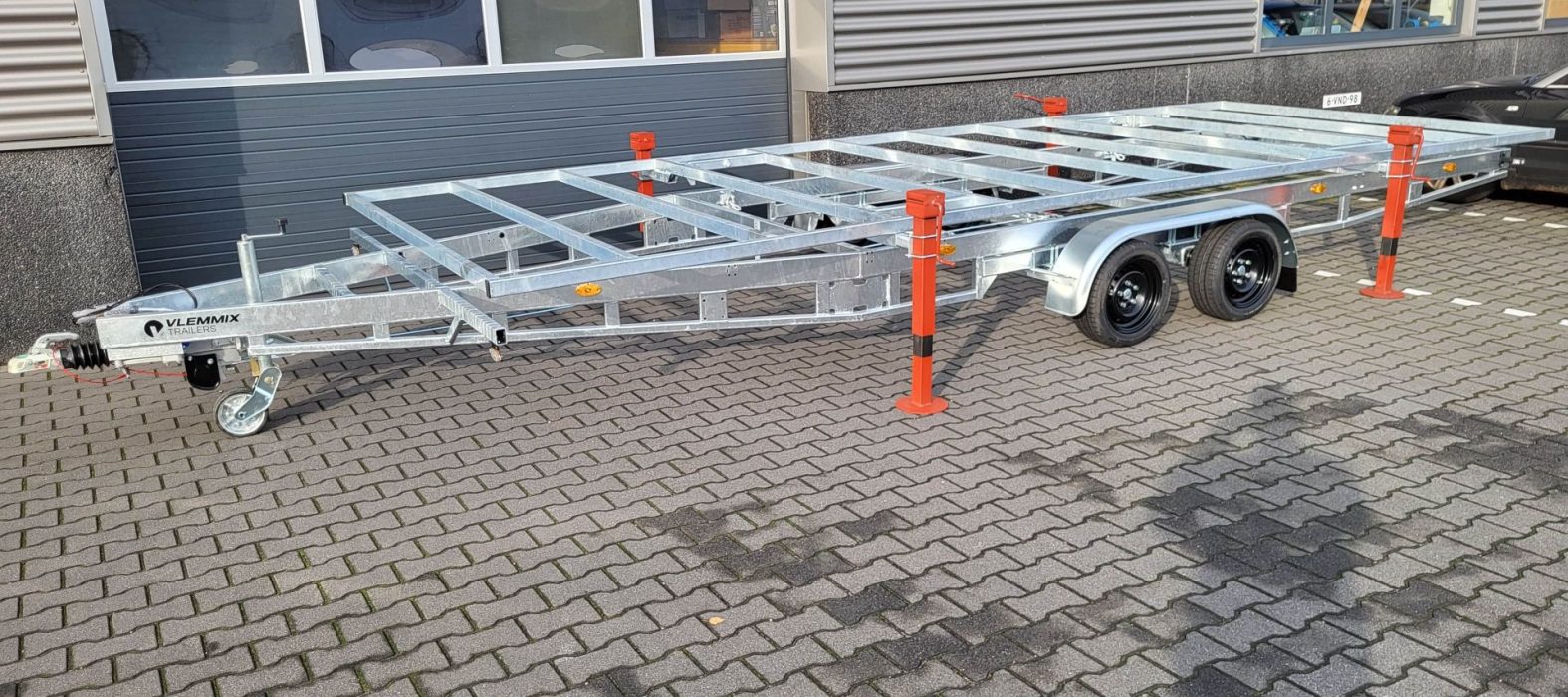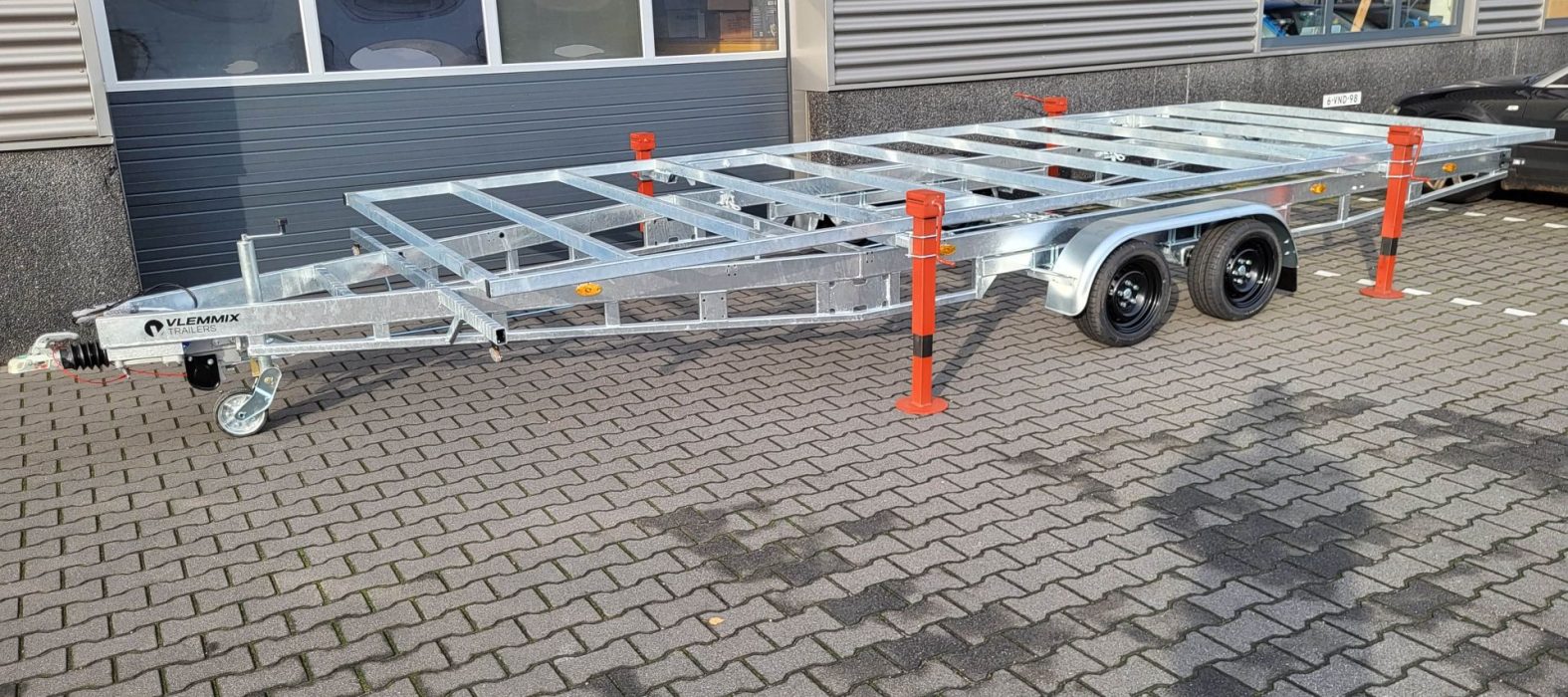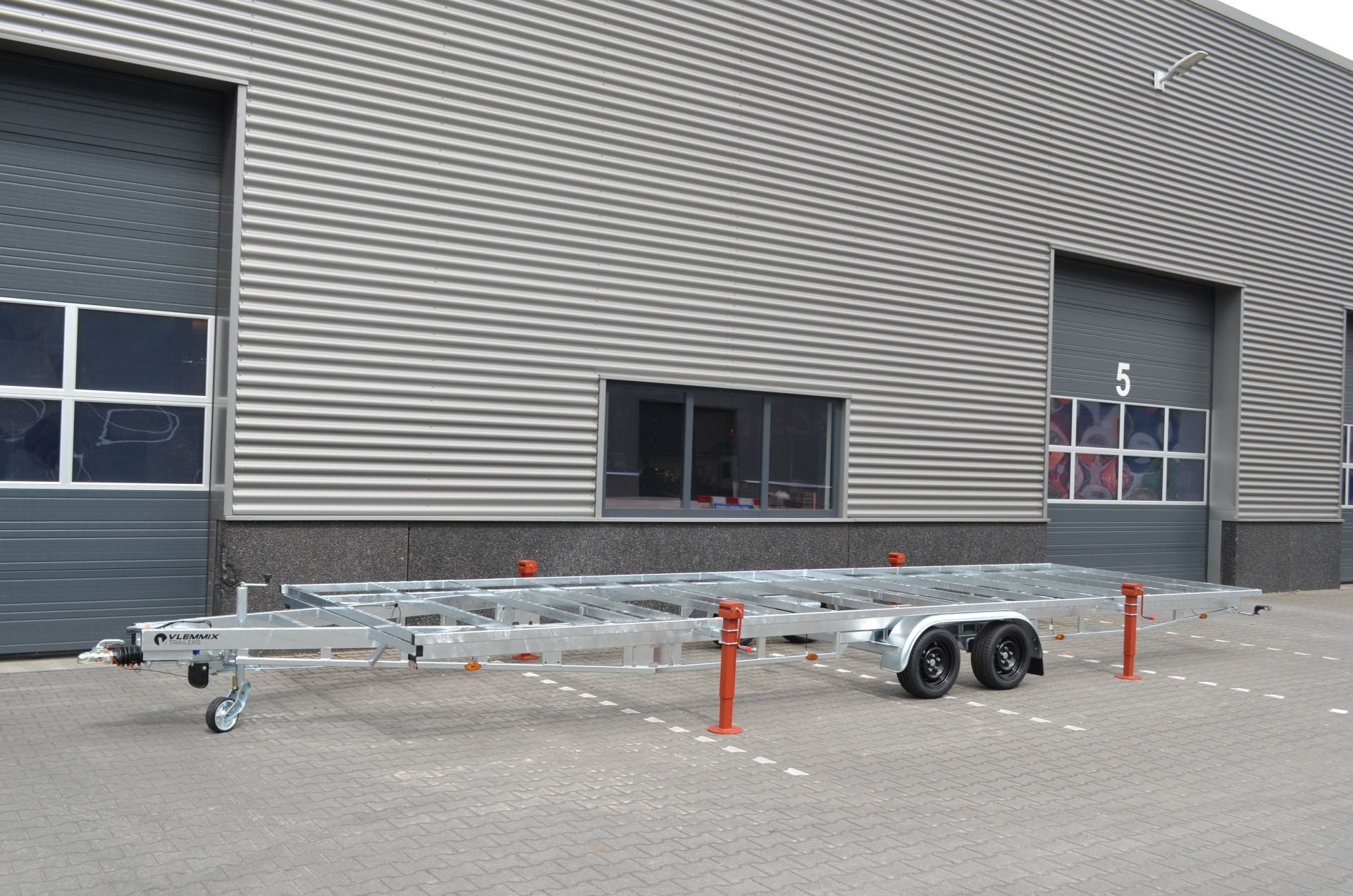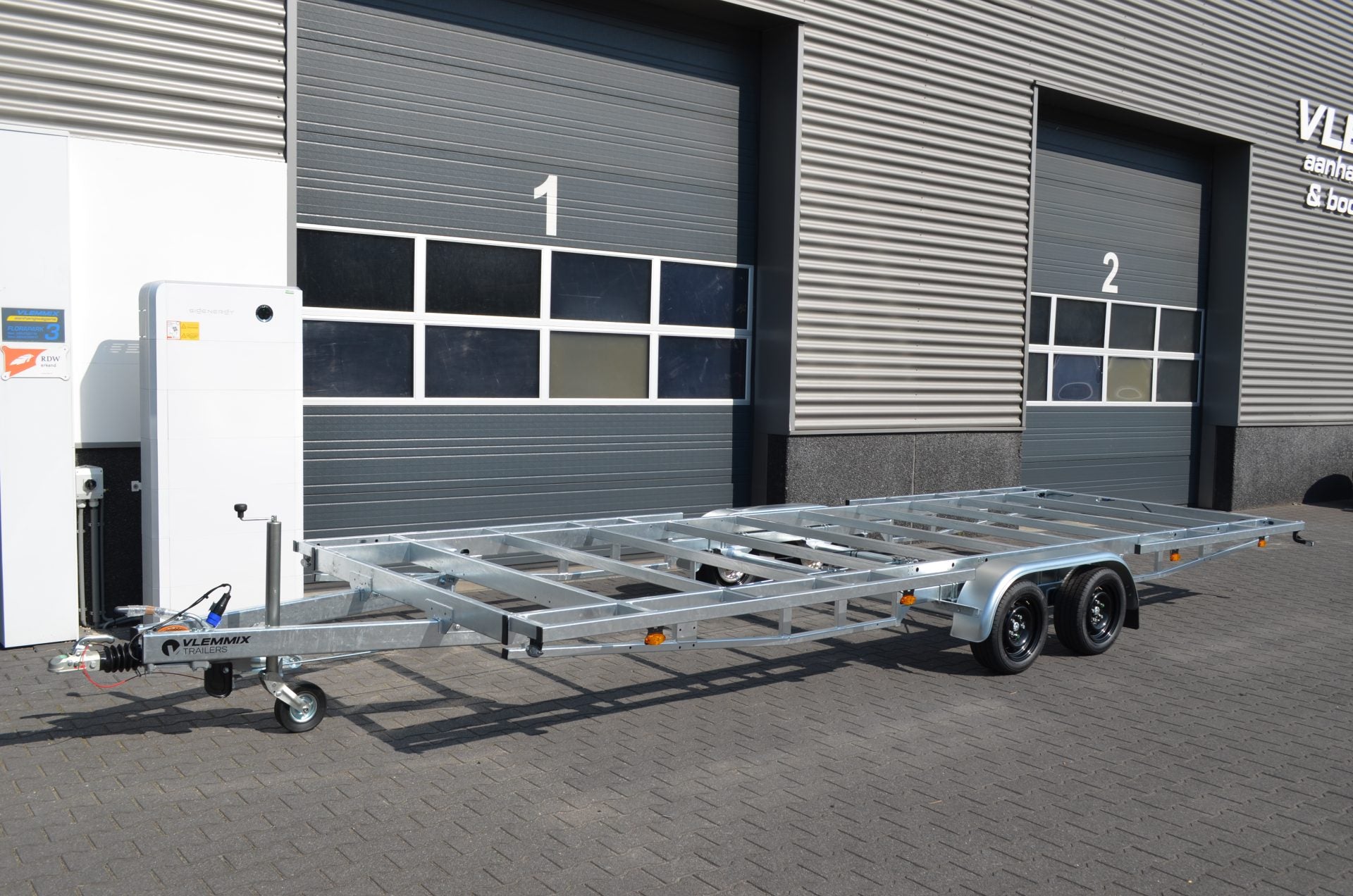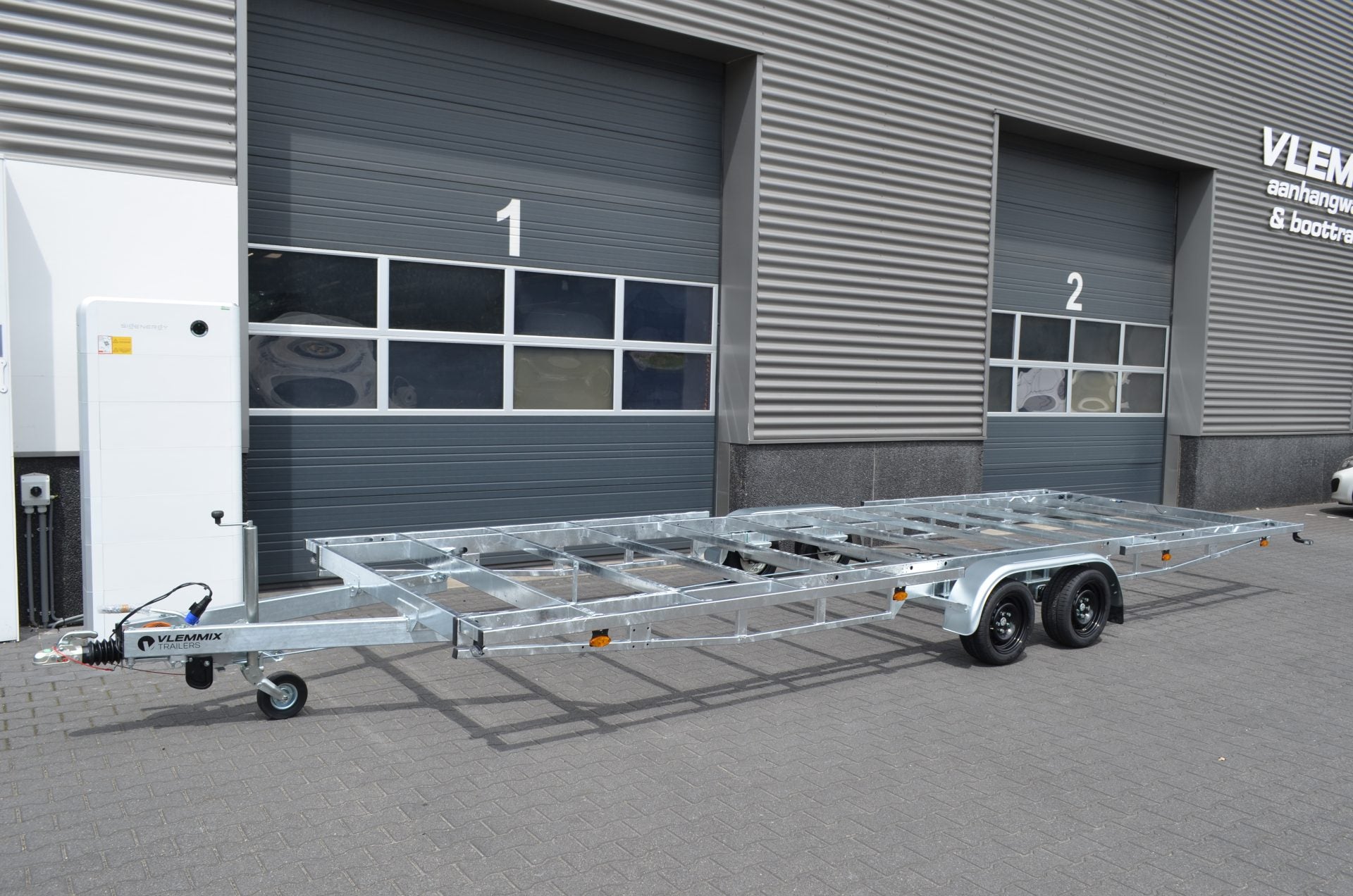
A 7-metre boat rests around 2,000 kg on four or six support points for months on end. Choosing those points badly distorts the hull, marks the gelcoat and, in the worst case, drops the boat on the ground in a storm wind. The right cradle costs from around €300-€700 and lasts for decades; this guide explains the types, how to size one by length and weight, and when do-it-yourself works out expensive.
TL;DR
- The cradle is the best support for long stays: it spreads the weight through the hull structure and lets you work underneath.
- Types: fixed welded cradle, adjustable cradle with movable stands, wheeled cradle for moving around a hardstanding, and loose boat stands as reinforcement.
- Sizing: by the weight of the boat (with a 30-50% margin) and by the shape of the hull (V-hull motorboat, keeled sailboat, catamaran).
- The stands must bear on bulkheads and hull reinforcements, never on an unsupported panel.
- A quality adjustable galvanised cradle: from around €300-€700 depending on length. The home-made version with builders' props saves €200 and puts the whole hull at risk.
What a cradle is and when you need one
A storage cradle is a steel structure that holds the boat ashore, supporting the keel and the bilges on adjustable points. Unlike a trailer, it does not run on the road: its job is to spread tonnes of weight stably for weeks or years, with the hull ventilated and accessible.
You need one in three situations: long winter storage out of the water, maintenance work that calls for access to the underwater hull (osmosis, antifouling, skin fittings) and storage of boats that sail rarely. In all three, the cradle beats the trailer as a support: more contact points, more stability and the trailer left free for other uses.
Types of cradle: which one suits each boat
| Type | How it works | Best for | Indicative price |
|---|---|---|---|
| Fixed welded | Geometry made to fit one hull | A single boat, always the same one | €250-€600 |
| Adjustable | Stands adjustable for height and width | Yards and different hulls | €300-€800 |
| Wheeled | Adjustable plus 4 solid wheels | Moving around a hardstanding or a unit | €400-€900 |
| Boat stands/props | Independent supports | Reinforcement and keeled sailboats | €60-€160 each |
The adjustable wheeled version is the most versatile option for private owners: it adapts if you change boat and lets you reposition the whole thing by hand inside a unit or on a plot without machinery. The fixed type wins for boats that will not change for years; boat stands complement a cradle, but should rarely hold up a motorboat on their own.
Sizing the cradle: weight, length and hull shape
The first figure is the boat's real dry weight: catalogue figure plus engine, residual fuel and gear, which usually comes out 20-40% above the builder's figure. Choose a cradle rated for at least 1.5 times that real weight: a 1,500 kg boat calls for a cradle rated at 2,000-2,500 kg.
The second is shape. A motorboat with a deep-V hull rests its keel on the central beam and is steadied by stands at the bilges. A sailboat with a long or bulb keel carries its weight on the keel and uses the side stands only for balance: there, tall adjustable props are the key part. Light, flat-bottomed RIBs and inflatables get by with small cradles or simple supports.
The third figure is where the stands bear: always under bulkheads, floors or structural reinforcements, never in the middle of an unsupported hull panel. A badly placed stand over six months leaves a permanent distortion (a hard spot) that shows up against the light and knocks value off the boat.
Home-made cradle versus buying one: the full sum
The usual video makes it look easy: steel sections, builders' props and an afternoon of welding. A home-made cradle costs €150-€300 in materials and works until it does not. Its three typical failings: untreated steel that rusts from the inside in two seasons, uncalculated geometry that concentrates the weight where it should not, and amateur welds working in fatigue with tonnes on top.
The full sum changes the verdict. A bought galvanised cradle: €300-€800, certified capacity, stands with rubber pads and decades of life. A home-made cradle: €200 less today, plus the real risk of a distorted hull (thousands of euros) or a boat on the ground. For a light sailing dinghy or a light inflatable, home-made will do; for a 1,500 kg motorboat, the saving does not cover the risk.
There is a sensible middle ground: buy the structural cradle and complete it with auxiliary boat stands wherever the boat calls for them. Certified stability where it matters and cheap flexibility for the rest.
Setting the boat on the cradle without drama
The standard sequence with a travel lift or crane: cradle positioned and levelled on hard ground, boat lowered until the keel settles on the central beam, and side stands raised until they touch without pushing, in opposing pairs and working from stern to bow. The hull should carry its weight on the keel with the sides simply balancing it.
With no crane, the practical route is the trailer-cradle combination: the boat arrives on its trailer, is lifted with jacks bearing on the strong points and the cradle goes underneath section by section. It is a two-person, one-afternoon job. Check the whole set-up after 48 hours (the stands bed in) and after the first windy storm; after that, a monthly glance is enough.
One detail people forget: the cover. Boat on a cradle plus a breathable cover is the perfect preservation combination; a waterproof cover with no ventilation, by contrast, traps condensation and grows mould under its own protection. How sun and heat affect a laid-up boat is covered in how to protect the boat from the sun in summer.
Cradle, trailer or both: the complete system
The right question is not cradle or trailer but which combination covers your boating year. A boat that goes out every couple of weeks lives better on a storage trailer, always ready to hitch up. One that stops for six months does better on a cradle, with the hull better supported. And the owner who does both uses both: cradle in winter, trailer in season.
The boat cradles in the range are hot-dip galvanised, with four solid wheels and adjustable stands with rubber pads that do not mark the gelcoat, in four sizes for lengths from 4 to 10 metres. They share the philosophy of the rest of the catalogue: 3 mm steel, a 2-year warranty and direct purchase with no middlemen.
For keeled sailboats the configuration changes (a keel support plus tall props): the sailboat trailers and their specific cradles solve that case, and the full boat trailers range covers every other configuration. Why hot-dip galvanising beats paint, with years of difference in service life, is set out in galvanised versus painted trailers: the same argument applies to a cradle, because it lives outdoors.
Arnaud will help you pick the size and configuration from your boat's dimensions and weight: ask with no obligation. And if the end goal is full winter storage, the whole procedure is in storing the boat over winter.
The mistake that ruins the most hulls
It deserves its own section because we see it every autumn: tightening the side stands as if they were jacks. The stands do not carry the boat; they balance it. The weight goes on the keel. A side stand over-tightened for months pushes the panel inwards millimetre by millimetre, and the distortion shows up in spring, when it is too late.
The yard rule: wind the stand up to firm contact, then half a turn, no more. If the boat moves in the wind, the problem is weight distribution or the ground, and you fix it by repositioning, not by tightening. With a sound, well-supported hull, coming out of the water is also the best moment to inspect the underwater hull: the guide to osmosis in the hull explains what to look for before the boat spends the winter ashore.
Buying the cradle: a five-point checklist
One: a certified capacity of at least 1.5 times your boat's real weight, with the figure in writing. Two: the steel treatment, hot-dip galvanised rather than painted, because the cradle lives outside and rust works from inside the sections. Three: stands with rubber or polymer pads, adjustable for height and angle, that follow the curve of the bilge.
Four: adaptable geometry, with a keel beam matched to your boat's length and stands that slide to sit under the hull reinforcements. Five: solid wheels if you are going to reposition it on a hardstanding, with a brake or chocks included. With those five points covered, the cradle is a purchase for twenty years; without the second and third, it is a purchase for two.
The benchmark price with all of that met runs from €300 to €900 depending on length. Below that bracket, check which point on the list is missing; it is usually the galvanising.
Frequently asked questions
How much does a boat cradle cost?
A quality adjustable galvanised cradle runs from €300 to €800 depending on length and capacity, and wheeled versions for moving around a hardstanding from €400 to €900. Loose boat stands and props cost €60-€160 each. A well-treated cradle lasts decades with no maintenance.
What cradle do I need for an 8-metre boat?
An adjustable cradle rated at 3,500-4,500 kg (the boat's real weight plus a 50% margin), with a central beam for the keel and at least four adjustable side stands bearing on hull reinforcements. At that length, order the configuration with the boat's specification sheet in front of you.
Can you build a home-made cradle?
For very light craft (sailing dinghies, inflatables), yes, with good judgement. For motorboats and sailboats over 800-1,000 kg, saving around €200 does not pay: ungalvanised steel, uncalculated geometry and welds working in fatigue put at risk a hull worth a hundred times more.
Where should the cradle stands bear?
Under structural elements: bulkheads, floors and hull reinforcements, with the main weight always on the keel. Never in the middle of an unsupported panel. The side stands balance without pushing: firm contact plus half a turn, no more.
Is a cradle or a trailer better for storing the boat?
For long stays, the cradle: more support points, better distribution and access to the whole underwater hull. For boats that sail often, a storage trailer, always ready to go. Many owners combine the two: cradle in winter and trailer in season.
Does a cradle damage the gelcoat?
A proper cradle does not: stands with rubber pads and correct weight distribution leave no mark. Marks and dents appear with bare metal supports, stands on unsupported panels or excess pressure held for months. Checking 48 hours after hauling out avoids most of it.
Can I move the cradle with the boat on it?
Only wheeled cradles, and only over short distances on hard, level ground, pushing slowly with two people or with a vehicle at walking pace. For any real journey, the boat goes on the trailer: a cradle has no brake, no suspension and no road type approval.
How often should I check a boat on a cradle?
48 hours after hauling out (the stands bed in), after the first strong windy storm and then once a month: stand contact, correct pressure, cover ventilating and no marks on the hull. Five minutes that head off any spring surprises.
What maintenance does a cradle need?
Almost none if it is galvanised: a fresh-water rinse when it works near the sea, an annual check of the fasteners and rubber pads (replace them if cracked) and nothing else. Painted cradles need touching up every season and still lose the battle with rust on the inside.
Does one cradle work for several different boats?
An adjustable one does: stands that move for height and width adapt to different hulls within a range of length and weight. It is the natural choice for yards and for anyone expecting to change boat. A fixed welded cradle only really suits the hull it was built for.
Can I launch the boat straight from the cradle?
No: a cradle does not go into the water and is not made for the slipway. The standard sequence is cradle for the stay and trailer for moving and launching, transferring the boat with jacks or a travel lift. Anyone who launches often is better off with the boat directly on the trailer.
New cradle or second-hand?
A used galvanised cradle with no distortion is a reasonable buy if it matches your length and weight with a margin. Check the welds, the stand threads and the rubber pads. A used painted one with rust needs shot-blasting and galvanising, and that restoration costs more than a new cradle.