
Quick Summary
- Osmosis is the entry of water through the gelcoat, which degrades the hull's fiber from within.
- It's detected by blisters on the underwater hull and a sour smell when they burst, almost always when hauling out.
- Treatment requires hauling out, drying the hull for weeks, and sealing with an epoxy barrier.
- The best prevention is to reduce the hull's time in the water and store it dry.
- Treating advanced osmosis costs thousands of euros; preventing it costs almost nothing.
Osmosis is the problem that most devalues a fiberglass boat without the owner noticing in time. It advances silently below the waterline until one day you haul out the boat and dozens of blisters appear on the hull. At that point, the repair can take weeks in the boatyard and cost thousands of euros. This guide explains how to recognize it early, what options are available to treat it, and, above all, how to prevent it from appearing with almost no cost.
The good news: osmosis is slow and very preventable. It mostly boils down to a simple idea. The less time the hull spends submerged, the less likely water is to penetrate the fiber. Someone who stores their boat dry for a good part of the year has a huge advantage over someone who leaves it afloat all the time.
What is osmosis and why does it appear?
Osmosis is the penetration of water through the gelcoat into the fiberglass laminate. Gelcoat is not a perfect barrier: it is permeable to a very low degree. Over the years, water molecules pass through this layer and react with soluble compounds left in the resin during manufacturing.
This reaction generates an acidic liquid within small cavities. The liquid attracts more water due to osmotic pressure, the cavity grows and eventually forms a blister under the gelcoat. If the process continues, water reaches the laminate and begins to separate the layers of fiber, weakening the hull structure.
It mainly appears in hulls that spend a lot of time in the water without resting, in old boats with aged gelcoat, and in warm water areas, where the chemical reaction is faster. A well-maintained hull that is regularly hauled out may never develop it. The same hull moored continuously for years has a much higher chance.
Which boats are at higher risk of osmosis?
Not all hulls start equally. The most important factor is time afloat: a boat moored all year accumulates years of continuous exposure, while a trailerable boat that goes in and out of the water barely gives the reaction a chance. That's why dinghies and RIBs stored dry rarely develop it.
The second factor is the age and origin of the hull. Fiberglass boats manufactured decades ago, with more permeable resins and poorer quality control, are more prone than modern ones. Water temperature also influences: in the warm Mediterranean, osmosis progresses faster than in cold waters. If your boat is old and moored in warm water, vigilance must be maximal. If it's trailerable and stored dry, the risk is low from the start.
How to detect osmosis early
Osmosis lives in the underwater hull, the part of the hull that remains below the water, so it is almost always discovered when the boat is hauled out. Hauling out regularly not only prevents it: it is also your best tool for early diagnosis.
The main symptom is blisters on the hull, ranging from the size of a lentil to a coin. They appear below the waterline, sometimes isolated and sometimes in clusters. When punctured or burst, they release a viscous liquid with a very characteristic sour or vinegary smell, an unmistakable sign that the reaction is active.
There are more subtle clues before the obvious blister. The gelcoat may appear dull, pitted, or with micro-craters, and to the touch, the surface is no longer smooth. In advanced cases, the hull sounds different when tapped with knuckles, duller where the laminate is separating. If you inspect the underwater hull every season, as any serious maintenance routine recommends, you will detect the problem when it is still cheap to resolve. Taking advantage of the winter haul-out for this inspection is what the guide to storing your boat in winter suggests.
How osmosis is treated
Treating osmosis is not a patch-up, it is a long and ordered process. Skipping steps guarantees it will return. The boat must be out of the water for the entire treatment, which in itself requires good support.
The first step is to haul out and strip the hull: remove old antifouling and expose the gelcoat. Then, all blisters are opened and the affected material is scraped away until healthy fiber is reached. This is a dirty and meticulous job, because leaving even one active blister contaminates the rest.
Then comes the longest step, and the one most people skip: drying the laminate. Soaked fiber can take weeks or months to release all moisture, sometimes with the help of controlled heat. Only when the hull is truly dry is an epoxy barrier applied, several coats that seal the surface and prevent water from re-entering. It is finished with new antifouling.
That is why an osmosis treatment ties the boat to land for a long season. Having a stable and prolonged place to support it ceases to be a luxury. This is precisely the scenario for which boat cradles and boat storage trailers exist, designed to hold the hull dry for months.
How to prevent osmosis (what really works)
Prevention always beats cure, and here the cost difference is brutal. There are three levers, and the first one is more important than the other two combined.
The main lever is to reduce time in the water. Water is the necessary condition for osmosis: without prolonged immersion, the reaction barely progresses. A boat that spends the winter dry and is hauled out between outings has minimal exposure. Here, the equipment matters, because storing the boat at home on its own support turns prevention into routine and, incidentally, saves you mooring fees, as explained in the breakdown of how much it costs to own a powerboat in Spain.
The second lever is to maintain the gelcoat and antifouling in good condition. An annual haul-out to inspect the underwater hull, repair any gelcoat pitting, and renew the antifouling keeps the outer barrier intact. A new or healthy hull can also benefit from a preventive epoxy barrier, which seals the gelcoat before water has any chance of entering the laminate.
The third is to dry and support the hull properly when it is on land. A hull resting on poorly distributed supports suffers from stresses and permanent contact points that do not help. Distributing the weight with a support sized to your length protects the fiber; you can find the criteria in the guide on how to correctly place your boat on the trailer.
Storing your boat dry: the most cost-effective prevention
If you had to choose just one measure, it would be this: take the boat out of the water whenever you're not sailing. It's the one that tackles the root cause and the only one that doesn't depend on products or expert hands.
For a trailerable boat (most powerboats, rigid inflatables, and light sailboats up to about 8 or 9 meters), storing it dry at home is perfectly viable. You need adequate support and a spot in your yard. From there, every month out of the water is a month in which osmosis doesn't progress.
The marine catalog covers both ways of doing it. Boat cradles are fixed supports that hug the hull and distribute the weight, ideal if you don't need to move it. Boat trailers give you the same dry storage plus the option to transport and launch whenever you want to sail. If you want to see all options by type of vessel, the starting point is the marine trailers category, which groups supports and trailers for each length.
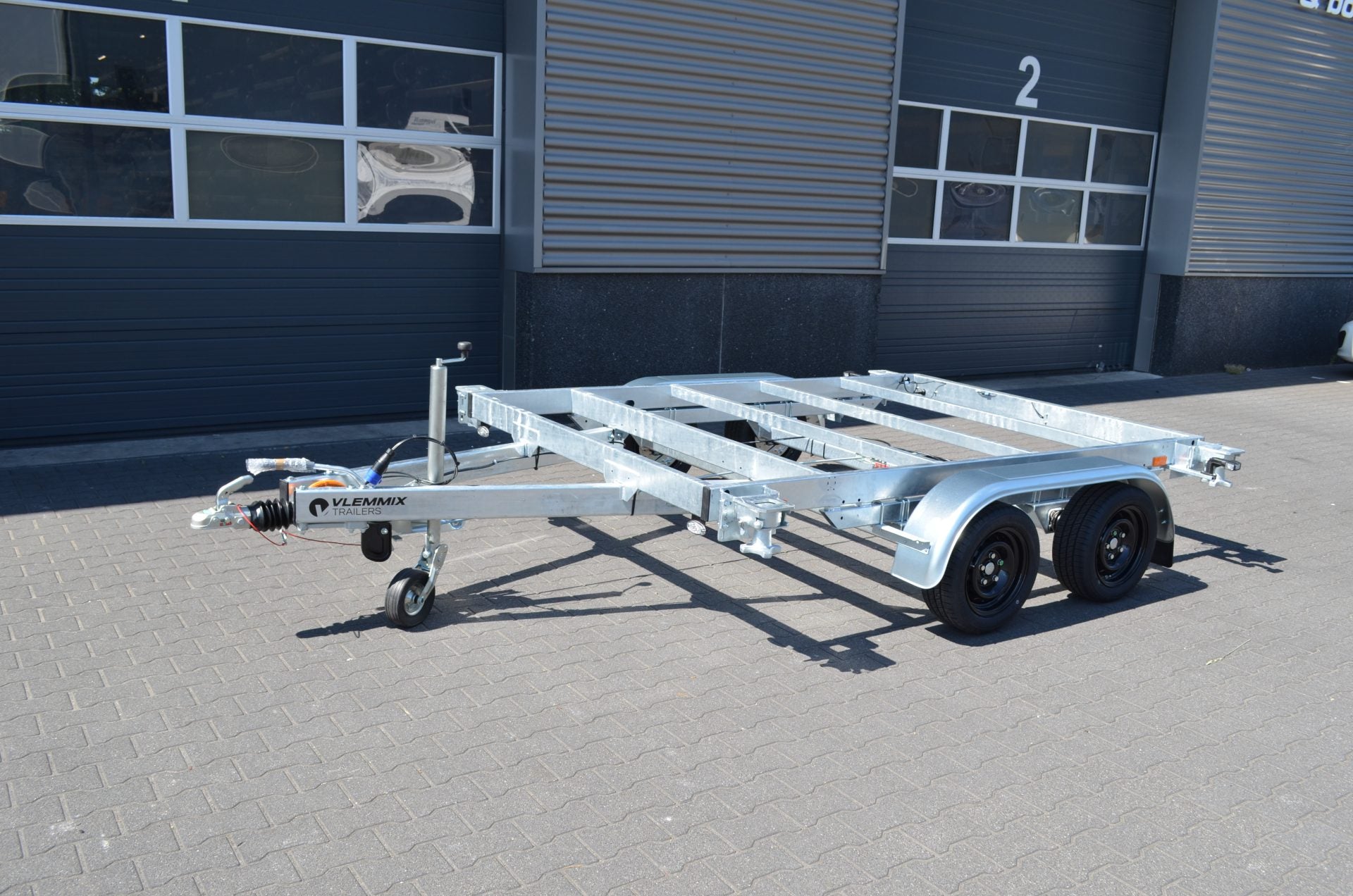
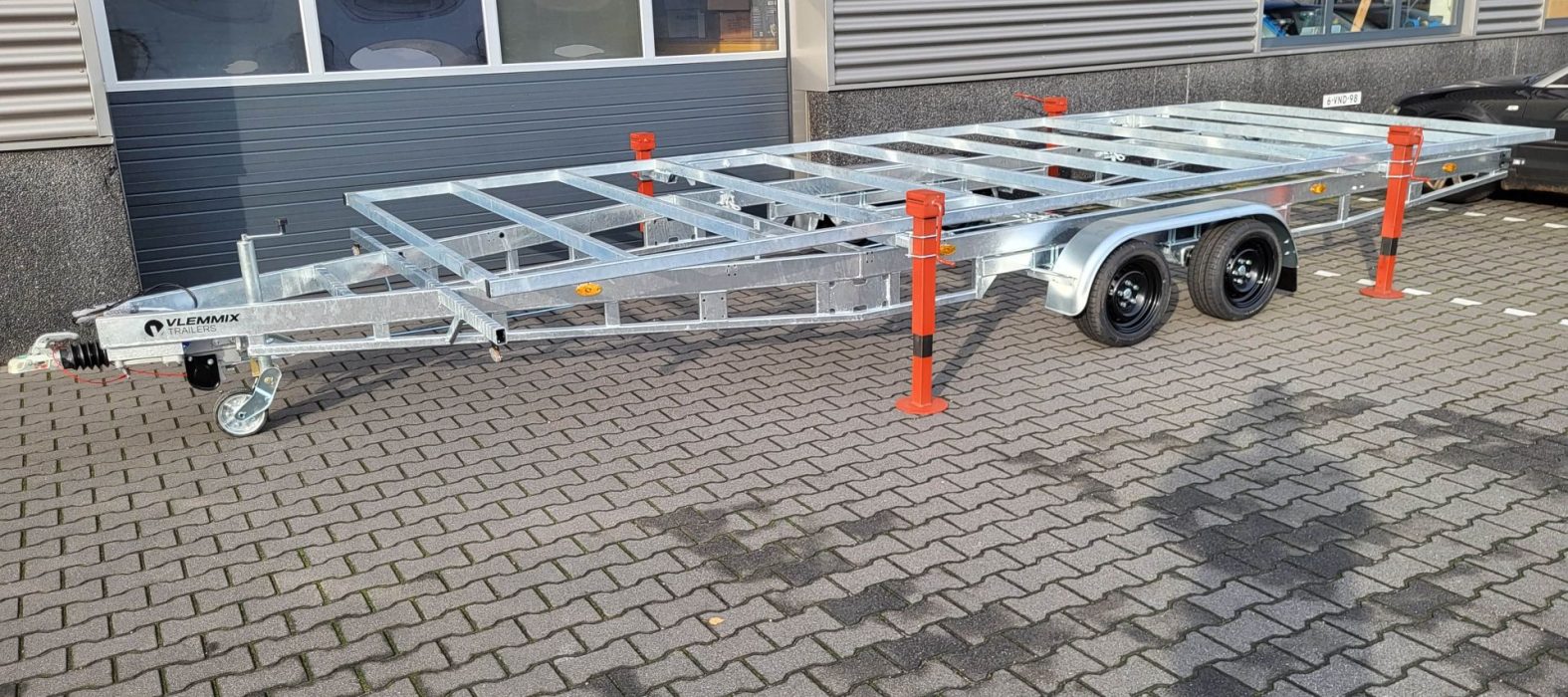
A support with a hot-dip galvanized chassis withstands outdoor conditions without rusting for years, exactly what equipment that will support the boat season after season needs. Keeping it dry protects the hull from osmosis and, at the same time, the support itself lasts longer, just like a well-maintained boat trailer.
Cost of treating osmosis vs. preventing it
The cost asymmetry is what makes prevention an obvious choice. A complete osmosis treatment on a medium-sized hull combines boatyard labor, weeks of haul-out, and materials. The bill easily climbs to several thousand euros, and it keeps the boat out of commission for an entire season.
Prevention costs a fraction. An annual haul-out with antifouling and gelcoat inspection is routine maintenance. A preventive epoxy barrier is paid for once and protects for years. And storing the boat dry has no recurring cost once you have the support, compared to hundreds of euros per month for a dry marina.
The math is simple. The money you save by preventing just one osmosis treatment easily covers a good storage support. And the boat, moreover, retains its resale value better, because a hull with no osmosis history is always worth more.
There is a hidden cost that almost no one adds up: time not spent sailing. Severe osmosis leaves the boat in the boatyard for an entire season, precisely the months you wanted to enjoy. Prevention not only saves you the repair bill, it also saves you from losing a summer at sea while the hull dries. Seen this way, storing the boat dry is the investment that protects the most sailing seasons.
Common mistakes with osmosis
The most expensive mistake is never hauling out the boat. Without taking it out of the water, you won't detect blisters in time, and you'll also maximize the exposure that causes the problem. Annual inspection of the underwater hull is not optional.
The second is to treat without drying. Applying the epoxy barrier to a laminate that still retains moisture traps water inside, and osmosis returns in a year or two. Slow drying is the boring part and cannot be rushed.
The third is to neglect the gelcoat. Every pit, ding, or dull area is an entry point. Repairing them promptly, as part of the maintenance that keeps the boat ready between seasons, closes those doors before water uses them. The complete annual routine can be found in the boat winterization guide.
The fourth is to improperly support the hull on land. Concentrating weight at two points for months deforms the fiber and creates stresses that do not help a hull you are trying to protect.
Frequently asked questions
How do I know if my boat has osmosis?


Related products