
Trailers are part of the daily mobility of thousands of drivers in Spain. They are used to transport boats, light machinery, construction materials, motorcycles, or even living structures. However, choosing the right model depends on more than just size or price. The trailer's configuration , its structural design, and the type of load it is intended for directly influence safety, road stability, and compliance with current regulations.
The Spanish market offers a wide variety of trailer configurations tailored to very different needs. Some are designed for occasional users who need to transport light loads with a passenger car, while others cater to professional needs requiring greater load capacity and more advanced technical systems. Understanding the differences between these configurations allows for more informed decisions and helps avoid common mistakes that often arise when buying a trailer without considering its intended use.
How does the trailer configuration influence its use?
When talking about trailers, it's common to think only of the cargo platform. However, the overall performance depends on several technical elements: the Axle type , weight distribution, braking system, and frame design. Each of these components determines what type of load can be transported and how the trailer will handle while driving.
He General Vehicle Regulations (Royal Decree 2822/1998) It establishes the technical requirements that trailers must meet to be driven in Spain. Among other aspects, it regulates the Maximum Authorized Mass (MMA), the mandatory braking systems when exceeding 750 kg, and the maximum permitted dimensions. Ignoring these variables can lead to problems during traffic inspections or vehicle inspections (ITV).
Furthermore, the dynamic behavior of the vehicle-trailer combination depends largely on how the weight is distributed across the axles. An improper configuration can lead to swaying, uneven tire wear, or even loss of stability during braking or crosswinds. For this reason, manufacturers typically design specific configurations based on the intended type of transport.
Trailer configurations for private use
Many drivers occasionally use trailers to transport bulky items that don't fit in their vehicle. In these cases, simpler configurations are usually sufficient.
Light general cargo trailer

The lightweight trailer is probably the most widespread model among private users. It is a simple platform designed to transport furniture, tools, or DIY materials. The maximum authorized mass is usually below 750 kg , which allows driving without an independent braking system.
This type of trailer offers several practical advantages. Since it doesn't require its own brakes or a separate license plate, maintenance is simple and administrative procedures are minimal. Furthermore, it can be towed by most passenger cars without requiring additional driving licenses, provided the combined weight and weight do not exceed the limits established by the DGT (Spanish Directorate General of Traffic) for a category B license.
Motorcycle trailer

Transporting motorcycles requires a specific setup. motorcycle trailers They incorporate metal rails that keep the front wheel aligned during transport. They also usually include reinforced anchor points to secure the motorcycle with approved straps.
This design prevents lateral movement while in motion and facilitates loading with integrated or removable ramps. For those who participate in competitions or travel frequently, this configuration offers a safe and relatively compact solution that can be towed by mid-size cars.
Trailer for small boats

Recreational boat owners often use specialized trailers designed to support the hull and distribute weight properly. Various types are available on the market. boat trailers designed to facilitate the safe transport of boats from the port or boatyard to the storage location.
These trailers incorporate Adjustable rollers or supports , allowing the frame to be adapted to the shape of the boat.
Transporting small boats in Spain is relatively common, especially in coastal areas or inland reservoirs. Proper trailer configuration facilitates maneuvering on launching ramps and reduces the risk of hull damage during road transport.
Trailer configurations for professional use
When a trailer is used frequently or to transport heavy loads, the design needs to be more robust. In professional settings, configurations that prioritize structural strength and stability are common.
Trailers with braking system

Trailers with a Maximum Authorized Mass exceeding 750 kg must be equipped with their own braking system, typically an inertia brake. Choosing the right system is important when comparing options such as Trailers with brakes vs. without brakes: when it's worth paying more , especially if you regularly transport heavy loads, usually using inertia brakes. This mechanism activates automatically when the towing vehicle slows down, helping to bring the trailer and trailer to a more balanced stop.
In professional transport, this configuration is essential to ensure safety when moving heavy loads such as machinery or construction materials. Furthermore, it reduces the load on the tractor's braking system and improves control on long descents.
Double axle trailers

Two-axle trailers are designed to support heavier loads and offer greater stability. By distributing the load over four wheels instead of two, the structure works in a more balanced way, reducing the pressure on each axle.
This configuration is frequently used in sectors such as professional gardening, light construction, and vehicle transport. It is also common in trailers designed to transport agricultural or industrial machinery that requires a more robust platform.
Vehicle transport platforms
Car carrier trailers are specifically designed for transporting cars. They incorporate integrated ramps, reinforced anchor points, and a structure capable of supporting the weight of a complete vehicle.
This type of configuration is common among mechanical workshops, roadside assistance companies, and professionals who occasionally transport vehicles. The overall stability is crucial, so these trailers typically include reinforced braking systems and axles .
Specialized configurations for specific transport
Some trailer configurations are designed to meet very specific needs. Their design is adapted to loads that require particular support or securing systems.
Nautical trailers for larger vessels

When transporting larger boats, the trailer must have a reinforced structure capable of supporting heavy loads and adapting to the boat's hull. These trailers typically include adjustable rollers, manual or electric winches, and galvanized frames to resist corrosion.
The use of rust-resistant materials is especially important in marine environments. Exposure to saltwater accelerates the wear of metal components if appropriate treatments are not used.
Machinery trailers

In sectors such as construction or garden maintenance, it is common to use trailers designed to transport heavy machinery. These configurations usually incorporate Tilting platforms or reinforced ramps , which facilitate the loading of equipment such as mini excavators or industrial lawnmowers.
The stability of the assembly is especially important in these cases, since the weight distribution can vary considerably depending on the type of machine being transported.
Trailers for habitable structures

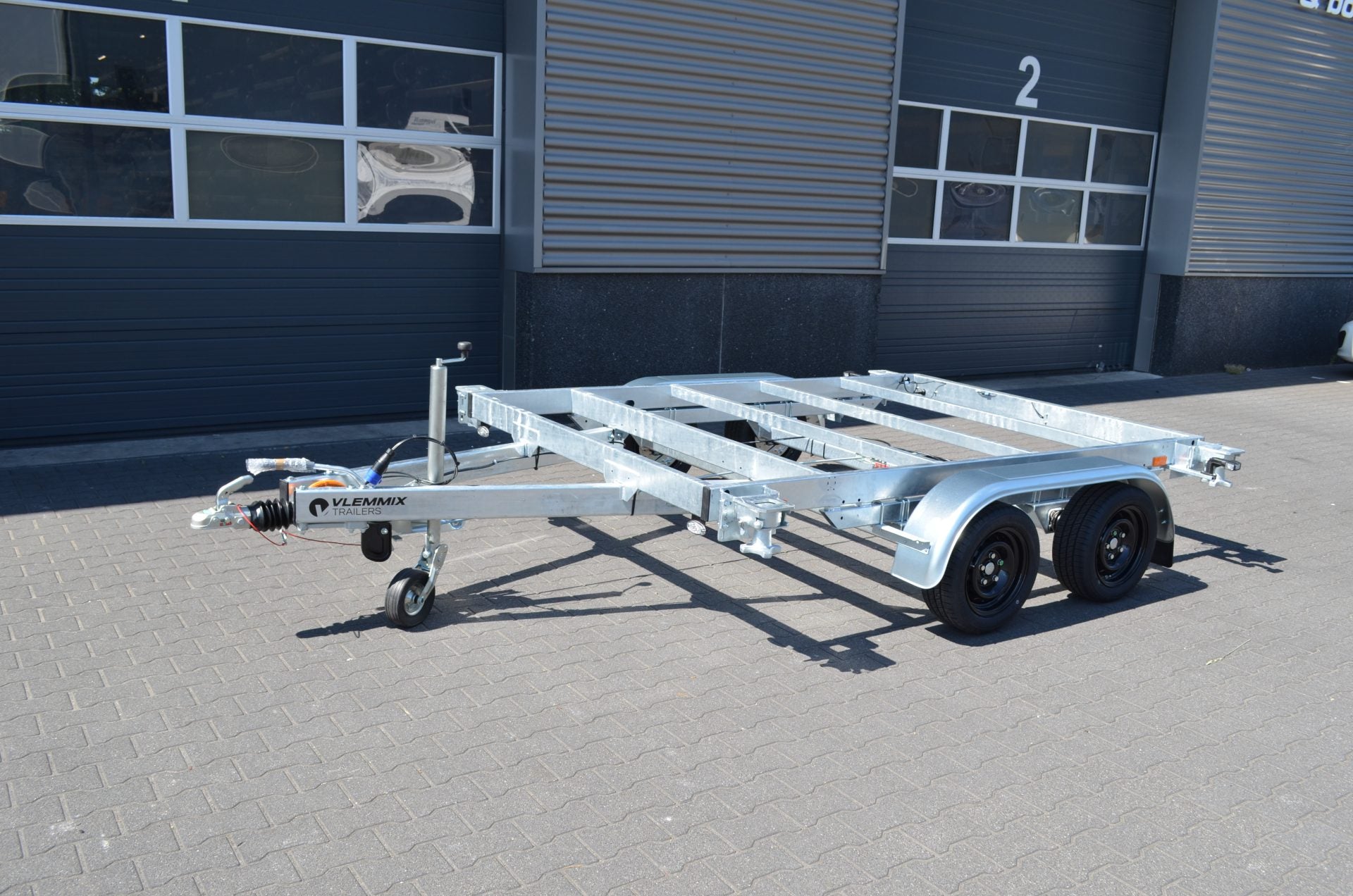
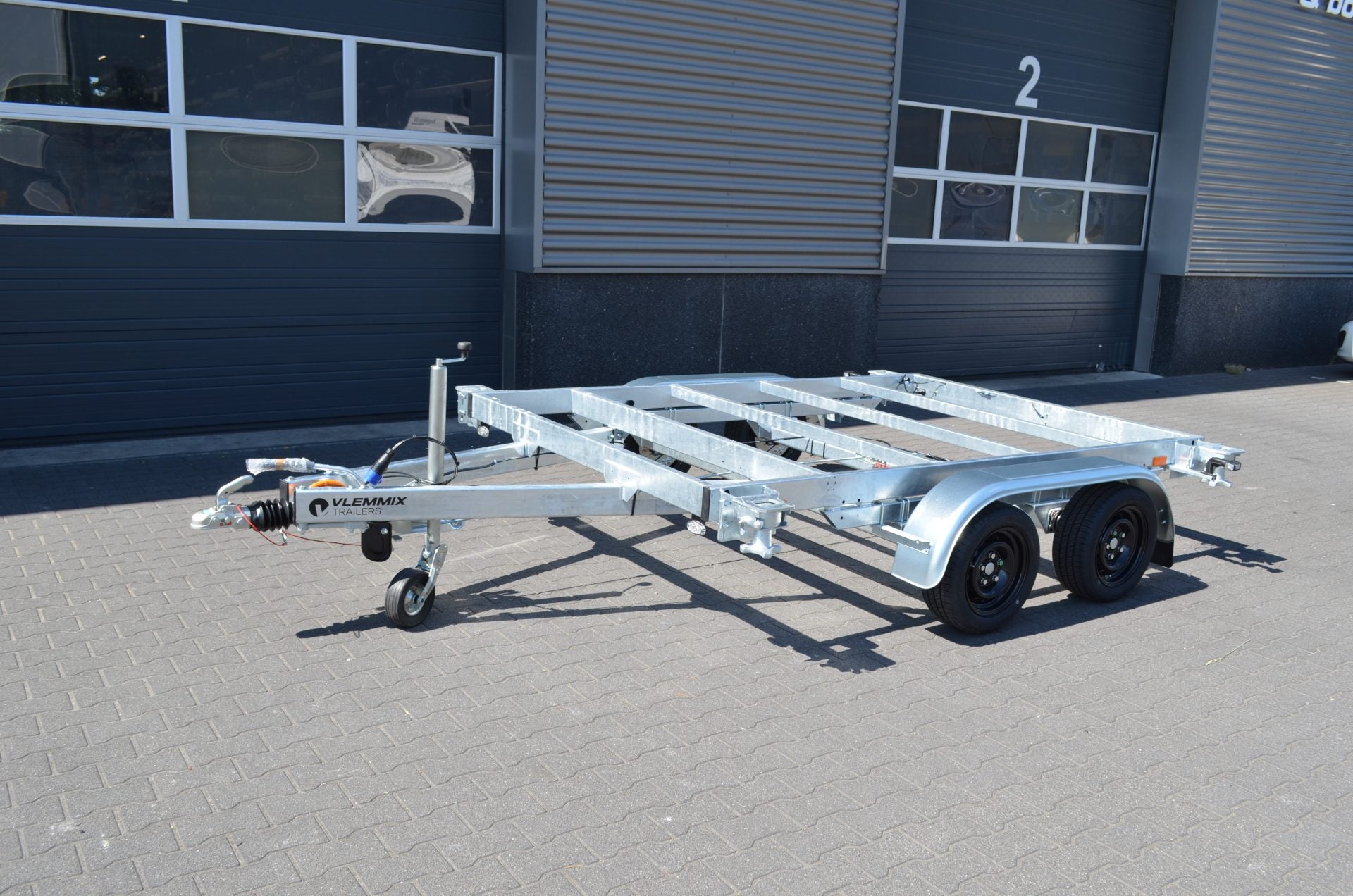
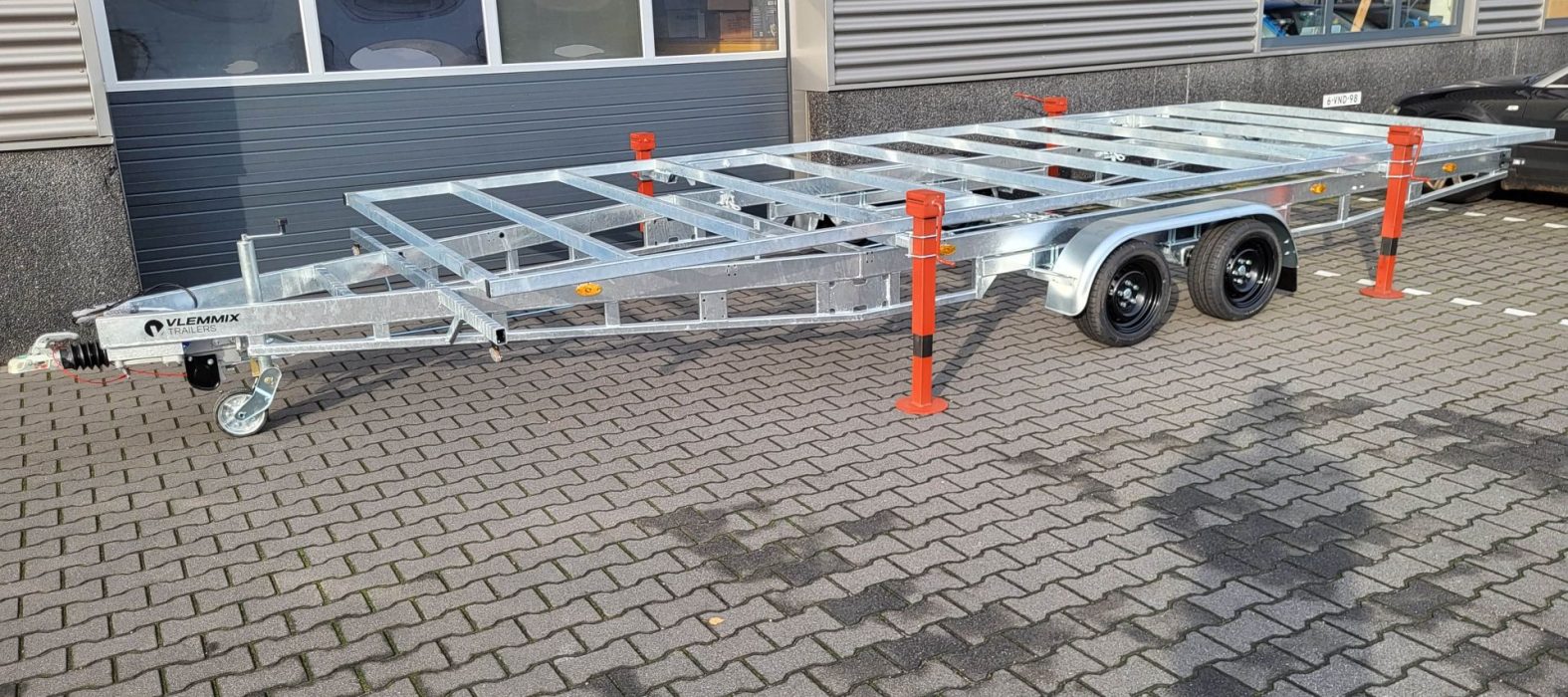
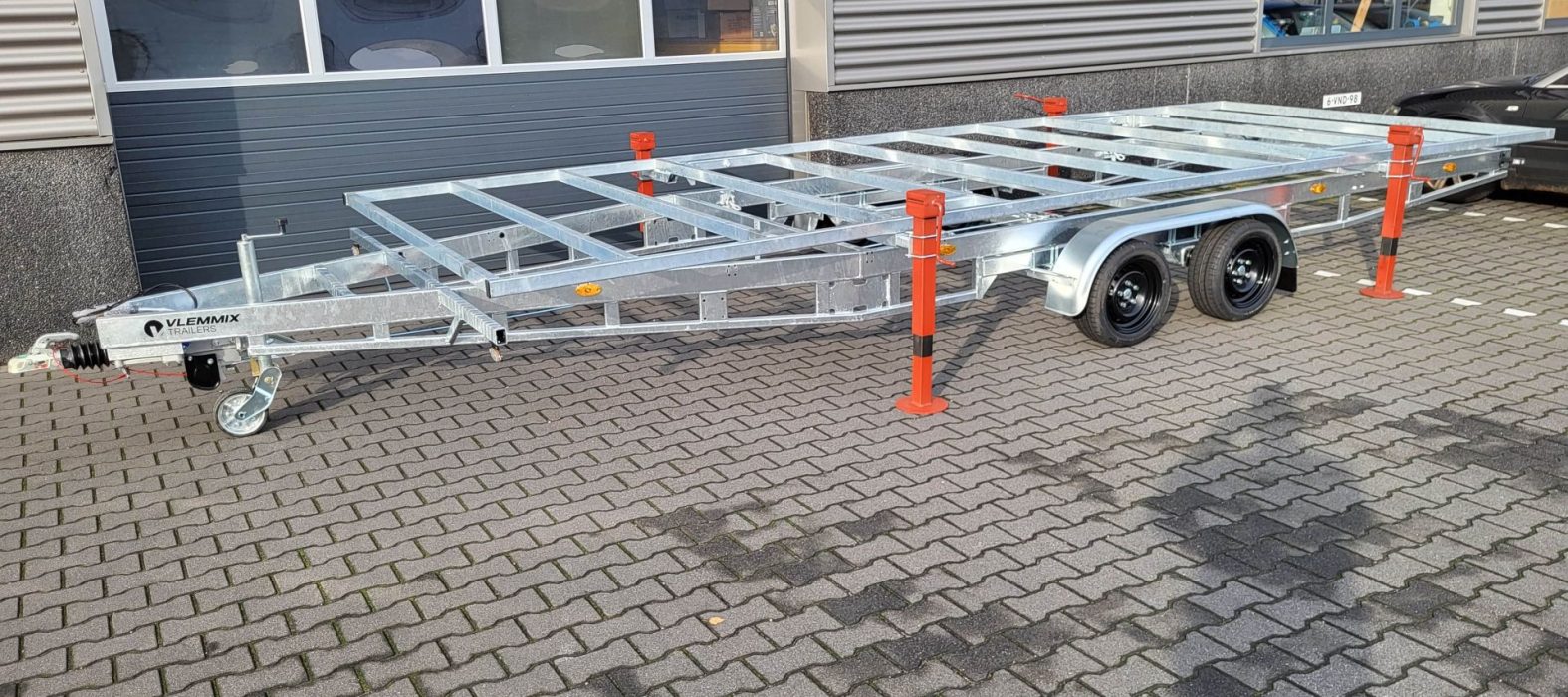
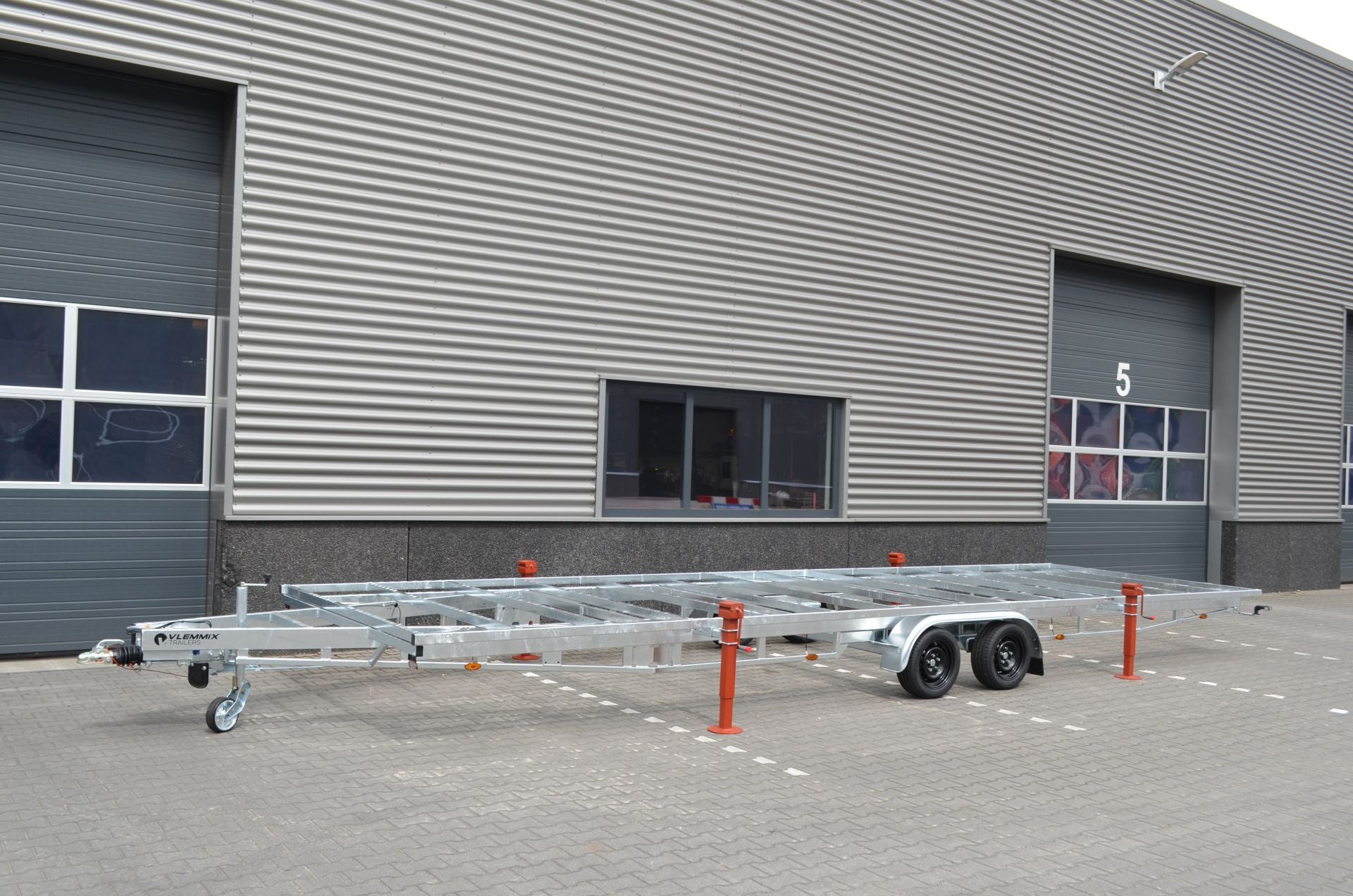
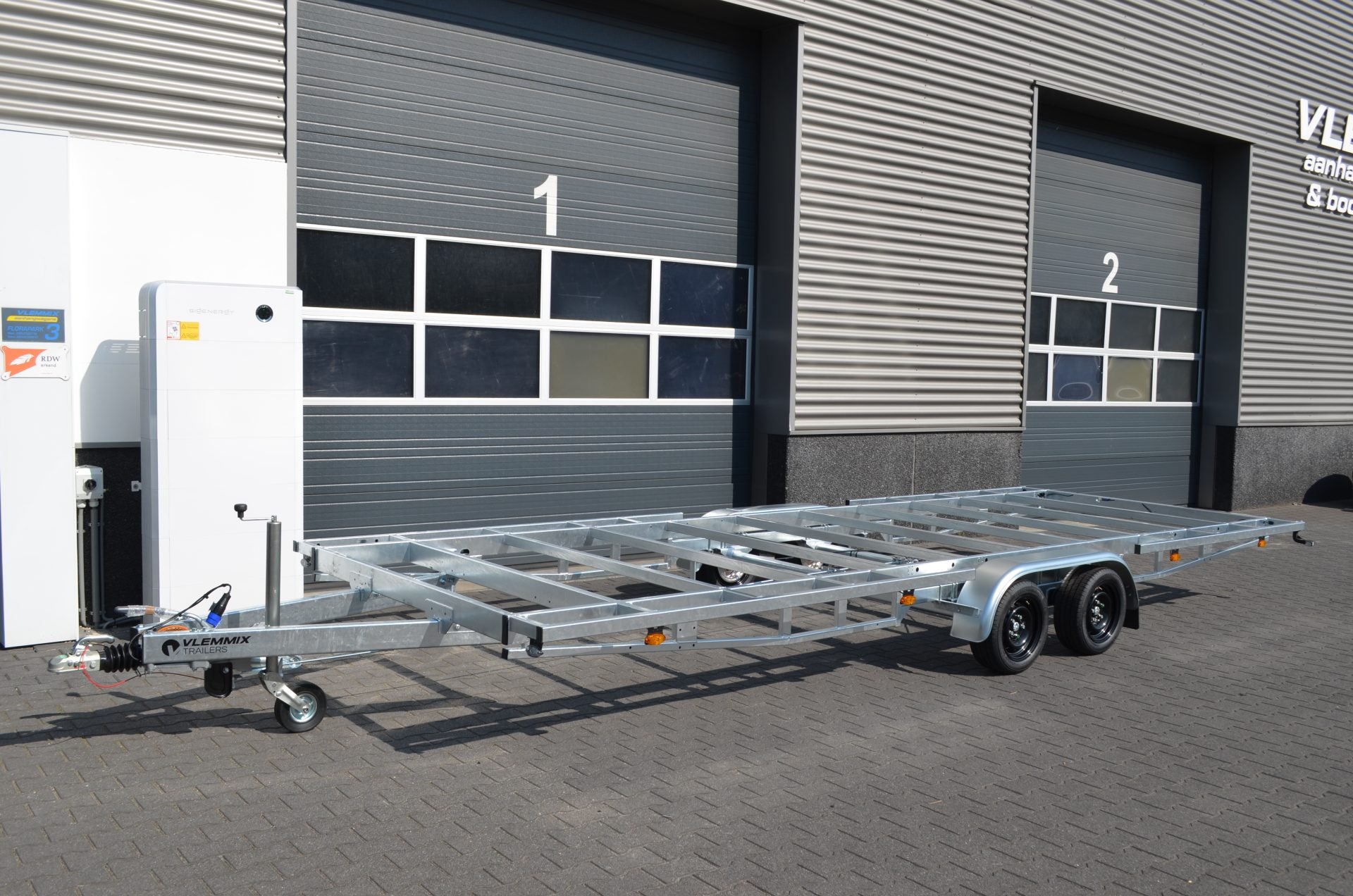
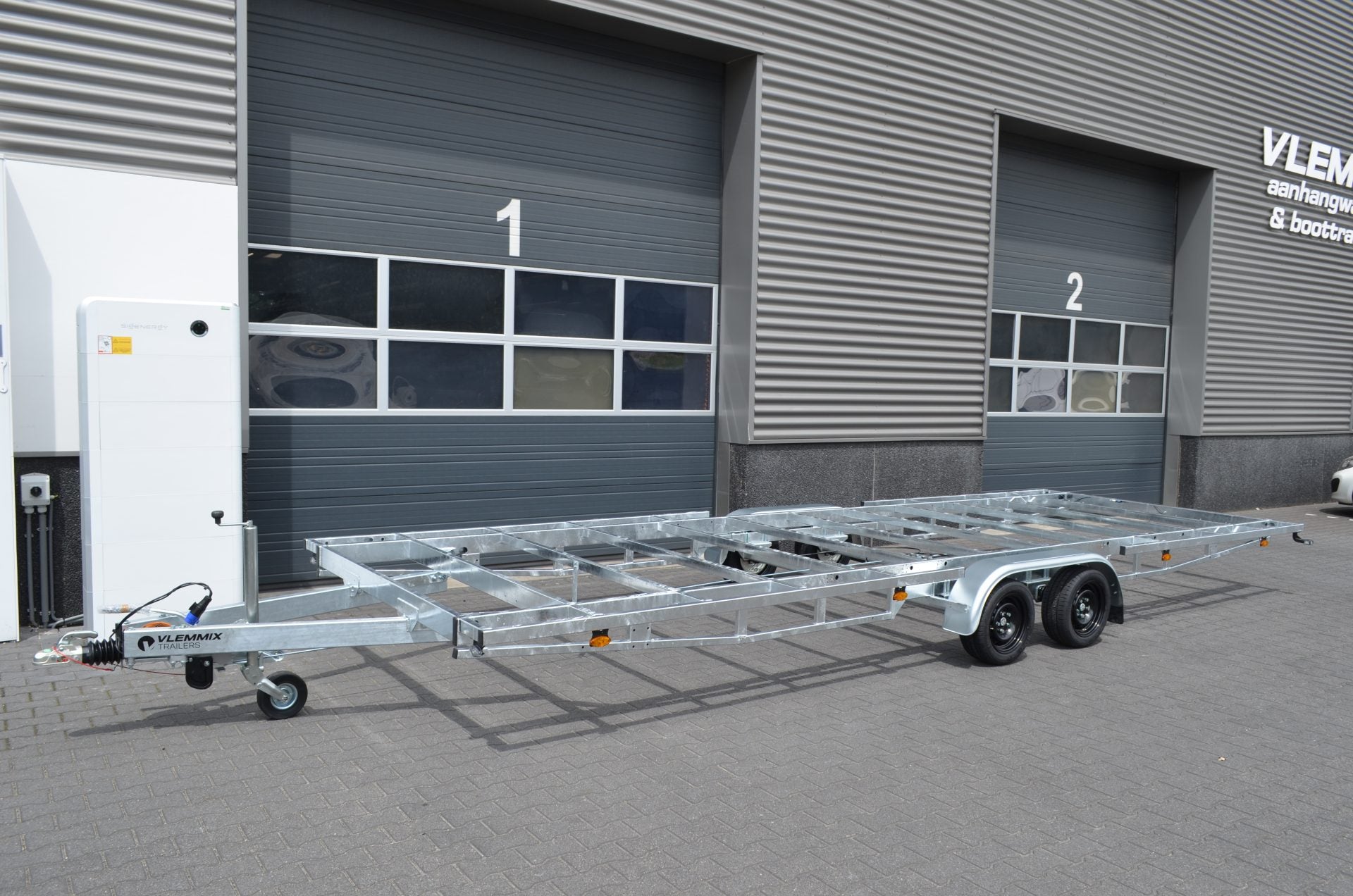
In recent years, interest in small mobile homes has grown. These types of projects are usually based on Structural trailers designed to support lightweight constructions , commonly known as tiny house bases. These types of structures are supported by trailers for tiny houses specially designed to support the weight of the house and ensure stability during transport.
These configurations incorporate reinforced frames and dimensions adapted to the legal limits established by Spanish regulations on road transport.
Reinforced multipurpose trailers for professional work
Within the professional sector, there are also trailer configurations designed to transport different types of cargo without needing to change platforms. These multipurpose trailers typically feature removable sides, multiple tie-down points, and reinforced frames.
Their versatility makes them a common solution for freelancers and small businesses that need to transport tools, construction materials or light machinery to different jobs throughout the week.
Common mistakes when choosing trailer settings
One of the most common mistakes is choosing a trailer based solely on the item you want to transport. Before making a decision, it's advisable to review a Checklist before buying a trailer: 12 questions that filter out junk , as it helps detect common mistakes that appear when choosing a model without analyzing the actual use it will have.
However, the total weight of the set is usually greater than many users imagine.
When transporting a boat, for example, you have to add up the weight of the hull, the engine, the fuel, the equipment, and the trailer itself. If the configuration isn't designed for that load, the whole assembly can operate near its structural limits, increasing the risk of breakdowns or stability problems.
Another error also frequently appears: Failure to check the towing capacity of the tractor unit . Each car has a maximum towing capacity indicated on its registration document, and exceeding that limit may result in fines or the immobilization of the vehicle combination during a traffic stop.
How to choose the right setting for each use
Choosing the right trailer requires considering several factors simultaneously. The type of load, frequency of use, total weight, and towing capacity of the tractor unit are all part of the equation.
In Spain, regulations establish clear limits on maximum dimensions and weights. Drivers must also consider their driving license, as certain vehicle and trailer combinations may require additional authorizations such as the B96 or B+E license.
Experience shows that users who correctly analyze these factors tend to choose more suitable configurations from the outset. This avoids unnecessary expenses on later modifications or premature trailer replacement.
In trailer.es We advise private and professional clients who need to find the right trailer configuration for their vehicle and their business. Our team analyzes the type of load, the vehicle's towing capacity, and applicable Spanish regulations to recommend the safest solution.
Furthermore, we offer a wide range of high-quality, precision-engineered trailers designed for stability, durability, and road safety. Choosing the right configuration from the start ensures years of reliable use.