
Complete legal and functional classification
Anyone looking for information about trailer types in Spain isn't interested in unnecessary theory. They want to know what they can tow with their car, what the regulations require, and which model best suits their needs. There isn't a single answer, as trailers can be classified in several ways: by legal criteria and by practical function. Understanding both helps avoid fines, overloading, and making the wrong choice .
The current market combines lightweight solutions for occasional use with more complex technical configurations designed for specific professional or recreational activities. Each category follows a different logic and is regulated by the General Vehicle Regulations and the General Traffic Regulations.
Legal classification of trailers in Spain
The first major distinction is legal. It doesn't depend on the intended use, but rather on the Maximum Authorized Mass (MAM) . This figure determines required documentation, registration, vehicle inspection (ITV), braking system, and, in many cases, the necessary driver's license.
Ignoring this classification is one of the most common mistakes among individuals. Before focusing on size or price, it's advisable to check which legal category the chosen model falls under.
Light trailers (up to 750 kg GVWR)

These are the most common type of trailer among private users. They do not exceed 750 kg maximum authorized mass (MAM) and do not require a separate registration; they use the same license plate as the towing vehicle. In most cases, they can be driven with a category B license , provided the combination complies with the established limits.
They don't usually have their own brakes. This means they depend entirely on the car's braking system . With a load close to the maximum permitted, braking distances increase. They are suitable for occasional moves, transporting belongings, or small boats, provided the actual payload is respected.
Non-light trailers (over 750 kg GVWR)

They exceed 750 kg maximum authorized mass and must have their own registration, independent vehicle inspection certificate, and mandatory overrun brakes. They are also subject to periodic inspections.
This is where many drivers discover they need a B96 or BE license , depending on the combined maximum authorized mass (MMA) of the vehicle and trailer. These licenses are common for transporting vehicles, machinery, or animals. Maintaining the braking system is crucial for safe driving and passing the vehicle inspection (ITV) without serious defects.
Before choosing a specific model, it's advisable to carefully review the authorizations your driving license allows, as not all vehicle-trailer combinations can be driven with a standard category B license. The combined maximum authorized mass (MMA), the type of trailer, and the presence of brakes directly influence the legal requirements. If you'd like to check this step by step, you can consult our guide on which trailers you can tow with your driving license in Spain , where we explain each case with practical examples.
Semi-trailers

The semi-trailer belongs to the professional sector. Part of its weight rests on the tractor unit via a fifth wheel. It is typical of heavy goods transport and cannot be towed by conventional cars or SUVs.
Although it is not part of the regular market for private individuals, it completes the general classification of towed vehicles in Spain.
Types of trailers according to their function
Beyond the legal classification, the market differentiates trailers by their actual use. This segmentation addresses the practical question of who needs to transport something specific.
Each function requires a different structure, a specific distribution of loads and, in many cases, technical solutions adapted to the type of merchandise.
Hitch or complete trailer

It is the classic model that attaches via an approved ball. All its weight rests on its own axles, transmitting only a controlled vertical load to the drawbar.
It includes both light and heavy-duty models. It is the most common format for passenger cars. Proper installation of the tow hitch and its registration on the vehicle's technical data sheet are mandatory in Spain.
Platform trailer

It is characterized by its flat base, generally without fixed sides. It is designed to transport machinery, ATVs, pallets, or light vehicles. It can include ramps and multiple anchor points.
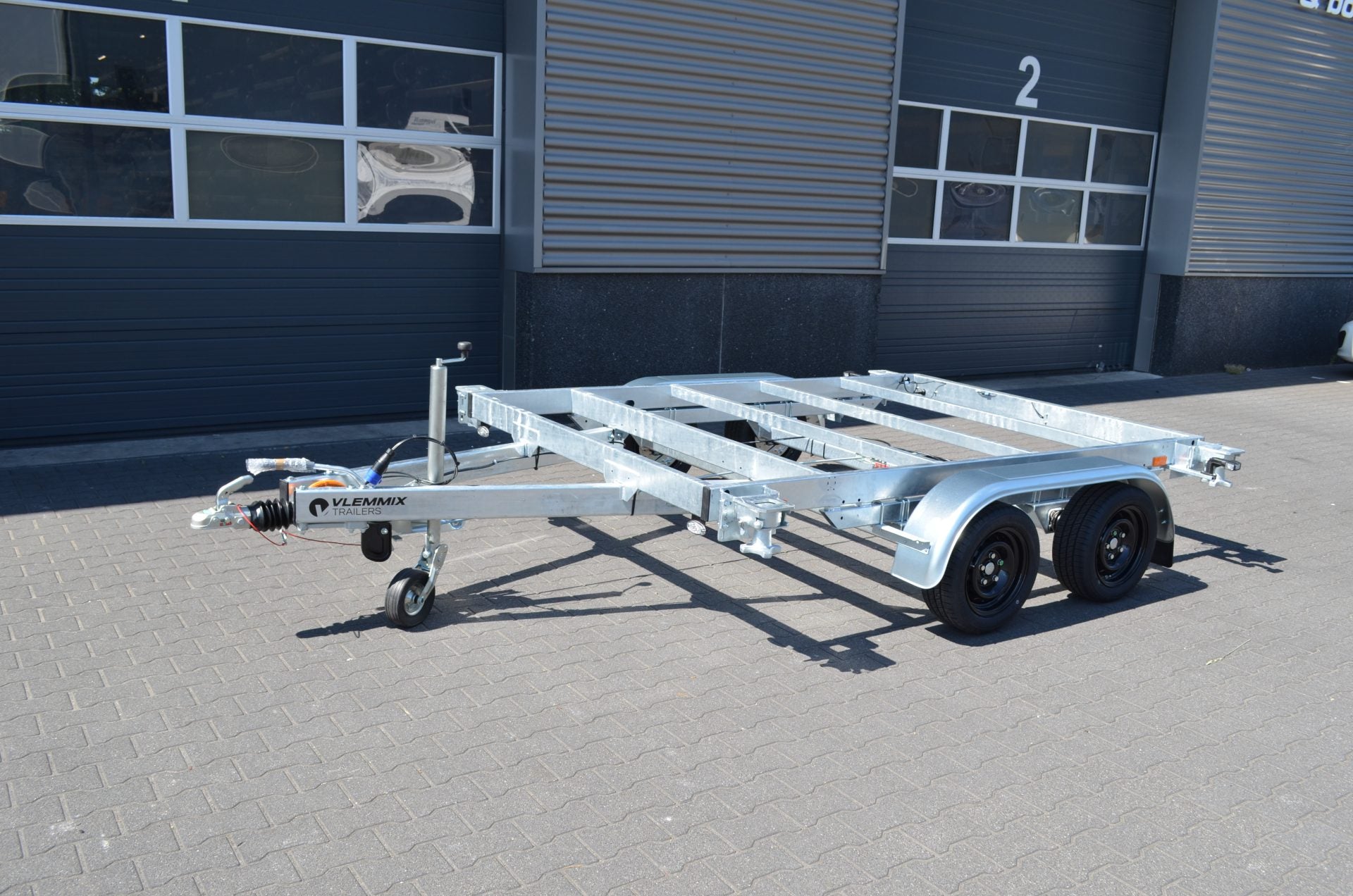
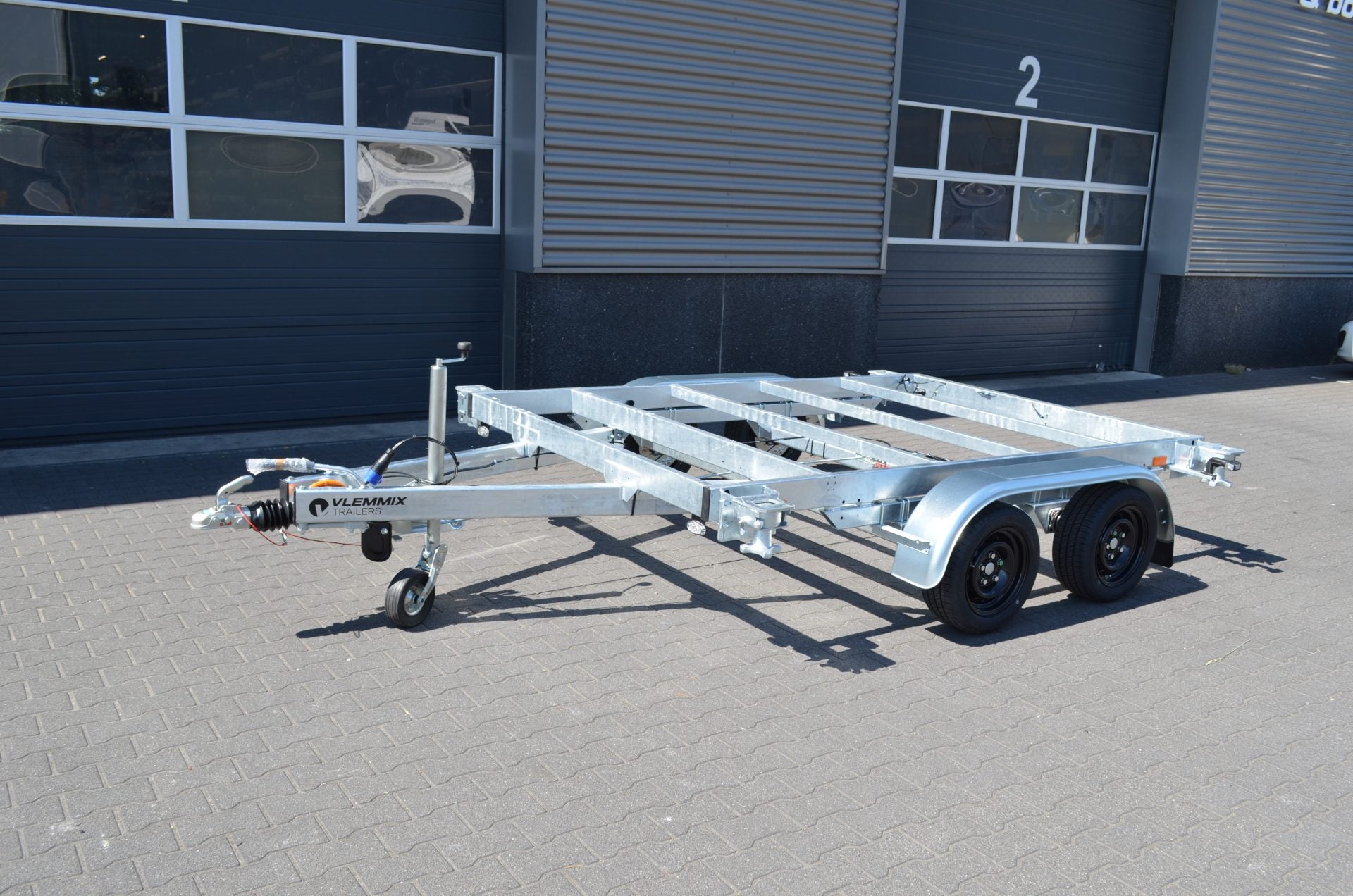
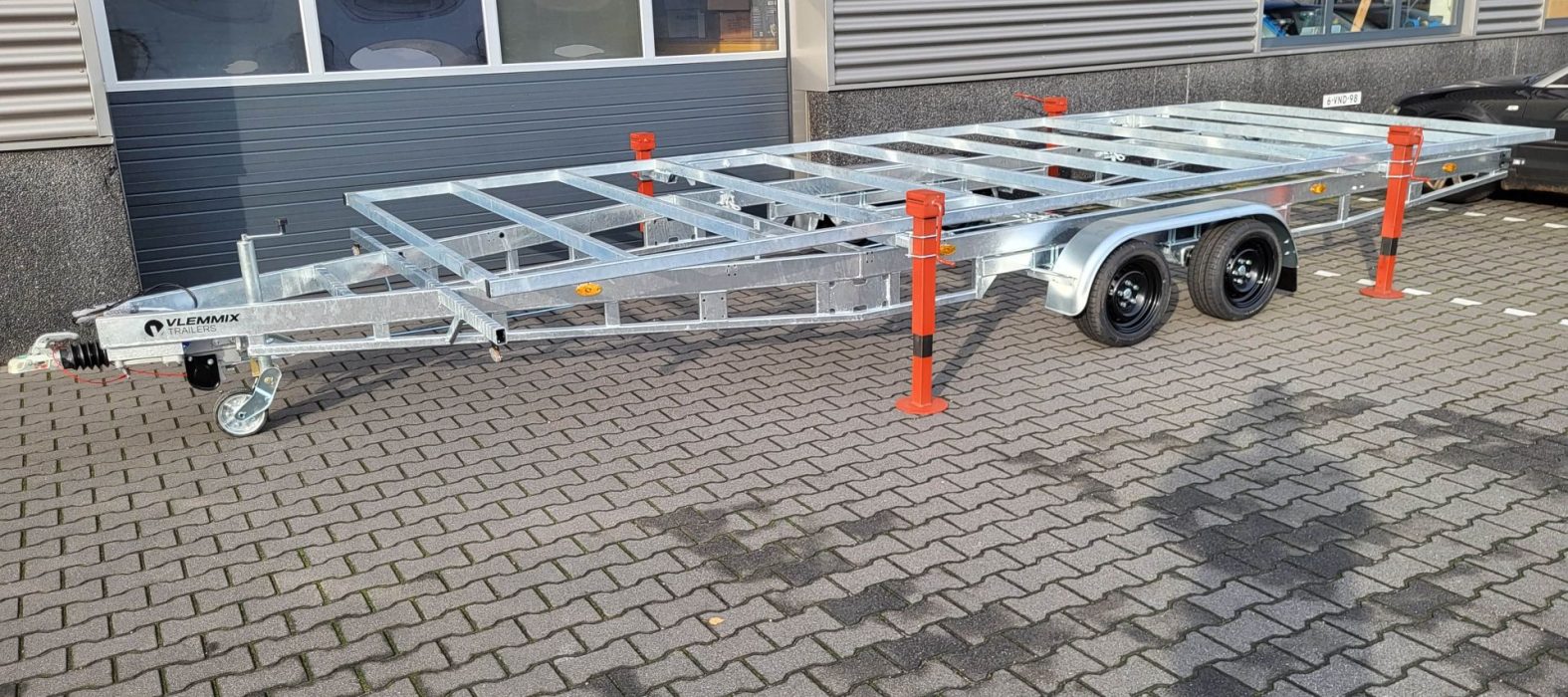
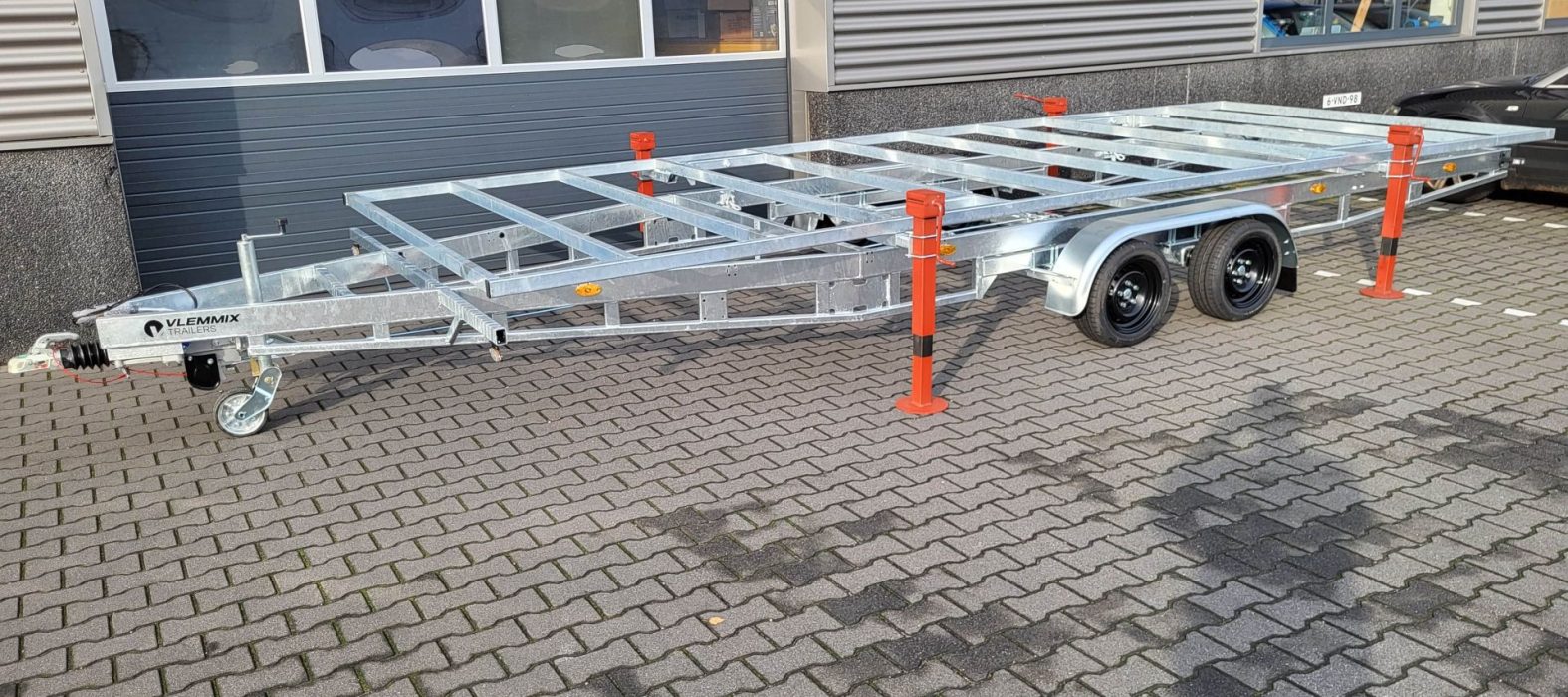
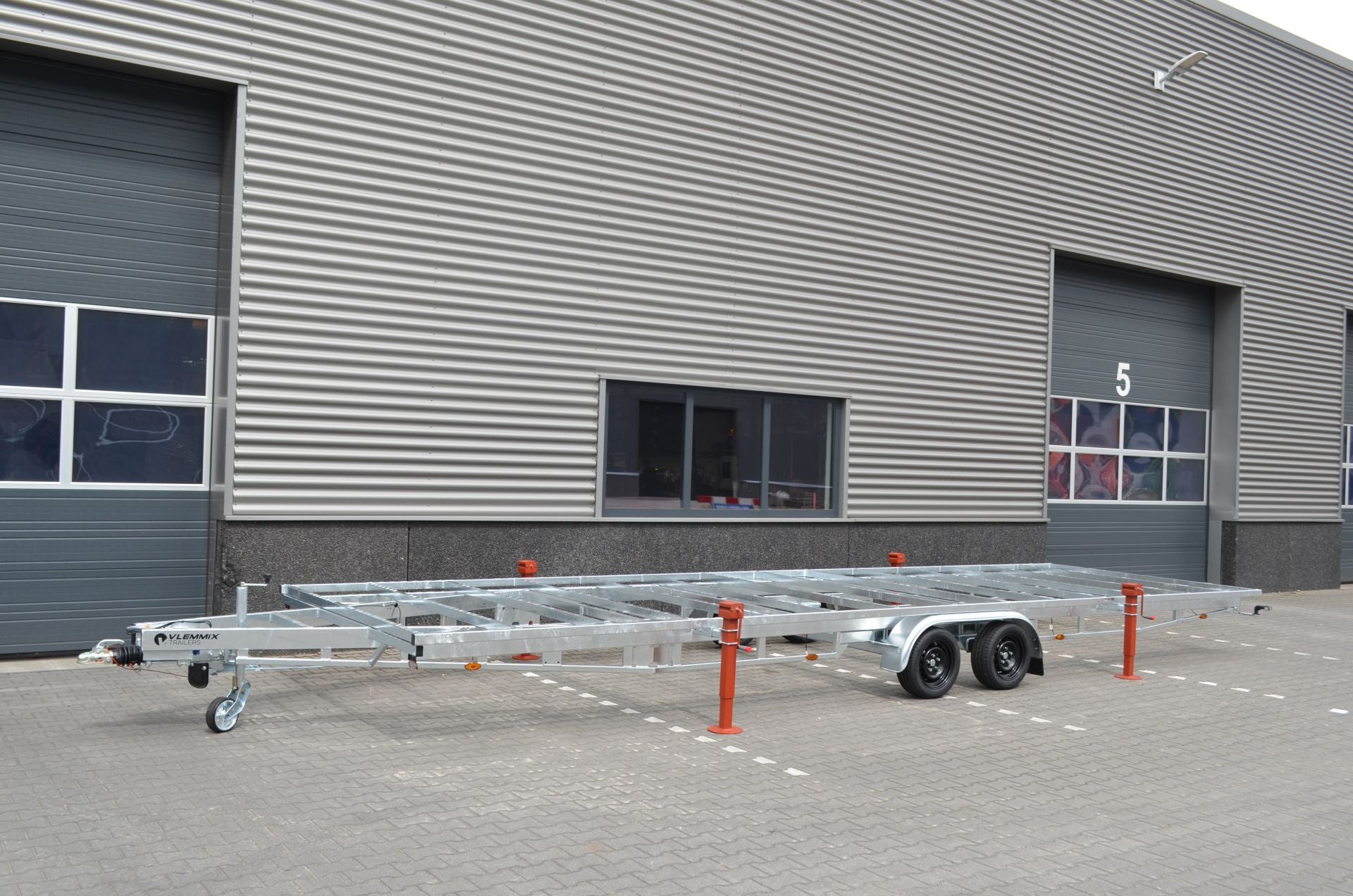
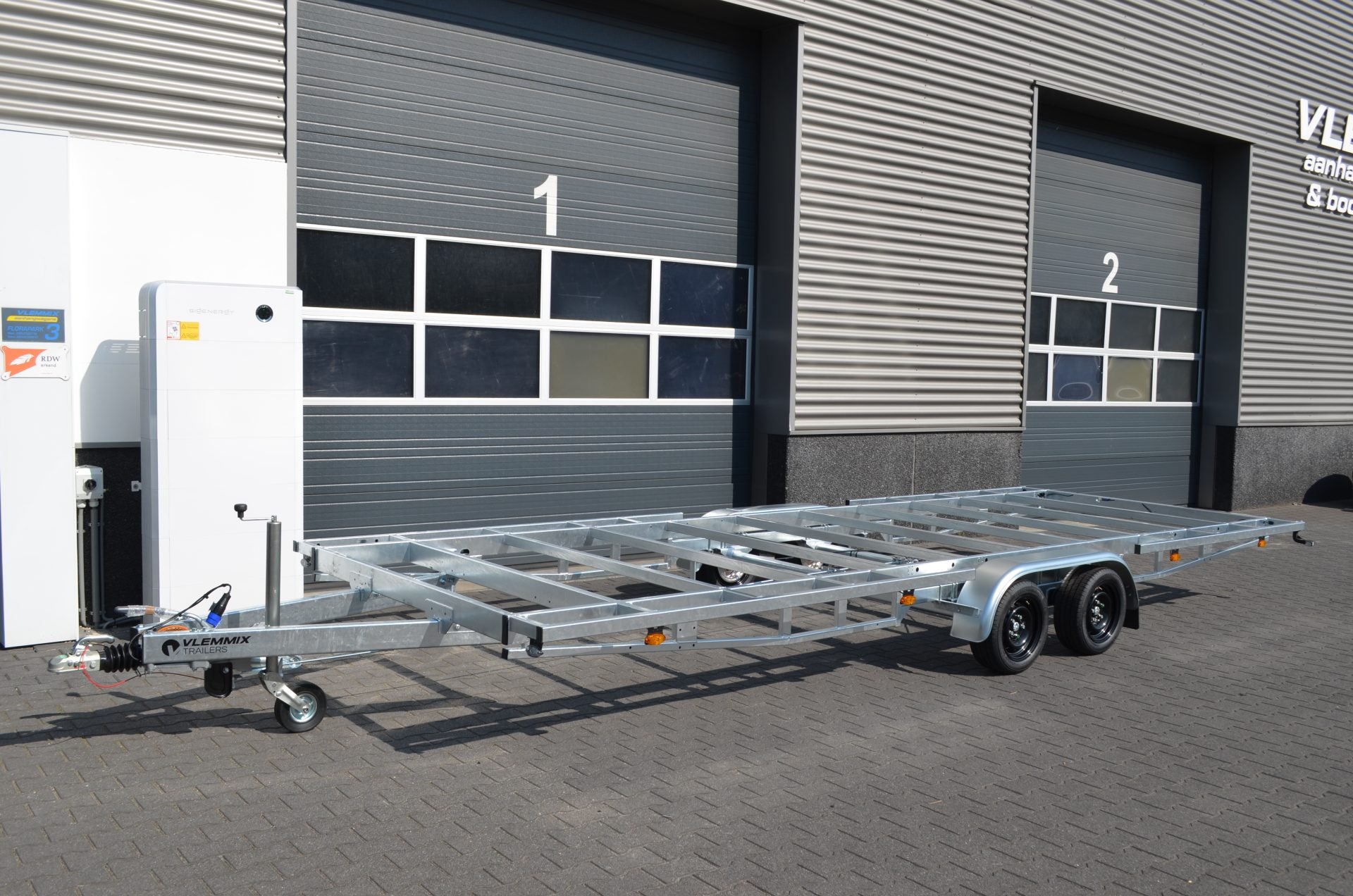
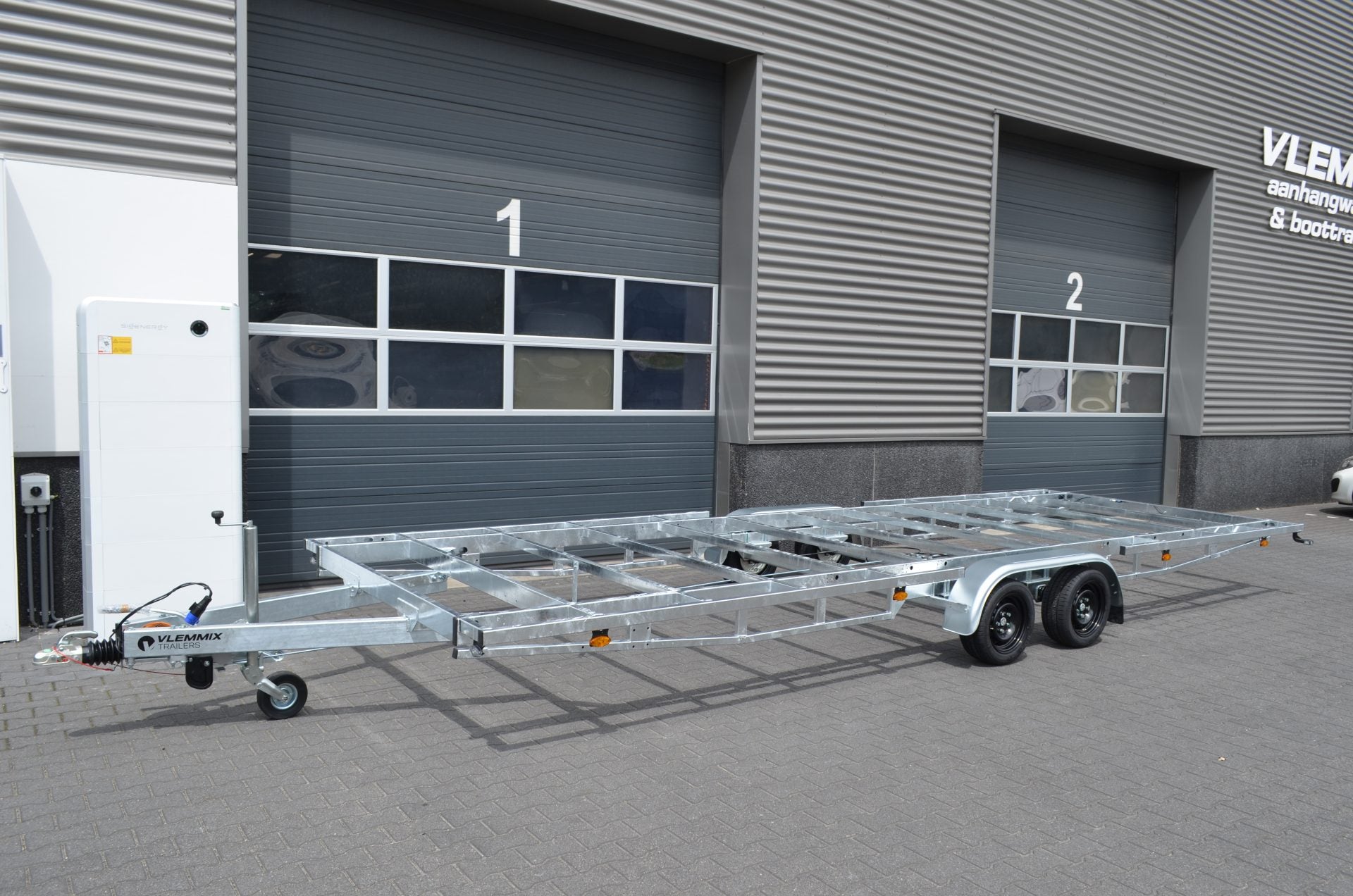
Its versatility makes it common in car renovations and sales. Here, the frame and the quality of the anchor points are crucial, especially when the load is concentrated at a specific location. Reinforced configurations are also available for specific projects such as mobile homes, for example. tiny house trailers , which require a structural base prepared to support high permanent loads.
Caravan

It's a camper trailer intended for leisure use. Its classification as light or heavy-duty depends on its maximum authorized mass (MMA). It includes fixed equipment that increases the tare weight and reduces the available payload.
You must respect the speed limits established for passenger cars with trailers: 90 km/h on motorways and 80 km/h on conventional roads. Larger caravans are subject to periodic vehicle inspections.
ATV trailers

The ATV trailer is specifically designed to transport ATVs safely and securely. Unlike a conventional open cargo trailer, it incorporates reinforced ramps, strategically placed tie-down points, and, in many cases, guide rails that facilitate loading and proper positioning of the vehicle. They are commonly used for recreational activities as well as agricultural or forestry work.
In most cases, they fall under the category of light trailers, which allows them to be towed with a category B license as long as the maximum authorized mass (MMA) limits of the combination are respected. However, the weight of the quad and proper securing with approved straps are crucial factors to prevent movement while driving. Although their structure is simple, choosing a model with a robust frame and good anchor points makes a difference in safety and durability.
Agricultural trailer

Designed for agricultural operations, it transports crops, tools, or materials. If driven on public roads, it must comply with the lighting, signaling, and documentation requirements stipulated by Spanish regulations.
On rural roads, stability is key. Weight distribution and axle condition directly influence safety.
Horse trailers

They incorporate ventilation, a non-slip floor, and interior dividers. The animal's movement alters the center of gravity, so the chassis must be robust and stable.
They are usually classified as non-lightweight and require inertia brakes. Furthermore, they may be subject to European regulations on animal welfare during long journeys.
Dog or hunting trailers

They have individual ventilated compartments and adapted securing systems. Many are lightweight, but they must comply with the same signaling and lighting requirements as any other trailer.
Hygienic maintenance and adequate ventilation are fundamental aspects for animal welfare.
Motorcycle trailers

The motorcycle trailer is designed to transport motorcycles with stability and safety. It incorporates specific rails, a front wheel guide, and reinforced anchor points that allow the motorcycle to be secured with approved straps, preventing movement while traveling.
Most are lightweight trailers and can be used with a category B license if the maximum authorized mass (MMA) limits are respected. The key is proper securing and good weight distribution over the axle, factors that directly influence the stability of the vehicle on the road.
Double-decker trailers

Special configurations with double loading levels, primarily used in professional vehicle or animal transport. They allow for optimized space in commercial operations.
They require special attention to the maximum permitted height and weight distribution between levels. They are not commonly used in private homes.
Technical differences between trailer types
Beyond the exterior shape, the technical differences directly influence the road handling.
Not all trailers behave the same way when faced with sudden braking or a gust of crosswind.
axis configuration

The single axle provides lightness and greater maneuverability. It is common in light trailers and those used occasionally.
The dual axle improves stability and load distribution in heavier or longer models. It also offers greater safety in the event of a tire blowout.
Braking system

Light trailers typically do not have independent brakes. Heavy trailers are required to have overrun brakes.
During vehicle inspections (ITV), any defect in this system is considered serious. Regular inspection is mandatory.
Materials and anti-corrosion treatment
Hot-dip galvanizing extends the service life, especially in coastal or humid areas. A frame without proper protection can deteriorate in just a few years.
The quality of the welds and the thickness of the steel directly influence the durability of the assembly. In marine environments, opting for specific solutions such as... Boat trailers with appropriate anti-corrosion treatment significantly reduce premature wear.
Common mistakes when choosing a trailer type
Confusing tare weight with maximum authorized mass (MMA) is common. So is failing to check the authorized towing capacity of the tractor unit. Buying solely based on price without considering actual use often leads to problems during vehicle inspections or fines for exceeding weight limits.
Improper load distribution is another common problem. Placing too much weight on the rear axle increases swaying. A misaligned axle or a neglected electrical system can cause wear and tear and breakdowns on the road.
If you want to know how much a trailer's load can legally protrude in Spain , this blog explains it in detail.
Tips for choosing the right trailer
Review the car's technical specifications before deciding. Calculate the actual load, not a rough estimate. Check if a B96 or BE license will be required.
Considering where the trailer will be stored and how often it will be used helps in making an informed choice. Thinking ahead prevents you from running out of capacity and having to change models in a short time.
Before buying a trailer, it's advisable to check three basic elements that directly influence safety and durability: chassis, lights and tires .
Chassis :
It must have clean welds, without cracks or premature rust. It is important to check the strength of the drawbar and its connection to the frame, as it bears a large part of the stress while driving. If it is galvanized, the coating must be uniform. A misaligned chassis can cause uneven wheel wear and loss of stability.
Lights and electrical connection:
All functions (position, brake, turn signals, fog lights) must operate correctly. Check that the 7 or 13-pin connector is in good condition and compatible with your vehicle. An electrical fault will result in a fine and a failed vehicle inspection.
Tires:
Check the tread pattern, sidewall condition, and manufacturing date. Even if the trailer is used infrequently, the tires age. The load index must be appropriate for the trailer's maximum authorized mass (MMA); otherwise, the risk of blowouts and premature wear increases.
Applicable regulations and legal aspects in Spain
The General Vehicle Regulations govern classification, documentation, and technical requirements. The General Traffic Regulations set speed limits and rules of use.
Trailers that are not lightweight must undergo periodic vehicle inspections (ITV) and have their own registration. The sum of the maximum authorized mass (MMA) determines the required license. Failure to comply with these limits may result in fines and penalty points.
Usage data and trends in Spain
Public records from the Ministry of Industry reflect strong growth in registrations of light commercial vehicles and auxiliary solutions such as trailers. The rise of self-employment and active tourism has driven demand for specific models, from motorcycle carriers to nautical solutions.
The Spanish Directorate General of Traffic (DGT) has intensified weight and dimension checks on the roads, reflecting the increased use of vehicle-trailer combinations for both leisure and commercial purposes. While publicly available statistics broken down by functional category are unavailable, annual reports confirm ongoing monitoring of these types of vehicles, particularly during seasonal enforcement campaigns.
The market is evolving towards more specialized solutions, with improved anti-corrosion treatments and more reliable braking systems. There is also growing interest in models adapted to SUVs and 4x4 vehicles, commonly used in recreational activities.
Find the right trailer with professional help
If you're unsure what type of trailer you need, at remolque.es we'll advise you based on your vehicle, your license, and how you'll actually use it. We analyze each case to ensure you buy with confidence and in compliance with current regulations.
At remolque.es we have a wide catalog of top quality trailers, manufactured with precision and prepared to offer durability and reliability on the road.