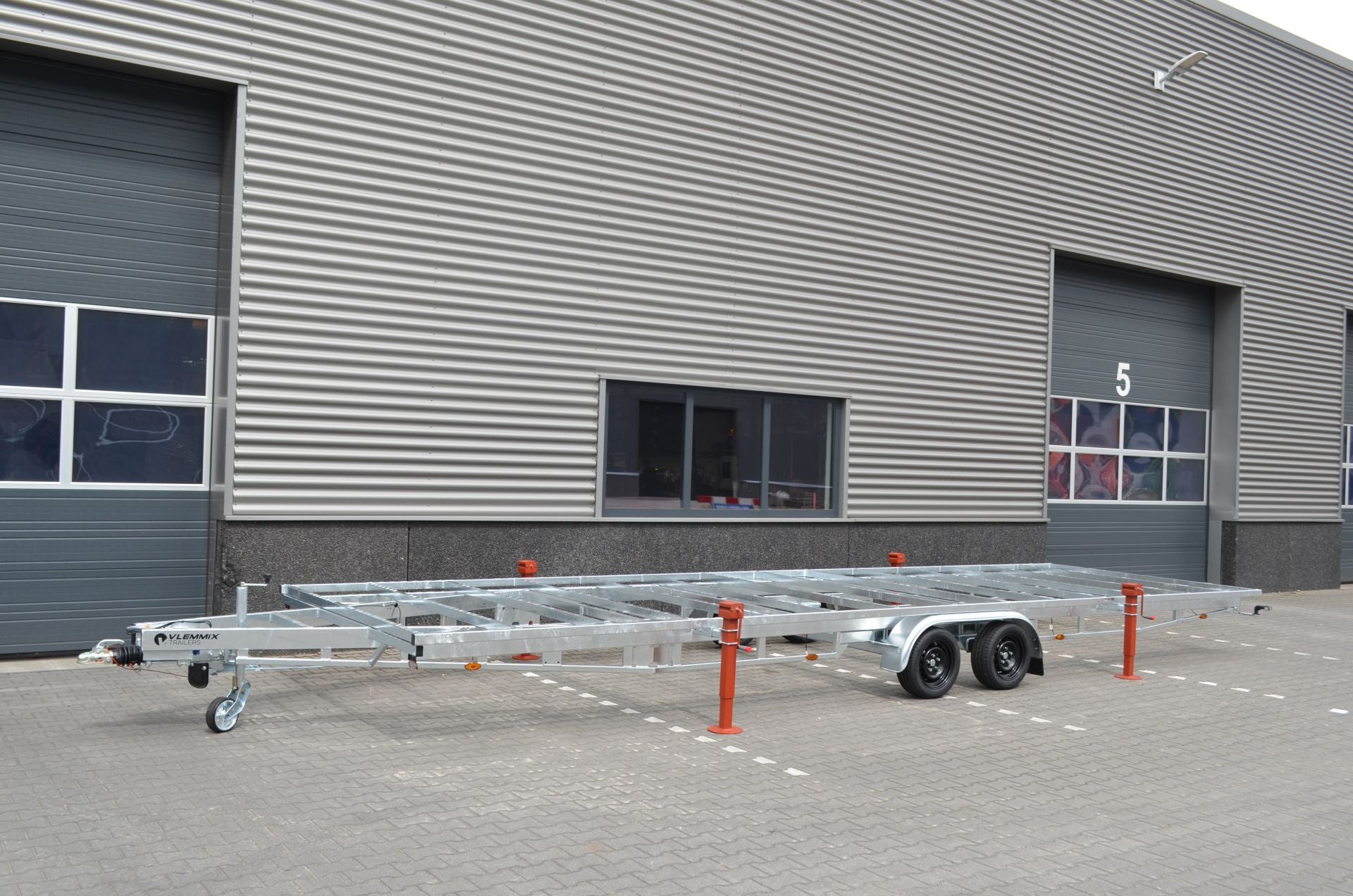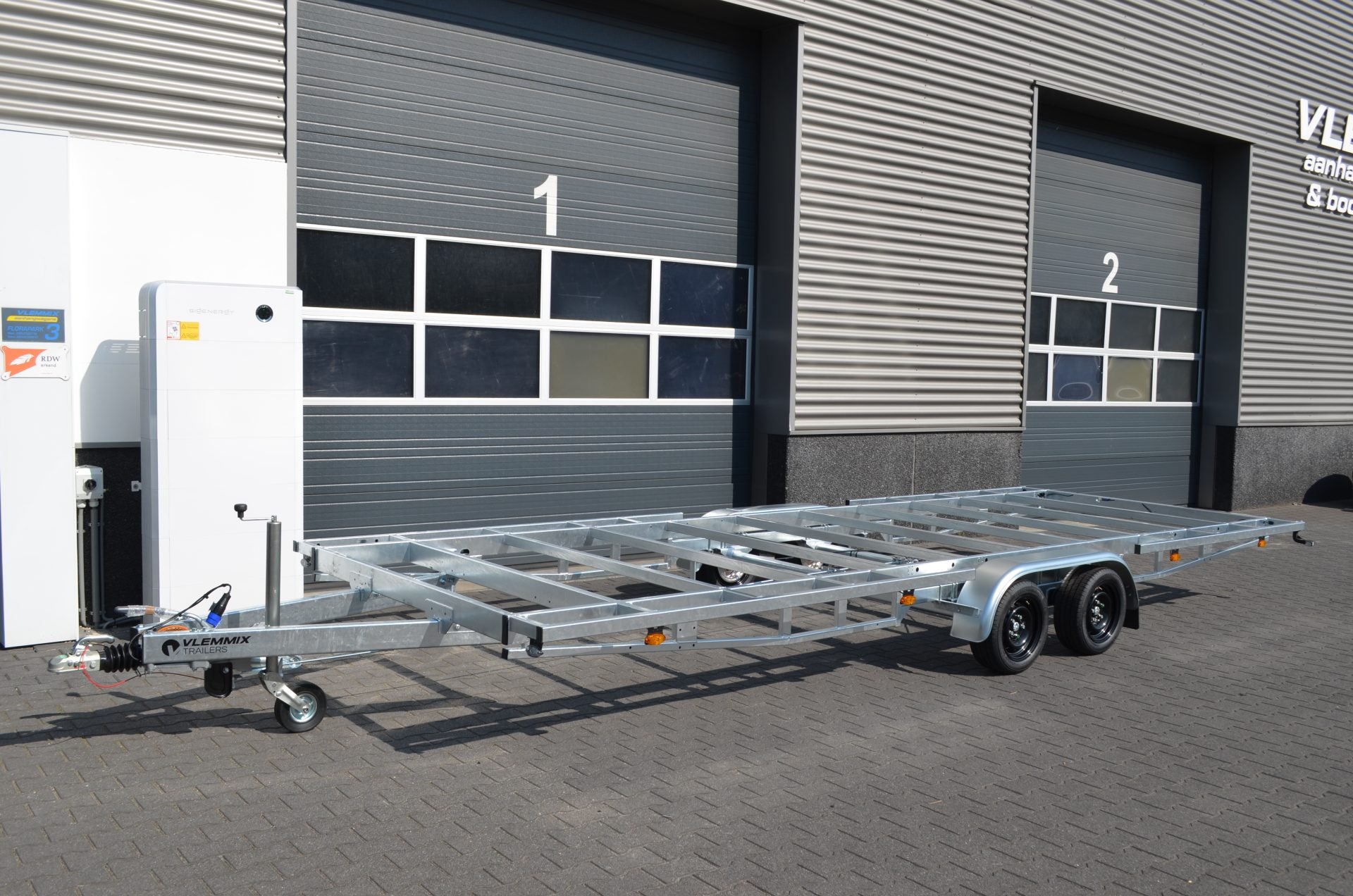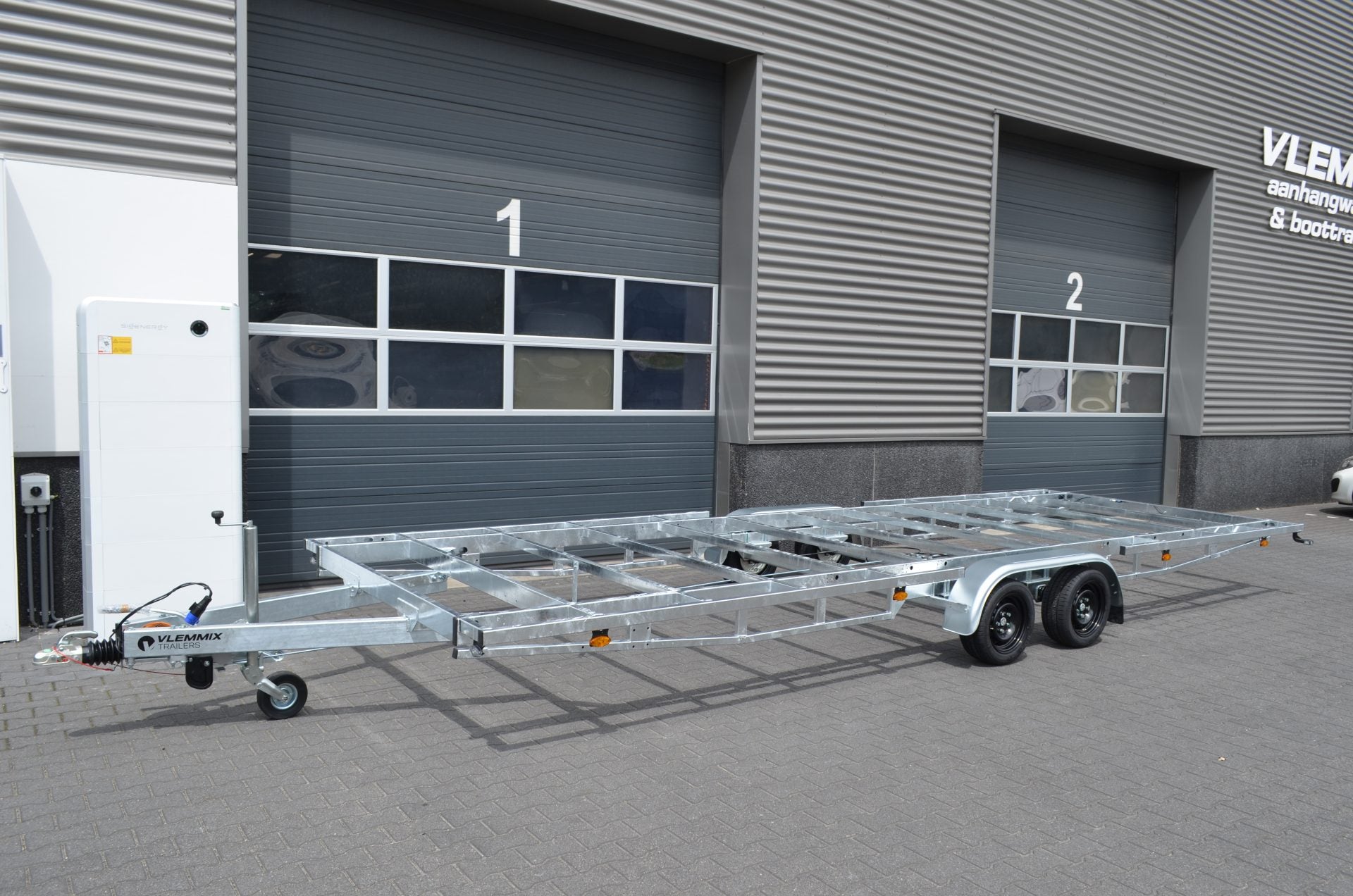

The popularity of tiny houses has changed the trailer market in Spain. More and more people are opting for a "mobile home" as a residential alternative or as a personal project. The problem arises when the chosen chassis is not designed to support a high permanent load for years. What in a trailer used occasionally would be normal wear and tear, in a tiny house can become premature structural fatigue.
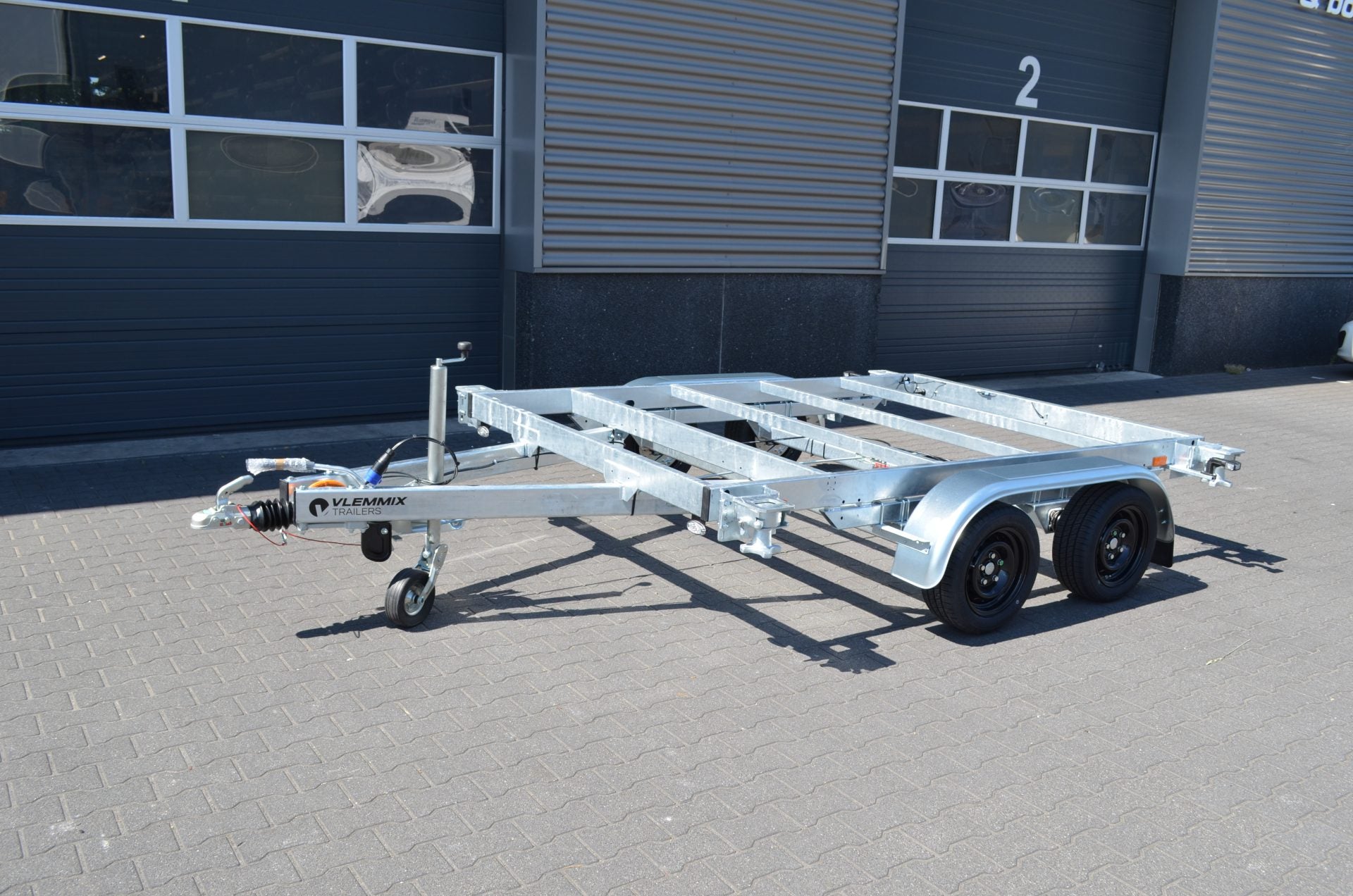
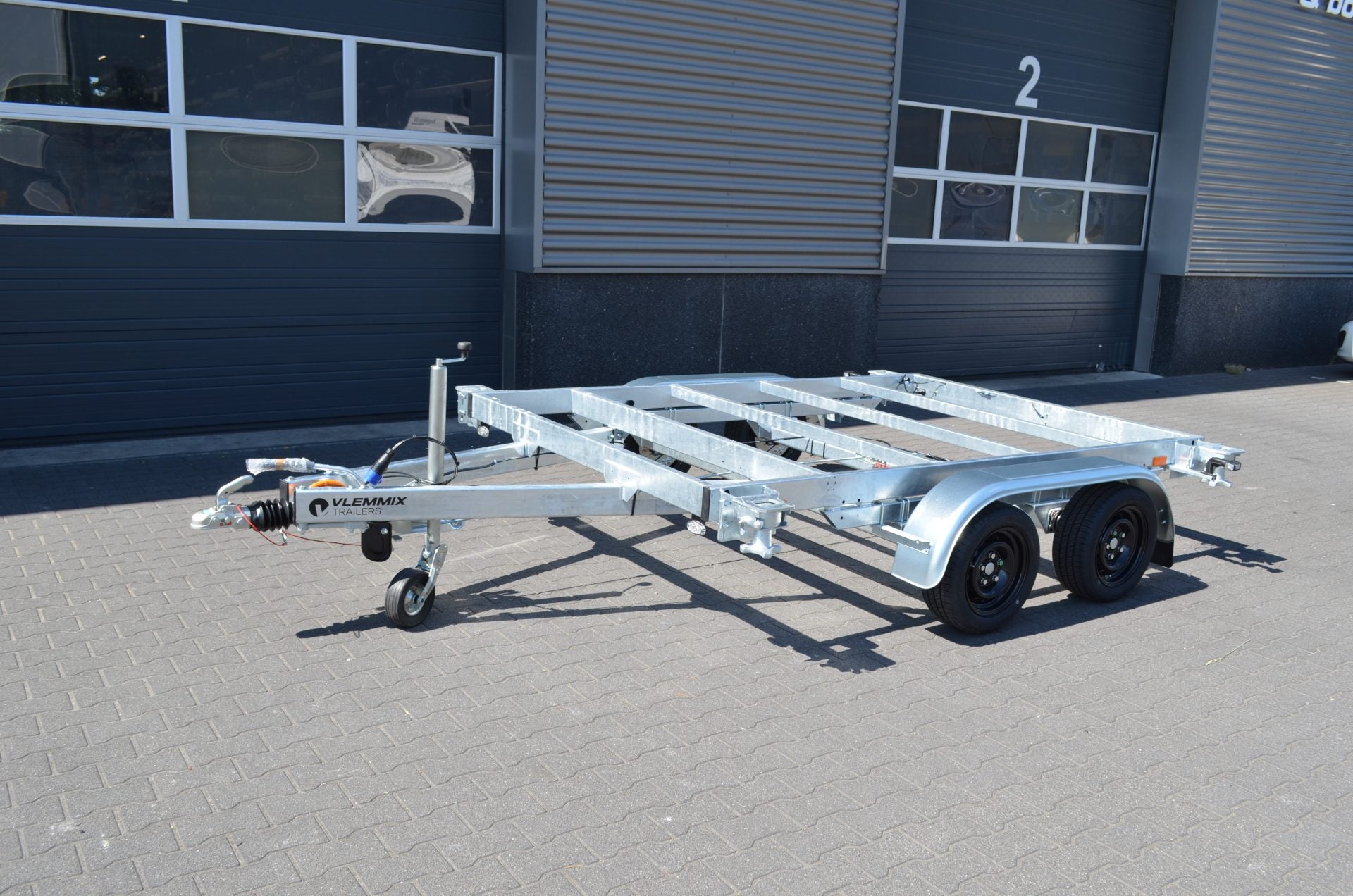
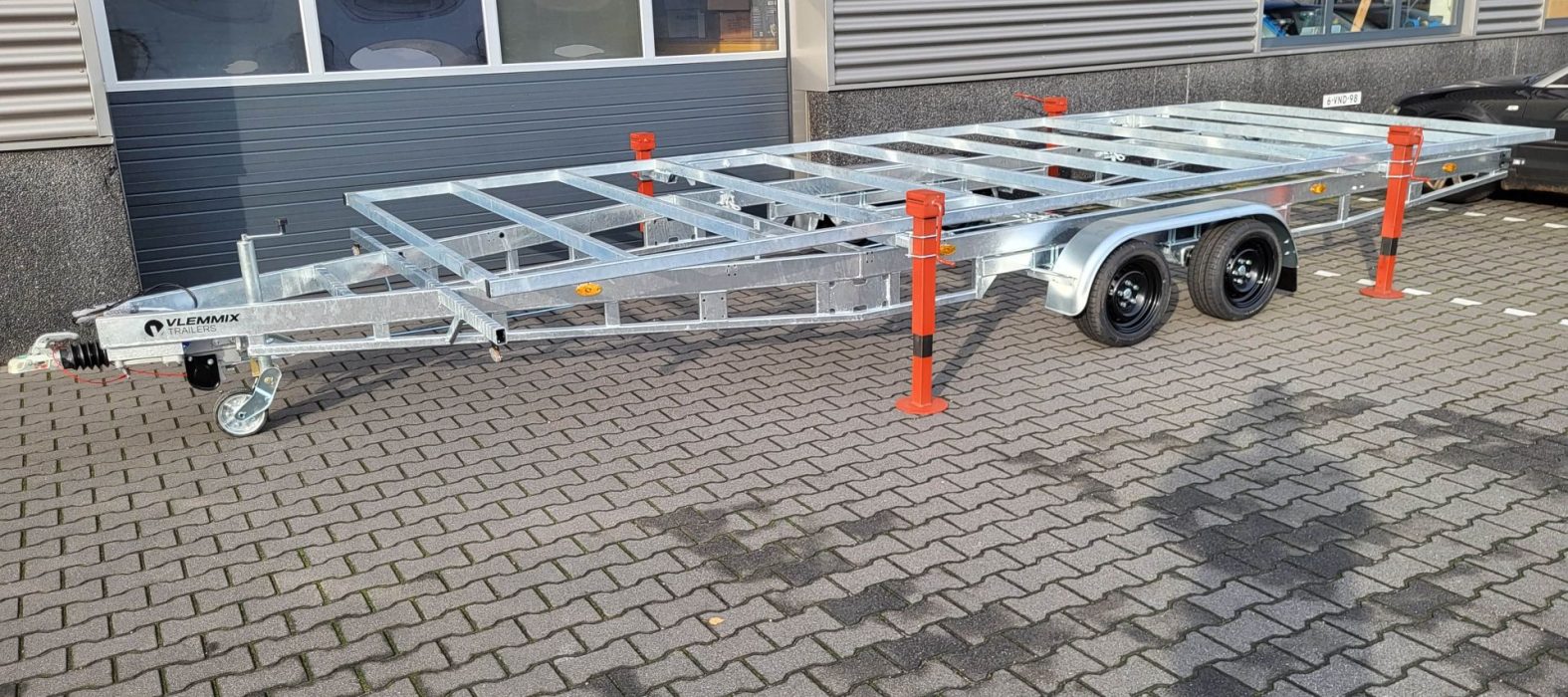
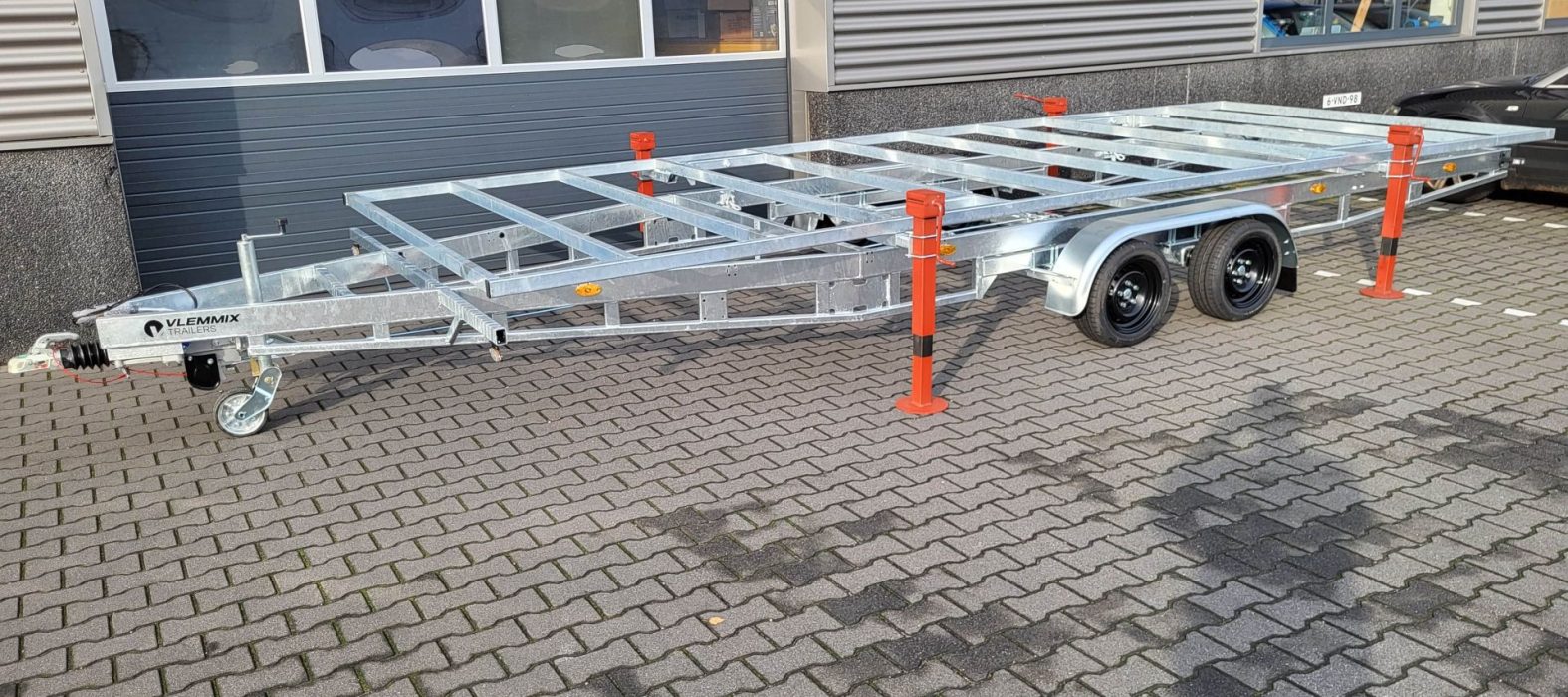
The question is clear: How long does a tiny house trailer actually last? Those considering purchasing a specific structural base can consult the technical specifications of tiny house trailers , designed precisely to withstand high permanent loads and reinforced structural configurations.
There is no official figure published by the DGT (Spanish Directorate General of Traffic) or the MITMA (Ministry of Transport, Mobility and Urban Agenda) specifically for this type of structure. However, technical expertise, data on the aging of the trailer fleet in Spain, and observations from vehicle inspections (ITV) allow us to establish a reasonable range and, above all, understand which factors make the difference.
Lifespan of a tiny house trailer
Unlike a conventional cargo trailer, a tiny house trailer works in Continuous operation . The steel supports weight day and night. There are no unloading periods. This detail completely changes the concept of durability.
Under normal conditions, a structural trailer specifically designed for mobile housing can achieve 15 to 20 years useful life If it is properly sized and maintained. This reference aligns with MITMA studies on the average age of the heavy trailer fleet in Spain, which is around 14–16 years. Although this data corresponds to commercial vehicles, it serves as a comparative framework.
When the frame is undersized or constantly working at its limit At the maximum authorized mass (MMA) , the expected lifespan clearly decreases. In generic, adapted structures without adequate reinforcement, it is not uncommon to see significant deformations starting at 8–12 years of age.
The element that usually marks the end of the useful life is not the axle that can be replaced, but the Frame fatigue . Microcracks in side rails and crossmembers appear after years of constant load, especially if the weight is not properly distributed.
Frame construction, structural quality and design
The durability of a tiny house trailer starts with the steel. Not all frames are designed to withstand a permanent static load for years. The difference lies in the structural design:
Profiles section
The section of steel profiles It determines the frame's capacity to withstand prolonged bending. In a tiny house, the weight is constant but unevenly distributed. Profiles with greater height and thickness reduce longitudinal deformation when the dwelling remains in place for years. A profile that is too lightweight may appear sufficient on paper, but under continuous load it tends to sag progressively.
Number of crossbeams

He number and arrangement of the crossbars They directly influence how weight is distributed across the chassis. The more structural support points there are, the less stress will be concentrated in specific areas. In mobile homes with integrated kitchens, bathrooms, and storage, a frame with few crossbeams transmits uneven stress to the main longitudinal members, accelerating fatigue.
Quality of welds

The structural welding These are critical points. They must be continuous, uniform, and penetrate the material properly. Surface or discontinuous welds may hold up under occasional use, but under constant load they become sources of cracking. In technical inspections, many structural deformations originate precisely at poorly executed joints.
Presence of diagonal reinforcements

The diagonal reinforcements They control frame torsion. A tiny house raises the center of gravity and generates lateral forces during cornering or cornering. Without diagonal bracing to stiffen the assembly, the chassis flexes slightly with each maneuver. This repeated flexing, although minimal, accumulates fatigue over the years. A design with well-placed reinforcements ages much more stably.
A trailer specifically designed for mobile homes uses taller and more robust side rails than a trailer used for occasional cargo. This larger cross-section reduces longitudinal flexing when weight is concentrated in areas such as the kitchen, bathroom, or water tanks. Torsional rigidity also plays a role. A tiny house generates lateral stresses during maneuvering and transport; if the frame flexes excessively, this micro-deformation is transmitted to the structure of the living space.
Hot-dip galvanizing extends corrosion resistance, but it doesn't correct a poor design. A well-engineered chassis ages slowly; a lightweight one, even if protected, will eventually show structural fatigue sooner than expected.
Load capacity and technical margin
The MMA (Maximum Authorized Mass) It shouldn't exactly match the estimated weight of the tiny house. Constantly working at the limit accelerates steel fatigue and wear on axles and the braking system.
In Spain, the General Vehicle Regulations establish limits on total mass and axle weight . Respecting these limits is mandatory, but from a technical point of view, it is also advisable to have a reasonable margin. A mobile home rarely maintains the same weight over time.
Additional furniture

Over time, many tiny houses incorporate extra furniture which wasn't included in the initial design. Reinforced shelving, sofa beds, heavier appliances, or fixed storage structures can add tens of kilos without the homeowner even realizing it. In a conventional home, the impact is negligible, but on a frame with a properly adjusted maximum authorized mass, every extra kilo translates into greater permanent structural stress.
Accumulation of objects

Daily life generates a The progressive accumulation of items —tools, clothing, books, small appliances, or seasonal supplies—is usually gradual and goes unnoticed. However, from a technical standpoint, the trailer is now carrying a greater weight than initially anticipated, accelerating steel fatigue and wear on axles and tires.
Full tanks

The clean water and grey water tanks They can significantly alter the overall weight of the vehicle. A 100-liter tank adds approximately 100 kg when full. If the vehicle has multiple tanks, the increase can easily exceed 200 kg. Regularly driving with full tanks puts more stress on the chassis and braking system than many owners realize.
Subsequent improvements

The subsequent modifications These types of projects often include the installation of solar panels with additional batteries, improved insulation, and the addition of stoves or air conditioning systems. Each upgrade increases the overall weight and, sometimes, alters the load distribution on the axles. Without a technical inspection, these modifications can cause the trailer to operate at or even beyond its structural capacity.
A trailer that operates with sufficient safety margin lasts longer because it reduces accumulated stress on the frame rails and connection points. In contrast, a frame constantly pushed to its limits enters the fatigue phase sooner. The difference isn't noticeable in the first year, but it becomes apparent in the medium term.
Choosing the right capacity is not about oversizing without criteria, it's about protecting the investment and extending the structural lifespan.
What does Spanish law establish?
The General Vehicle Regulations (RD 2822/1998) do not include the tiny house as a separate category. The trailer is classified as lightweight (up to 750 kg MMA) either Not lightweight (over 750 kg) . In practice, most mobile homes exceed 750 kg, so they fall into the second category.
This entails its own registration, periodic vehicle inspections (ITV) every two years until the age of six, and annually thereafter, separate insurance, and, depending on the combination, a B96 or BE license. The choice of the appropriate license depends on the combined maximum authorized mass (MAM) of the towing vehicle and the trailer, as well as the total mass of the combined vehicle and trailer. If there are any doubts about the legal limits and possible combinations, it is helpful to check which license you need to drive a trailer based on the load in Spain before planning any transport. The regulations do not specify a "maximum lifespan," but the ITV acts as a technical filter. A trailer with severe structural corrosion or chassis deformations will fail the inspection.
DGT reports on roadside checks show that the most common serious defects in older trailers are corrosion and problems with the braking system. There are no publicly available studies specifically on tiny houses, but their structural behavior does not differ from any platform subjected to continuous load.
How a tiny house trailer really degrades
Degradation is not usually dramatic or immediate. It is gradual. corrosion It is the most visible enemy. Even a frame hot-dip galvanized according to UNE-EN ISO 1461 can show oxidation at cut points, welds, or areas drilled for attaching the housing. In humid or coastal environments, the process accelerates.
This problem is not exclusive to mobile homes. It is also observed in structures subjected to constant humidity, such as boat trailers , where the environment accelerates the degradation of steel if there is no proper treatment and regular maintenance.
The structural fatigue It appears in beams and crossbeams when the load is poorly distributed. Tiny houses concentrate weight in the kitchen, bathroom, or water tanks. If these points are not reinforced with structural supports, the steel will be subjected to uneven stress for years.
It also plays a role High center of gravity . These homes place a large part of their mass above the axle. During maneuvers or movements, lateral forces increase. A wide, rigid frame ages better than a flexible one.
Finally, mechanical systems suffer even when not in use. Bearings and brakes can seize if they are not regularly checked. A trailer that sits idle also ages.
Errors that shorten the useful life
The most common problem is assembling a house whose weight approaches or exceeds the authorized maximum authorized mass . Constantly working at the limit accelerates fatigue. This is no small detail: a few hundred extra kilos can reduce the structural lifespan by several years.
Another common mistake is assuming that galvanizing solves everything . The protection is effective, but not permanent. Subsequent perforations and areas hidden beneath the house are vulnerable points if not properly addressed.
The load distribution is also underestimated. A tiny house with a highly asymmetrical interior layout can have one side carrying more weight than the other. Over time, the frame develops slight twists that eventually affect doors, windows, and the structure of the house itself.
Finally, thinking that a stationary trailer doesn't need maintenance is a common mistake. Static loads deform tires, dry out internal grease, and promote moisture buildup.
Factors that prolong durability
A A trailer specifically designed for tiny houses , with larger section steel profiles, diagonal reinforcements and adapted structural calculation, offers a much higher expectation than generic platforms.
Maintaining ventilation between the floor of the house and the frame reduces condensation. Regularly checking the tightening torque of the joints prevents internal vibrations. During extended stays, partially offloading the weight with auxiliary supports reduces the constant stress on axles and stringers.
Annual inspection of the galvanizing condition, anti-corrosion treatment in critical areas, and tire pressure checks are simple practices that add years of service.
It's also advisable to measure the weight distribution along the axles. A well-balanced tiny house puts less stress on the structure.
Use and environment: two decisive variables
A mobile home that changes location several times a year is not the same as one that is installed almost permanently. Each move introduces vibrations and dynamic stresses. If the frame is oversized and the load is distributed correctly, its lifespan should not be compromised. If it isn't, wear and tear accelerates.
The environment also plays a role. In coastal areas of Spain, salinity accelerates corrosion. In humid northern regions, persistent condensation affects metal joints. Lifespan is not measured solely in years, but also in cumulative environmental conditions.
So how long do they last?
The honest answer is that a A structural trailer suitable for a tiny house can last between 15 and 20 years , provided it is not operated at its maximum authorized mass (MMA) and receives regular maintenance. A generic frame without specific reinforcements rarely maintains structural integrity beyond a decade if it is subjected to a heavy continuous load.
Spanish regulations do not set an expiration date. Physics does. Steel responds to accumulated stress and corrosion, not to an administrative calendar.
At remolque.es, we analyze each project considering weight, interior layout, and intended use. We offer precision-engineered structural trailers, designed to comply with Spanish regulations and ensure long-lasting durability. Choosing a solid foundation from the start is the decision that will make all the difference in ten or fifteen years.