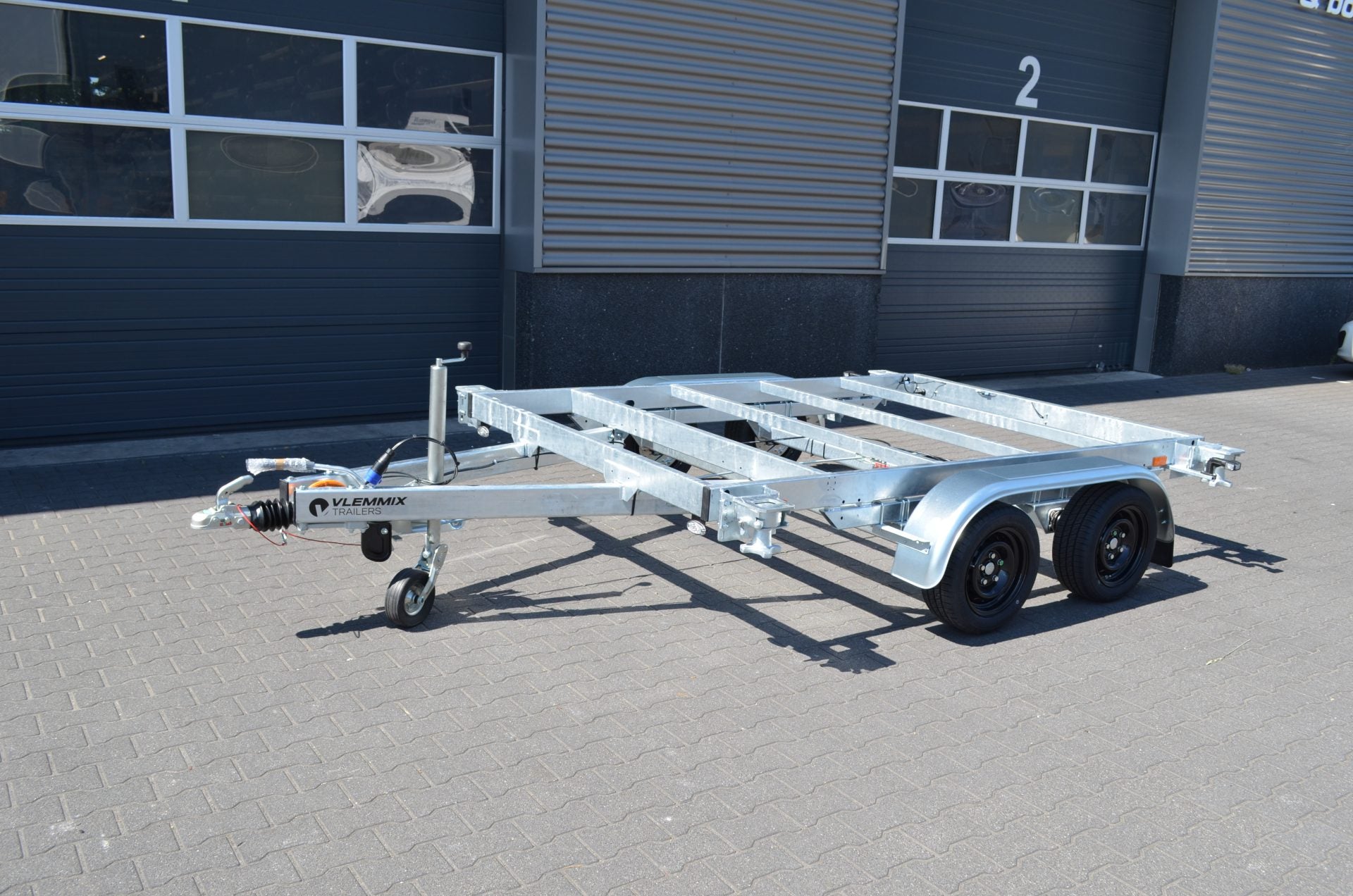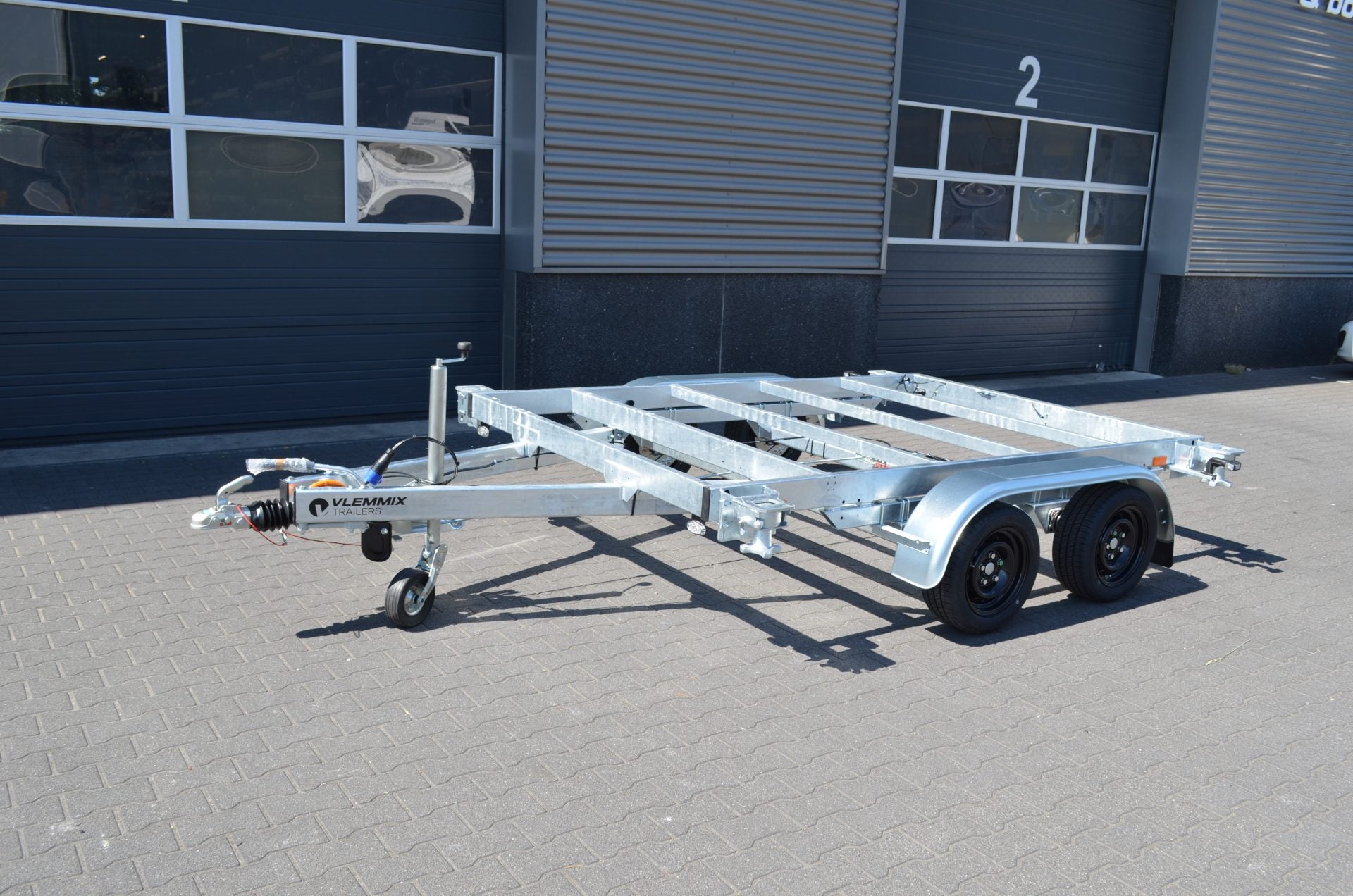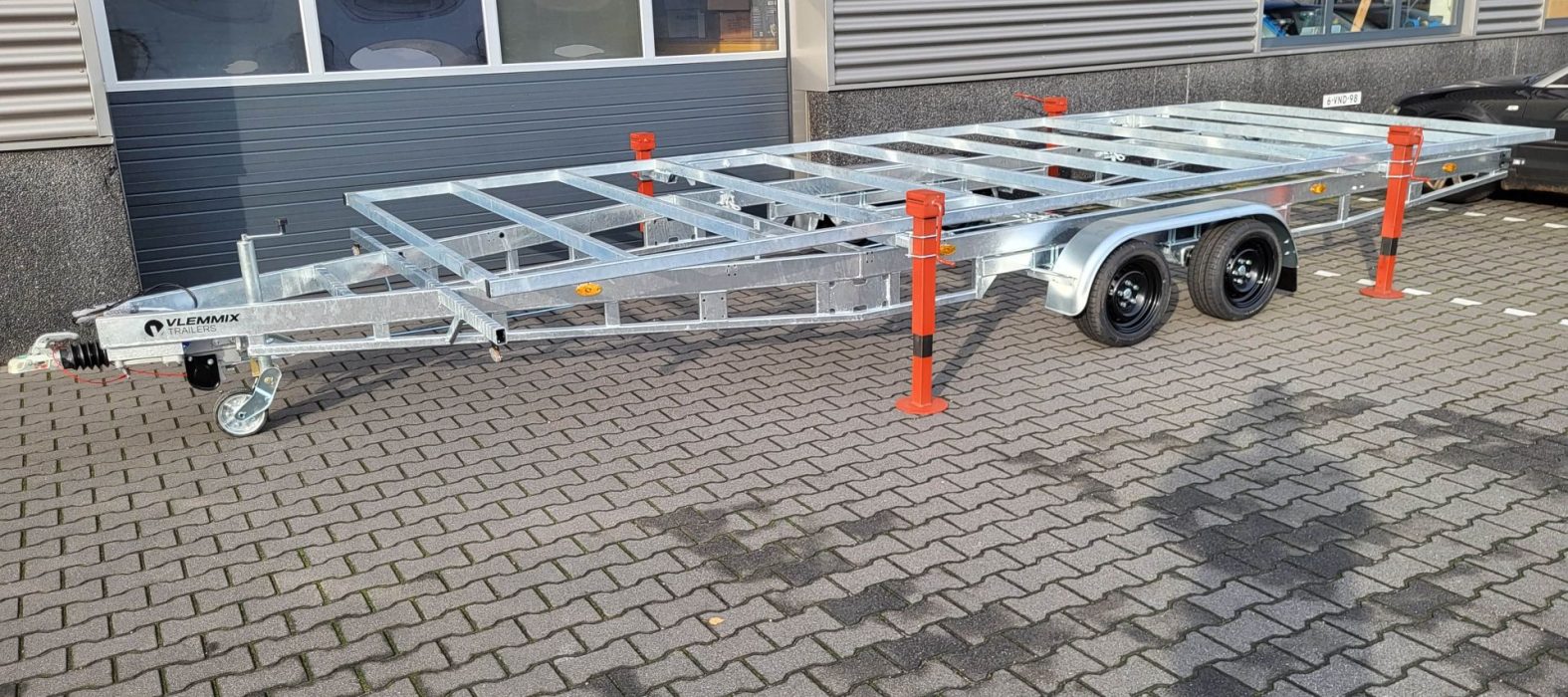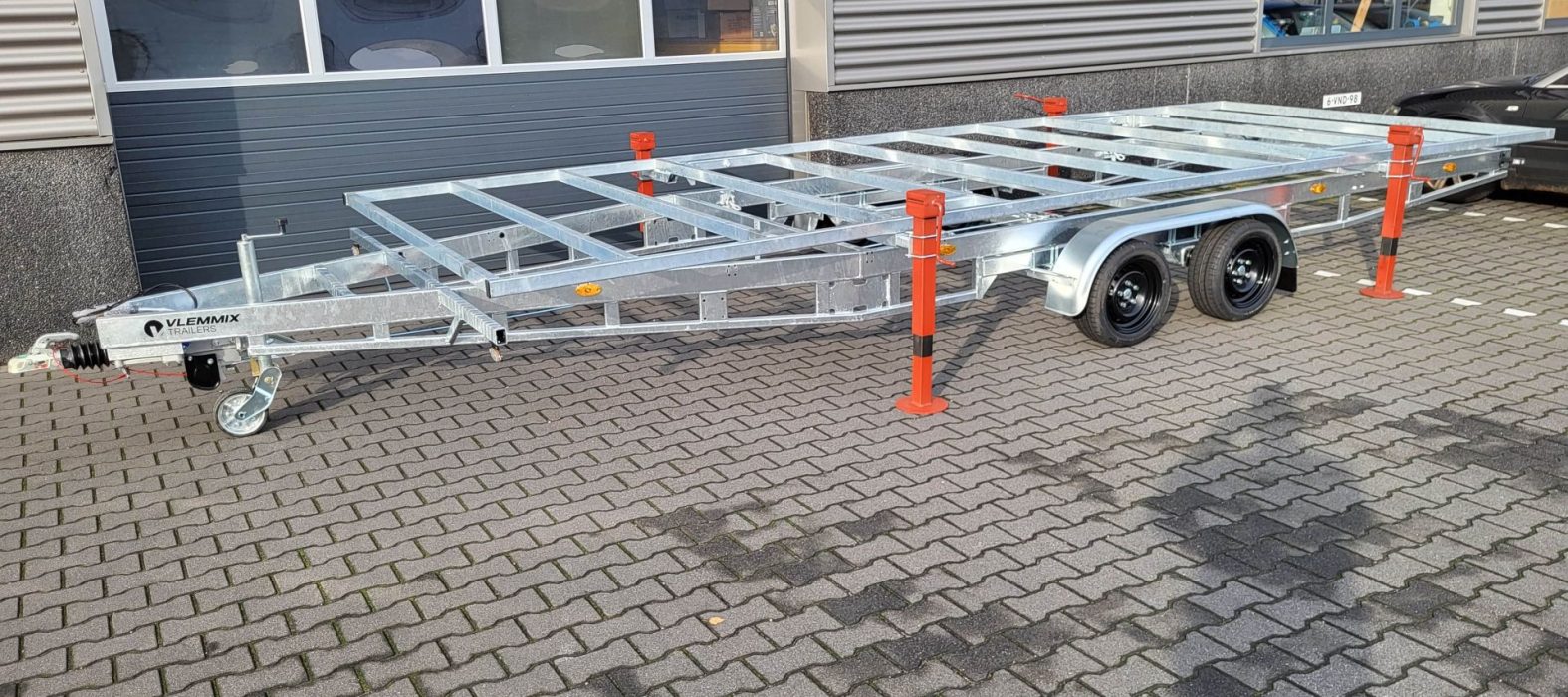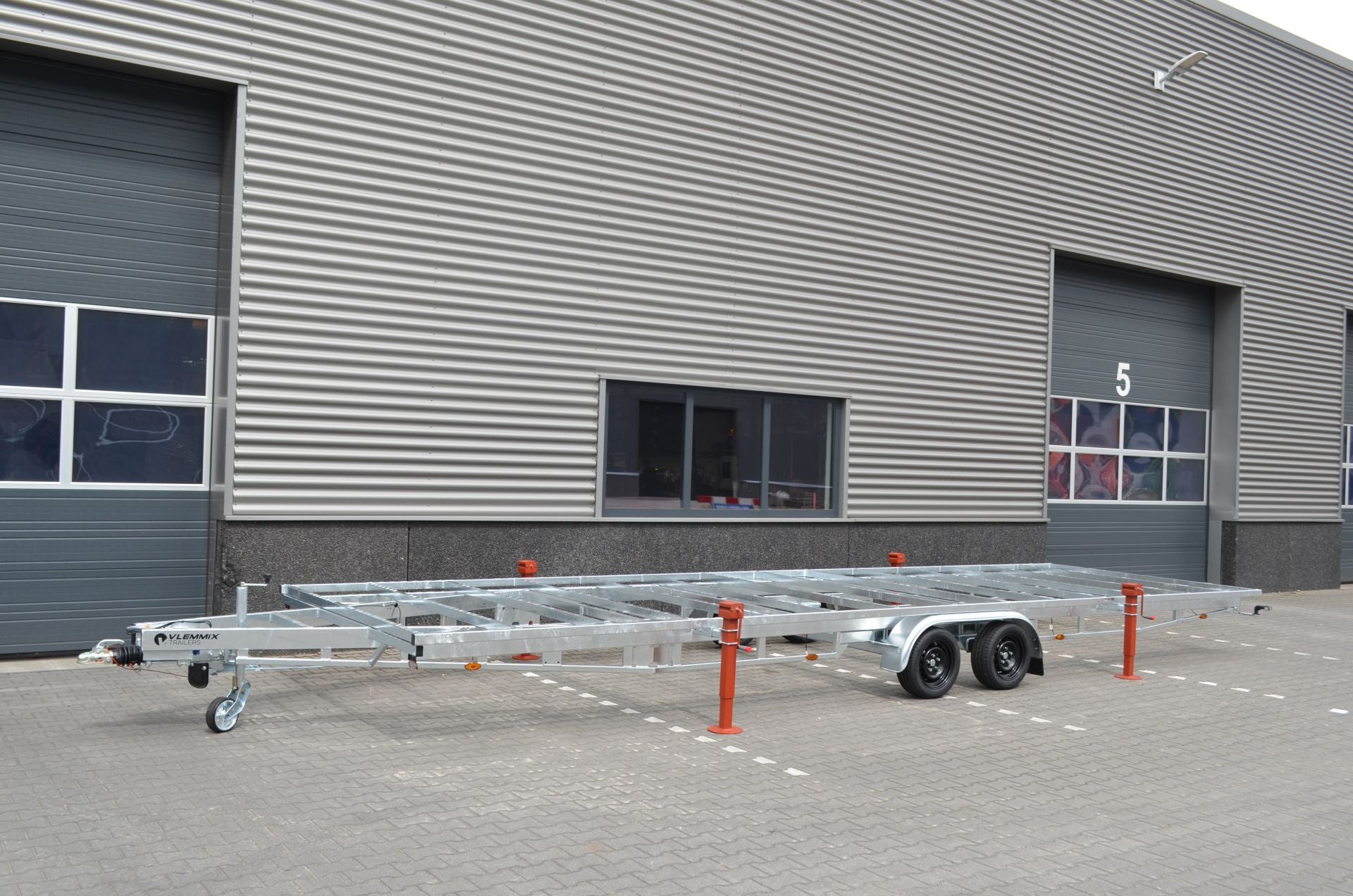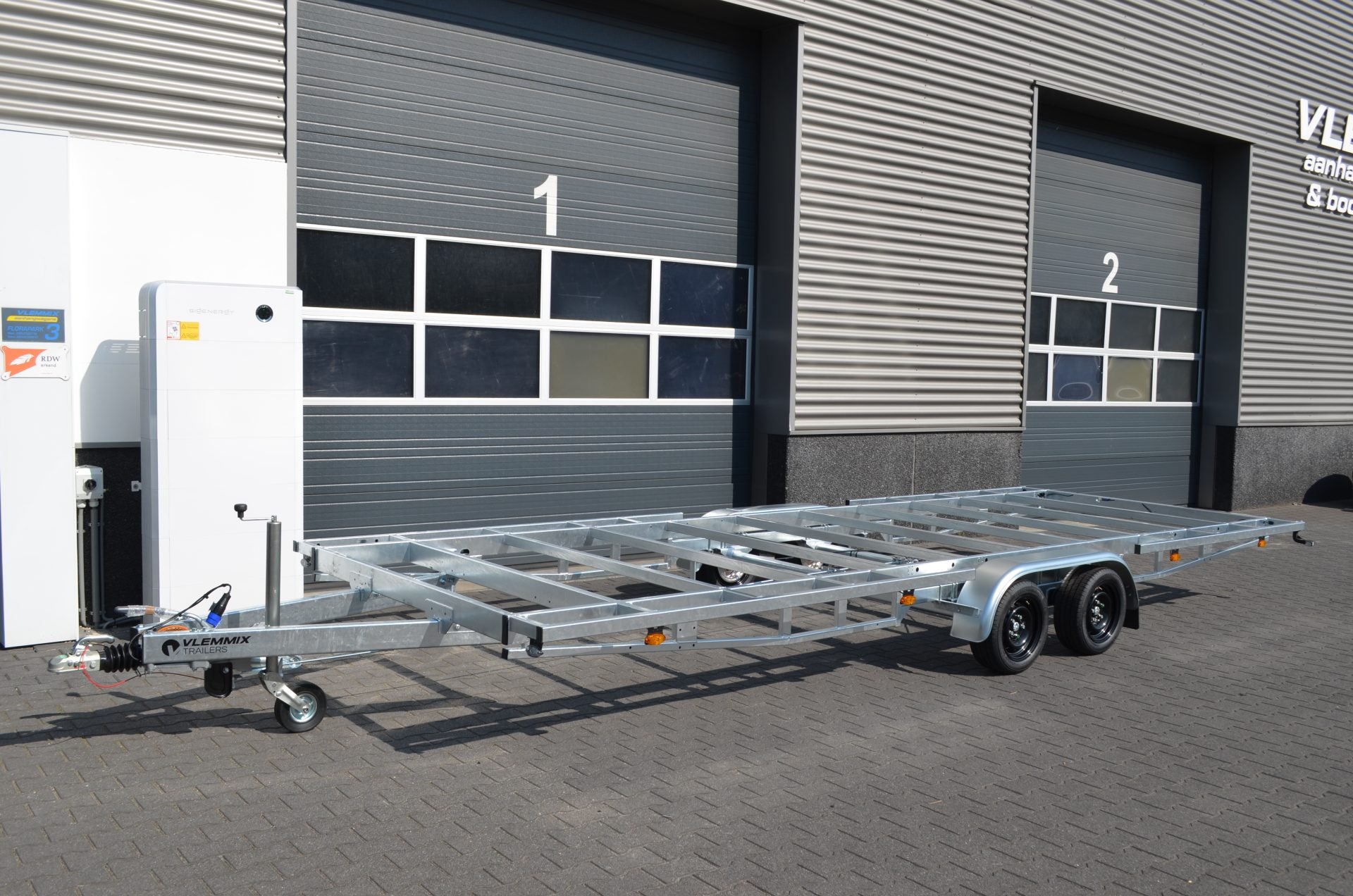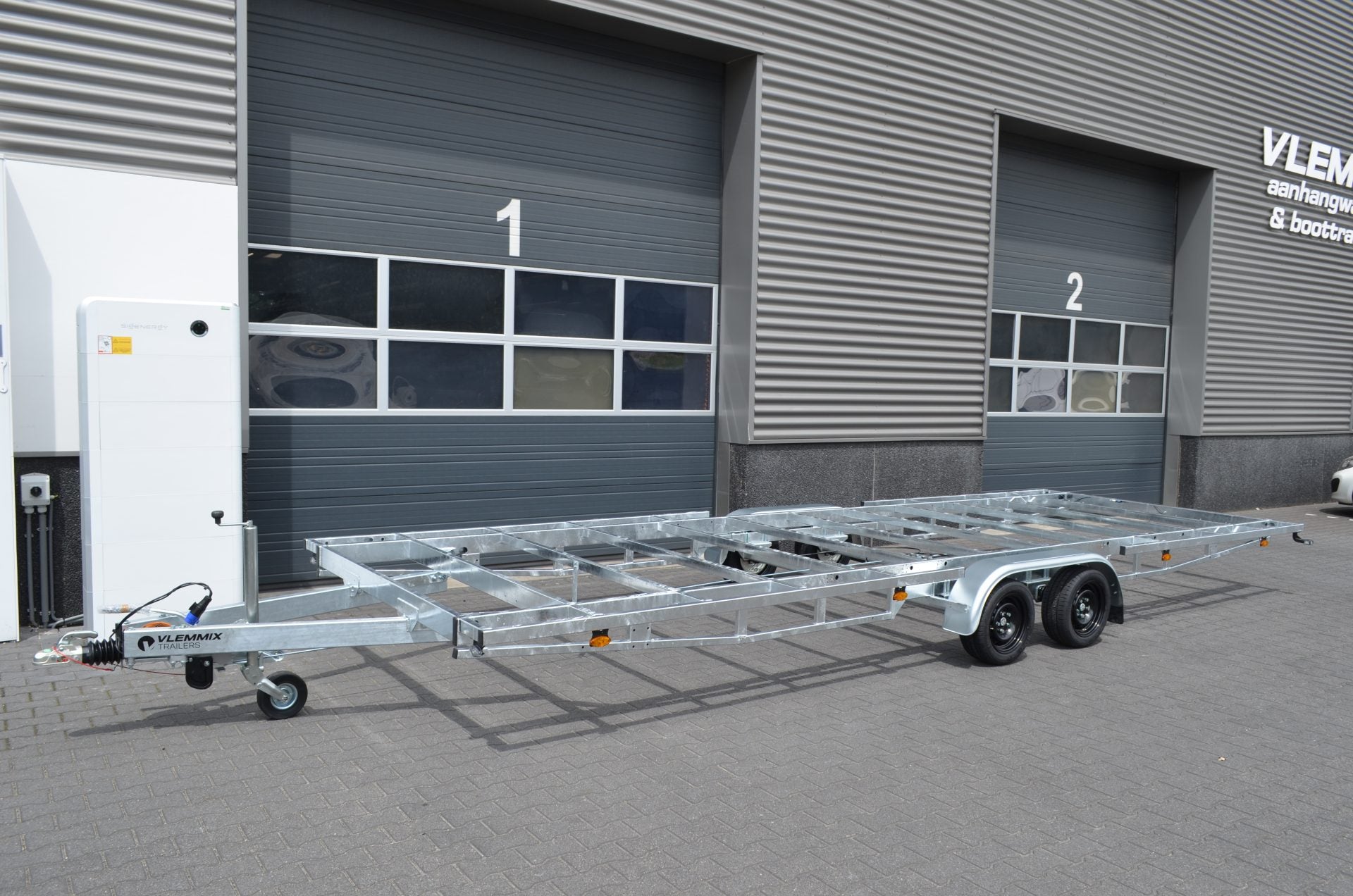

When someone asks in a forum or a seller for a buggy trailer, the first thing to clarify is something most Spanish articles ignore: SxS and UTV are the same vehicle, and "buggy" is a term that mixes several distinct categories. Without that clarification, any purchase decision—of the vehicle itself or the trailer to transport it—starts with a fundamental error.
In this technical guide, we explain what each one is, what real differences exist, and above all, what you need to know to transport it legally in Spain: vehicle weight, trailer GVW, required license, homologation, and ITV. It is intended for those considering buying an SxS/UTV, for those who already own one and are looking for how to move it to a track or route, and for companies in the sector that need clear criteria for their fleet.
Buggy, SxS, and UTV: Are they the same?
Short answer: SxS and UTV are technical synonyms; both refer to the same vehicle: an off-road vehicle with side-by-side seating, a car-style steering wheel, pedals, a roll cage, and usually four wheels. "Buggy" is a broader and older term that can refer to three different things: a modern SxS/UTV (colloquial use), a classic dune buggy from the 60s-70s derived from a Volkswagen Beetle chassis, or a sand rail (a custom-built tubular frame for dunes).
Long answer. The acronyms mean the following: SxS stands for Side-by-Side; UTV stands for Utility Task Vehicle or Utility Terrain Vehicle. Manufacturers use them interchangeably. Polaris, Can-Am, Yamaha, and Kawasaki sell exactly the same type of machine, sometimes calling it an SxS and other times a UTV, depending on the model or catalog year. If we had to draw a useful line, we would say that "SxS" is more associated with sport models (sporty, powerful, oriented to dunes and leisure) and "UTV" with utility models (with a cargo bed, oriented to farm, construction, hunting, or maintenance). But it's a commercial convention, not a technical difference: the chassis, mechanics, and architecture are the same animal.
The term "buggy" is what causes confusion. Historically, the buggy was born in the 1960s with the Meyers Manx: a fiberglass body mounted on a shortened Volkswagen Beetle chassis for fun on beaches and dunes. It evolved into the sand rail (no longer derived from a car, but built from scratch with structural tubing). Today, in Spain, when someone says "I want a trailer for a buggy," they may be talking about a modern SxS/UTV, a classic dune buggy inherited from their grandfather, or a custom-built dune kart. The three weigh differently, measure differently, and need different trailers.
SxS vs UTV: The real distinction that does exist
Although technically the same, there is a nuance that does have operational value and that should be understood before looking at trailers.
Sport SxS usually refers to models focused on speed, long suspension, powerful engines, and intensive recreational use. Examples: Can-Am Maverick R, Polaris RZR Pro R, Yamaha YXZ1000R. They are wider, heavier, and have a wider track. Many weigh around 1,000 kg dry and have 150-200 HP.
Utility UTV designates models with a rear cargo bed, lower top speed, more payload (useful load capacity), and a work focus. Examples: Polaris Ranger, Can-Am Defender, Kawasaki Mule, Yamaha Viking. They weigh around 700-1,100 kg and have 40-80 HP.
This distinction matters for the trailer for one specific reason: the sport SxS is heavier and wider. A Can-Am Maverick R measures 72 inches wide (1.83 m) and weighs ~1,020 kg dry; a Polaris Ranger 1000 measures 62.5 inches (1.59 m) and weighs ~870 kg. Transporting one or the other requires different trailer capacity and, in some cases, even a different platform width.
Dune buggy: The historical term that causes confusion
If someone in Spain says "I have an old-school buggy" and is looking for a trailer, they are probably referring to a classic dune buggy. It's important to distinguish it because it's a very different vehicle from the modern SxS/UTV.
The original Meyers Manx (1964) defined the category: a fiberglass body on a shortened Volkswagen Type 1 chassis, air-cooled boxer engine, rear-wheel drive, no roll cage. It was a Californian beach toy that was replicated in thousands of European versions for decades. In Spain, there are still homologated buggies based on Beetle, Citroën Méhari or similar; many have historical license plates.
The sand rail, the dune buggy's big brother, goes further: it doesn't reuse a car, but is built from scratch with chrome-moly tubing. Central VW or Subaru engine, two seats, four anchor points, designed exclusively for dunes. In Spain they are marginal but exist, especially in coastal areas with sand.
These three vehicles (classic dune buggy, sand rail, modern SxS/UTV) are colloquially called "buggies", but they weigh between 400 kg (classic dune buggy) and 1,500 kg (some turbo SxS). Choosing a trailer with the wrong category in mind is the most common mistake.
Comparative table: SxS, UTV, ATV and classic dune buggy
|
Dimension |
Sport SxS |
Utility UTV |
ATV (quad) |
Classic Dune Buggy |
|
Seats |
2-4 |
2-6 |
1 (sometimes 2) |
2-4 |
|
Controls |
Steering wheel + pedals |
Steering wheel + pedals |
Handlebars |
Steering wheel + pedals |
|
Dry weight |
700-1,100 kg |
600-1,100 kg |
200-400 kg |
400-700 kg |
|
Width |
1.60-1.85 m |
1.50-1.75 m |
1.10-1.30 m |
1.50-1.70 m |
|
Payload |
150-250 kg |
250-500 kg |
50-100 kg |
Variable |
|
Main use |
Dunes, track, leisure |
Farm, hunting, construction |
Trails, leisure |
Beach leisure / historic |
|
Homologation Spain |
L7e (heavy quadricycle) |
L7e |
L7e or L7e-A/B |
Frequent historical registration |
|
Typical brands |
Can-Am, Polaris, Yamaha |
Polaris, Can-Am, Kawasaki |
Honda, Yamaha, Suzuki |
Meyers Manx, EMPI |
The most relevant data for someone looking for a trailer is the dry weight combined with the total width. The weight determines the minimum GVW of the trailer; the width determines whether it fits on a standard platform or requires a wide platform.
How to choose the right trailer for your SxS or UTV
Choosing a trailer is not an aesthetic exercise: it is calculation. Three pieces of data are paramount.
First, the real weight. It is not enough to look at the manufacturer's "dry weight". An SxS/UTV loaded with full fuel (40-60 liters × 0.75 kg/L = 30-45 kg), racks, winch, reinforced cage, paddle tires, and luggage can easily add 100-150 kg to the official weight. The rule of thumb: add 15% to the declared dry weight and size the trailer based on that figure.
Second, the GVW of the trailer. It must be equal to or greater than the total weight of the loaded vehicle, with a margin. Concrete example: a Can-Am Maverick R (~1,020 kg dry, ~1,180 kg loaded) should not be transported on a trailer with a 1,500 kg GVW at its limit; a 2,000-2,500 kg GVW trailer is reasonable to have an operational margin and not strain brakes, axles, or chassis.
Third, the usable platform. The internal usable width of the trailer must exceed the width of the vehicle by at least 10-15 cm to allow loading and securing without damaging the wheels against fenders. An SxS 1.83 m wide requires a platform of at least 2.00 m usable. This excludes many standard 1.70 m trailers and requires wide platforms (2.00-2.10 m) or specific ones.
Indicative trailer → typical SxS/UTV matrix:
|
Trailer GVW |
Max. recommended vehicle weight |
Compatible with |
License |
|
750 kg |
650 kg |
ATV and light classic dune buggy |
B |
|
1,500 kg |
1,300 kg |
Light utility UTV, large ATV |
B96 |
|
2,000-2,500 kg |
1,700-2,100 kg |
Medium sport SxS, heavy utility UTV |
B96 |
|
3,500 kg |
3,000 kg |
XL sport SxS, fleet (2 vehicles) |
B+E |
At Remolque.es, we work with approved platforms of 2.44 m and 2.90 m useful width, specifically designed to cover all these ranges, from the classic dune buggy to the widest sport SxS. → See trailers for buggies, SxS, and UTVs at /collections/remolques-para-buggy.
Regulations in Spain: license, homologation, registration
Transporting an SxS, UTV, or buggy in Spain requires compliance with DGT regulations on trailers. It is not optional, and fines are high.
License depending on trailer GVW.
If the Gross Vehicle Weight (GVW) of the trailer is ≤ 750 kg and the combination (car + loaded trailer) does not exceed 3,500 kg, a standard B license is sufficient. Above 750 kg GVW, there are two options: the B96 allows a combination up to 4,250 kg, and the B+E allows a trailer up to 3,500 kg towed by a car also up to 3,500 kg. For those transporting a medium sport SxS (~1,500-2,000 kg on a 2,000-2,500 kg GVW trailer), the B96 is usually sufficient; for professional fleets with 3,500 kg trailers, the B+E is mandatory.
Trailer homologation.
The trailer must be European-approved and have a Spanish technical data sheet (ITV card). Buying a trailer from Asian portals or semi-handmade without a Spanish technical data sheet leads to serious problems: it cannot be registered, it will not pass ITV, and it cannot circulate legally. All trailers distributed by Remolque.es come with a ready Spanish technical data sheet.
Registration and license plate.
Trailers with a GVW exceeding 750 kg must be registered and carry their own red license plate at the rear. Those with a GVW ≤ 750 kg can use the towing vehicle's license plate. The car's tow hitch must be approved and legalized through a modification reflected in the vehicle's ITV card.
ITV (Vehicle Inspection).
Trailers with GVW > 750 kg pass ITV every 2 years for the first 6 years, and annually thereafter. Those with GVW ≤ 750 kg are exempt, but the technical data sheet and license plate must be in order.
Insurance.
Trailers with GVW > 750 kg must have their own mandatory insurance. Those with GVW ≤ 750 kg are usually covered by the towing vehicle's insurance (to be verified with the insurer, not taken for granted).
Typical mistakes when transporting an SxS or UTV
Five mistakes we frequently see in clients who come asking for a trailer change after real problems:
-
Underestimating the loaded weight. Relying on the manufacturer's "dry weight" without adding fuel, luggage, and accessories. Result: trailer at its limit, hot brakes, strained axles.
-
Platform too narrow. Using a 1.70 m trailer for an SxS of 1.83 m. Result: improvised loading on planks, damage to tires and fenders, falls.
-
Insufficient tie-downs. Two straps instead of four. A loaded SxS/UTV needs four certified anchor points (minimum 2,500 kg LC each) on all four chassis axles, not on suspension components or bodywork.
-
Forgetting the inertia brake. Buying a trailer without brakes for GVW > 750 kg. This is illegal and dangerous; at highway speeds with 1,500 kg behind without a brake, the car cannot stop.
-
Transporting without SxS/UTV insurance coverage. The transported vehicle should also be insured during transport. Trailer insurance covers the trailer, not the load. Check with your insurer.
Frequently Asked Questions
Are SxS and UTV the same?
Yes. They are technical synonyms for the same vehicle: an off-road vehicle with side-by-side seating, a steering wheel, and a roll cage. The only useful distinction is that "SxS" is used more for sport models and "UTV" for utility models, but this is not a fixed rule.
What is the difference between an SxS and an ATV (quad bike)?
An ATV is a quad bike with handlebars, ridden straddled, for one person (exceptionally two). The SxS/UTV has a car-style steering wheel, pedals, side-by-side seating, and a roll cage for two or more occupants. The SxS is larger, safer, and allows for a comfortable co-driver.
Can an SxS be transported on a 750 kg trailer?
Only if the loaded SxS weighs less than 650 kg, which virtually excludes all current models. Modern SxS/UTVs weigh 700-1,100 kg dry. For a standard SxS, a trailer with at least 1,500 kg GVW is needed, usually 2,000-2,500 kg.
What license do I need to tow a 900 kg SxS?
If you use a trailer with a GVW ≤ 750 kg, a B license is sufficient (although the SxS would not legally fit). If you use a trailer with 1,500-2,000 kg GVW (which is realistic), you need a B96 license if the combination does not exceed 4,250 kg, or a B+E if it does.
Do I need a special platform for an SxS 1.83 m wide?
Yes. Standard 1.70 m usable trailers are not suitable. You need a wide platform of 2.00 m or more. There are specific 2.44 m and 2.90 m trailers that cover everything from the widest SxS to fleets with multiple vehicles.
Does a classic dune buggy need the same type of trailer as a modern SxS?
No. A classic dune buggy (Beetle base) weighs 400-700 kg and fits on smaller trailers (750-1,500 kg MAM). But the challenge with classic buggies is usually the ground clearance and the original tie-down points.
How much does a suitable trailer for SxS/UTV cost?
Indicative ranges for 2026 in Spain: 1,500 kg MAM trailer with suitable platform from €2,500-€3,500; 2,500 kg MAM wide platform trailer €3,500-€5,500; 3,500 kg flatbed trailer €5,000-€7,500. Prices vary widely depending on galvanization, brand, and finishes.
Can I register a trailer purchased abroad?
Technically yes, but the process is long and expensive (it can exceed €1,500 in administrative fees + ITV + tests). In practice, it almost never pays off compared to directly buying a trailer with a ready-to-use Spanish technical data sheet.
Not sure what trailer you need?
At Remolque.es we offer direct technical advice: we review the actual weight of your vehicle, its intended use, and the applicable regulations, and we recommend the platform that will indeed work for the next 10-15 years.