
Quick summary
- No state prohibition: parking a boat with a trailer on the street is usually legal, but municipal ordinances prevail.
- Attached to the car counts as a complete vehicle; unhitched it becomes a parked trailer, and that's when fines come.
- Some city councils fine around €100 for leaving the trailer separated from the towing vehicle.
- The trailer must be registered, have a valid ITV (vehicle inspection) if it exceeds 750 kg, and be properly signposted.
- The risk-free option, avoiding fines or towing, is to store it on your own property.
Every autumn, the same question arises among those who store their boats at home: can I leave it on the street on a trailer without getting fined? The short answer is that it depends on the municipality, and therein lies the problem. State traffic regulations do not prohibit it, but each city council applies its own ordinance, and some sanction with around €100 for leaving the trailer unhitched. This guide clarifies what the law says, when you can be fined, and what alternative saves you the problem from the root.
Before we begin: this is general information to help you know where to look, not a legal opinion. The only source that applies to your case is your city council's traffic ordinance, which can change from one municipality to another and even from one neighborhood to another. If in doubt, a simple call to the local police can save you a fine.
Is it legal to park a boat with a trailer on the street?
Generally speaking, yes, it is legal, as long as you respect parking rules like any other vehicle and the municipal ordinance does not expressly prohibit it. The General Traffic Regulations do not include a specific prohibition on parking a trailer on public roads.
The nuance that changes everything is whether the trailer is hitched or not to the towing vehicle. Hitched, the combination is considered an articulated vehicle and is treated like a parked car. Unhitched, it becomes a trailer parked on its own, and then it falls squarely into what each municipal ordinance decides to allow or prohibit.
That's why the honest answer is not a resounding yes or no. It's "it depends on your town and how you leave it." We'll elaborate on this below, because understanding that difference is what prevents most fines.
Hitched or unhitched: the difference that gets you fined
This is the key distinction and the one that causes the most misunderstandings. As long as the trailer remains attached to the towing vehicle, it is part of a unit and, for parking purposes, behaves like any car with a trailer. In practice, it is much more difficult to be sanctioned just for being parked.
As soon as you unhitch the trailer and leave it alone on the road, its nature changes: it is now an independently parked trailer. Some city councils directly prohibit it, and others allow it with conditions. Cities like Madrid or Jaén consider a fine of about €100 for parking a trailer separated from the vehicle that pulls it.
The practical consequence is simple. If you are going to leave the boat for a few hours or in passing, keeping it hitched gives you leeway. If you want to store it for weeks or months on the street unhitched, that's where the risk of fines and towing skyrockets, and where it's advisable to look for another solution.
What state regulations say and what they leave to city councils
State traffic regulations set the general framework but leave urban parking in the hands of each municipality. The General Traffic Regulations regulate how to drive and park, without expressly prohibiting leaving a trailer on public roads.
What state law does require is that the vehicle be in good standing to be on the street: registered, identifiable, and not constituting an obstacle or danger. From there, city councils regulate the details through their traffic ordinances: maximum time, permitted areas, prohibition of unhitched trailers or vehicles exceeding a certain size.
The result is an uneven map. Some municipalities only allow trailers to be parked in expressly designated areas and prohibit them on the rest of the road. Others set a maximum time, after which the trailer is considered improperly parked. That's why two people in neighboring towns can have opposite answers to the same question. The golden rule: consult your ordinance before taking anything for granted.
What if I live in a housing development or condominium?
When the boat is not going to a public road but to a private common area (the housing development's parking lot, a communal square, or an internal road), it is no longer the city council that decides, but the community of property owners. Their internal rules and board agreements govern that space.
Many communities limit or prohibit leaving trailers, caravans, or boats in common areas, precisely because they occupy spaces and generate complaints. Before installing the boat there, review the bylaws and, if necessary, bring the matter to the board. What an ordinance regulates on the street, the community minutes regulate within your development. The difference is that here the conflict is with your neighbors, and you see them every day.
Requirements for it to be legal to have it on the street
Even if your municipality allows it, the trailer must meet several conditions to be legally on public roads. It's not enough for it to "fit."
The trailer must be registered and approved. Trailers over 750 kg maximum mass have their own registration and documentation, distinct from that of the car. If your boat trailer exceeds that weight, it must be properly registered to circulate and be on the street.
It also needs a valid ITV (vehicle inspection) when it's due. Light trailers have their own inspection periods, and if yours are expired, the trailer is not in legal condition to be on public roads. If you need to pass it, it's best to get it right the first time, as explained in the guide on how to pass the trailer ITV the first time.
Finally, it must be well-parked and visible: without invading sidewalks, crosswalks, or lanes, without blocking signs, and without reducing the visibility of other drivers. A correctly parked trailer, within its space and signposted, gives far fewer reasons for a sanction than one left carelessly.
When you can be fined or have your trailer towed
Beyond the fine for unhitching, there are other situations that result in a sanction or towing. It's important to know about them because they often catch people by surprise.
The first is an abandoned vehicle. If the trailer remains immobile in the same spot for a long time, looking neglected or not moving for weeks, the city council may consider it abandoned and initiate its removal. A trailer that never moves is a clear candidate.
The second is regulated zones and low-emission zones. In blue or green zones, the trailer occupies a space and pays like any other vehicle, and in the LEZs of large cities, additional restrictions may apply. The third is occupying an improper space: invading a sidewalk, a driveway, or a reserved parking spot is an immediate sanction, with or without a trailer.
The common pattern is that the risk increases the longer and more stationary you leave the trailer on the street. For a boat that spends the entire winter parked, the public road is precisely the worst place: maximum exposure to fines, towing, and vandalism.
It's worth adding a risk that almost no one calculates: vandalism and theft. A boat visible on the street for months is an easy target for the outboard motor, electronics, or the trailer itself to disappear. Recovering or replacing it costs much more than any fine, and insurance does not always cover property left unsupervised on public roads. Adding fines, possible towing, and this risk, leaving the boat on the street all winter is expensive even if no sanction materializes.
The risk-free alternative: store it on your property
All this uncertainty disappears with a simple decision: don't leave it on the street. If you store the boat on your own property, garage, or private land, no municipal ordinance affects you, and you forget about fines, towing, and neighborhood complaints.
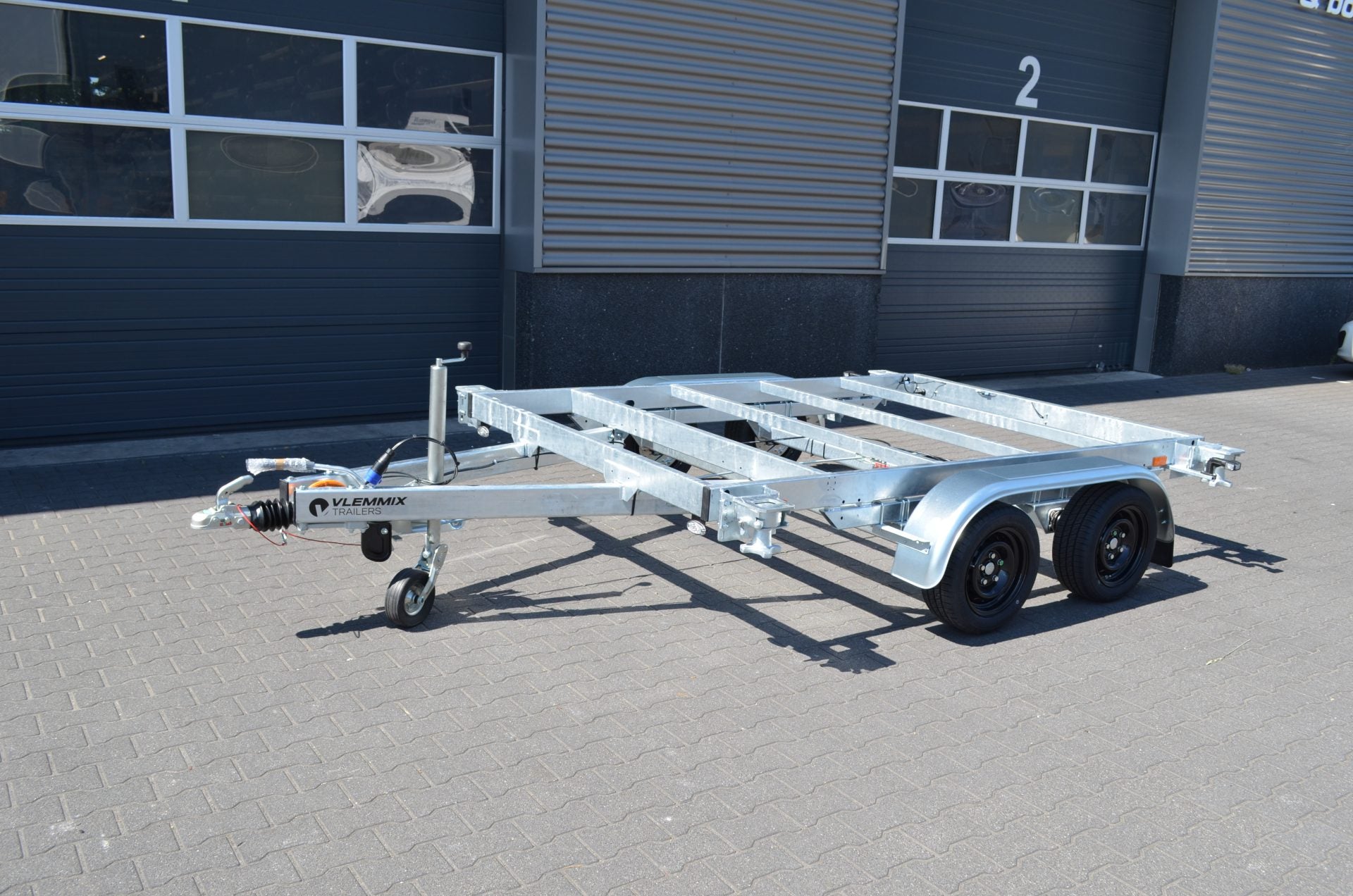
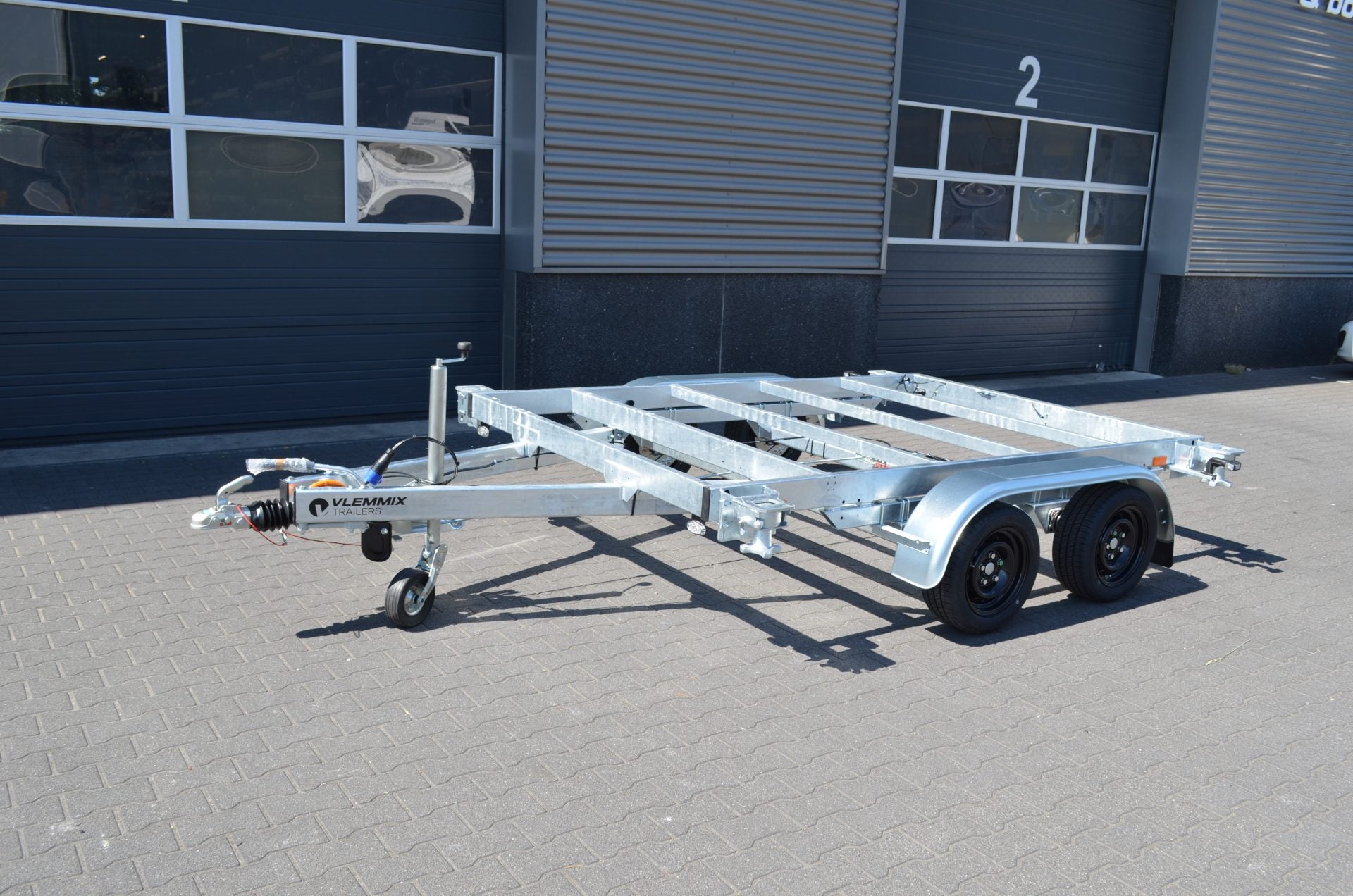
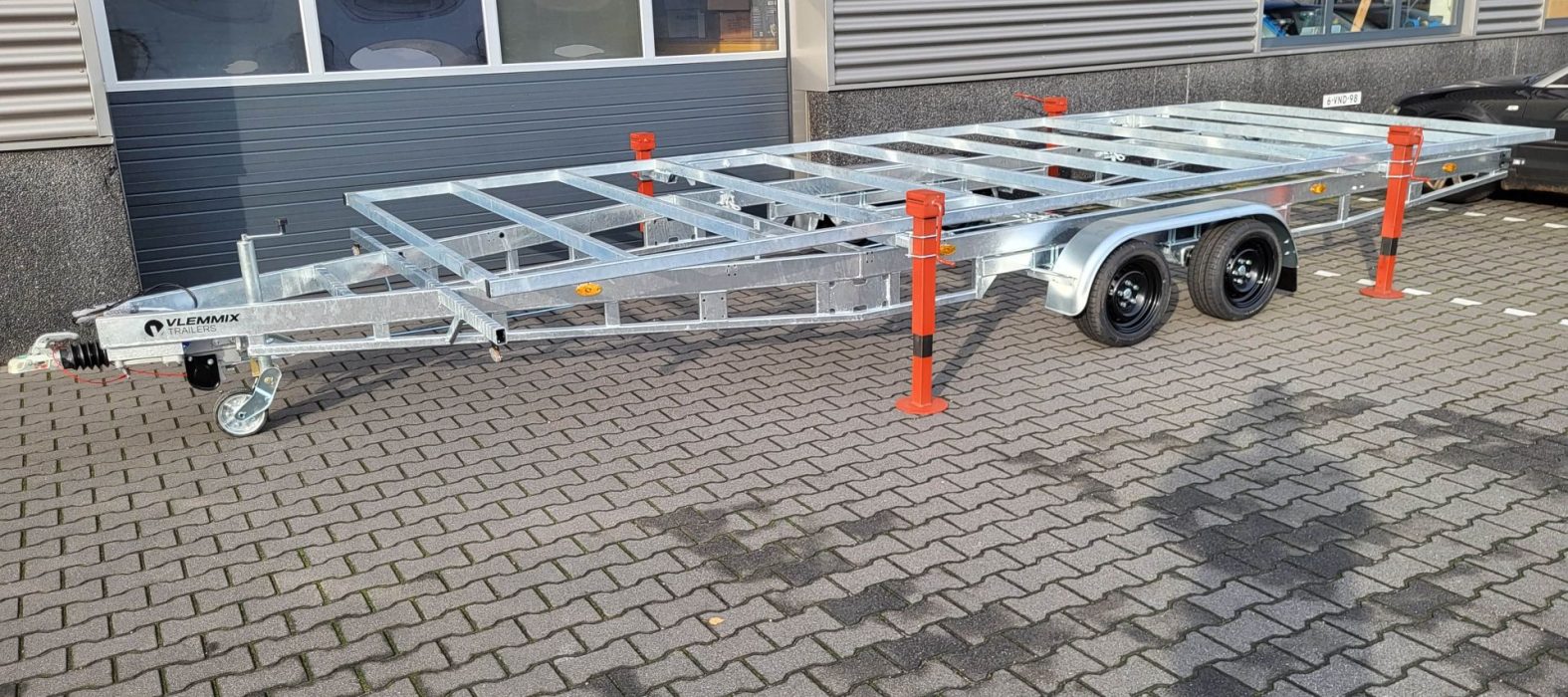
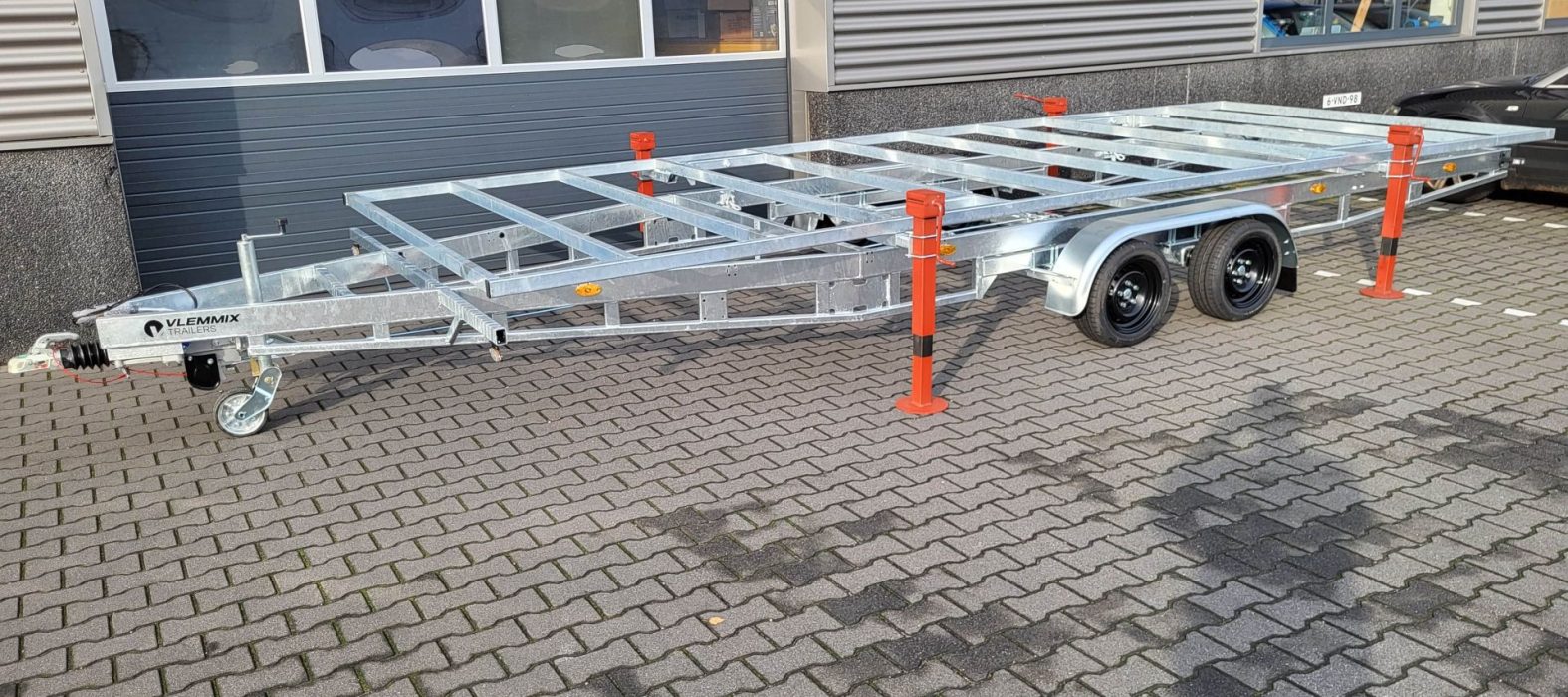
This is where the right equipment changes everything. A stand designed for dry storage at home turns a corner of your property into its permanent spot. Boat cradles are supports that hug the hull and distribute the weight, ideal if you don't need to move it from the property. If you prefer to be able to transport and launch it whenever you want, boat storage trailers give you both: you store it dry and move it on sailing day, without depending on anyone.
Storing it at home also protects the boat better than on the street. You have it supervised, covered from vandalism, and without continuous exposure to sun and rain. And if you keep it dry, you avoid hull problems like osmosis, as explained in the guide on storing your boat in winter.
For a trailerable vessel, the math is simple. Your own support pays for itself once and saves you mooring fees, dry marina fees, and the legal headache of public roads. Compared to hundreds of euros a month for a port or dry marina, the support pays for itself in a single season and lasts for years. The starting point for choosing according to your length is the nautical trailers category, which groups all options by boat type.
Common mistakes when parking a boat on the street
The most common mistake is assuming it's legal everywhere. Regulations are municipal, and what's valid in your town might be prohibited in the next. Assuming without checking is the quick way to a fine.
The second is to unhitch and forget about it. Leaving the trailer unattached for weeks is precisely what many ordinances sanction and what increases the risk of removal due to abandonment. If you have no other choice but to leave it on the street for a while, keeping it hitched to the car reduces the problem.
The third is to neglect documentation. A trailer with an expired registration or ITV is not in a legal condition to be on a public road, and that is sanctionable regardless of where you leave it. Before parking it on the street, make sure it is in order, just as you ensure the boat is properly seated by following how to correctly place the boat on the trailer.
The fourth is to ignore the size. A boat trailer is long, and occupying more than one space or invading the sidewalk is a sure fine. If your combination is large, review the width limits for a trailer in Spain beforehand.
Frequently asked questions
Can I leave my boat trailer parked on the street indefinitely?
It depends on the municipality. Many ordinances limit the time or only allow designated areas, and an immobile trailer for a long time can be considered abandoned and be removed. For long stays, the public road is the worst option.
Can I be fined for leaving the trailer unhitched?
Yes, in municipalities where the ordinance prohibits it. Cities like Madrid or Jaén apply a fine of around €100 for parking a trailer separated from the towing vehicle. Hitched to the car, the risk is much lower.
Does a boat trailer need registration and ITV to be on the street?
Trailers over 750 kg have their own registration and independent documentation, and must have a valid ITV according to their deadlines. A trailer with expired documentation is not in legal condition to be on public roads.
Is it better to store the boat at home than on the street?
To avoid fines, towing, and vandalism, yes. On your private property or land, no municipal ordinance affects you, the boat is more protected, and if you keep it dry, you take better care of the hull. You only need a support suitable for your length.
Can I park my boat with a trailer in a blue or green zone?
Yes, but the trailer occupies a space and pays like any other vehicle, with the time limits of the regulated zone. It is not a solution for leaving it parked all winter, because the daily cost accumulates and many zones limit the maximum hours. For long stays, private property is always the best option.
Where can I check the exact regulations for my area?
In your city council's traffic ordinance, available on their website, or by calling the local police. It is the only source that decides in your specific case, because parking regulation is municipal.
Do you want to stop risking it on the street and store your boat at home? Check out our boat trailers and we'll help you choose the right support for your length, no obligation.