
Bunk Nautical Trailers
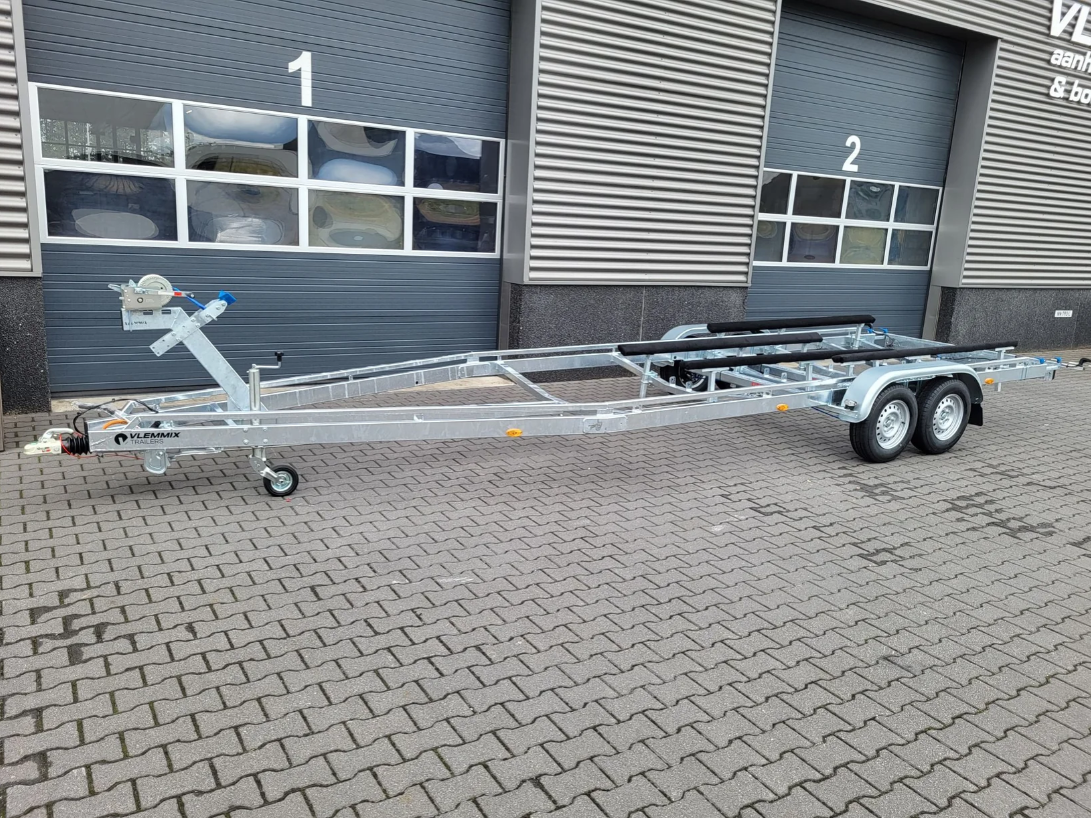
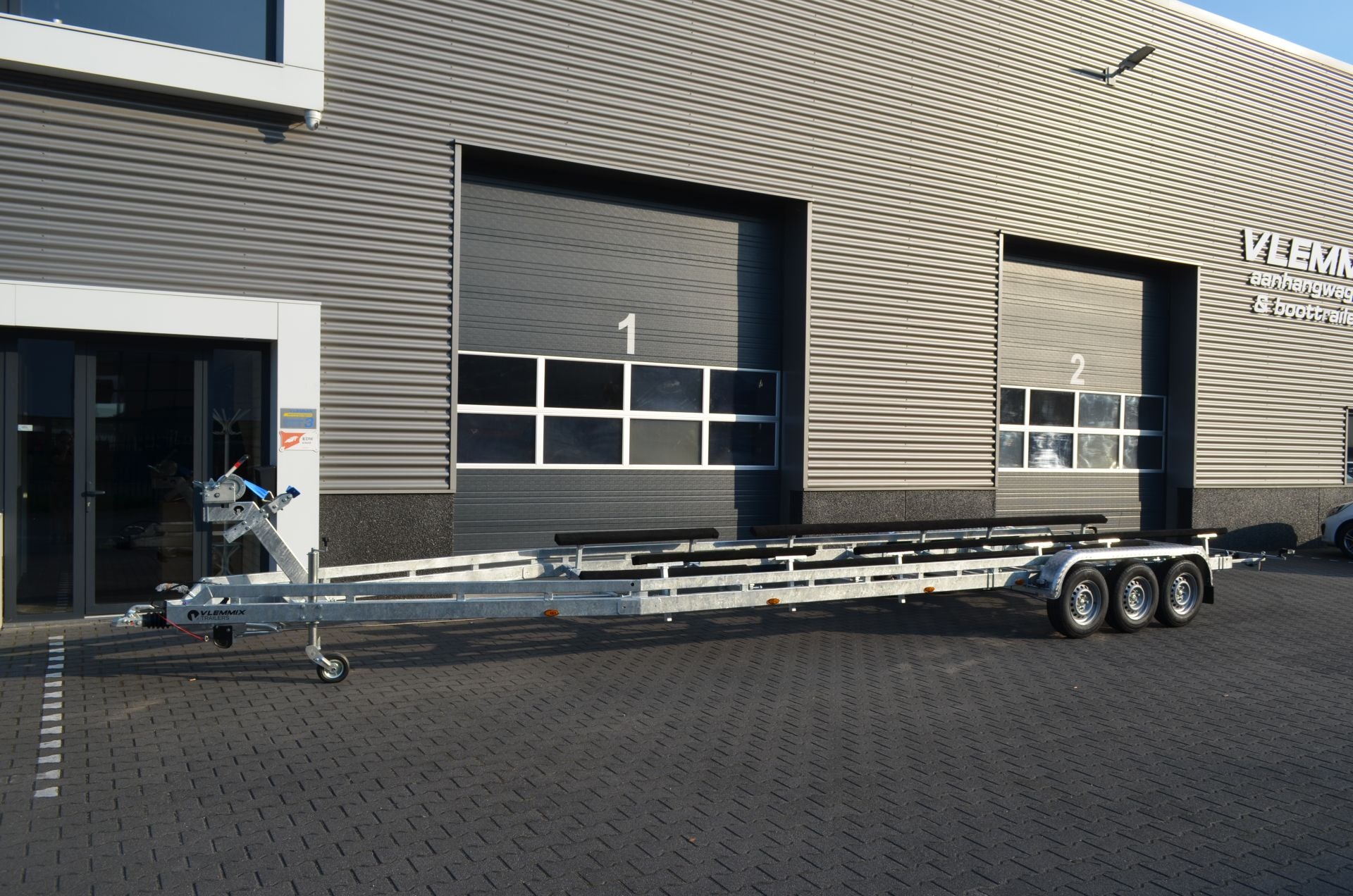
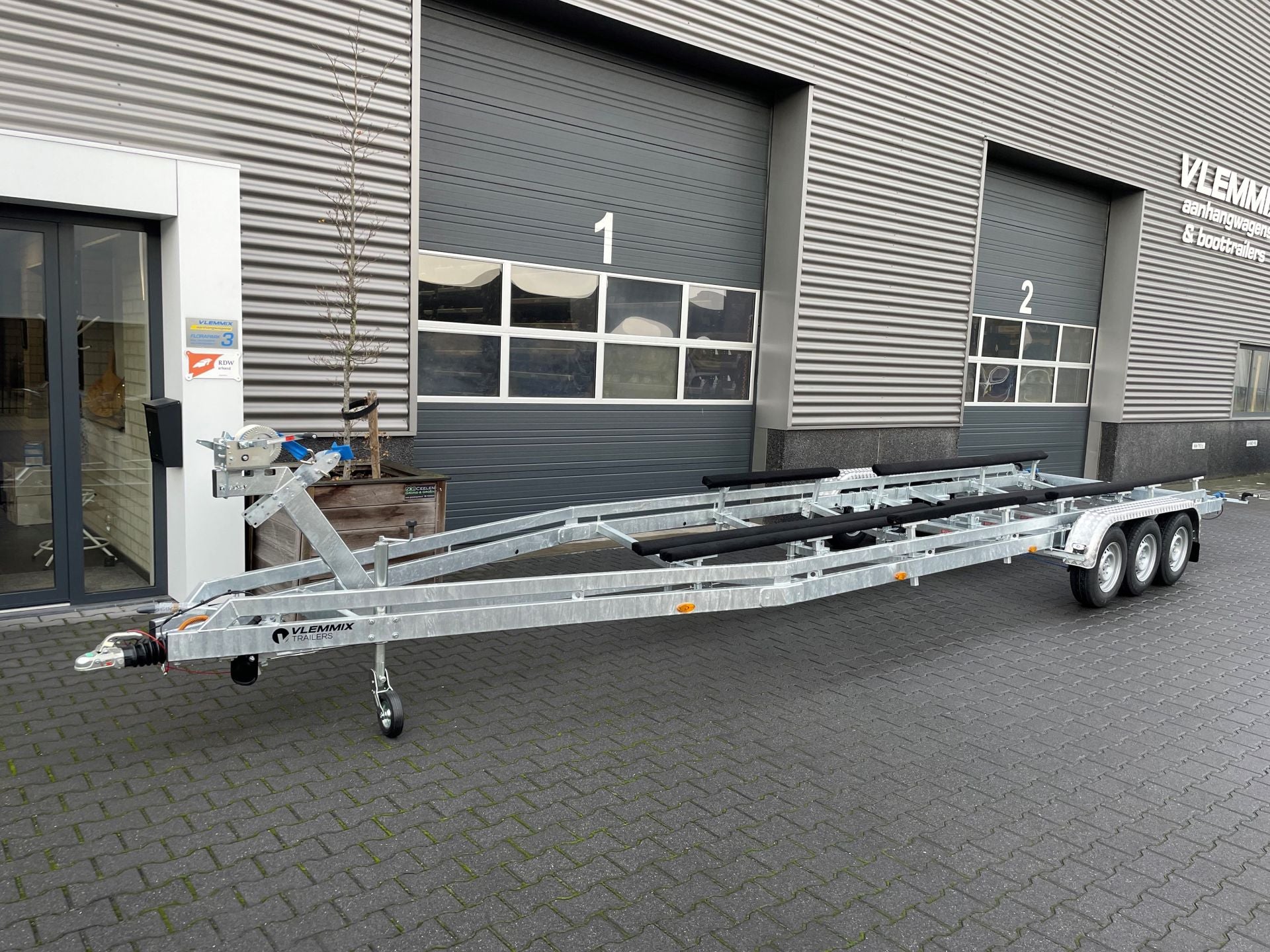
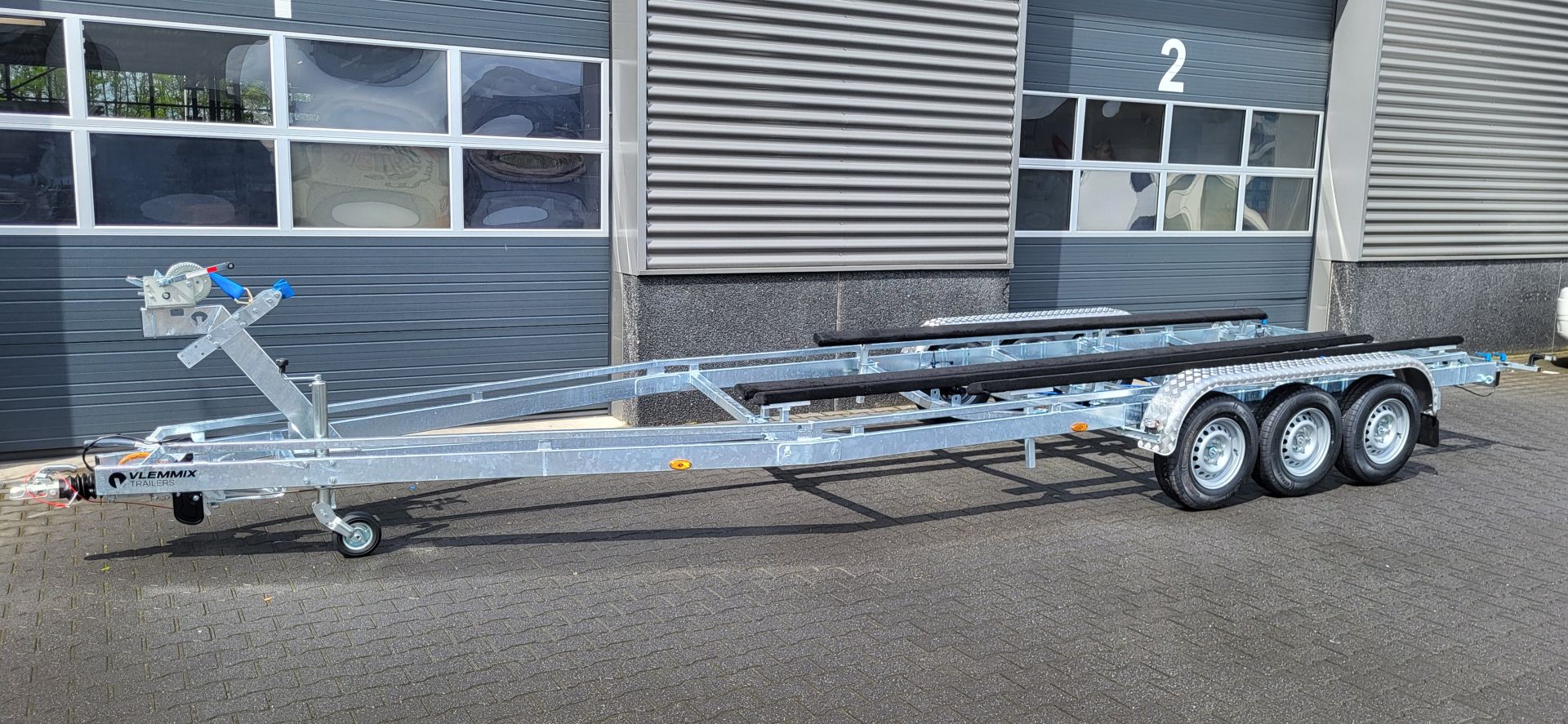
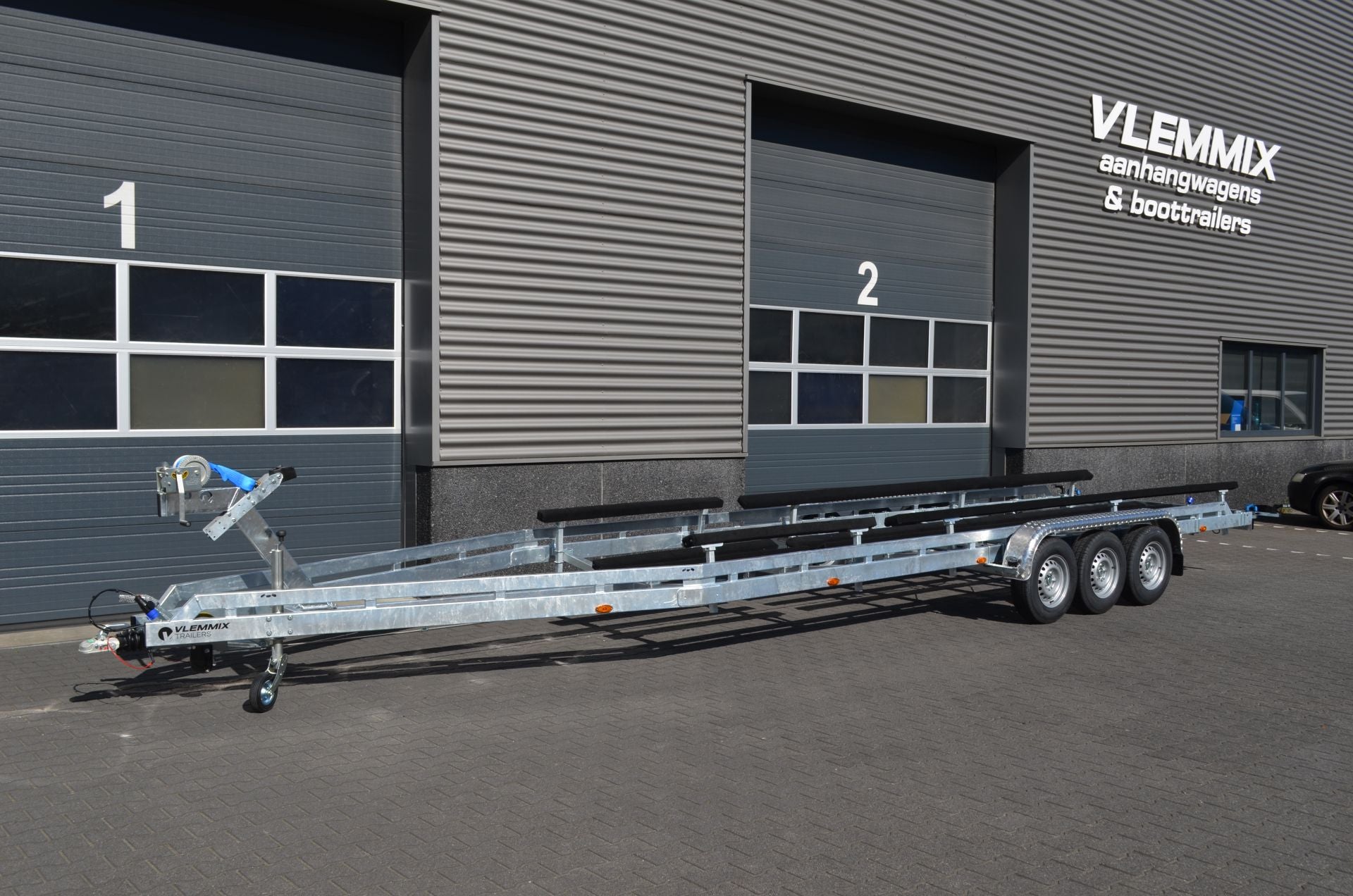
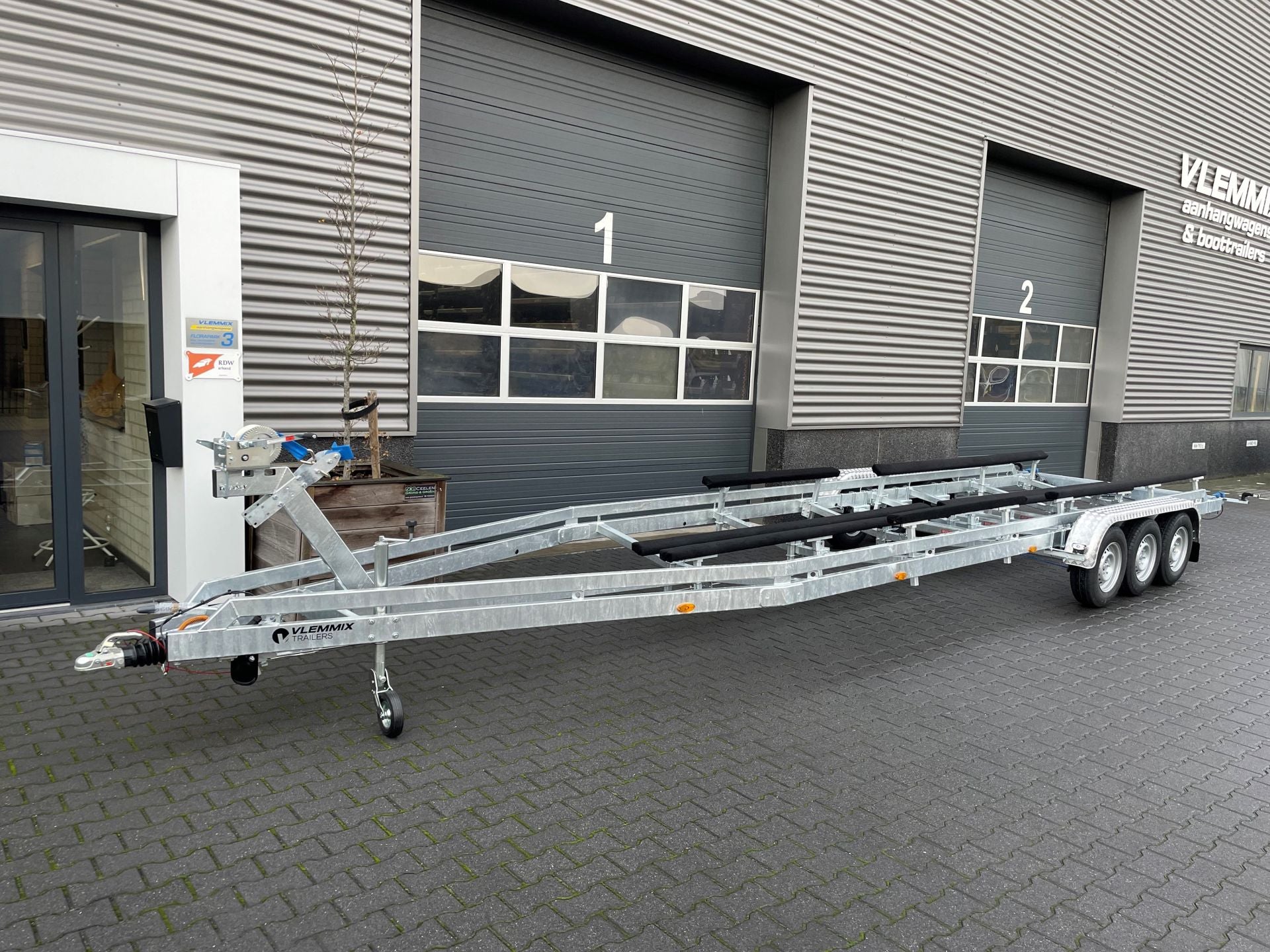
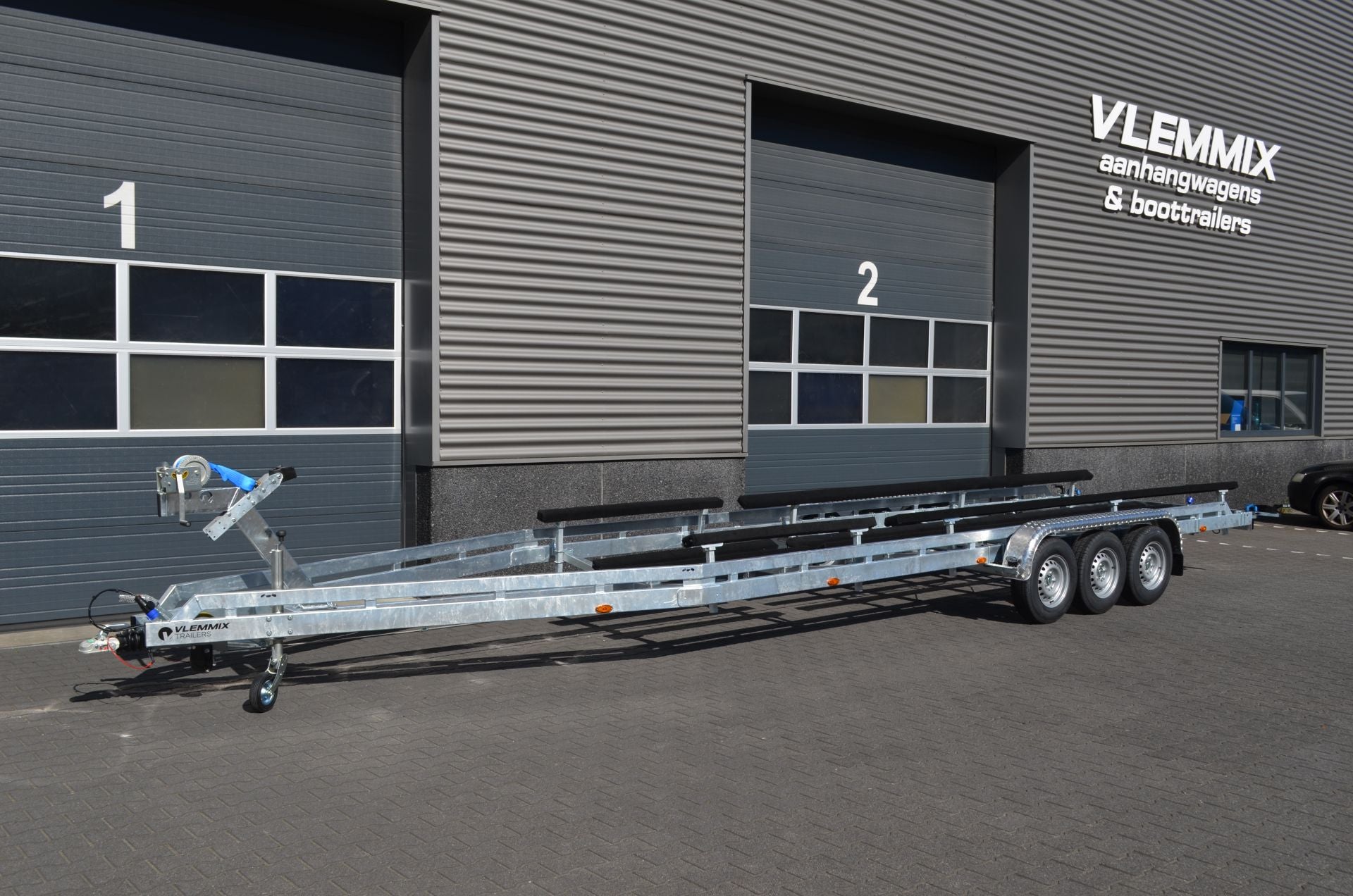
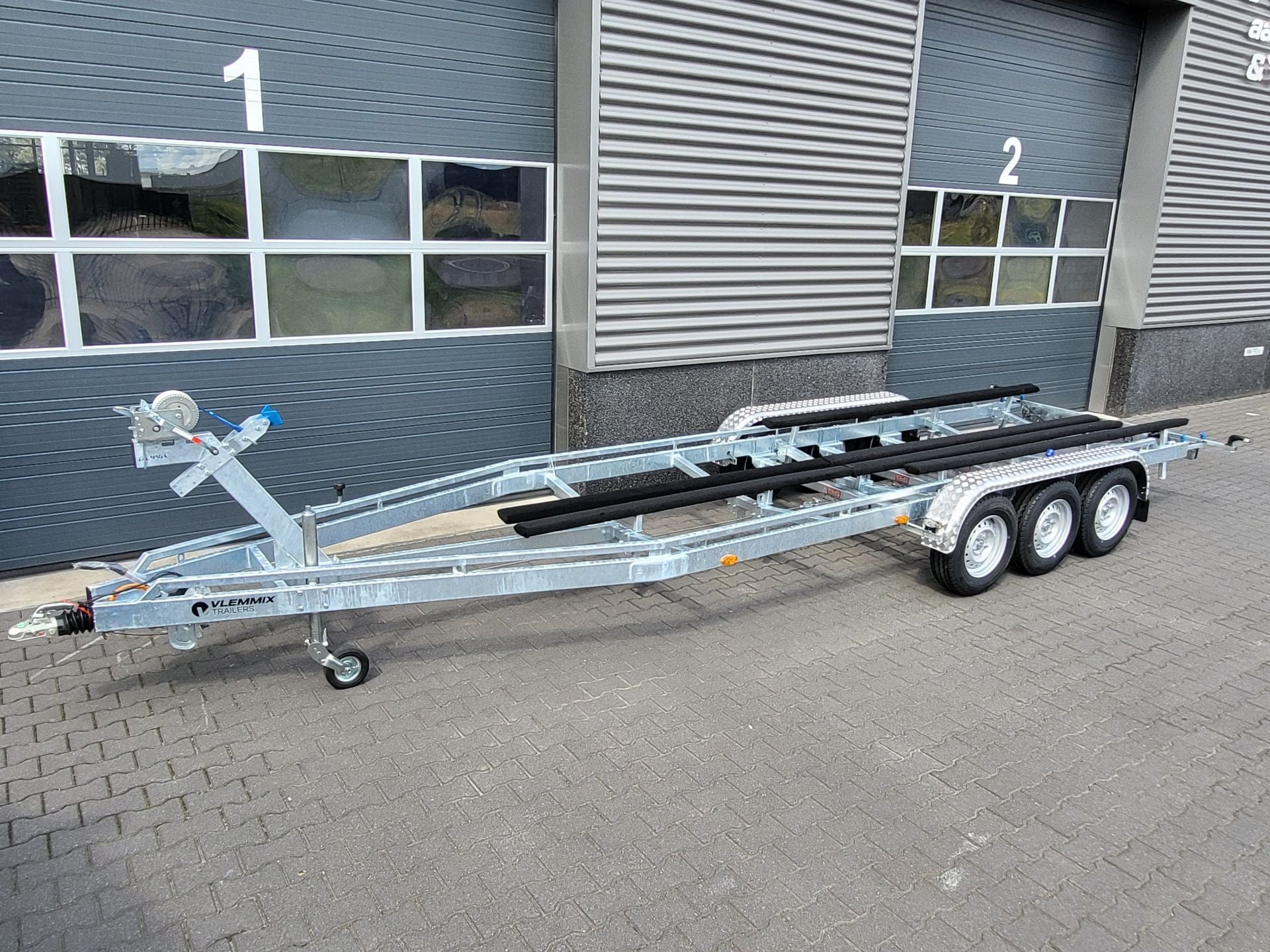
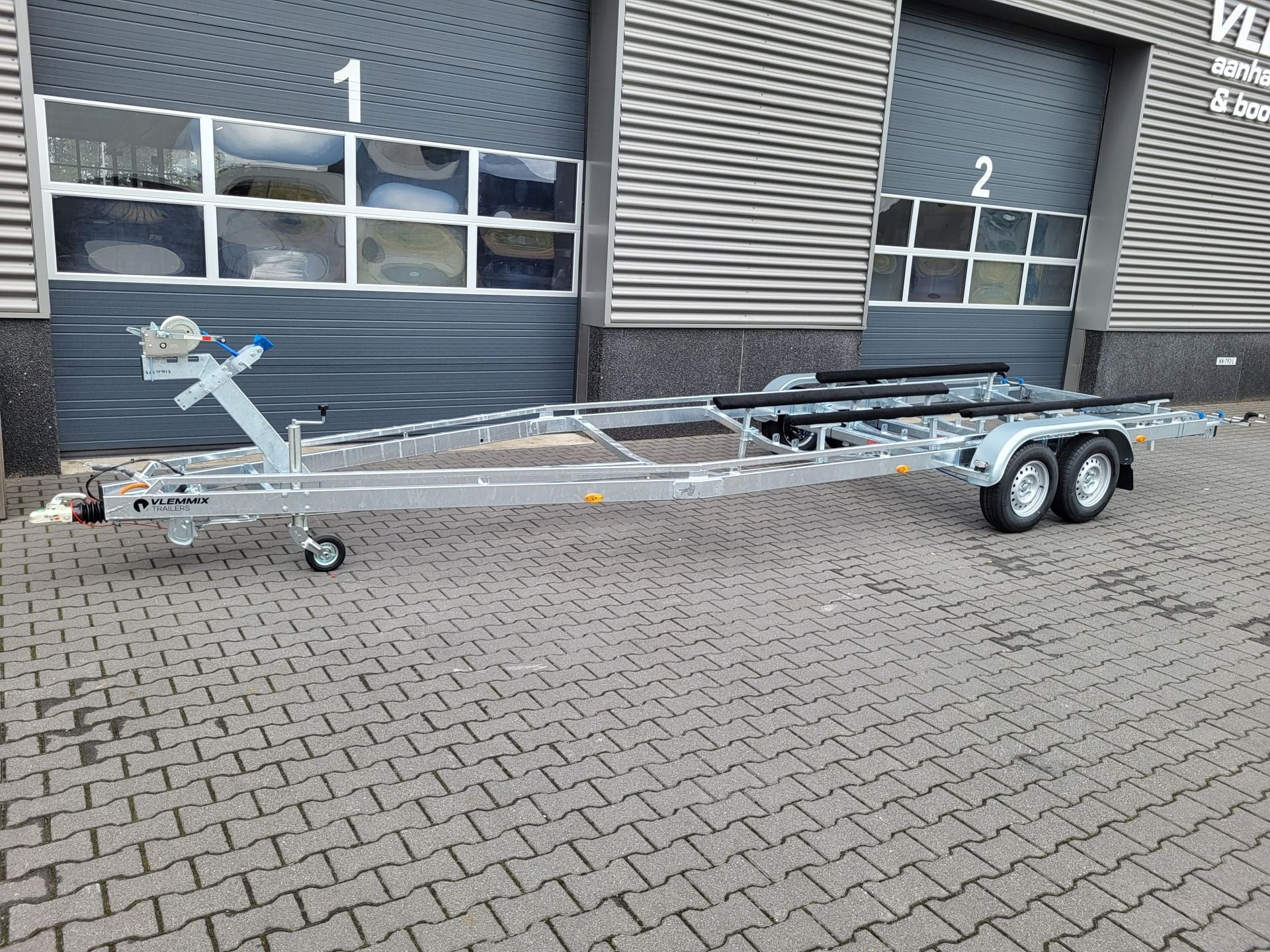
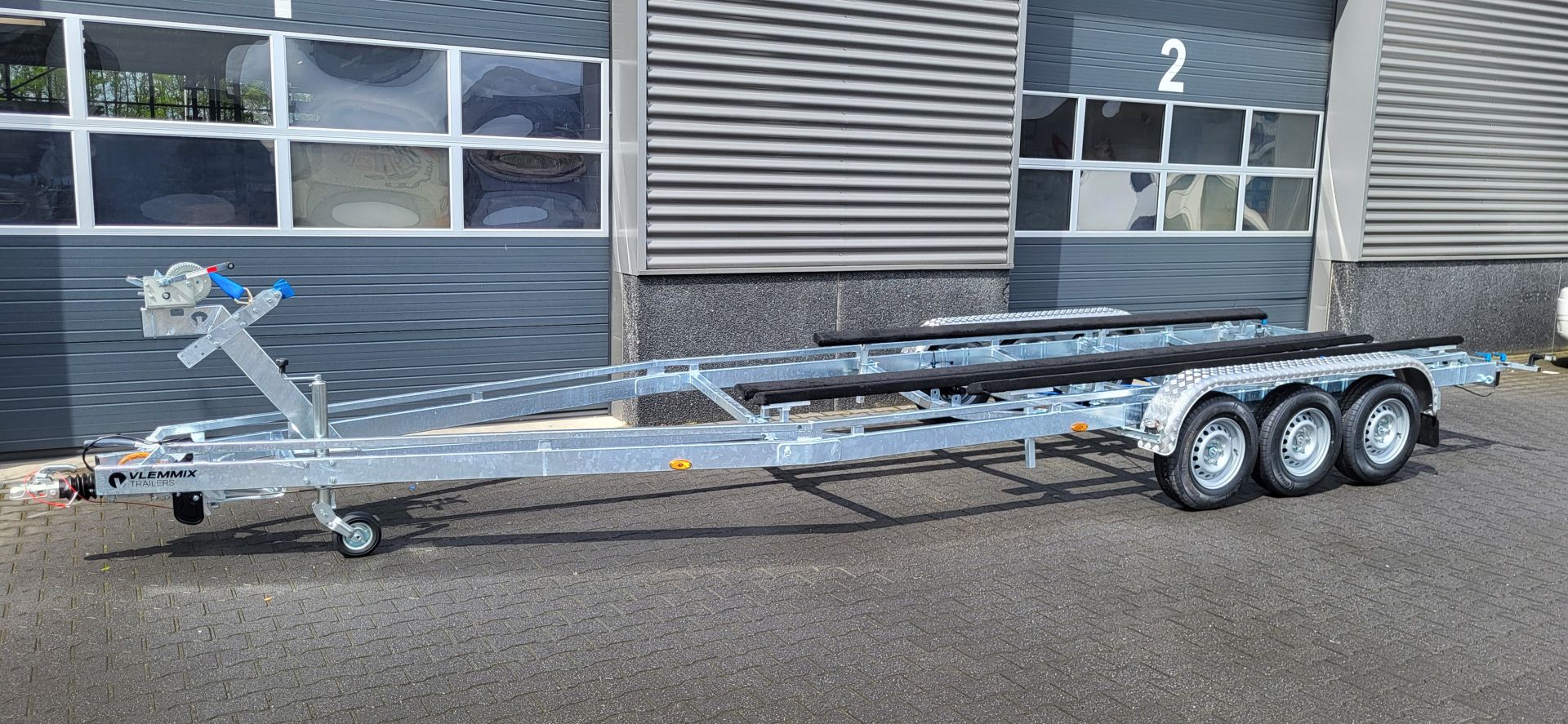

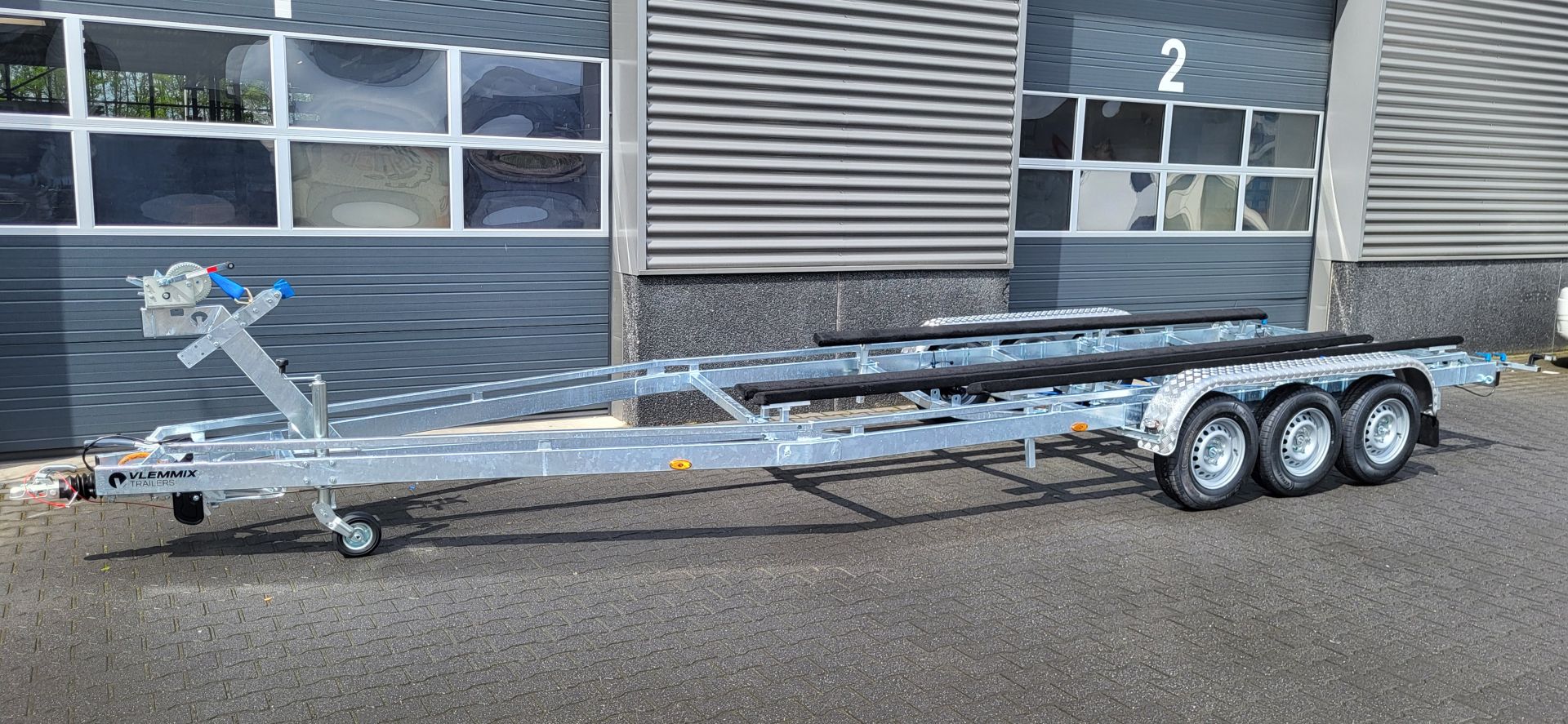
Catalog of Nautical Trailers with Cradles
Stability, continuous support, and fewer surprises when bouncing
A boat trailer with a cradle is purchased and chosen when you need continuous support under the hull and want to avoid marks, twisting, and sudden movements on the ramp. The goal here is very specific: for the boat to glide smoothly and with control, for the hull to withstand years of salt spray, and for the road to be a thing of the past. In this category, you'll find trailers designed for boats, motorboats, console boats, and light sailboats that require long support surfaces, typically made of treated wood beams with a technical carpet. Compared to systems with rollers, the cradle distributes weight better and minimizes hard spots, especially on delicate hulls.
We're talking about hot-dip galvanized chassis, protected wiring within the frame, fold-down light bars, and the option to add features that make maneuvering easier: winch, adjustable supports, shock absorbers, or washing systems. If you're looking for the lowest price, you're in the wrong category. Here, it's important to choose wisely to avoid paying for repairs, fines, or unpleasant surprises later. This is the starting point: technical clarity, safety, and an informed decision for your boat and your car.
What do these trailers with skates include?
On boat trailers with skids, the chassis isn't the only key element; the support beams are. These are typically made of durable, pressure-treated wood covered with a special carpet, featuring a hard base for resistance and a soft top layer to protect the gelcoat. This continuous support reduces stress when loading or unloading the boat on the ramp. You'll find options with one, two, or three axles, overrun brakes on the larger models, axles with sealed bearings, and integrated wiring with a 13-pin connector. Many models allow you to adjust the height and width of the beams to accommodate different hull shapes and, when needed, add more beams.
In higher-end models, details that make a difference include waterproof LED lighting, an extendable and removable light bar to prevent damage, certified locks, and service trays. All of this is complemented by hot-dip galvanizing and very tight manufacturing tolerances thanks to laser cutting of tubing and sheet metal, resulting in straight, quiet, and more predictable chassis on the road.
How to choose the best boat trailer with skids
Start with the actual weight you'll be moving, not the "theoretical" weight listed in the catalog. Add up the hull, engine, fuel, battery, equipment, and a reasonable safety margin. The trailer's Maximum Authorized Mass should be comfortably exceeded. Consider the type of beam: the longer and more adjustable it is, the better it distributes the weight. Hot-dip galvanizing is essential if the trailer will be getting wet; avoid painted solutions. Check the number of axles and the tire diameter: more contact means more stability and better braking. A bunk with an inertia brake, a proper winch, and a keel guided by rollers in the center makes launching easier without banging. Also, consider accessories that simplify your actual use: shock absorbers, integrated washers, a retractable light bar, and stainless steel fittings. Every detail counts when the trailer hits the water.
Vehicle and hitch compatibility
Check your car's technical specifications for the towing capacity with and without brakes. If the trailer exceeds this figure, you cannot drive it. Also check the type of tow ball, the electrical connection with a 13-pin connector, and the hitch height to ensure the entire assembly is level. A trailer that's tilted nose-first or tail-first becomes twitchy and wears out tires and bearings.
Check the load distribution on the tow ball: too much weight in the front puts undue stress on the vehicle; too little causes dangerous swaying. And don't forget that, in Spain, some trailer configurations require separate insurance and, where applicable, periodic vehicle inspections (ITV). Before buying, always register the trailer, boat, and car on the same form: you'll avoid surprises and fines.
Safety and basic maintenance of boat trailers with skids
A bunk trailer operates in harsh conditions: saltwater, sand, long braking periods, and slow maneuvers. Safety starts with simple habits. Rinse with fresh water every time you leave the water. Regularly check bearings, straps, and the winch; if you see cracks, threads, or rust spots, replace them.
Check the wheel bolts after several launches: the temperature difference can loosen them. Make sure the floor mats are clean and free of pebbles that could scratch the hull. Maintain the overrun brake according to the manufacturer's instructions and lubricate the moving parts. And, before hitting the road, a quick check of the lights, ignition, and rear bar lock will save you from fines and unpleasant surprises. The stability of the whole setup starts with these details.
Common mistakes and how to avoid them
One of the most common mistakes is adjusting the beams "by eye," leaving the hull slightly crooked. The result is a trailer that struggles against itself, hot tires, and unnecessarily high fuel consumption. Another common error is using old straps; with sun and salt air, they lose strength and, when they fail, they give no warning. You also see makeshift electrical connections that end up getting wet and causing power outages just when you need to be most visible. Don't rely on the "it'll go in" excuse: the winch must lock firmly, and the bow must be secure. And, when you leave the ramp, double-check everything on dry land. Measuring, adjusting, and checking is cheaper than repairing a hull.
Recommended use cases
If you move your boat short distances and value easy maneuvering, a simple bunk trailer with adjustable beams and a compact chassis is a great choice. Those who travel longer distances will appreciate larger axles, an overrun brake, and a removable light bar to avoid bumps. On narrow or sloping ramps, keel rollers help guide the boat without putting stress on the beam. If the trailer will be kept by the sea, look for stainless steel fittings, protected wiring within the frame, and, if possible, an axle washing system. When the boat's equipment changes frequently, it's advisable to have additional beams and adjustable supports that allow for smooth adjustments each season.