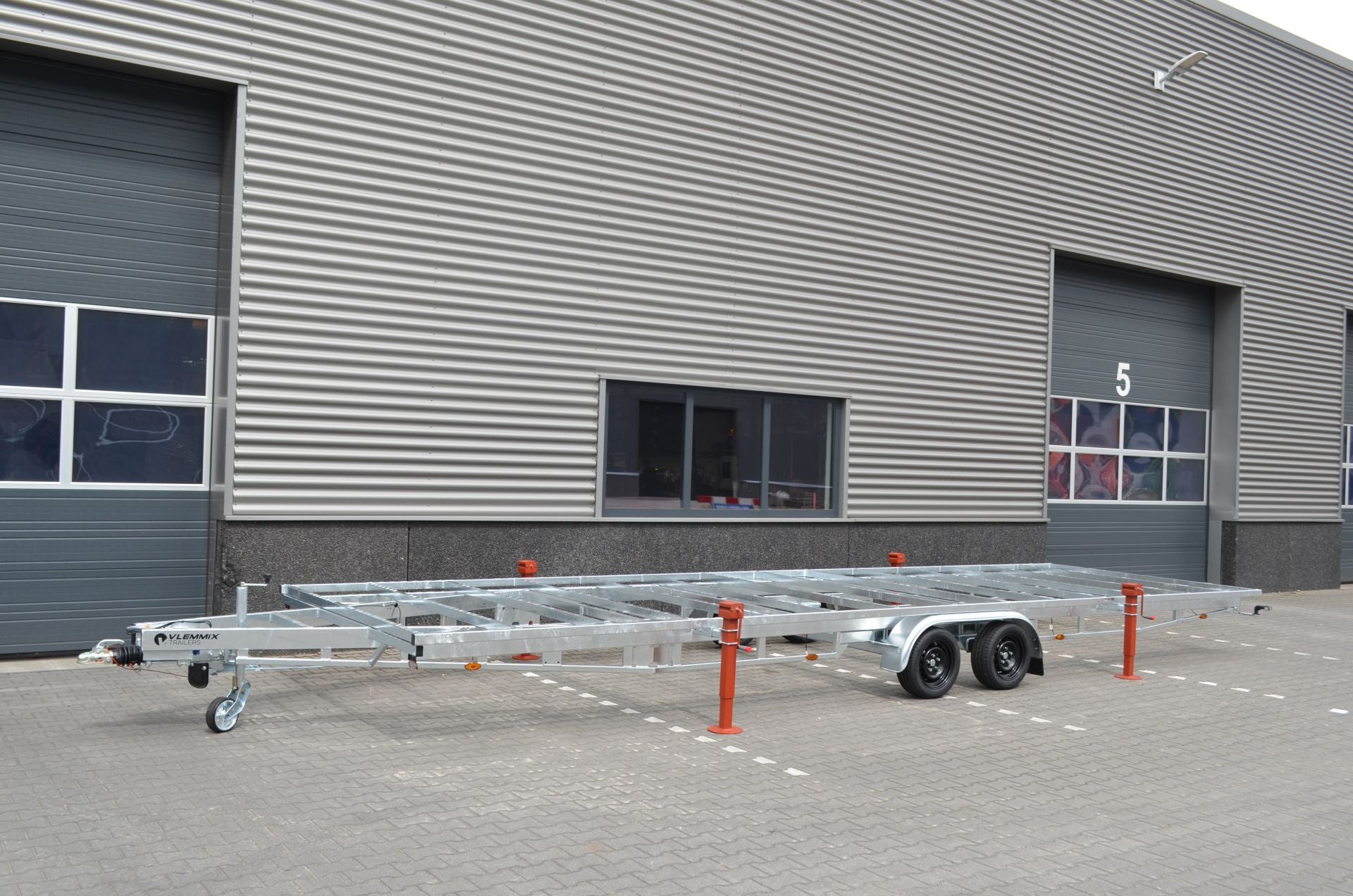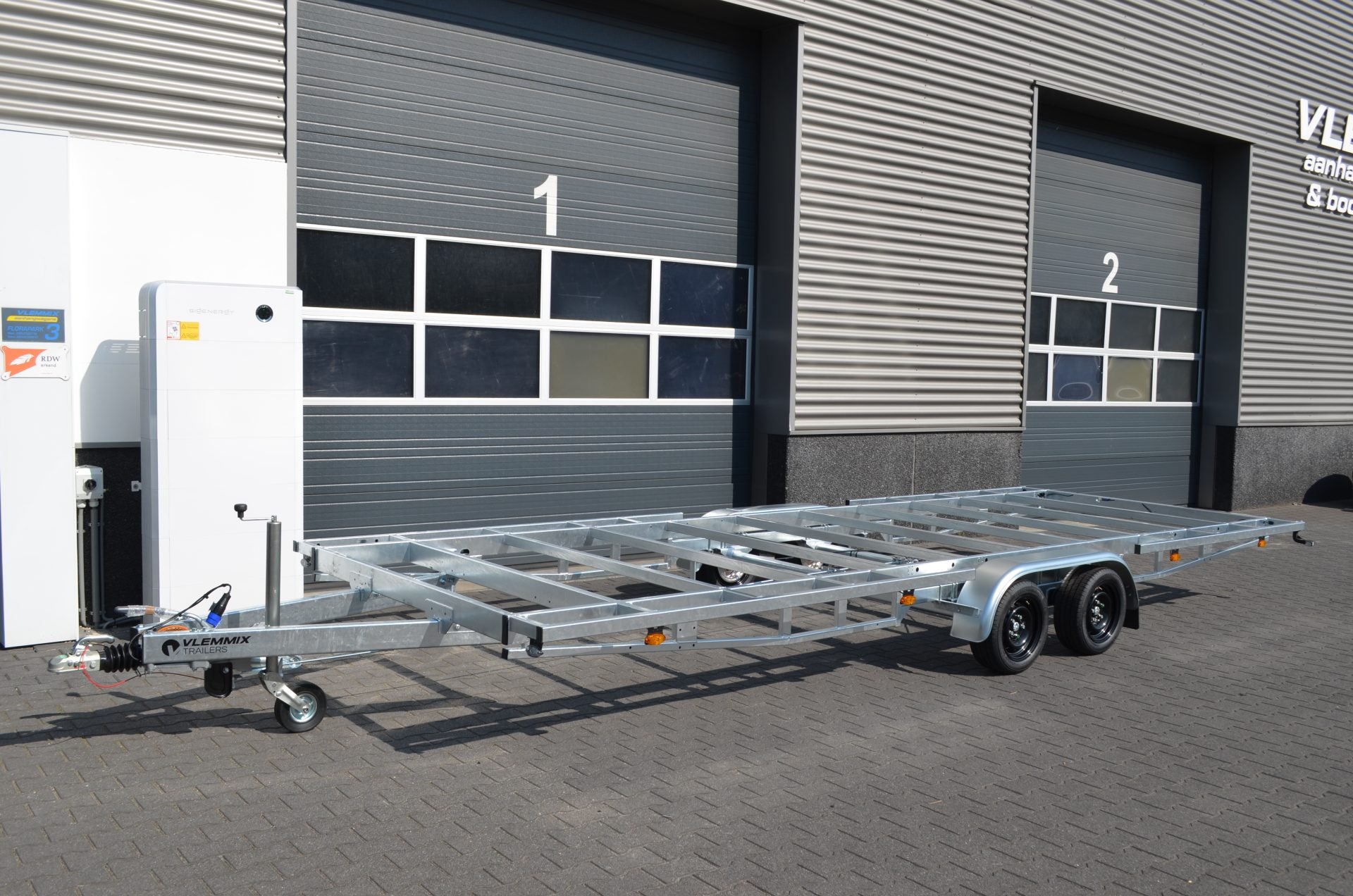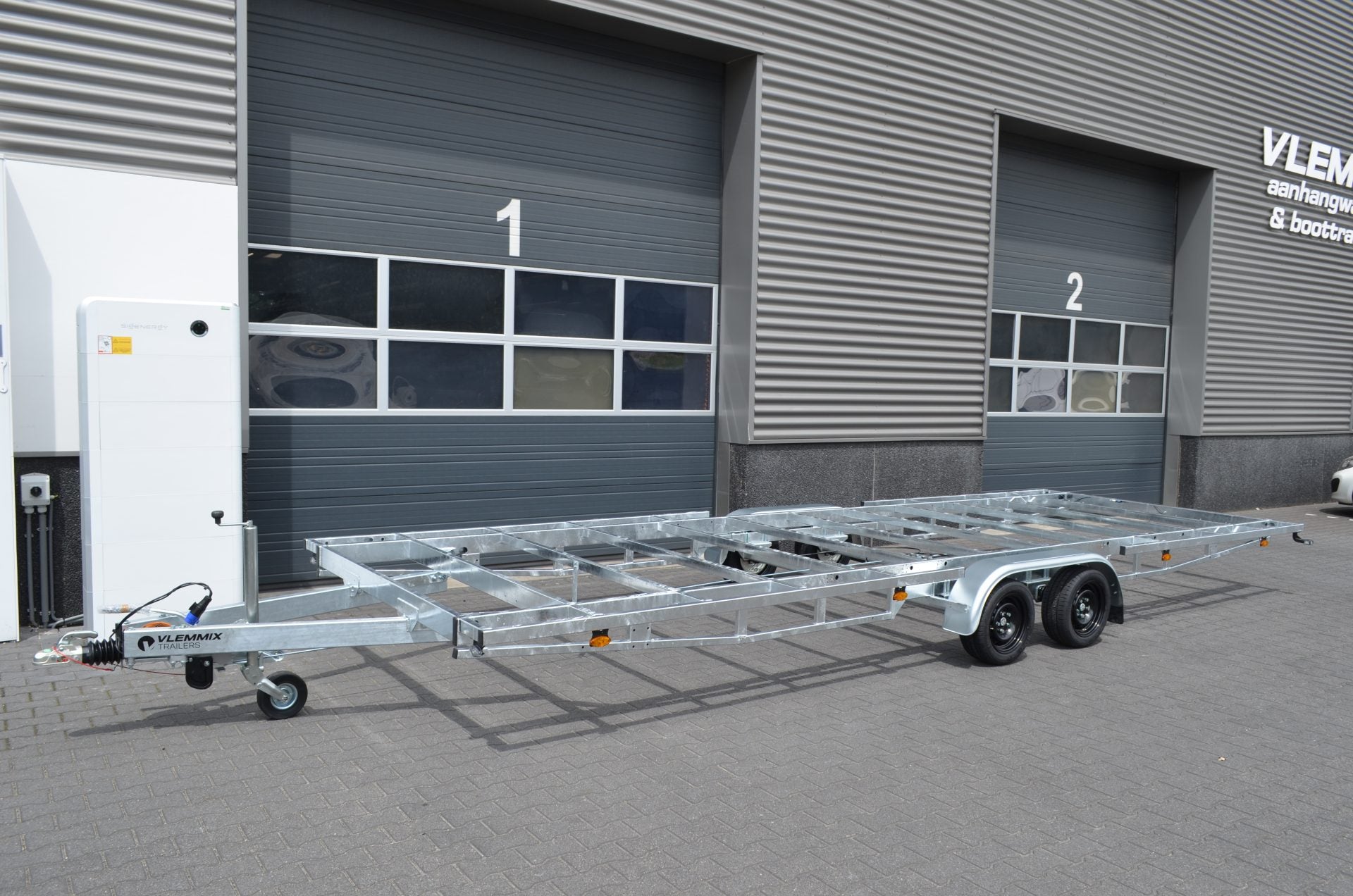

SUVs, 4x4s and family vehicles for towing
Hitching up a trailer and hitting the open road seems easy until you reach the first windy roundabout, a long downhill stretch, or a marina ramp. That's where the car that "can tow" becomes separated from the car that... Towing with control is what really matters. In Spain, the problem usually starts with a bad mix of expectations and regulations: you buy a car for its looks or power, you choose a trailer for its capacity… and when you add up the maximum authorized masses (MAMs), you discover that the combination doesn't fit your license or that the car is overloaded.
This guide is designed to help you choose which cars are a good base for towing. In Spain , what legal limits apply, which models are worthwhile for stability, and which cars should be avoided even if they appear to be "4x4" on the street?
What makes a car good for towing in Spain
Horsepower helps, but you can't control a trailer with horsepower alone. What makes the difference is the torque , the car weight , the battle (wheelbase), a reliable transmission, and brakes that withstand wear and tear. That's why a mid-size SUV with plenty of horsepower but a lightweight build can perform worse than a longer station wagon with less power but a better base. The goal is simple: the car must have control over the trailer, and the trailer shouldn't push against it or disrupt its trajectory.
On the road, the difference is immediately noticeable. A stable car with a trailer allows you to drive calmly: progressive braking, minimal corrections, and a feeling of being "securely attached." When the car isn't suitable, typical signs appear: twitchy steering, swaying when passing trucks, more frequent corrections, and the feeling that the trailer is making decisions for you. This isn't just inconvenience; it's a loss of margin for error in the event of any unforeseen circumstance.
At the purchasing level, there's another common pitfall: confusing "towing capacity" with "real-world use." Two cars may have the same homologated towing capacity, but one will do it with ease while the other struggles. The one that struggles usually translates into more wear and tear, higher fuel consumption, and reduced safety when the weather gets hot or an incline appears.
Spanish MMA regulations and permit
In Spain, driving licenses and legality don't depend on "what the vehicle weighs today." They depend on... Maximum Authorized Mass (MMA) which appears on the vehicle and trailer's technical specifications. In other words, the law uses homologation figures, not estimates. The DGT (Spanish Directorate General of Traffic) summarizes it in its guides for traveling with a trailer or caravan: with a category B license you can drive combinations up to 3,500 kg MMA ; if you exceed this, you need an extension such as a B96 or a B+E depending on the total weight of the vehicle.
This explains why so many people get into trouble without realizing it: large SUVs usually have a high maximum authorized mass (MAM), and when you add a trailer with a significant MAM, the combination easily exceeds the maximum authorized mass (MAM). And it doesn't matter if the trailer is half empty: the MAM is the figure that counts.
Besides the permit, there are obligations that shouldn't be ignored out of laziness: lights, signaling, proper license plate, tire condition, load distribution, and, if applicable, trailer brakes. A legal but poorly balanced setup is a bad idea, because highway handling changes drastically and braking margins are reduced.
Table of required MMA license according to the group (Spain)
|
Total maximum authorized mass of the combination (car + trailer) |
Required permit |
Typical case |
|---|---|---|
|
Until 3,500 kg |
B |
Light trailer or medium caravan |
|
3,500–4,250 kg |
B96 |
Equipped caravan / medium high trailer |
|
More than 4.250 kg |
B+E |
Large caravan, large boat, car transporter |
This table indicates if you are at the limit; the sensible thing to do is to buy a car and trailer with a margin or plan for the correct permit to tow a trailer before spending the money.
List of the best SUVs and 4x4s recommended for towing trailers
Exact values depend on the version and year. Typical capacities are listed here, and where a clear data sheet/guide exists, it is referenced. For serious towing, the difference between 2,500 kg and 3,500 kg is significant.
|
# |
Model |
Trailer with brakes (standard) |
Ideal for |
Real advantage of towing |
|---|---|---|---|---|
|
1 |
Toyota Land Cruiser |
3,500 kg |
Large caravan, heavy ship |
Robust foundation and real margin |
|
2 |
Land Rover Defender |
3,500 kg* |
Frequent heavy towing |
True stability and traction |
|
3 |
INEOS Grenadier |
3,500 kg* |
Heavy use, serious load |
Tool focus |
|
4 |
Volkswagen Touareg |
3,500 kg* |
Large caravan |
Poise and solid brakes |
|
5 |
Audi Q7 |
3,500 kg* |
Caravan trips |
Comfort + stability |
|
6 |
BMW X5 |
3,500 kg* |
Heavy road trailer |
Mass and chassis |
|
7 |
Porsche Cayenne |
3,500 kg* |
Heavy trailer with remote control |
Very stable dynamics |
|
8 |
Mercedes GLE |
3,500 kg* |
Premium heavy trailer |
Very poised |
|
9 |
Volvo XC90 |
2,400–2,700 kg* |
Medium-high caravan |
Smooth driving |
|
10 |
Kia Sorento |
2,500 kg |
Medium caravanning |
A lot of balance |
|
11 |
Hyundai Santa Fe |
2,500 kg |
Medium caravan |
Stable and comfortable |
|
12 |
Skoda Kodiaq 4x4 |
2,500 kg |
Medium trailer |
Very sensible for towing |
|
13 |
SEAT Tarraco 4Drive |
2,200–2,500 kg* |
Medium caravan |
Familiar and capable |
|
14 |
VW Tiguan (depending on the version) |
2,200–2,500 kg* |
Medium trailer |
Good compromise |
|
15 |
Mazda CX-60 |
2,000–2,500 kg* |
Medium trailer |
Poise and a solid foundation |
|
16 |
Mazda CX-80 |
2,000–2,500 kg* |
Family + trailer |
long battle |
|
17 |
Nissan X-Trail |
2,000–2,200 kg* |
Moderate use |
Correct without being excessive |
|
18 |
Subaru Outback |
2,000–2,400 kg* |
Travel and rain |
Stable traction |
|
19 |
Toyota RAV4 AWD |
1,650–2,000 kg* |
Moderate towing |
Reliable, without pushing the limits |
|
20 |
Honda CR-V |
1,500–2,000 kg* |
Occasional use |
Stable on the road |
|
21 |
Ford Ranger (pickup) |
3,000–3,500 kg* |
Heavy work and towing |
Cargo chassis |
|
22 |
Toyota Hilux (pickup) |
3,500 kg* |
Hard trailer |
Reliability |
|
23 |
Isuzu D-Max (pickup) |
3,500 kg* |
Intensive work |
Very cargo-oriented |
|
24 |
Mitsubishi L200 (pickup) |
3,100–3,500 kg* |
Nautical + work |
Traction and strength |
|
25 |
Nissan Navara (pickup) |
3,500 kg* |
Heavy trailer |
Solid platform |
|
26 |
SsangYong Rexton |
3,000–3,500 kg* |
Large caravan |
Great value for the price |
|
27 |
Mercedes X-Class (pickup) |
3,500 kg* |
Heavy trailer |
Capable and stable |
|
28 |
Jeep Grand Cherokee |
3,000–3,500 kg* |
Big ship |
Very reliable |
|
29 |
Jeep Wrangler |
2,500–3,500 kg* |
Ramps and leisure |
real 4x4 |
|
30 |
Volvo XC60 (depending on the version) |
2,000–2,400 kg* |
Medium trailer |
Road balance |
*Capacity varies depending on the version. Final confirmation is always provided with the technical specifications.
Table of the best passenger cars, family cars and sedans for large trailers
There's a very Spanish type of driver who tows with a family car or large sedan because they do a lot of highway driving and want stability without having to go for an SUV. It's a logical choice when the trailer is moderately tall and the car has a solid base.
|
# |
Model |
Trailer with brakes (standard) |
Guy |
Ideal for |
Real advantage |
|---|---|---|---|---|---|
|
1 |
Audi A6 Avant |
2,000–2,500 kg* |
Familiar |
Large caravan |
Aplomb |
|
2 |
BMW 5 Series Touring |
2,000–2,500 kg* |
Familiar |
Large trailer |
Solid chassis |
|
3 |
Mercedes E-Class Estate |
2,000–2,100 kg* |
Familiar |
Trips with cargo |
long battle |
|
4 |
Skoda Superb Combi |
2,000–2,200 kg* |
Familiar |
Caravanning |
Great value for the price |
|
5 |
VW Passat Variant |
2,000–2,200 kg* |
Familiar |
Large caravan |
Very balanced |
|
6 |
Volvo V90 |
2,000–2,400 kg* |
Familiar |
Highway with trailer |
Stability |
|
7 |
Audi A4 Avant |
1,800–2,000 kg* |
Familiar |
Medium high trailer |
Easy to carry |
|
8 |
BMW 3 Series Touring |
1,800–2,000 kg* |
Familiar |
Medium trailer |
Good control |
|
9 |
Mercedes C-Class Estate |
1,800–2,000 kg* |
Familiar |
Medium trailer |
Route |
|
10 |
Arteon Shooting Brake |
2,000 kg* |
Familiar |
Caravan |
Plumb |
|
11 |
Mondeo family |
1,800–2,000 kg* |
Familiar |
Medium trailer |
Good base |
|
12 |
Insignia Sports Tourer |
1,600–2,000 kg* |
Familiar |
Medium trailer |
Correct |
|
13 |
Mazda 6 Wagon |
1,600–2,000 kg* |
Familiar |
Trips |
Stable |
|
14 |
Peugeot 508 SW |
1,500–1,800 kg* |
Familiar |
Medium trailer |
No high margin |
|
15 |
Octavia Combi |
1,500–2,000 kg* |
Familiar |
Medium trailer |
Practical |
|
16 |
A8 / 7 Series / S-Class |
2,000–2,500 kg* |
Sedan |
Large trailer |
Brutal mass |
The advice here is, if you want a large trailer, a long family trailer makes a lot of sense, but don't be overly optimistic about the weight. Many models are limited to 2,000–2,200 kg, which is enough for many caravans, but not for the biggest things at the campsite.
Why are some cars not recommended for towing?
Real limitations that hold you back even if you have money
Let's clarify the point that generates the most confusion: "Why is my car not valid if it's powerful and an SUV?" Because Towing is limited by homologation and by physics .
The first limitation is legal: maximum towable mass The car's weight limit is determined by the vehicle's homologation. If your car is allowed 1,600 kg and your trailer has a maximum authorized mass (MAM) of 2,000 kg, there's no question about it. You can't drive it. The second limitation is your driving license: even if the car and trailer are compatible, if the combination exceeds the MAM limits for your license, you also cannot legally drive it normally. The DGT (Spanish Directorate General of Traffic) classifies this based on the limit of the Category B license and any necessary extensions.
The second limitation is technical: stability and braking. Compact and urban SUVs are usually lightweight, with a short wheelbase and efficient engines. With a medium-sized trailer, the vehicle becomes more twitchy. You notice it in crosswinds. You also notice it when braking. This is why a long-wheelbase family car usually tows better than a small SUV with similar power.
The third limitation is mechanical: transmission and cooling. Towing in summer, on inclines, fully loaded, and with the air conditioning on, is demanding. A car designed for efficiency can be pushed to its limits. This results in wear and tear, soaring fuel consumption, and, in the worst-case scenario, breakdowns. This isn't just theory: it's what happens when a car is constantly operating near its limits.
Cars not recommended for towing
|
Car type |
Why does it fail when towing? |
When does it “happen” |
When it's not convenient |
|---|---|---|---|
|
urban SUVs (B/C segment) |
Lightweight and short battle |
Occasional light trailer |
Medium caravan/trailer |
|
Light front-wheel drive |
Less traction on ramps |
Quiet highway |
Ramps, rain, high load |
|
PHEV/EV with limited homologation |
Range drops and towing limit increases |
Moderate towing |
Long trips with weight |
|
Family sports cars |
Capacity usually remains at 2,000–2,500 kg |
Medium trailer |
Frequent heavy towing |
What about "sport" models like the Audi RS6, AMG, or powerful BMWs? Yes, but use your head.
They can be used, and in fact they tow very well on the road due to their stability and poise. But they are normally in the range of 2,000–2,500 kg (according to specifications and version), not at 3,500 kg. Its strength lies in traveling with a medium-sized trailer in a very stable manner, not in working aggressively with a large trailer every weekend.
Furthermore, they have two hidden costs: wear and tear and usage patterns. Performance tires, expensive brakes, and mechanics not designed for everyday towing. If you tow occasionally and want a spectacular car that can handle it, this is a good fit. If you tow heavy loads frequently, a 3,500 kg SUV or pickup truck would be a smarter purchase.
Tips for choosing the right car to tow in Spain
First, define the trailer and its Actual MMA . Don't be guided by "I'm going to carry a light load". Second, check the vehicle's specifications. Maximum braked towing capacity . Third, add up the maximum authorized masses of the vehicle combination to determine the license requirements and avoid problems.
If you want to get it right from the start, it's important to understand the type of trailer you really need. At remolque.es you'll find a helpful guide for comparing them. types of trailers depending on use and compatibility, especially if you're considering caravan, boat, or cargo.
And something almost no one does: don't buy "at the limit." Leave some margin. Towing with a margin means safety, less stress, and less hidden maintenance costs.
Expert advice to choose the right car-trailer combination
Choosing the right car is half the battle, but the whole setup only works well if the trailer is suitable and properly configured. trailer.es We'll advise you on choosing the trailer that best suits your load, your vehicle, and the legal maximum authorized mass (MMA) limits that apply in Spain. Furthermore, in trailer.es We have a wide catalog of top-quality trailers, manufactured with precision, designed to offer stability, durability and real safety on the road.