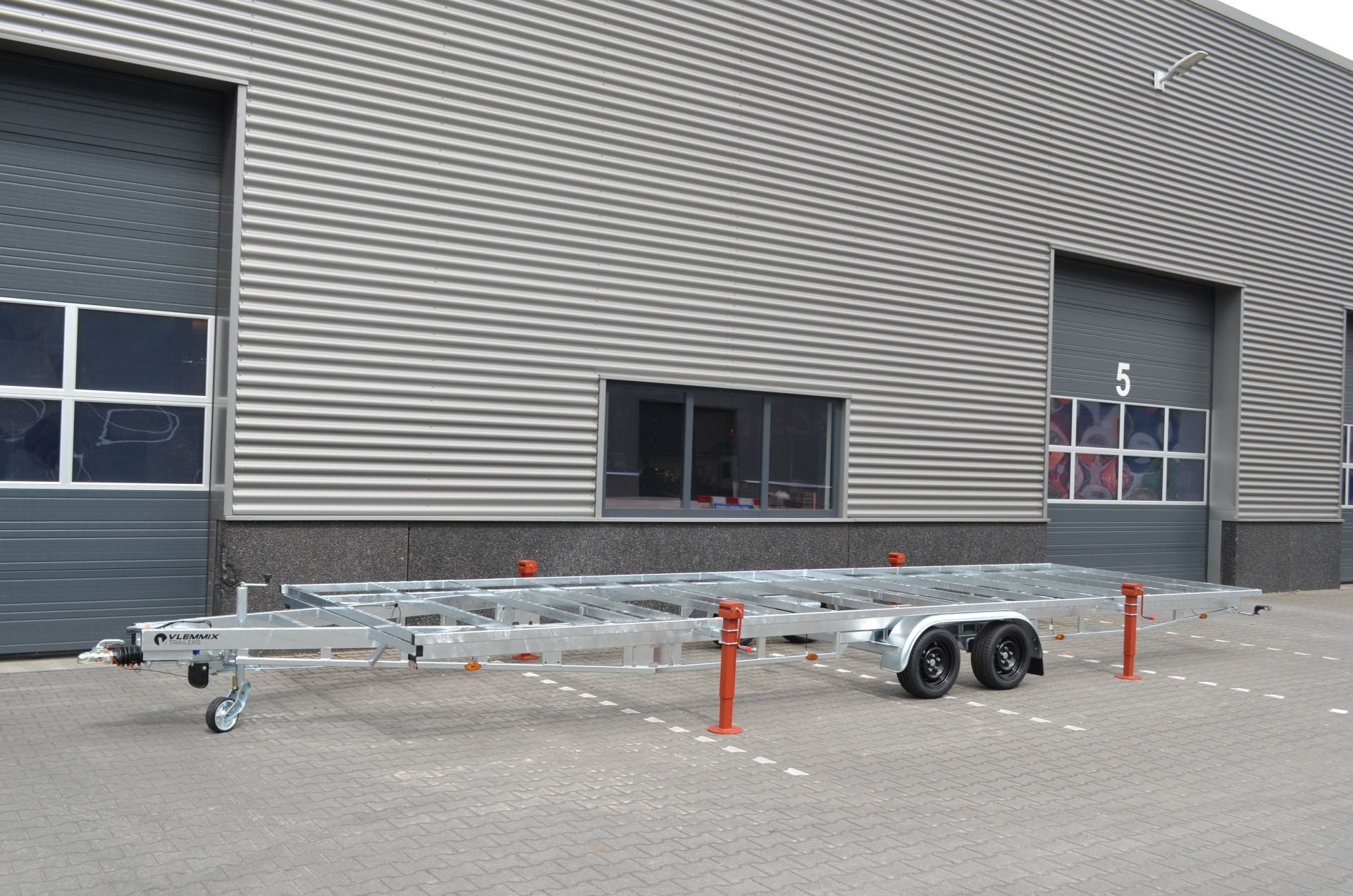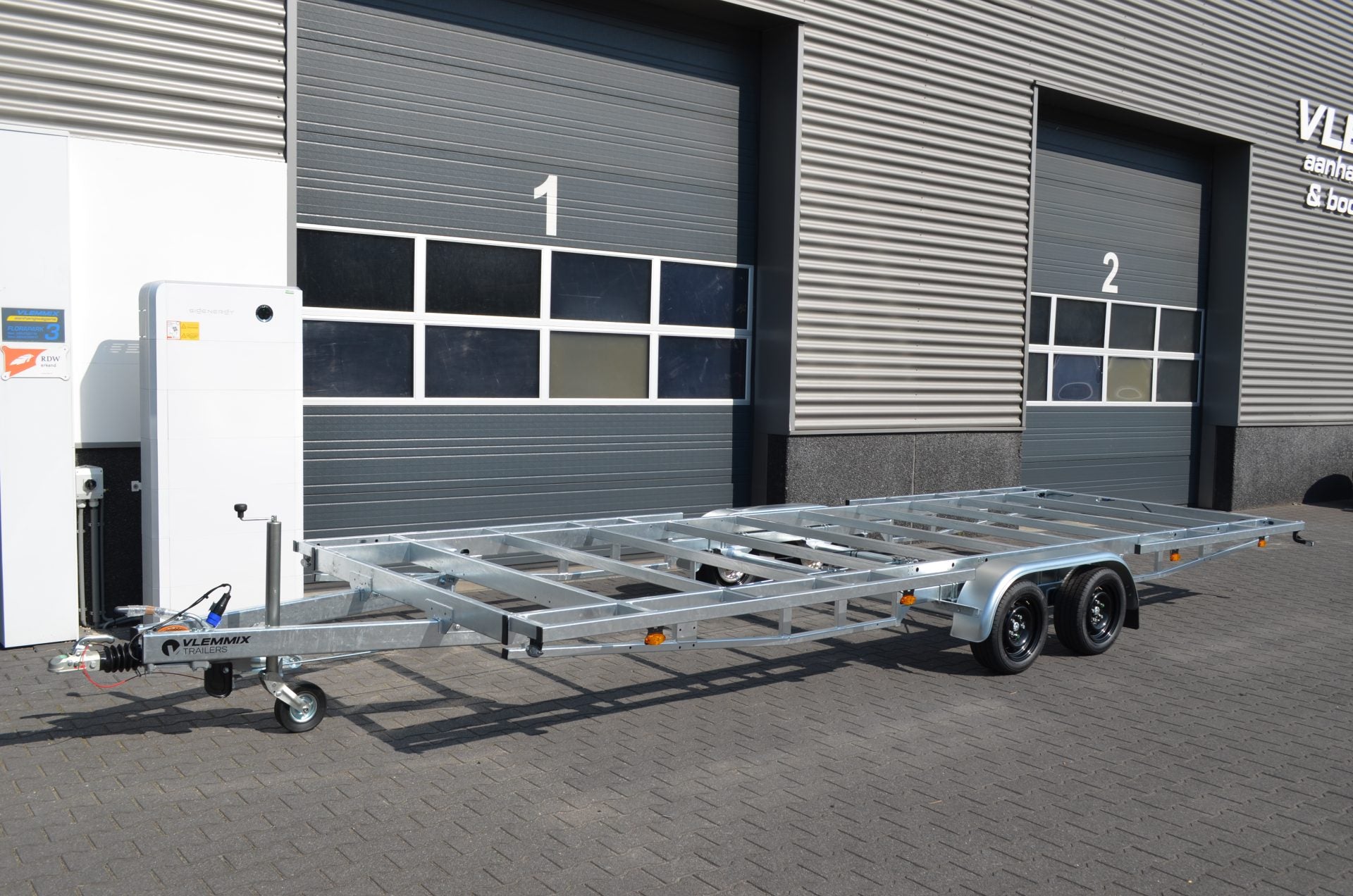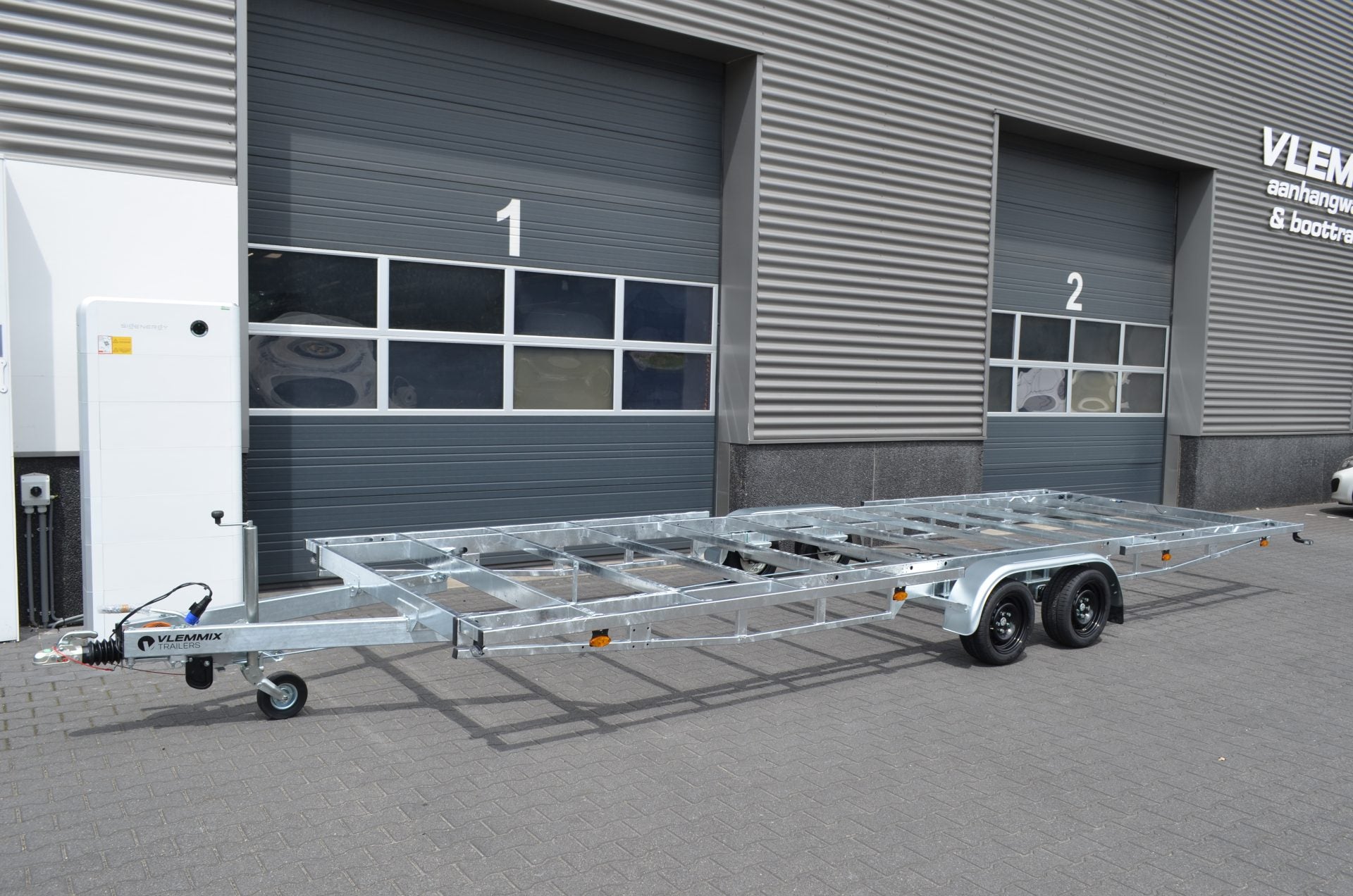
Hiring a crane truck to move a container costs between 150 and 600 euros per trip, depending on distance and access. Someone who moves their container twice a year spends more on cranes than it costs for the equipment to stop calling them. There are five methods to move a container without a hired crane; here are all of them, with their real cost and the scenario in which each one wins.
TL;DR
- To move the container by road without a crane: a container trailer with twist locks. A 10ft or empty 20ft container can be towed by a capable car.
- To load and unload it without a crane: rented telescopic handler (200-350 euros/day), mechanical jacking system (600-1,500 euros per set) or ramps with a winch for small containers.
- To move it a few meters within the property: jacks and rollers, or skates. Slow but almost free.
- A crane truck is the option without owning equipment: 150-600 euros per movement.
- With 2 or more movements per year, owning a trailer pays off and a crane becomes unnecessary.
Before choosing a method: weight, distance, and frequency
Three preliminary questions determine the correct method for your situation. How much the container weighs (tare plus contents), how many meters or kilometers it needs to be moved, and how many times a year the operation will be repeated. An empty 10ft container weighing 1,300 kg that crosses a property does not require the same solution as a 20ft container that changes provinces every season.
The tare weight is engraved on the CSC plate on the door: 1,200-1,400 kg for a 10ft and 2,080-2,300 kg for a 20ft. Any contents add kilos to the calculation. With the actual weight clear, choose your scenario in the table below and then delve into the details of each method.
Comparative table: the five methods
| Method | Estimated Cost | Distance | Best for |
|---|---|---|---|
| Container trailer | €3,000-€6,000 (one-time purchase) | Any, by road | Recurring movements |
| Rented telescopic handler | €200-€350/day | On-site loading and unloading | Loading and unloading from trailer |
| Hired crane truck | €150-€600/trip | Medium, by road | Single movement |
| Mechanical container jacks | €600-€1,500 (set) | On-site lifting | Loading without machinery |
| Rollers, skates, and levers | €100-€400 | Meters, within property | Relocating without transport |
Method 1: Container trailer (transport, solved)
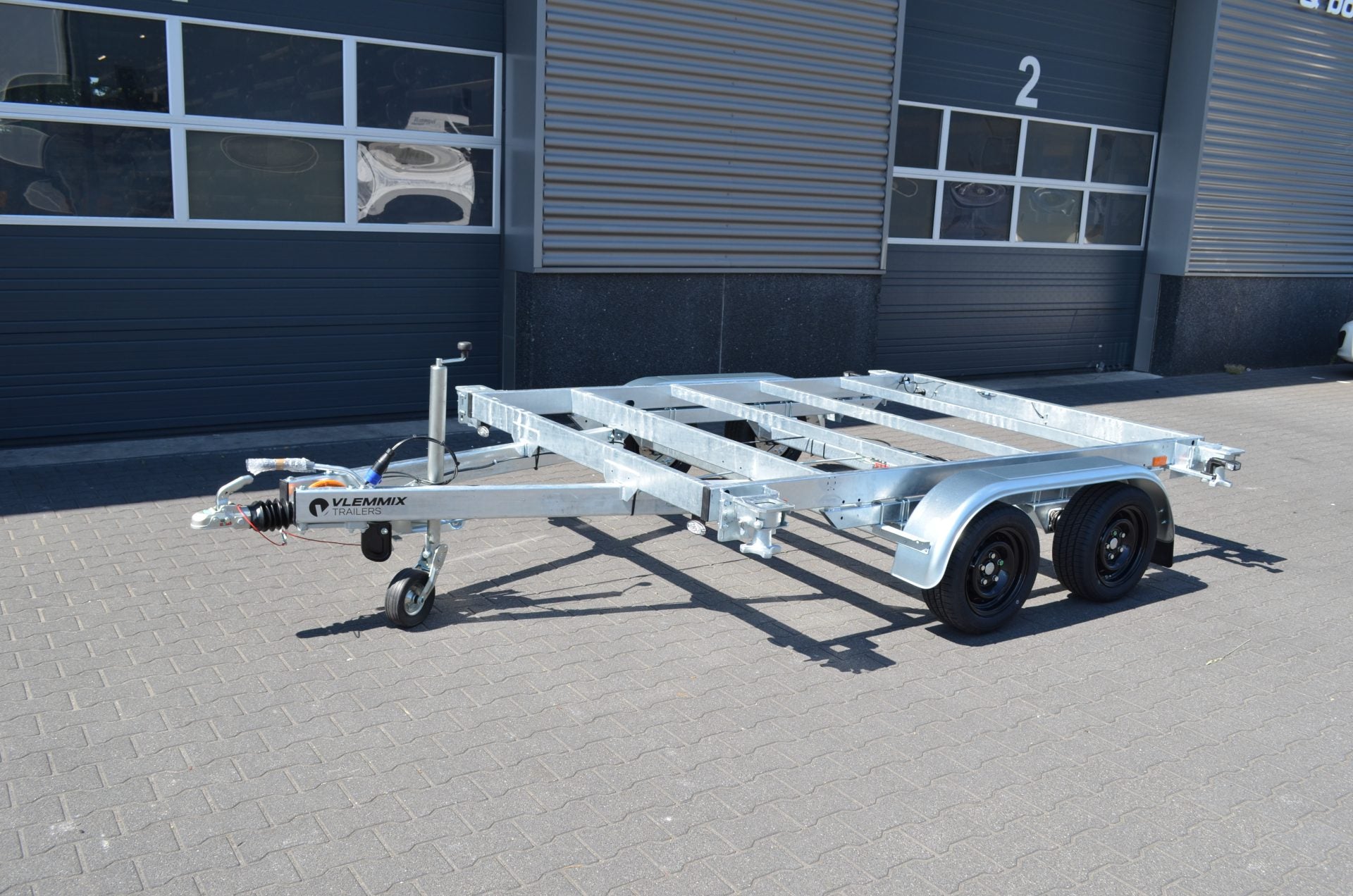
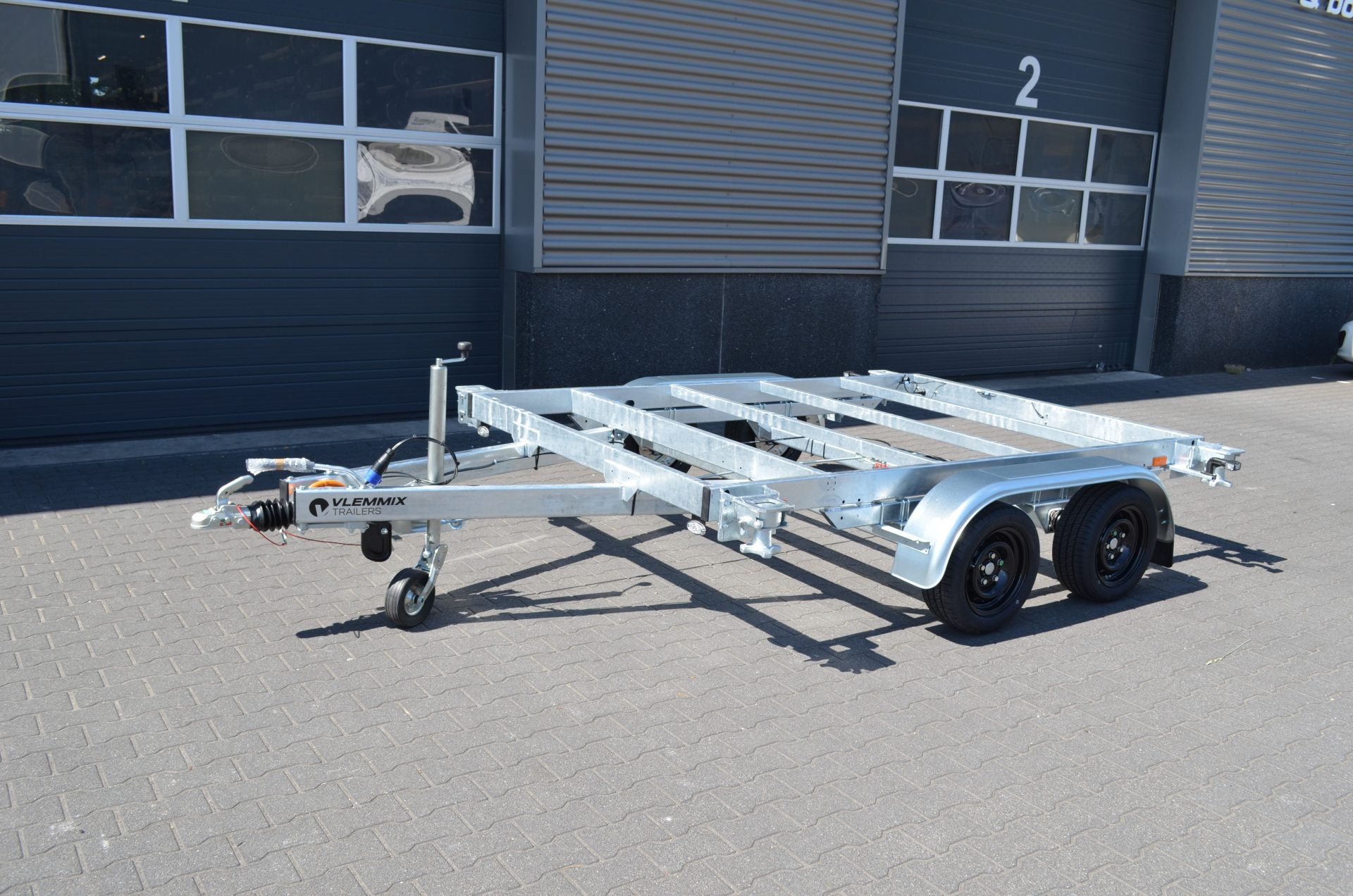
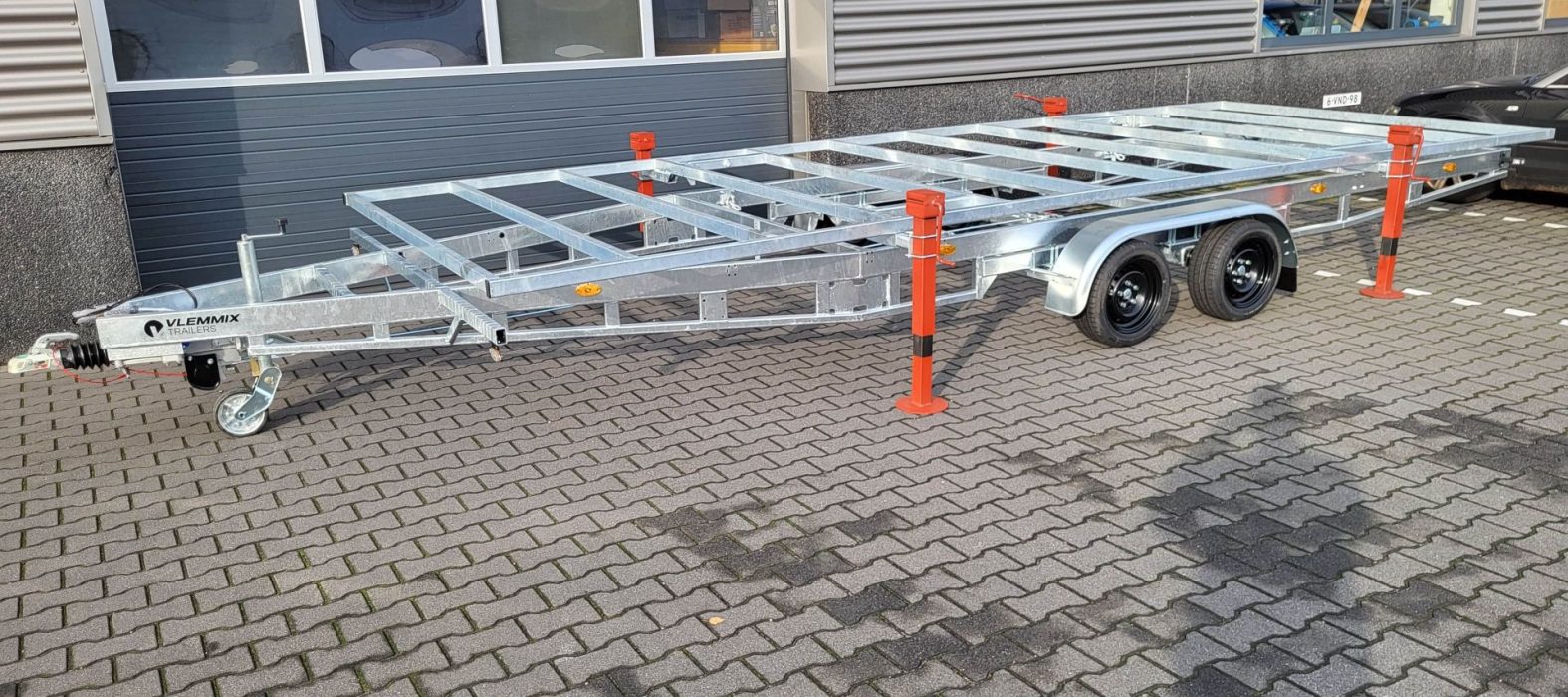
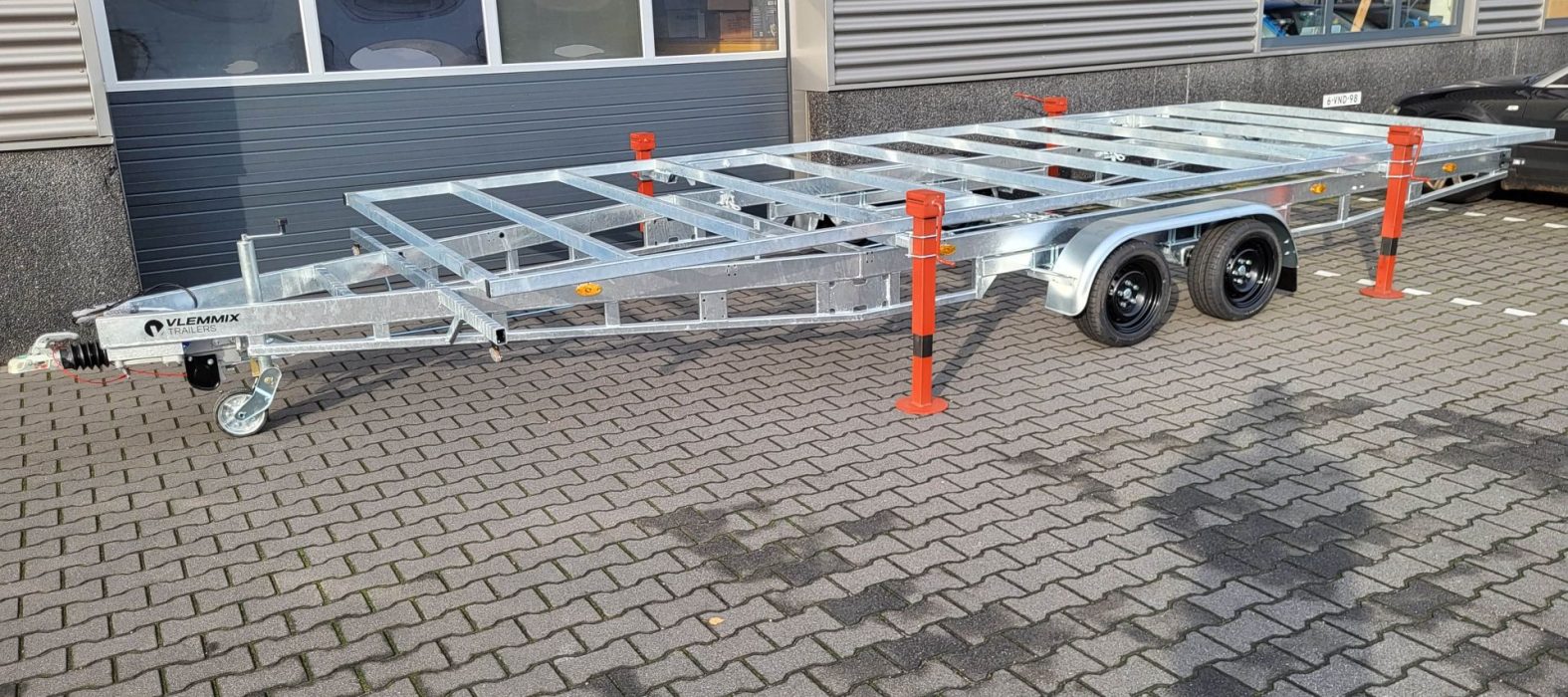
A trailer with twist-lock anchorages is the only way to move a container by road without hiring anyone. A fully loaded 10ft or an empty 20ft container can be legally towed behind a car with sufficient towing capacity, with a GVW of up to 3,500 kg and an overrun brake.
The strategic advantage goes beyond just the transport: a container that lives on a trailer can be moved in ten minutes, without waiting for anyone. For seasonal cabins, event modules, or rotating warehouses, this availability completely changes the economics of the container.
20ft container trailers have integrated twist locks in all four corners and a hot-dip galvanized chassis. The full range by size is available at container trailers. Overrun brakes are mandatory for these weights; if you're wondering why, we explain it in trailer with brake vs. without brake.
Method 2: Telescopic handler or large forklift (loading, solved)
Loading the container onto the trailer requires lifting it. The most practical option in a rural setting is a telescopic handler: it has a capacity of 2,500-4,000 kg, can be rented for 200-350 euros per day with or without an operator depending on the area, and many agricultural or construction companies have one nearby.
A conventional forklift is only suitable if it is heavy-duty (3,500 kg actual capacity at the required height) and the ground is firm. Standard warehouse forklifts of 1,500-2,500 kg cannot safely lift a 20ft container, and overturning a forklift with a container is a classic accident.
If you move machinery frequently, you might end up owning a telescopic handler. In that case, you transport it on a machinery trailer sized to its weight, completing the cycle: both the machine and the container are moved with the same car.
Method 3: Crane truck or self-loading truck (pay per movement)
The self-loading crane truck does all the work: it arrives, lifts the container with its boom, places it on its bed, and unloads it at the destination. It costs between 150 and 600 euros per movement for short to medium distances, plus surcharges for difficult access, waiting times, or weekends.
This is the right option for a single movement: the initial delivery of a newly purchased container or a relocation that won't be repeated. It stops being cost-effective when the operation is repeated. Two movements a year for three years add up to 900-3,600 euros paid to third parties, which is more than a new trailer with a warranty that can also be used for other cargo.
Method 4: Mechanical container jacks (lifting without machinery)
Specific container jacks are attached to the four ISO corner castings and lift the box synchronously to the height of the trailer or truck. A set costs between 600 and 1,500 euros and can be operated by a single person without machinery experience.
The process is slow (30-60 minutes per lift) but eliminates the need for a telehandler or crane: you lift the container, back the trailer underneath, lower the box onto the twist locks, and secure it. For those who always load and unload at the same two points, this is the cheapest long-term combination along with a trailer.
Its limitations are weight and leveling: they work well with empty containers on firm, level ground. With cargo inside or soft ground, the risk of overturning advises against this method.
Method 5: Rollers, skates, and levers (moving meters, not kilometers)
To reposition a container a few meters within the property, you don't need to lift it completely. With conventional 5-10 ton jacks, wooden blocks, and steel rollers or load skates, the container can slide over a hard surface. This is the method used in old port warehouses and it still works.
Consider the hours before choosing it: an empty 20ft container might require a full day's work for two people to move 20 meters safely. It pays off once; as a regular system, no. And as soon as the movement leaves the property, you'll need the trailer or truck again.
Safety: the three points that prevent surprises
First, securing the cargo. The container travels anchored by twist locks in all four corners, never tied with straps on a flat platform. An emergency brake with 2,000 kg loose turns the cargo into a projectile.
Second, weight distribution. On the trailer, the container's mass must be centered over the axles, with 5-10% of the weight on the hitch. The principle is the same as with any load: we detail it in how to properly load a trailer.
Third, clearance. A container on a trailer adds up to about 2.9-3.2 meters in total height: watch out for branches, canopies, and parking structures. In length, the combination with a 20ft container is around 11-12 meters; legal dimension limits are found in how much cargo can protrude from a trailer.
Common mistakes when moving containers without a crane
The first is underestimating the terrain. Container jacks and telescopic handlers need firm and level ground; soft earth after a week of rain will swallow the supports with the box raised. The typical result is a container tilted and stuck halfway up, which can then only be lowered with a professional crane. Check the ground by stepping on it, and if in doubt, distribute the support with planks.
The second is lifting with cargo inside. The documentation for jacks and handlers specifies capacities for empty and centered containers; contents shift the center of gravity and turn lifting into a gamble. Empty the box before moving it or confirm that the contents are anchored and symmetrically distributed.
The third is improvising anchorage for short transport. "It's only two kilometers" is the phrase that precedes most containers in the ditch. Physics does not distinguish distances: twist locks must always be closed, even for crossing the town. And the fourth: forgetting vertical clearance. A container on a trailer adds about 3 meters; branches, cables, and gas station canopies are no longer just scenery.
Which combination to choose depending on your case
Single delivery movement: crane truck and move on. Container rotating between plots or events several times a year: container trailer plus rented telescopic handler on loading day, or mechanical jacks if you always load at the same spot. Repositioning within the plot: jacks and rollers.
The break-even point is clear: from the second annual movement, owning equipment outperforms a hired crane. And a trailer requires a legal driver: if the combined gross vehicle weight (GVW) exceeds 3,500 kg, check which trailers you can drive with your license.
All models in the cargo trailer range are delivered homologated, with complete documentation and a 2-year warranty, purchased directly without intermediaries. Arnaud will help you size the trailer and loading method for your container: consult without obligation.
Checklist before each movement
The five-minute routine that separates a smooth transport from an incident. Verify the actual tare weight on the CSC plate and compare it with the trailer's payload; unanchored contents must be removed or secured. Check tire pressure, lights, and the closure of all four twist locks with a lever pull.
At start-up, a gentle first brake at low speed to settle the unit, and a check stop after 10-15 km. On the road, a legal maximum of 90 km/h on the highway, double braking distance, and attention to side winds: the box acts like a sail, and gusts are felt in the steering wheel before the trailer.
At destination, the reverse order: firm and level unloading area, twist locks opened only when the lifting equipment is already positioned, and the container never suspended over people. A boring routine, a transport without incident; which is exactly what it's all about.
Frequently Asked Questions
How do you move a shipping container without a crane?
By combining two pieces of equipment: a container trailer with twist locks for transport and a lifting device for loading (rented telescopic handler, mechanical container jacks, or a one-off crane truck). For movements of a few meters within a plot, jacks and rollers are sufficient.
How much does it cost to rent a telescopic handler to load a container?
Between 200 and 350 euros per day depending on the area and capacity, with an additional charge if you need an operator. For a single loading and unloading operation, one day is usually enough. Compare this with the 150-600 euros per trip for a crane truck, which includes transport.
Can a 20ft container be moved with a forklift?
Only with heavy-duty forklifts (3,500 kg or more actual capacity) and on firm ground. Standard warehouse forklifts of 1,500-2,500 kg cannot safely lift a 20ft container. For outdoor and uneven terrain, a telescopic handler is the appropriate machine.
What are container jacks and how much do they cost?
They are mechanical jacks that attach to the four ISO corner castings and lift the container to the loading height of the trailer. A set costs between 600 and 1,500 euros. They allow for loading without machinery: you lift it, back the trailer underneath, and set the container onto the twist locks.
Can I drag the container on the ground with my car?
It is not advisable and usually not feasible. Dragging damages the corner castings and the container's floor, requires enormous traction, and can damage the vehicle's clutch. For short movements, use jacks and rollers; for any other, lifting and a trailer.
What maintenance does a container trailer require?
The usual for a cargo trailer: tire pressure and condition, grease in the hub, check of lights and the overrun brake, and verification of the twist locks before each trip. The hot-dip galvanized chassis does not require painting or periodic anti-corrosion treatment.
Can I move a container with an agricultural tractor?
On private land, yes: a tractor with a loader or an agricultural trailer can handle internal movements. On public roads, the combination must comply with agricultural vehicle regulations, and the container must be properly secured. For road transport, a car with a homologated trailer is the simpler way.
How many people are needed to load a container without a crane?
With a telescopic handler, two people: the operator and a guide to align the corner castings. With mechanical jacks, one person can complete the operation, although with two it is faster and safer. The roller method for short movements requires at least two experienced people.
Can a 40ft container be moved without a crane?
In practice, not with private means. Its tare weight of 3,700-3,900 kg rules out car trailers, standard jacks are at their limit, and its volume requires a truck with a semi-trailer. For a 40ft container, hire a flatbed plus a crane or a heavy-duty self-loading truck.