
Sailboat Trailers
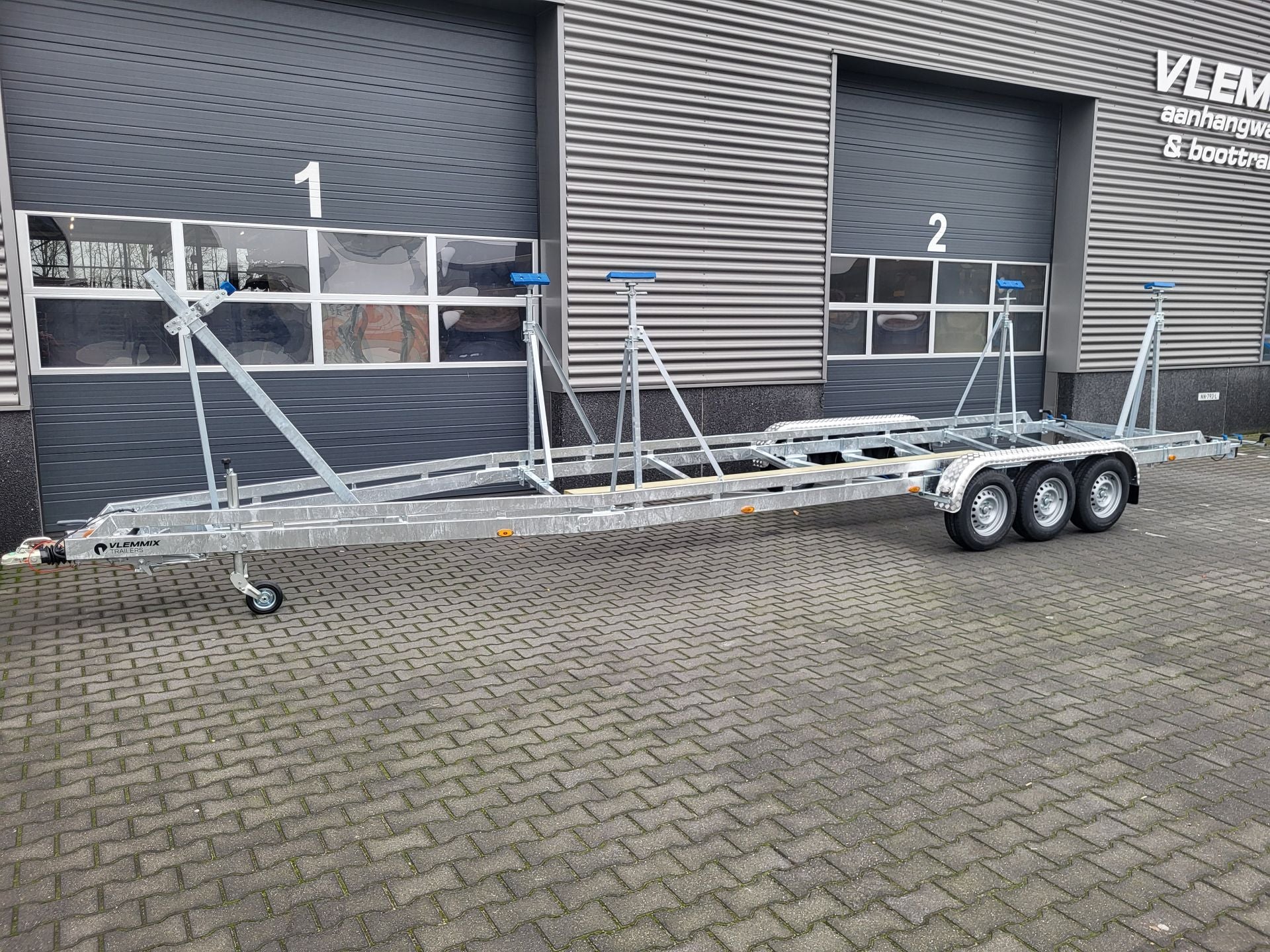
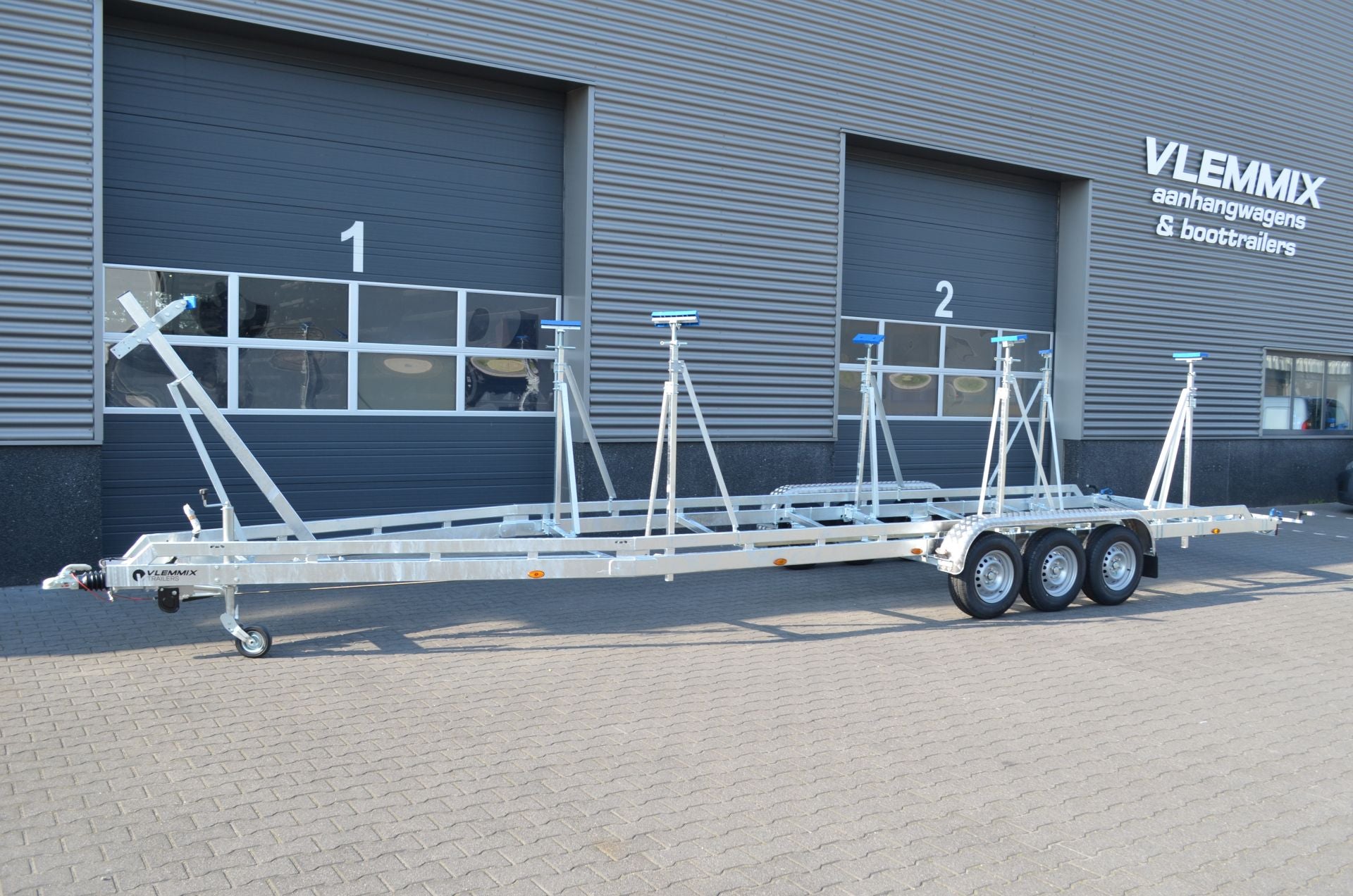

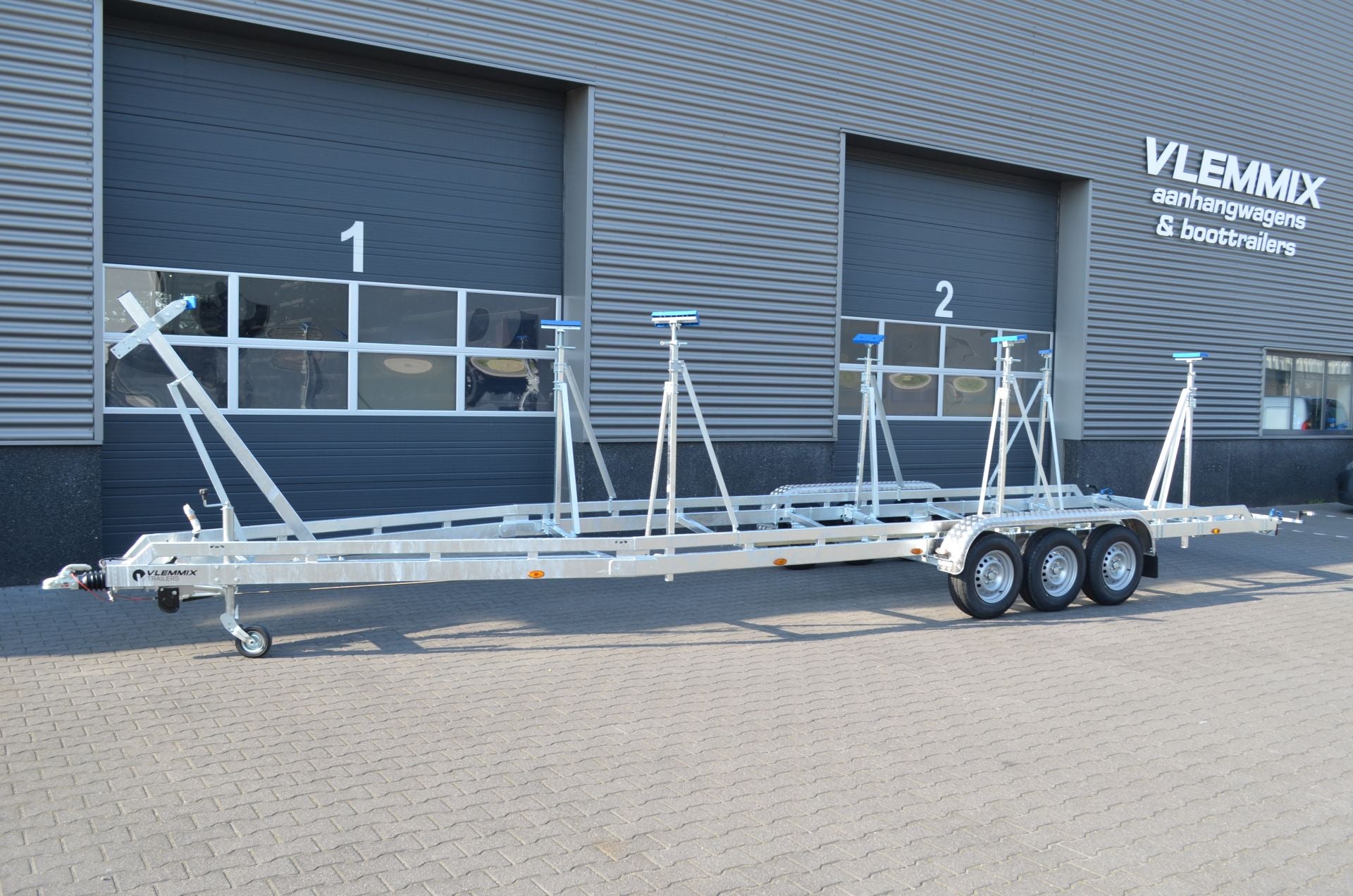
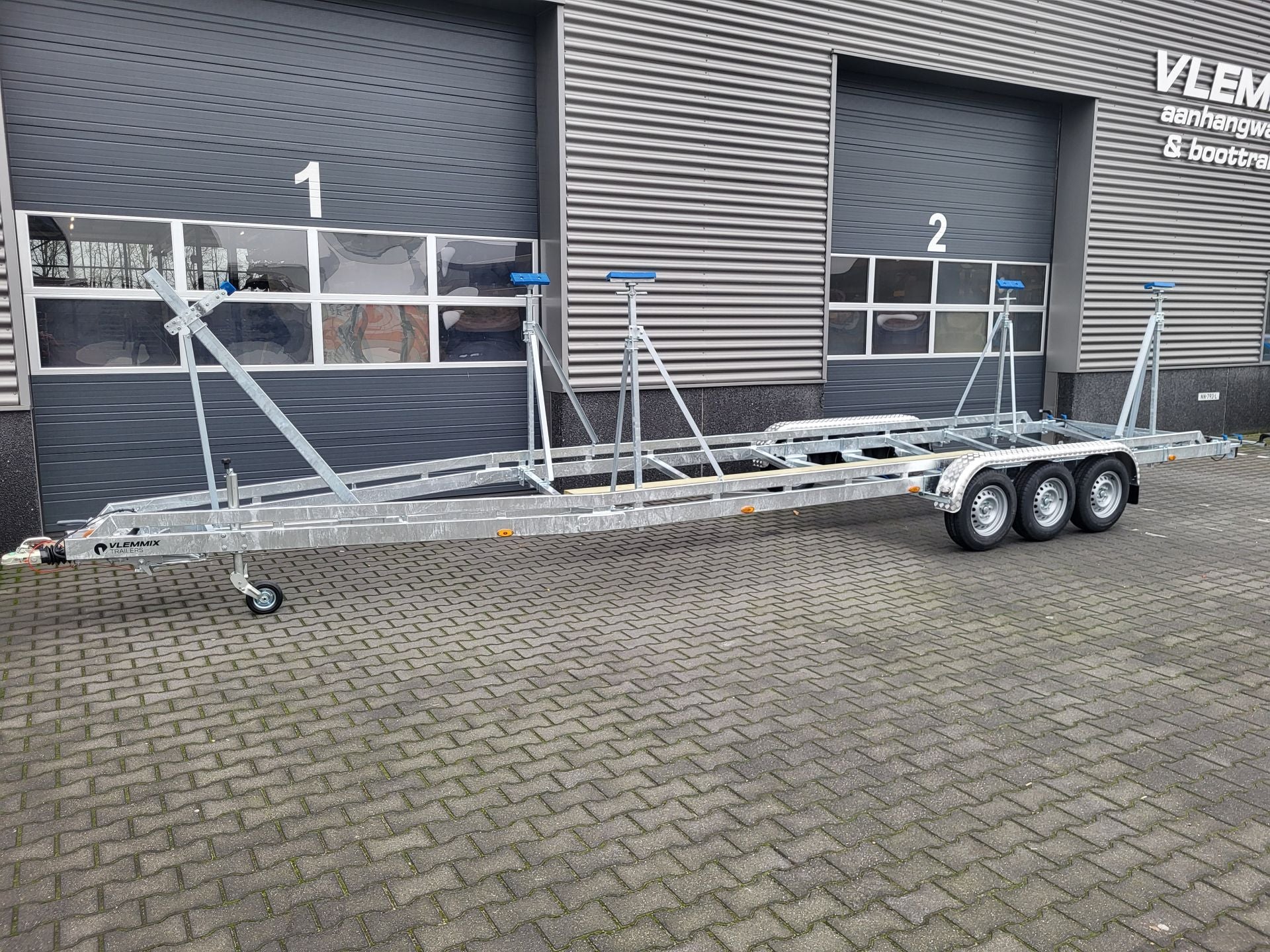
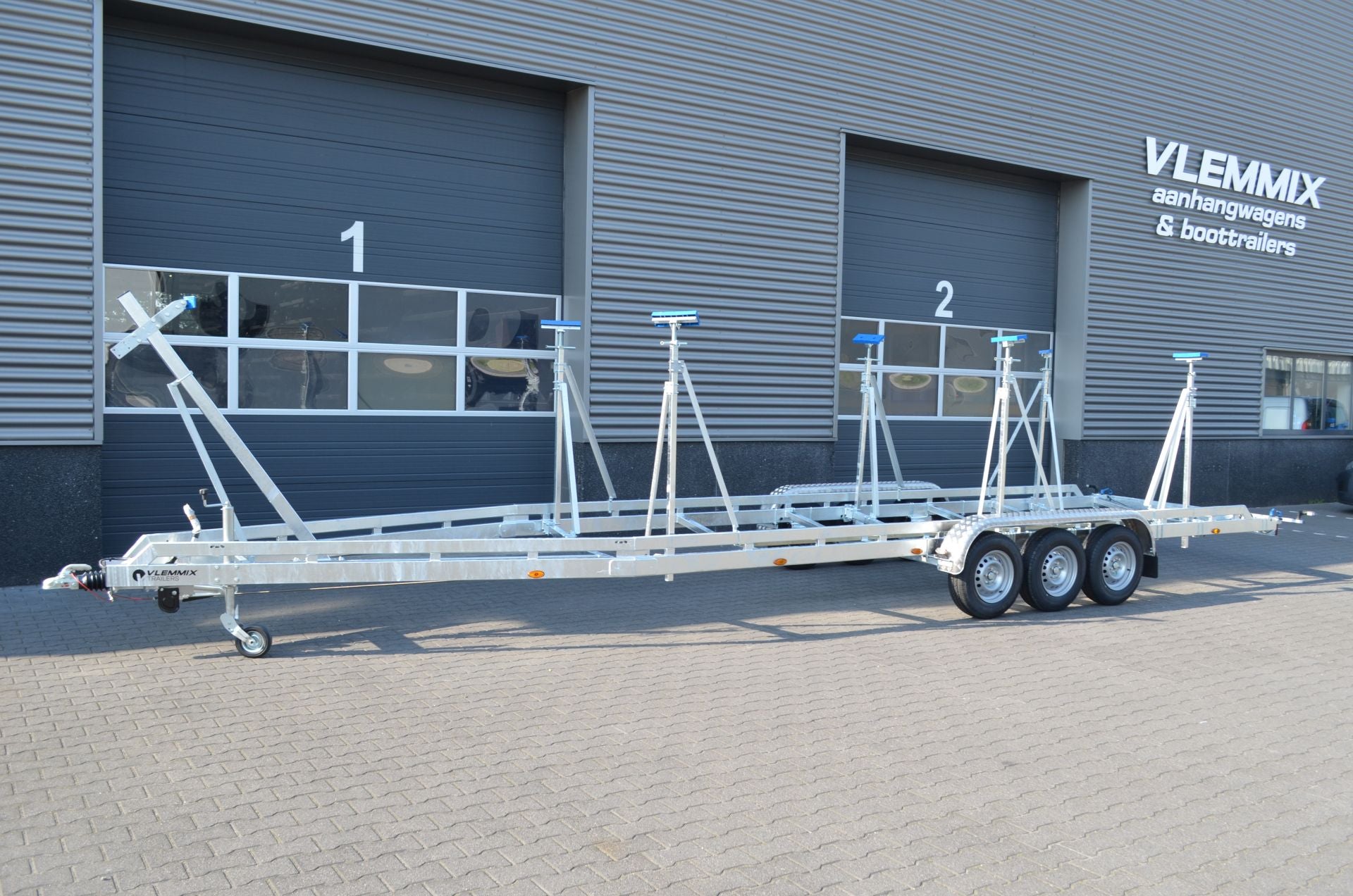
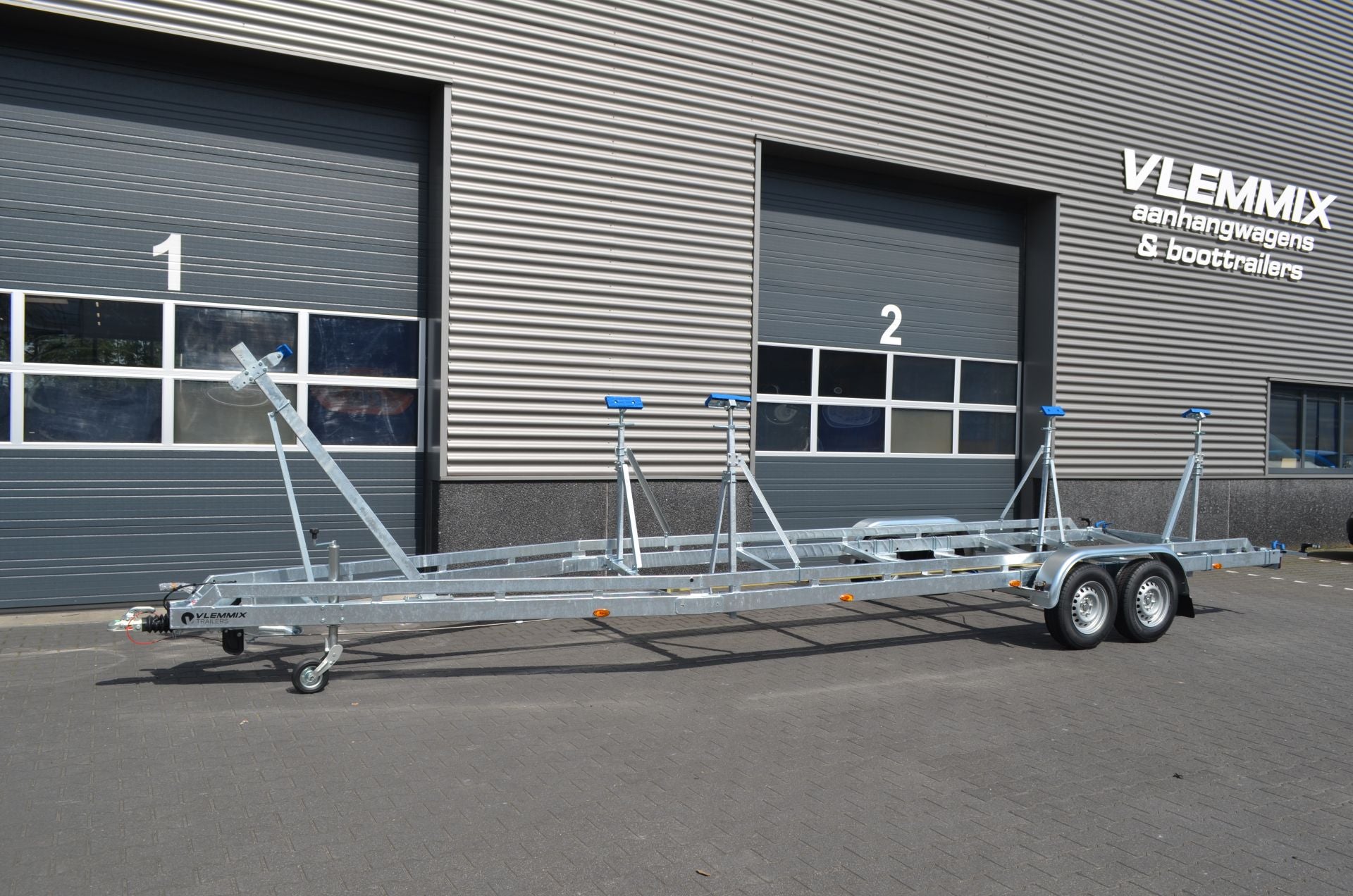
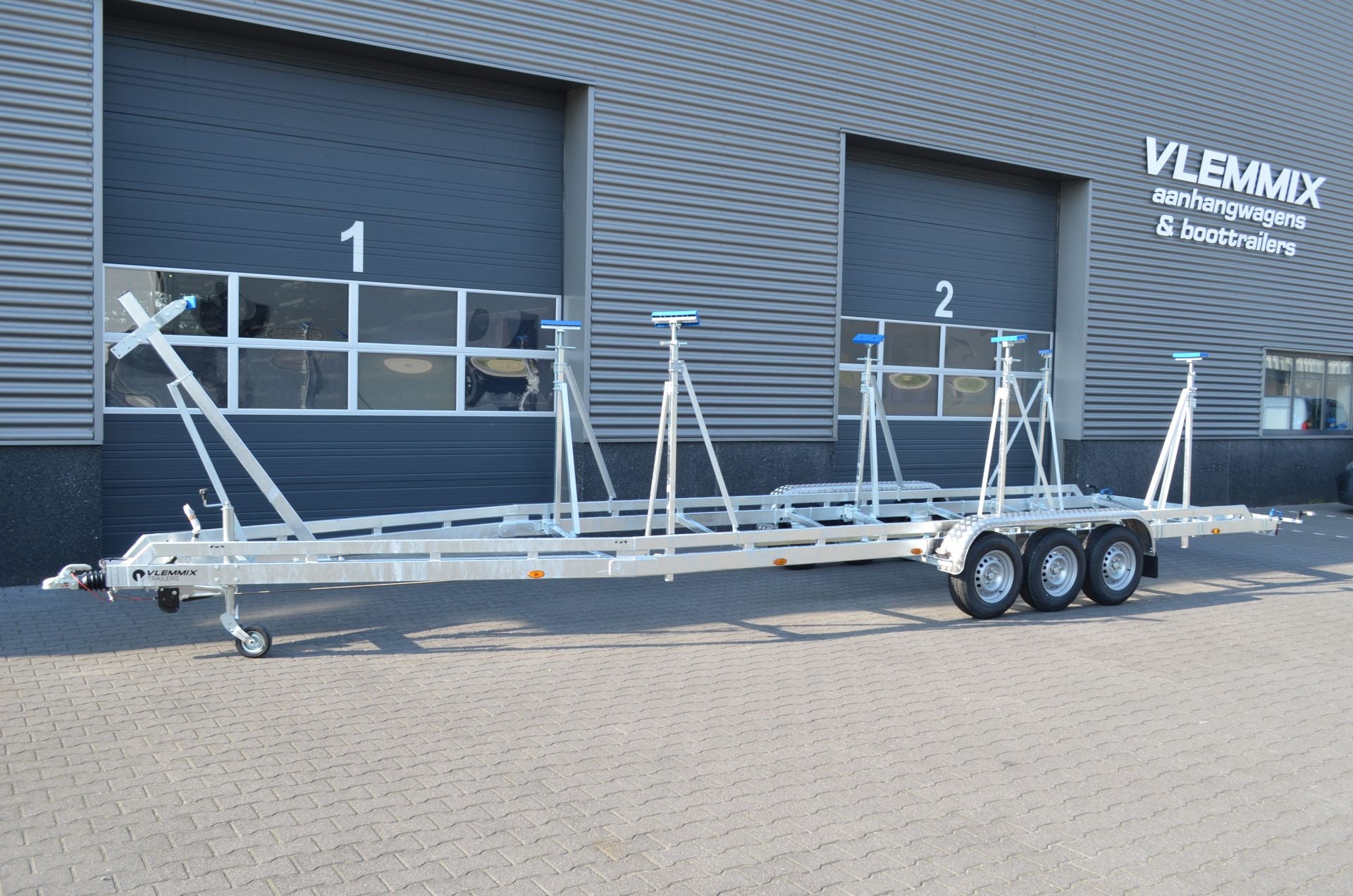
Sailboat trailer catalogue
Choosing well means protecting your boat
Towing a sailboat takes more than a trailer that “sort of fits”. When you buy a sailboat trailer, stability, corrosion, long braking distances and the rules you have to meet are all at stake. The aim is simple: the boat travels firmly, the slipway manoeuvre stays predictable and everything is fully compliant.
What our sailboat trailers offer
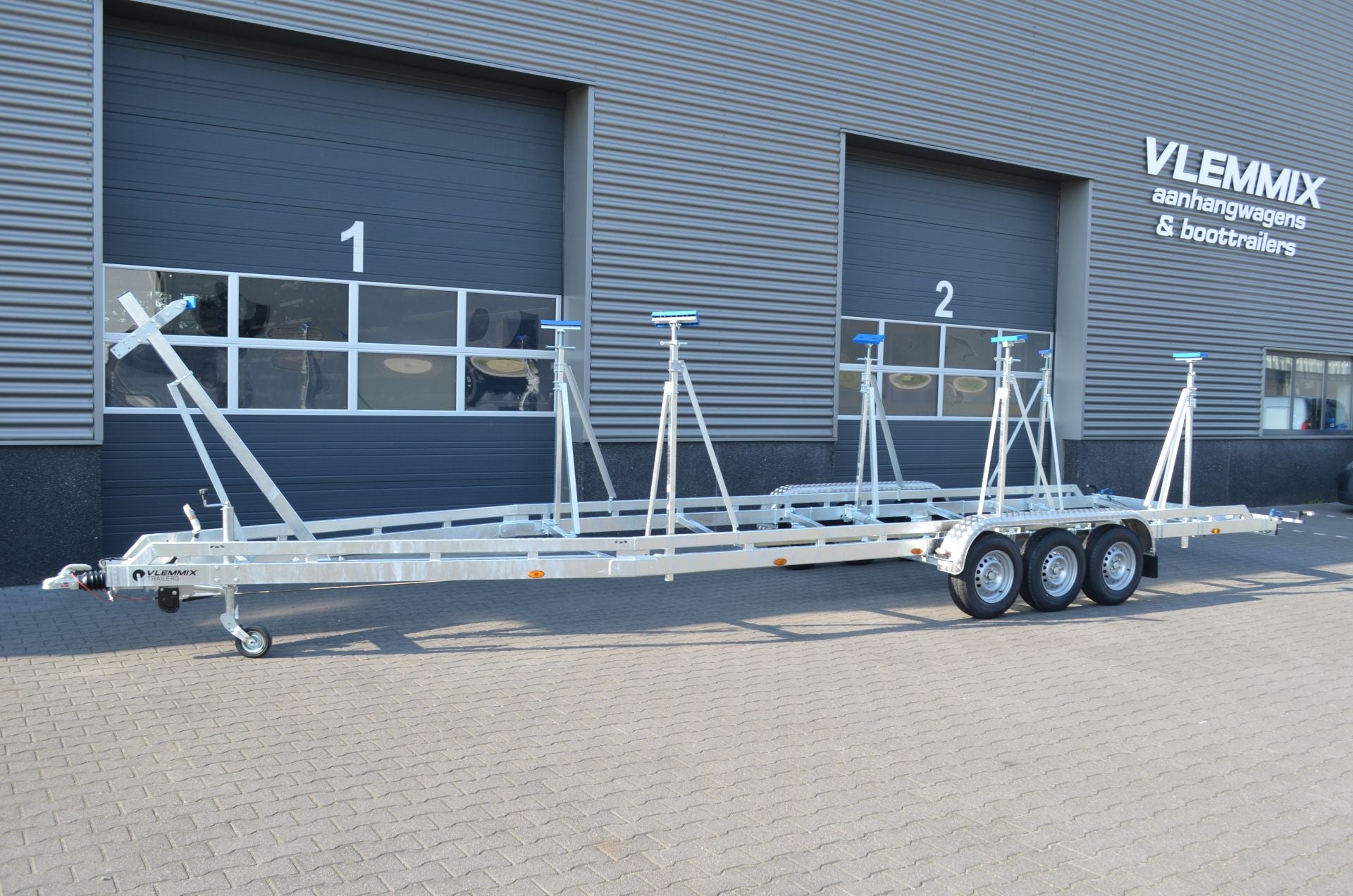
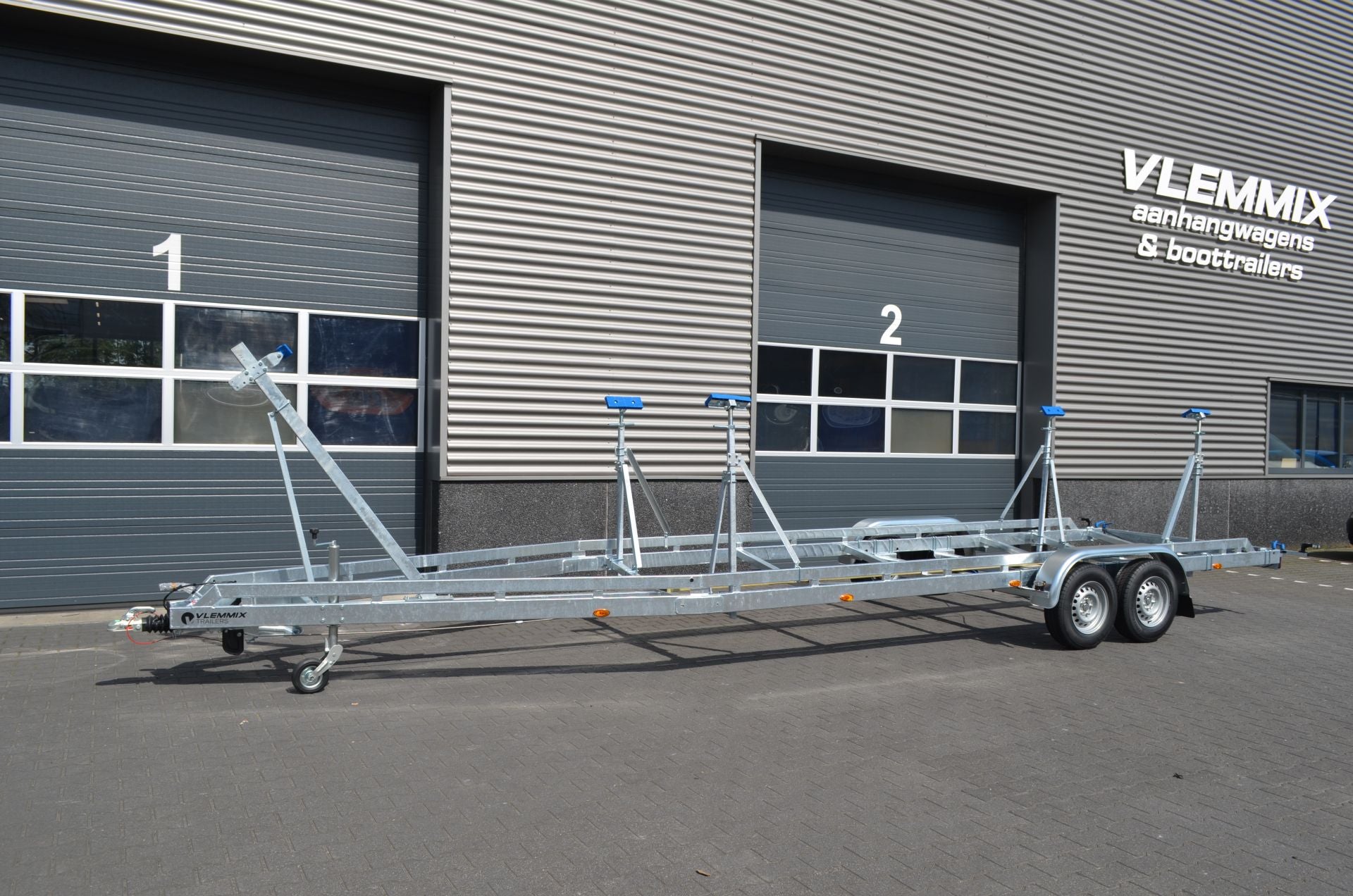
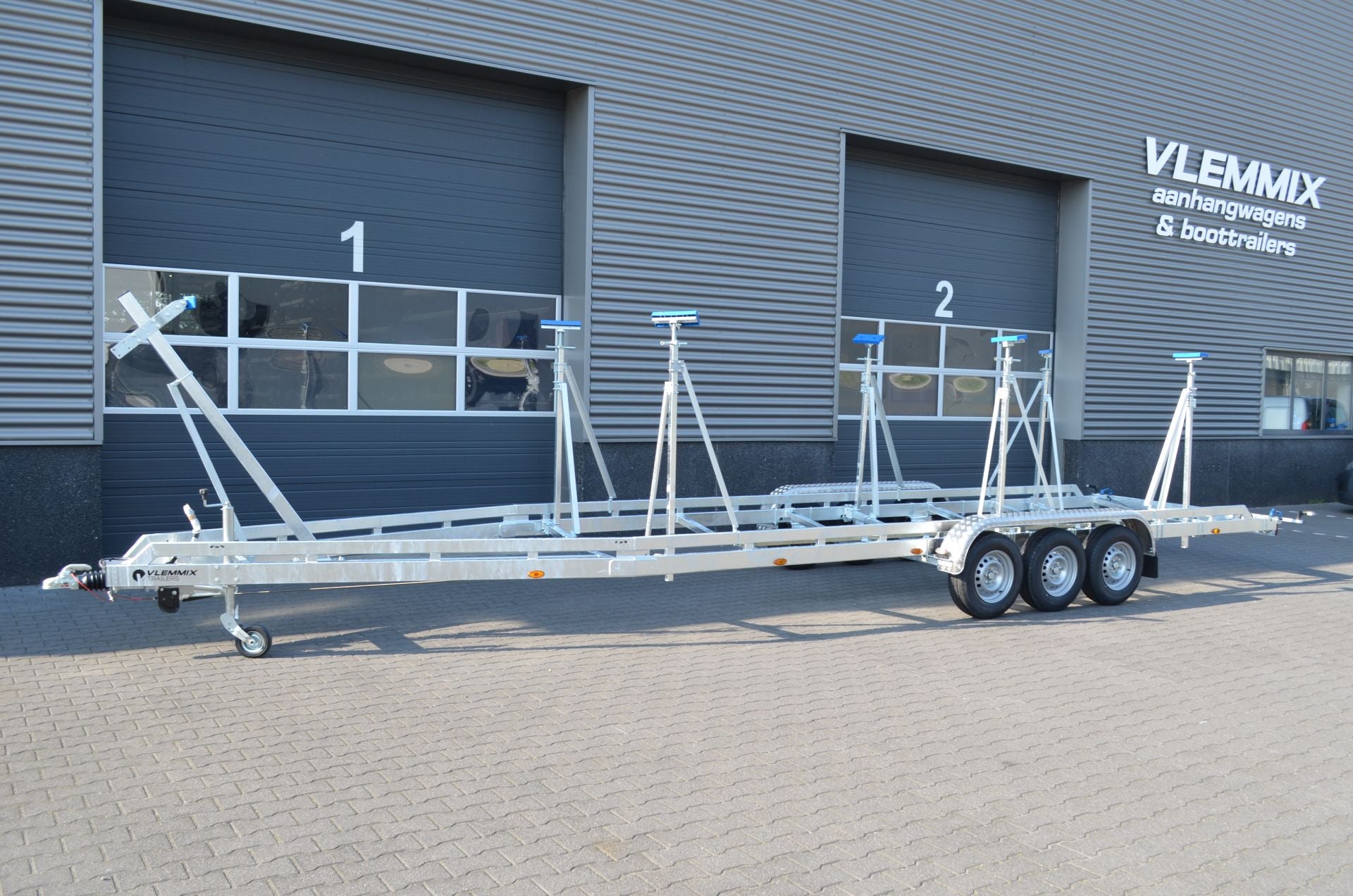
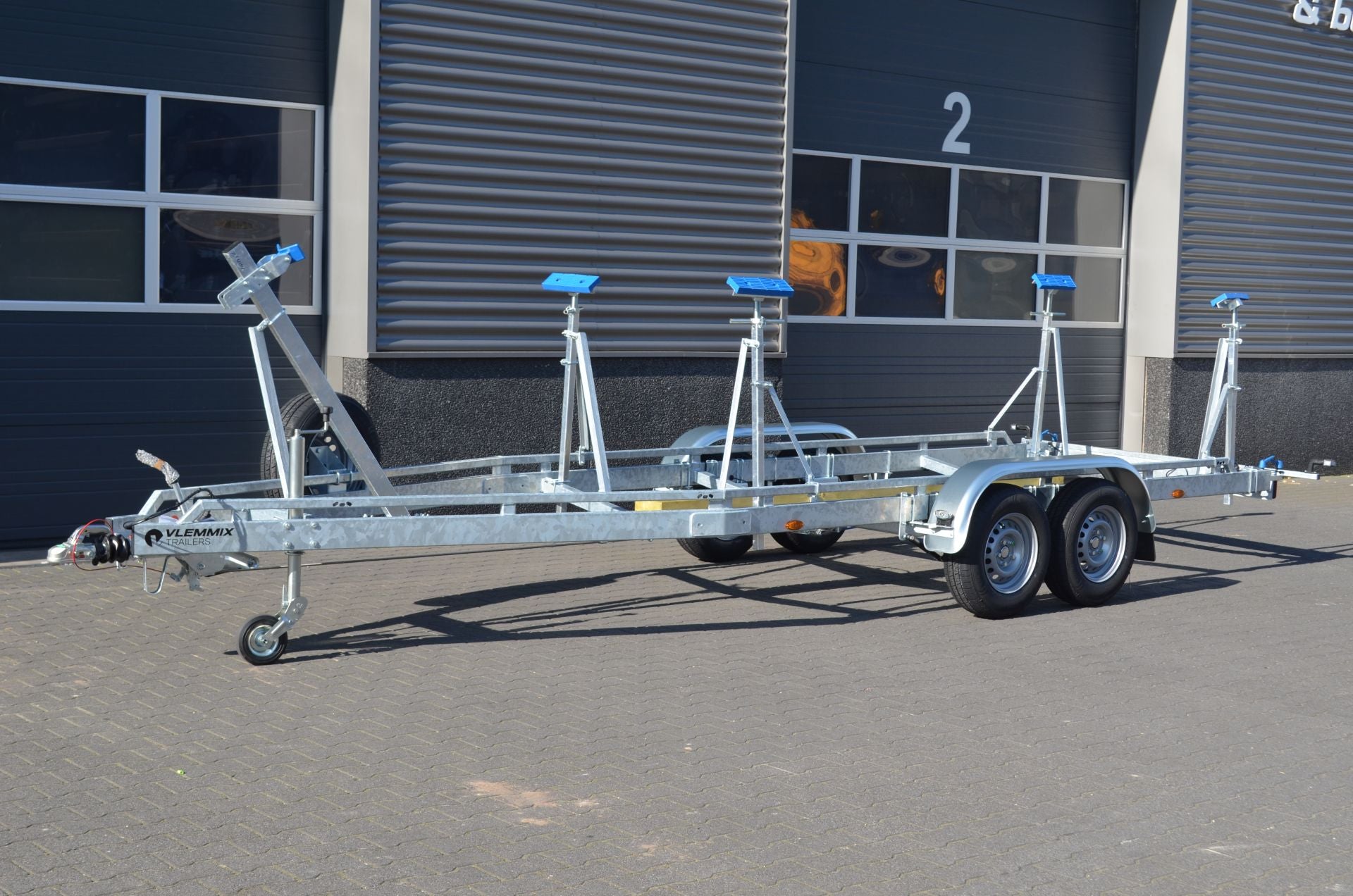
These trailers are built for keel hulls. Hot-dip galvanised frames ready for a marine environment, adjustable supports and systems that spread the weight where it belongs. Many current models are laser-cut from tube and sheet steel with very tight tolerances. Parts that fit to a tenth of a millimetre and squarer structures, which you notice when the rig tracks straight instead of snaking.
You will find single and multi-axle setups, an overrun brake on the higher gross weight versions, wiring integrated into the frame itself and removable light bars so you do not damage them on the slipway. The higher-end models come with watertight LED lighting and protected cabling, which cuts failures caused by salt air.
How to choose the best trailer for your sailboat
Start with the gross weight. Work out the real weight of the sailboat, add the equipment and leave a margin. Then add usable length and the ability to adjust the supports: cradle and keel supports adjustable in height, length and width prevent pressure where it does not belong. Go for hot-dip galvanising, quality bearings and a reliable winch. And always check how the load sits on the coupling: if the nose is too light, the rig starts to sway.
Vehicle and towbar compatibility
Check your car’s towing capacity on its registration documents. If the trailer exceeds it, it is not an option. Check the towball, the 13-pin plug (standard on boat trailers) and that the trailer runs level. A rig that sits crooked punishes tyres and brakes.
Safety and basic maintenance
After every trip in salt water, rinse with fresh water. Check straps, winch, tyres and bearings. On trailers with an overrun brake, keep servicing up to date. Adjustable supports and the removable light bar help, but without regular checks the risk comes straight back.
Common mistakes and how to avoid them
A frequent mistake is assuming that “if it fits on the trailer, it will do”. It will not. The hull has to sit centred and aligned with the trailer axle. When the sailboat ends up a few centimetres off to one side, the whole rig works crooked, the tyres run hotter than they should and stability suffers on the motorway.
Many owners also skip checking wheel nut torque after several trips down the slipway. Water, salt and temperature swings loosen bolts. A regular check with the right wrench avoids nasty surprises.
Another classic is using straps that “lasted fine last summer”. Sun and salt air rob them of strength. If they creak under tension or show loose fibres, replace them. And never run them over the rigging: sharp fittings cut without warning.
Some people simply trust the winch will hold. Bad idea. The cable or webbing must be in good condition, with no kinks or rust, and the pawl has to lock firmly. If the sailboat shifts half a metre under braking, the damage is serious.
Finally, there is the “that will do” as you pull off the slipway. The trailer changes angle, the load moves and what looked secure no longer is. A quick check on dry land (straps, lights, plug and a walk-around) saves fines and headaches.
Recommended use cases
If you use the sailboat occasionally and cover short distances, you will appreciate a simple trailer that is easy to store and has supports you can adjust quickly. Less weight, simpler manoeuvres and manageable maintenance.
If the boat is kept at home and every season brings long road trips, look for more stable frames, axles sized with margin and a support system that allows small adjustments to suit the hull trim. The goal is to travel for hours without straining the rig.
For anyone working on narrow or steep slipways, a trailer with a removable light bar and well-positioned rollers makes launching easier. Fewer knocks, less rushing and less stress.
In very salty environments such as ports and hardstandings by the sea, it pays to invest in the details you do not see at first glance: protected fasteners, properly sealed wiring and components designed to get wet and keep working.
And if the sailboat’s kit changes often (ballast, sails, extra gear), go for a model that accepts a wider range of support settings. That adjustability saves you fighting the setup every time the boat goes on or off the trailer.