

Galvanised Boat Trailers


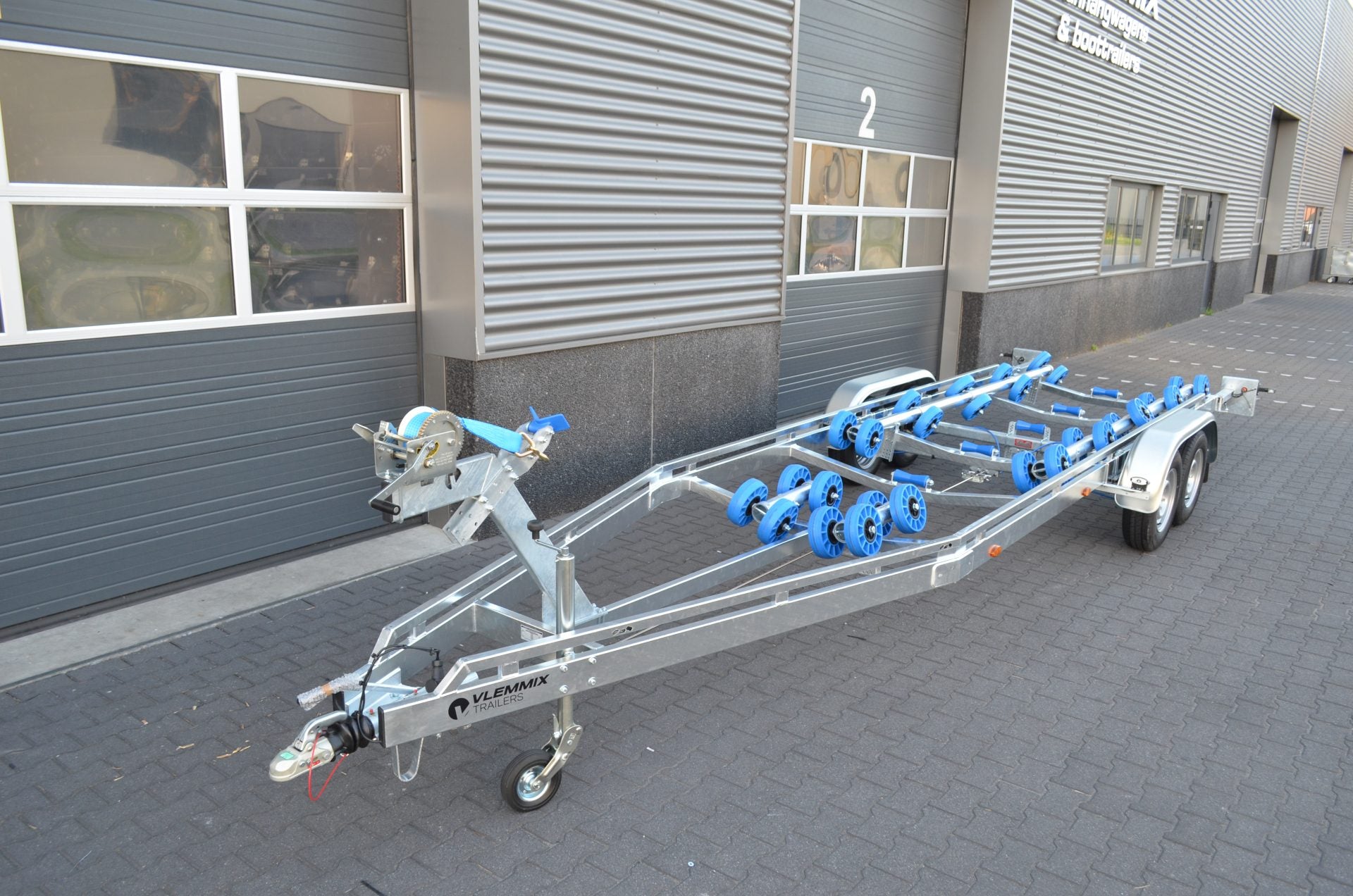
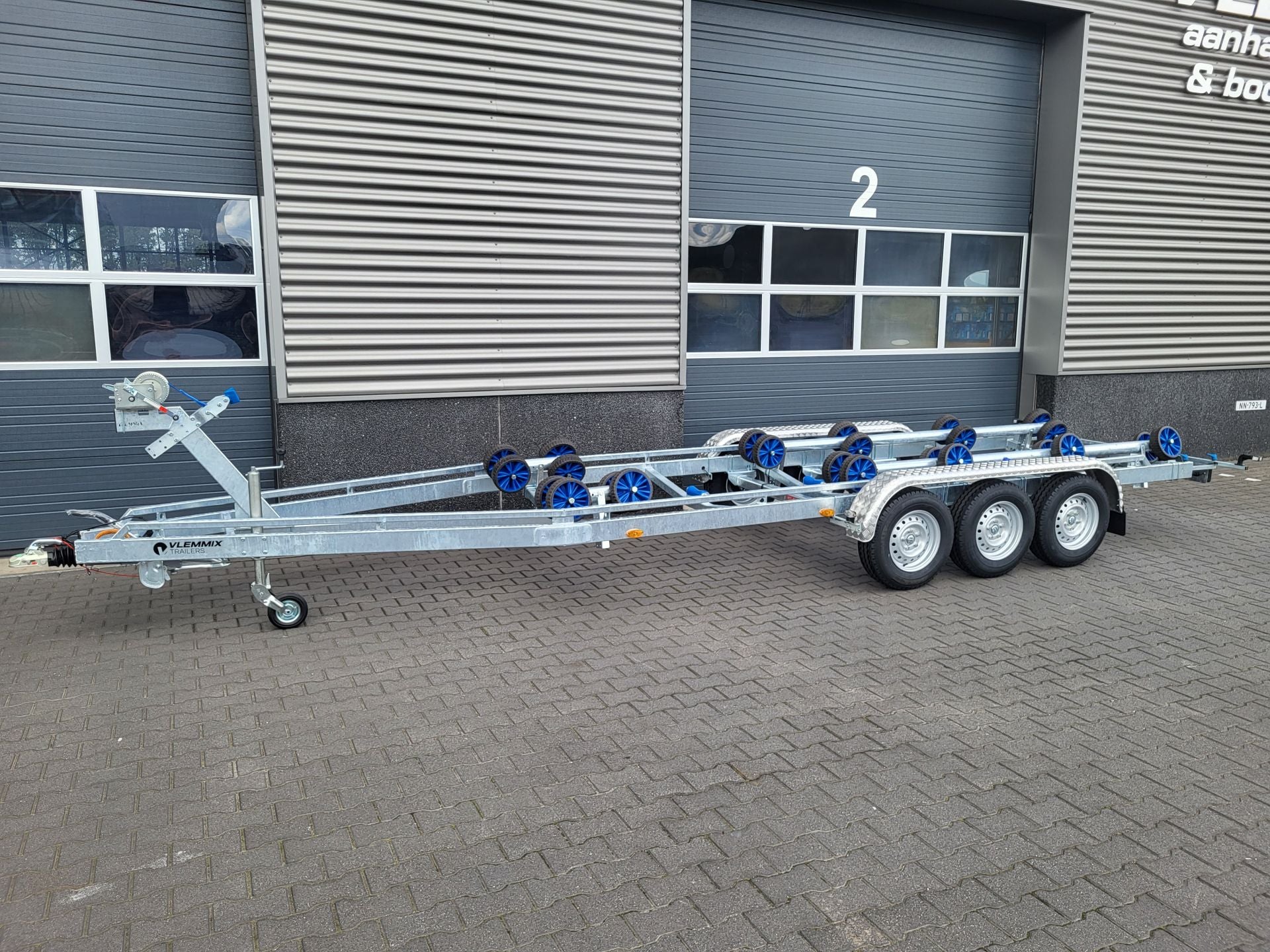
Why our boat trailers last longer in salt water
In boating, the deciding factors are hot-dip galvanising and 3 mm steel
A boat trailer gets wet, goes under at the slipway, travels with trapped moisture and lives exposed to salt and sea wind. The difference between a trailer that lasts 15 years and one that rusts in 5 comes down to two manufacturing decisions worth looking at closely before you buy.
Hot-dip galvanising, not paint or cold galvanising
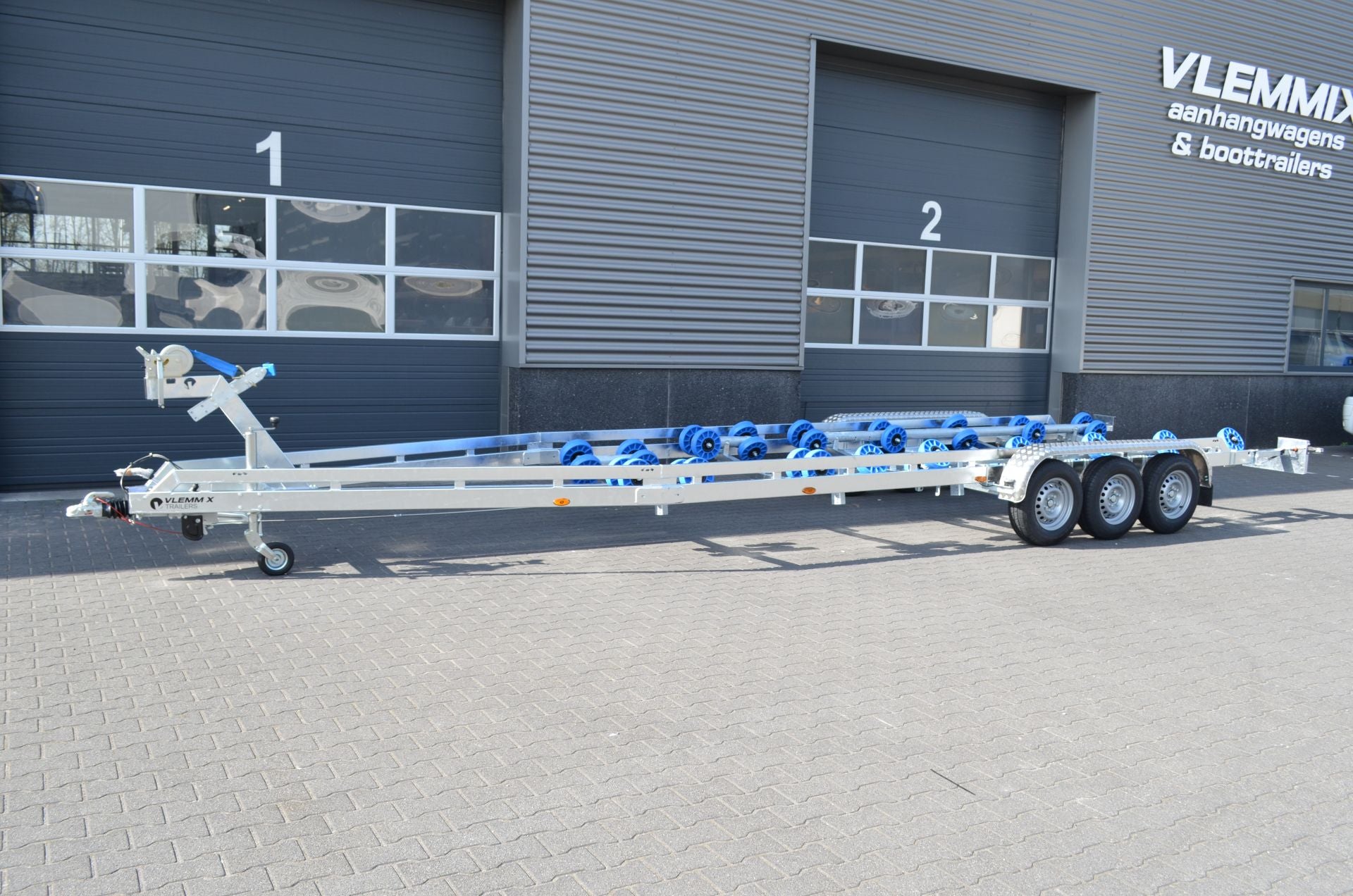
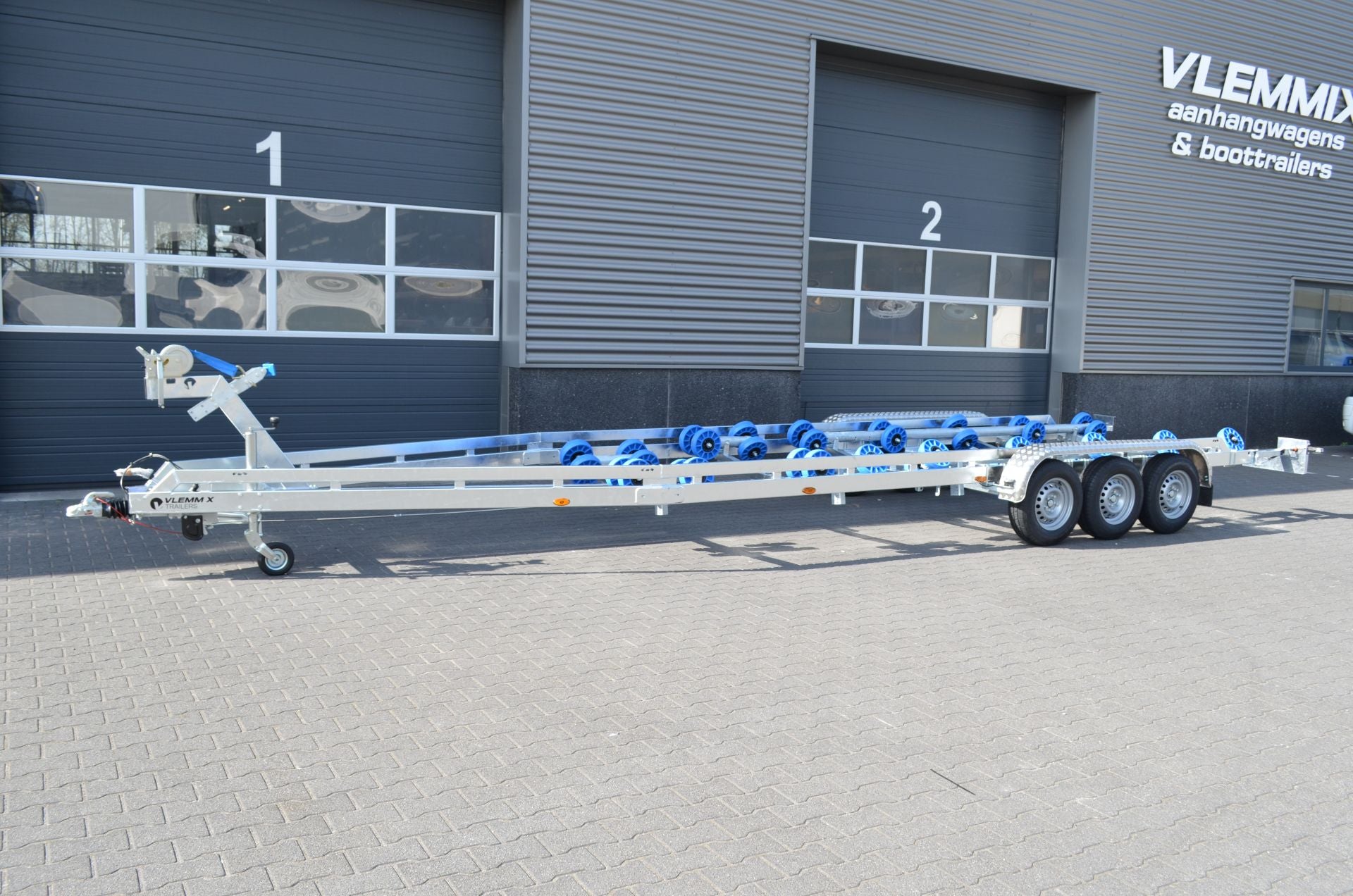
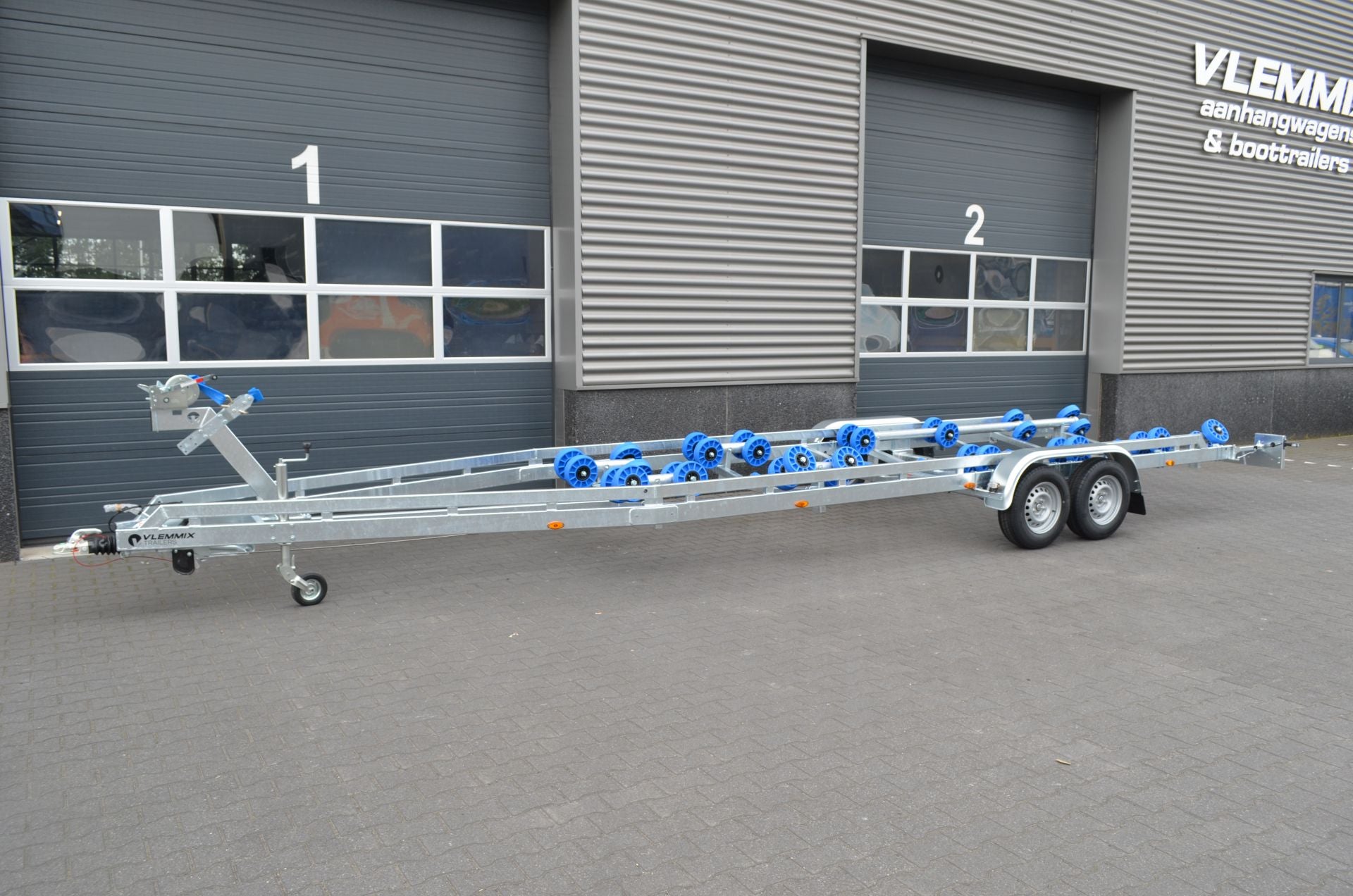
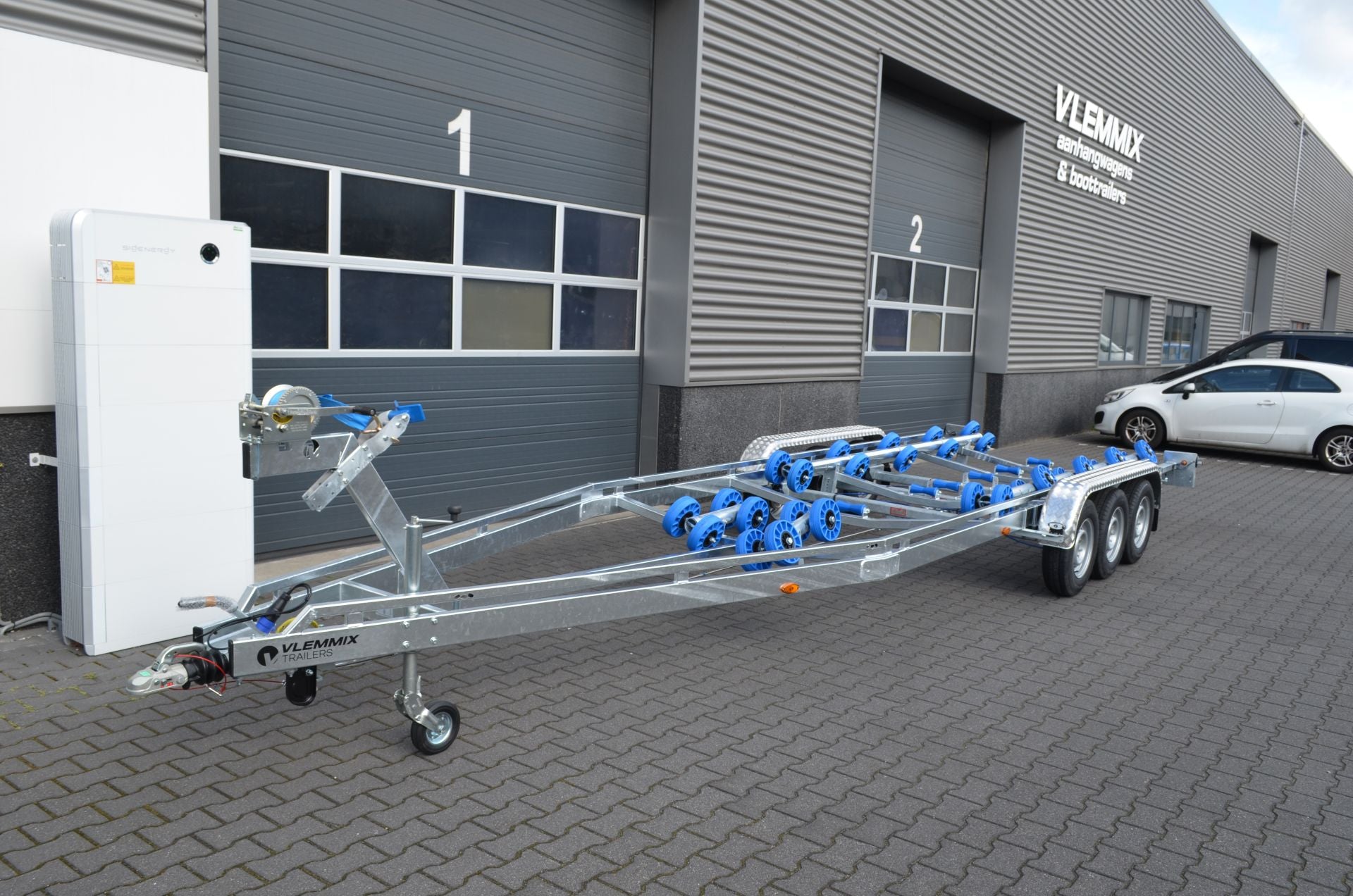
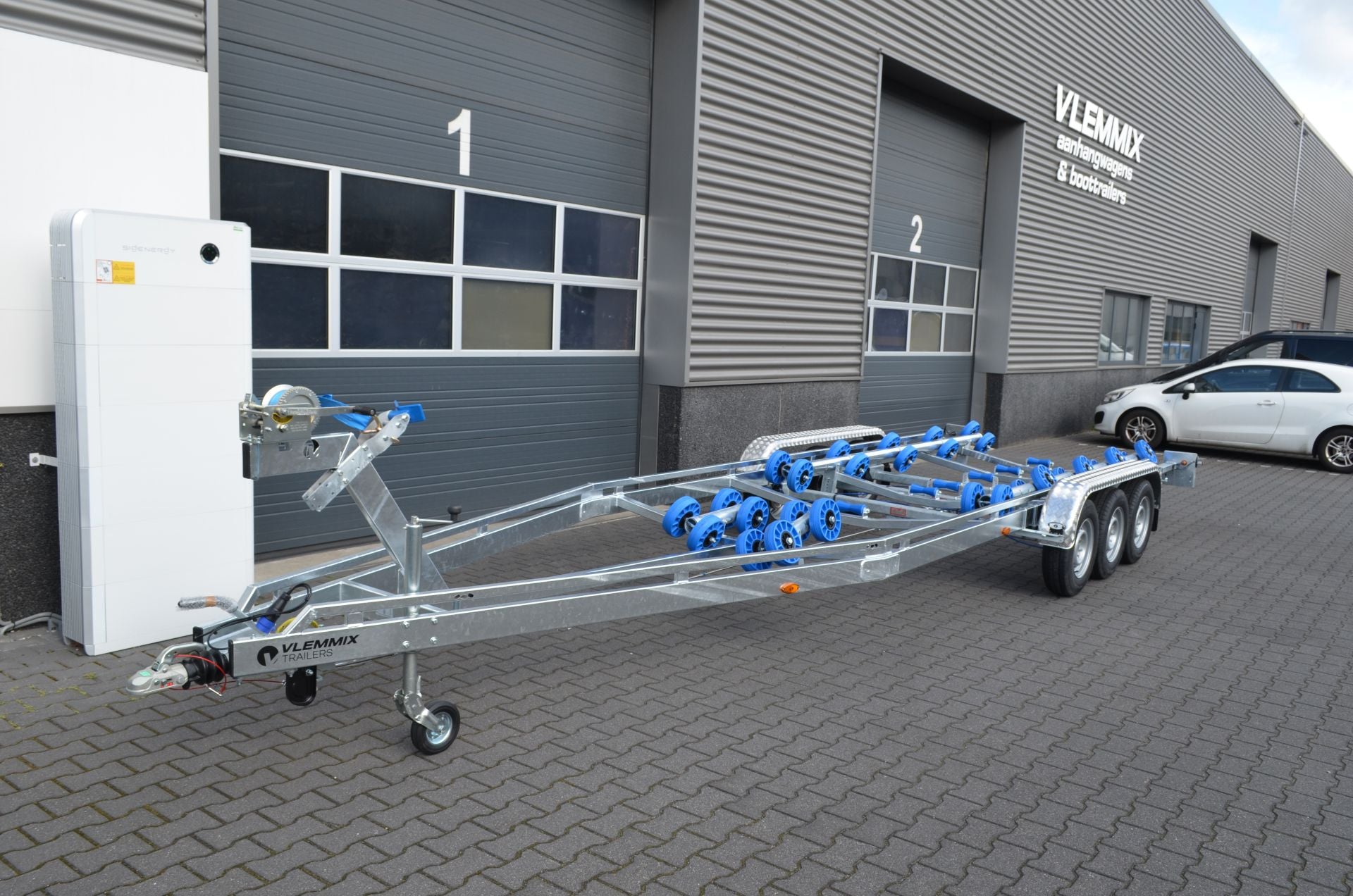
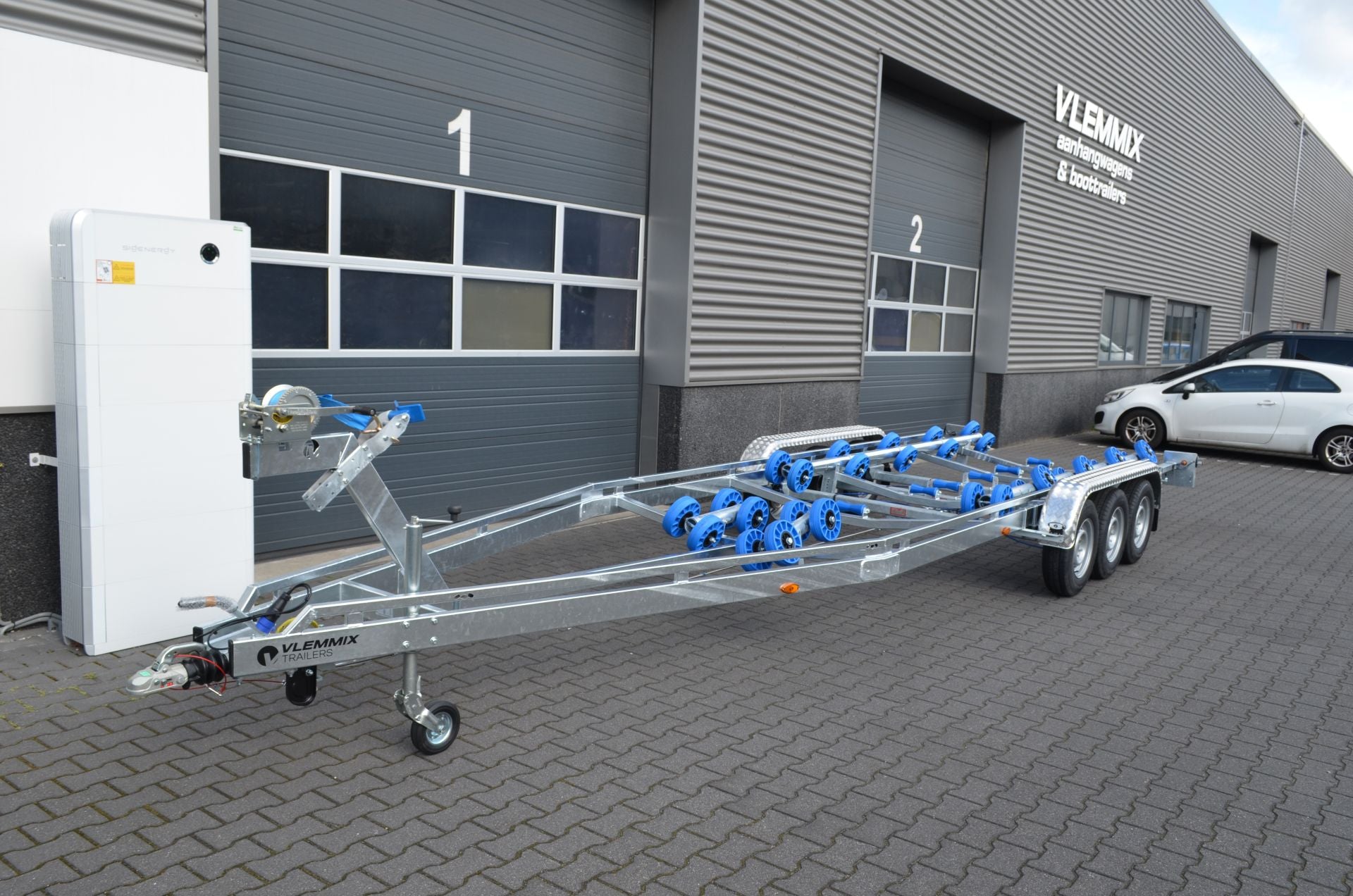
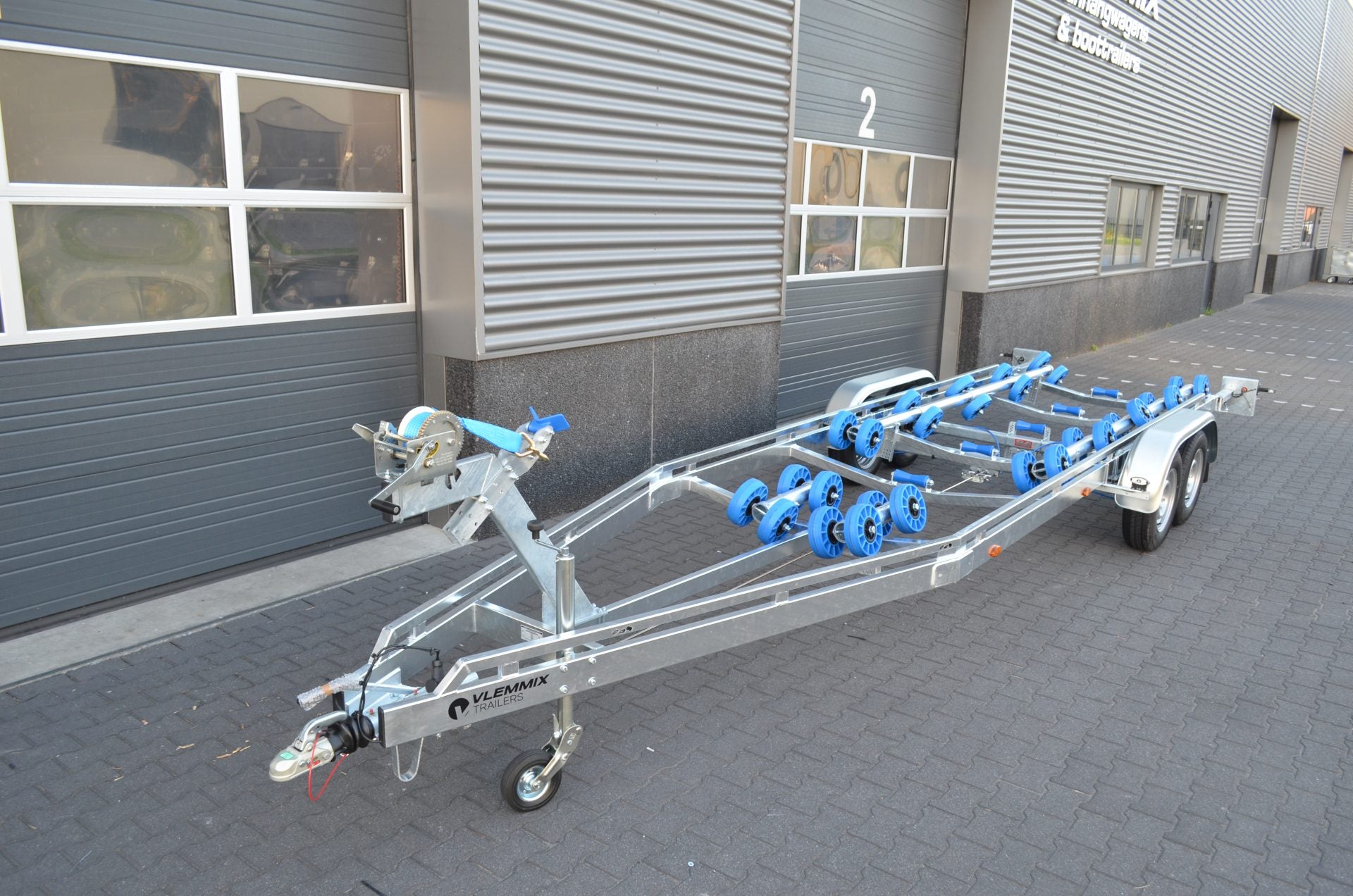
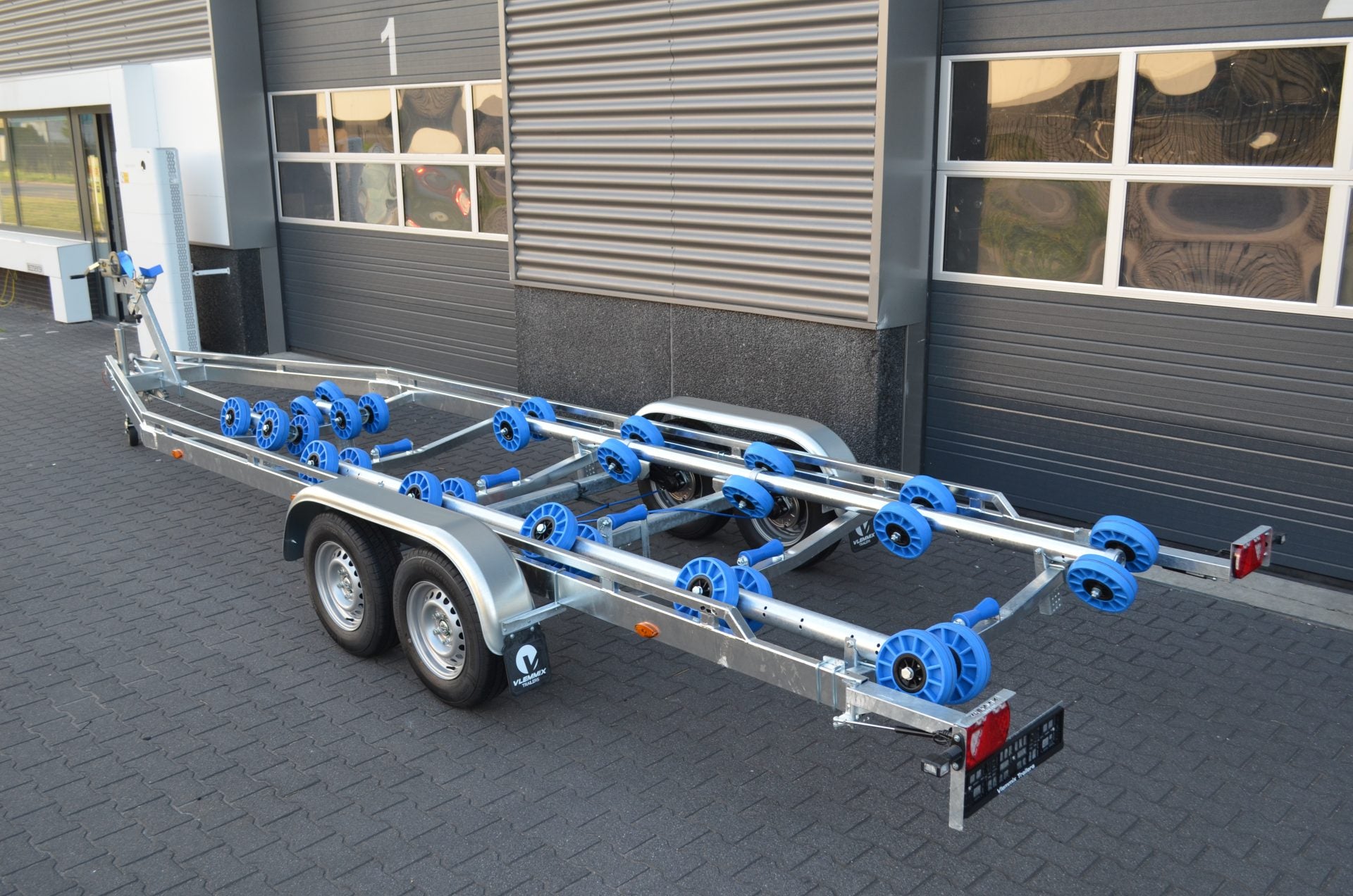
All our boat trailers are built with full-immersion hot-dip galvanising. The chassis, crossmembers and anchor points go through a complete bath of molten zinc at 450 °C, forming a metallurgical layer that resists salt corrosion far better than paint or cold galvanising. It is the same treatment claimed by the leading manufacturers in the European marine sector, and it is what separates a trailer built for real marine service from a repurposed general cargo trailer.
3 mm steel against the 1.5 mm standard
The chassis is made from 3 mm steel. The usual industry standard is 1.5 mm. That is 50% more material at the highest-stress points: twisting on the slipway, knocks against the dock, fatigue on 8-10 m trailers loaded to their maximum. More years of service, better resistance to deformation and better resale value.
Up to 100 kg less tare, up to 100 kg more boat
A 6-8 m boat with an outboard weighs between 1,200 and 2,500 kg ready to go. Add the trailer's tare to the tow car's and the 3,500 kg combined limit of a category B licence arrives fast. Our trailers have up to 100 kg less tare than the competition (on a 7-8 m model, 700-800 kg against the usual 850-900 kg), which translates directly into headroom for a bigger boat without needing a BE licence.
2-year warranty and direct support
The marine sector standard is 1 year. Our cover is 2 years against manufacturing defects, including chassis, suspension, braking system and original components. Any issue is handled directly with Arnaud from Spain, without shipping the trailer back to the factory or dealing with third-party service centres.
Which type of boat trailer you need
Every boat has an optimal trailer type. These are the six subgroups in the Remolque.es marine range. If you are unsure which one fits your boat, powerboat or jet ski, Arnaud will settle it with you in a 10-minute call.
6-metre boat trailer · 7-metre boat trailer · 8-metre boat trailer · 12-metre boat trailer · Storage trailer · Boat cradles
Standard boat trailers
For GRP boats with a keel, RIBs and motorboats from 6 to 12 metres. Bed with bunks or multi-rollers depending on the model, launching winch and approved LED lights. D-W range models with a gross weight up to 3,500 kg, 2 or 3 axles.
Bunk boat trailers
Padded longitudinal bunks that spread the hull's weight along the whole keel. Suited to RIBs, planing boats and open boats up to around 7-12 metres. More stable support and fewer concentrated load points than rollers.
Sailboat trailers
A specific setup for keelboats, with an adjustable cradle and support shaped to the hard chine of the hull. Designed for 4-7 metre dinghies and racing boats, and cabin sailboats up to 12 metres with a centreboard. Low bed to make slipway launching easier where there is draught.
Five technical decisions before you buy
1. Work out the real weight of your boat ready to sail
The weight in your boat manufacturer's catalogue is the dry weight. The real ready-to-go weight includes the engine (50-200 kg), a full fuel tank (50-150 kg), the battery, auxiliary batteries, chemical toilet, anchor, gear and often a tender. Add 200-400 kg to the dry weight. The trailer's gross weight should exceed that real figure with a 10-15% margin.
2. Choose the support system to match the hull
Bunks: stable, they spread the load along the full length. For RIBs, planing boats and straight hulls. Flex Roll multi-rollers: they make solo launching easier and adapt to varying shapes. For delicate hulls or single-handed operation. Adjustable cradle: for keelboats. Low bed with ramp: for inflatables with shallow draught.
3. Check width and approved lighting
The maximum transportable beam is usually limited by the trailer's width and by regulations (a 2.55 m limit without special permits in Spain). Check your boat's beam before choosing. Lights should be approved LED units with a 13-pin connection for braking and manoeuvring systems.
4. Twin axle for longer boats
From 7 m in length with a gross weight above 2,000 kg, a twin axle is effectively mandatory to spread the load, improve motorway stability and reduce tyre wear. From 8.5 m with a gross weight close to 3,500 kg, a triple axle adds safety under braking and in bends.
5. Hot-dip galvanised, not cold galvanised
In boating, full-immersion hot-dip galvanising is the only protection that survives repeated use in salt water. Cold galvanising and epoxy paint degrade within 2-4 seasons. Check the spec sheet for the exact wording "hot-dip galvanised".
Boat trailer FAQ
What does it mean for a boat trailer to be hot-dip galvanised?
It means the chassis and metal components are fully submerged in molten zinc at around 450 °C, forming a metallurgical layer bonded to the steel. It is the standard treatment in the marine sector because it resists salt corrosion far better than paint or cold galvanising. All our boat trailers are supplied with full-immersion hot-dip galvanising.
How much does a boat trailer cost?
The usual range on the Spanish market runs from €1,100 (jet skis) to €7,500 (models for 10 m boats with a triple axle). Our prices sit 15% to 50% below comparable national options thanks to European economies of scale. Ask Arnaud for a fixed quote with no obligation.
Is it approved for use in Spain?
Yes. Every trailer is supplied with EU type approval and registration ready to go. Only the road registration remains, and we help with that too.
What warranty is included?
2 years against manufacturing defects, covering the galvanised chassis, suspension, braking system and original components. The industry standard is 1 year.
Can I use the trailer to launch and recover my boat directly at the slipway?
Yes. It is designed for real marine service with partial immersion at the slipway. The hot-dip galvanising and the components (sealed bearings, sealed LED lights, stainless fixings) are built for repeated use in salt water.
What is the difference between a bunk trailer and a Flex Roll multi-roller?
Bunk: padded longitudinal bunks that carry the hull along the keel. More stable and more affordable, recommended for two-person launching. Flex Roll multi-roller: self-adjusting rollers that cradle the hull and make single-handed launching and recovery easier, especially useful with large boats or delicate hulls.
Does it work for a keel sailboat?
Yes, but using the dedicated sailboat trailer subcategory with an adjustable cradle and support shaped to the hard chine. The standard boat trailer subcategory is optimised for flat hulls and RIBs.
How long does delivery to my address take?
Typically 7 to 15 working days from order confirmation. Delivery anywhere in mainland Spain.
Is there a fleet discount?
Yes. Marine businesses (rental, charter, workshops running several trailers) get special terms on orders of 3 units or more. Arnaud quotes case by case.
Official distribution, no middlemen
Remolque.es is the official distributor in Spain for the European brand. The whole process is handled by people, directly, not through an intermediary dealership:
- You call, email or request a quote. Reply in under 24 hours.
- Fixed configuration and all-in price (EU type approval, registration, transport to your address in mainland Spain).
- You receive the trailer at home, ready to tow. No trips, no waiting at a dealership.
- After-sales and the 2-year warranty are handled by us.